Pages

Subscribe:

Labels

038628037504 (1) 10150 (1) 10BURIED (1) 10Count (1) 110011040 (1) 115Ounce (1) 1200mg (1) 12BSN (1) 12Count (2) 12CountNutricor (1) 12CountWWSN (1) 12Fresh (1) 12Stacker (3) 12VPX (1) 140243 (1) 14Servings (1) 158Ounce (1) 15Ounce (1) 16Ounce (2) 1716 (1) 17Skque (1) 1lbinLife (1) 2000Hrs (1) 2000mg (1) 200Watt (1) 2021A (1) 20OunceNatures (1) 2412Ounce (1) 24Count (1) 24EAS59134 (1) 24FRS (1) 24Guru (1) 24Guru01GR124 (2) 24Nestle (2) 24Pediasure (2) 24Peptamen (1) 24PieceDisplay (1) 24Solis (2) 27ReSource (2) 2Biochem (1) 2Dynamic (1) 2Jarrow (1) 2Muscle (1) 2Natures (1) 2Ounce (3) 2Pound (1) 30Day (1) 328601 (1) 334928 (1) 336gOptimum (1) 37Ounce (1) 3Ensure (1) 3M (1) 414 (1) 432500 (1) 48Boost (1) 48Fluid (1) 48ml (1) 4Ensure (1) 4Isopure (1) 5000mg (1) 527408 (1) 5511786 (1) 574400 (1) 5Hour (2) 5Ounces (1) 600Kendall (1) 662380 (1) 6Beneprotein (1) 6Proteinex (1) 70951 (1) 750mlNutriPrima (1) 845Ounce (1) 84Fluid (2) 84OuncesLiquid (1) 89Inch (1) 8nuun (2) 8Ounce (7) 99369FR (1) ABB (3) Academy (1) ACCENTS (1) Acia162Ounces (1) Acsry (1) Active (2) Adapter (1) AdapterBattery (1) Advance (1) Advanced (1) Advantage (1) AdvantEdge (1) Africa (29) African (1) Agaricus (1) AiCoco (1) AIDSTrustex (1) Airbrush (1) Airbus (6) Aircraft (94) AISI (1) Ajmeras (1) Alchohol (1) Alertness (1) Alfalfa (2) Alive (1) Allergy (1) Allspice (8) Alpine (1) Alstom (2) Alternative (1) Amarillo (1) Amazing (3) Amazon (2) American (1) animal (11) Annual Reports (155) Antioxidant (1) Anwar Ibrahim (1) Apple (1) Applied Materials (1) Arrowroot (1) AshtonDrake (1) Asia (72) Assorted (1) Atkins (1) Audi (1) Australia (21) Automotive (250) Automotive Technology (183) Ayurvedic (1) BABIES (1) Babys (1) Bacopa (1) BagAtkins2627 (1) BagsTraditional (1) BagSun (1) Balanced (1) Ballard Power System (1) Banaba (2) Baram Dam (1) Baram Regatta (1) Bariatric (1) Barisan Nasional (2) Barisan Nasional Helps Penan (1) Barista (2) Barley (2) barsBiochem (1) Basement (1) BASF (2) Basics (1) Batu Lawi (1) Bayer (1) BEA1017OZ (1) Beachbody (1) Beaded (1) Beaumont (1) beautiful girl image (19) Beauty (2) Beneprotein (2) Berries (3) Berry (4) BerryLiving (1) Beverage (1) Bicycle (1) BioAstin (1) Biochem (4) Biofuel (12) Biogenesis (2) BlackBlender (1) Blend (1) Blender (4) Blueberry (1) BlueStereo (1) BMF (1) BMW (7) BMX (1) BN (1) Boeing (4) Bombardier (4) Book (1) Borneo (6) Bottle (8) BottleProStat (1) Bottles (15) BottleScivation (1) bottlesEnsure (2) BottlesMio (1) BoxChenille (1) BoxDarice140243 (1) BOXESAmerican (1) BoxesFRSPowder (1) BoxPremier (1) BP (2) Brands (1) Brands833667000102 (1) Brazil (10) Brazilian (1) Breeze (3) BrewersBarista (1) BRIC (118) Brikpaks (3) Brownie (1) Bruno Manser (1) Bruno Manser Fund (3) Bruno Manser Fund Fraud (1) Bruno Manser Fund Frauds (1) Bruno Manser Lies (2) BTL410400 (1) Bubbles (1) Burner (1) business (72) Butchers (1) Butter (1) Butterscotch (1) Cable (1) Cables (1) Calcium (2) California (1) Calorie (3) Camera (1) Canada (11) Candela (1) Canister (2) CanisterCLICK (1) Canisters (1) Canning (1) Capramilk (1) CapsSwanson (1) Capsule (5) Capsules (6) CapsulesEAS (1) Caraway (1) Cardio (1) Carnation (1) CaseEnsure (2) CaseNestle (2) Celebrity (22) CellularFactory (1) Celsius (1) Certification (28) Certified (2) Chameleon (1) Charger (1) Charter/Terms of Reference (27) CHEAP (135) Chenille (1) Cherry (1) CherryZydot (1) Chevron (1) Chewing (1) Chile (1) China (99) Chipotle (1) Chlorophyll (1) Chocolate (7) Chocolate8 (1) Choice (2) Cholesterol (1) Chrome (1) Chrysler (1) Chunho (1) Citrifolia (1) Citroen (1) Citroën (1) Citrus (2) Civil Service (1) CK Morris Associates (1) Clare Rewcastle Brown (2) Class (1) Classic (2) Clinical (1) CNST (1) Coenzyme (1) Coffee (4) Coffee11001105 (1) Coffee7DSC2B (1) Coffeehouse (1) Cold Fusion (1) Coldkicker (1) Collectable (1) Collection (1) Colored (1) Colors (1) Communications (14) Company (2) COMPLETE (4) Complex (1) Computer (1) Concentrate (1) Concentrated (1) Concepts645654 (1) Condoms (1) Container (7) CONTROL20BGSee (1) Corrections (3) CosMedix (1) count (1) countAmscan (1) CountMy (1) Crayola (3) Criminal (4) Cruiser (1) Crunch (1) Cytosport (2) Daimler (3) Dam (1) DAP (1) DAP Lies (1) Darice (1) DARPA (18) Dato Roland Sagah Wee Inn (1) Defence (60) Defense (61) Delight (2) description (1) Desert (7) Design (65) DESIGNER (3) Desktop (1) detail (1) Detroit (1) Development (1) Dexatrim (1) diameter (1) diameterGaming (1) Diecast (1) Dinosaur (1) DISCOUNT (4) Discover (1) Disney (1) Doctors (1) DoE (8) DolphinsSticky (1) DOMAGRON (1) Dow Corning Corp (2) DP9260 (1) DRA6329 (1) Dragon (1) Dressing (1) Drink (11) Drinkin (1) drinksNVE (1) Dupont (2) dv9657clSIBCORP (1) Dymatize (3) DYMMGV (1) DYNAMIC (5) EachHager (1) EADS (12) ecigs (1) Eco-Tourism (1) Economy (14) Education (1404) Electra (1) Electric Grid (1) Electrolyte (4) ELP3STSL (1) Endorush (1) Endurox (2) Energizing (1) Energy (540) English Article (20) Enhanced (1) Enhancer (1) Enlive (2) Ensure (12) Enterprise (1) Environment (170) Enzymatic (1) Eraser (1) ERECTION (1) Ergonomics (4) ESA (4) Espresso (1) Essence (2) Essentials (3) EssentialsHSE (1) ethnic group (1) Europe (201) Executive/External Ombuds (2) Extended (2) ExtenderBadger (1) Extension (1) Extern/Intern (20) Extract (5) Extreme (21) Factor (1) Factors (3) Fantastic (1) Fatigued (1) Faucet (1) feature (9) Featuring (1) Fellowes (1) Fillet (1) First Energy (6) Fitera (2) FlatScreen (1) Flavor (1) FlavorBeachbody (1) Focus28 (1) Ford Motors (7) Foreign NGOs (2) Forest (1) formula (5) Formulas (1) Forts (1) FORUM (1) Fragrance (1) France (12) Frappuccino (1) FreeHubner (1) French (2) Friday Poll (13) Frontier (1) Frost (1) Fruits (1) Ft1140Alessco (1) Ft132Alessco (1) FToys (1) Fudge (1) Fuel Cell (26) Fujitsu (2) funny (19) Gadget (6) Galleries (1) Gallon (1) GameJax2000 (1) Games (1) General Electric (21) General Motors (15) Genesis (1) Georges (1) Germany (28) Go02658 (1) Golden (1) Goldfinch (2) Goodyear (1) Google (6) Gordoni (1) Gourmet (1) Government (333) Grape (2) Grape5 (1) Green Energy (544) Greens (2) GripAlex (1) Ground (7) Guarana (1) Halal Hub (1) Hammer (1) Hardware (1) Hasbro (1) Hawaiian (1) health (19) Health Care (87) Healthy (4) Herbal (5) Herbals (1) Himalayan (1) Holiday (1) Honda (4) Honeywell (1) Hoodia (1) HPCompaq (1) Hubner (1) human capital development (1) Humor (18) Hydration (2) hydration8PKNUUNLL (1) Hydrive (1) Hyundai (2) IBM (2) Illegal Demonstrations (1) iMicro (1) IMMICRP (1) India (23) information (8) Infrastructure (44) inLife (1) Inside Invester Ltd (1) Instantized (1) Institute (1) International (338) Internet (7) Intestinal (2) Investment (187) IOA News (168) ISO (1) ISO100 (1) Isolate (2) Isopure (4) Isotonix (1) Italian (2) Italy (1) Jabatan Penerangan (1) Jameson Ahip Nawie (1) Japan (57) JarALTERNATIVE (1) JarDoctors (1) Jarrow (1) Job Postings (339) Johnson Controls (1) Journey (2) Juice (2) JUICECRANBERRYOG2 (1) JuiceTahitian (1) Kangmei (1) KCups (1) Kerlix (1) Kettler (1) Kettler8852600 (1) Keurig (1) Keyboard (1) Kiddio (1) KitBerg (1) KiteSpiderMan (1) KitGoldfinch (1) Kombucha (2) KombuchaKIT (1) Kraft911501 (1) Kuching (1) Laboratories (1) Langnickel (1) LaptopNotebook (1) lbBioGenesisRICE3 (1) lbsNatural (1) Leading Indicators (450) Lean (10) LeapFrog (3) Learning (1) Leaves (2) Leccino (1) Legislation (65) Lemonade (2) Lemonlime (1) Len Talif (1) License (1) Lifetime (2) Light (1) LightHog (1) LINERBLADDER (1) Liquid (20) LiquidDeSouzas (1) Litigation (45) Living (2) Lockheed Martin (6) Looking (1) Lubricants (1) Lubricated (1) Macbook (1) Malaysia (4) MaleFemale (1) Management (16) Manufacturing (394) Marine Technology (2) Materials (446) Mazda (2) Medical (84) Medicinals (1) MEGAWING (1) Mental (1) Mercedes-Benz (3) Merdeka (2) Metabolic (1) MetaboLife (1) Metallic (1) Metamucil (1) MetersCables (1) Middle East (16) Miniatures (1) MioEnergy (1) Miradent (1) Miri (1) MIRROR (1) Mitsubishi (4) Monkey (2) Monster (1) Morinda (1) Morton (1) Mosacis (1) Mosaics (1) Mothers (1) MountScotty245 (1) MultiPackCELSIUS (1) MultiPackDYNAMIC (2) MultiPackLILY (1) MultiPackLIQUID (1) MultiPackMACA (1) MultiPackONLY (1) Multiracial (1) Mulu (1) Muscle (1) Muscletech (2) Myoplex (1) Nanotechnology (279) NASA (22) National Laboratory (46) Natural (12) natural phenomena (11) Naturally (1) Naturals (3) Natures (6) Naturessunshine (4) nc8000 (1) nc8220 (1) nc8230 (1) Nesting (1) Nestle (2) Netbook (1) New Programs (133) New Zealand (2) NGO's (213) NGOs (1) Nickel Hydrogen (1) Nissan (8) NIST (5) North America (18) Northrop Grumman (1) Norway (1) NovoAndina (2) Noxide (1) NREL (8) NSF (3) NTT Data (1) Nuclear (45) Numbers (1) Nuspeed (1) Nutrex (1) Nutricor (1) Nutrient (2) Nutrients (1) NutriPrima (1) Nutrition (15) Nutritional (5) NutritionON45 (1) nw8000 (1) nw8240 (1) Offshore (7) OilsAWM (1) OintmentWounded (1) Olives (1) Onshore (2) Optical Technology (28) Optimum (4) Optisource (2) Orang Ulu (1) Orange (7) OrangeHigh5 (1) Organic (12) Original (2) Other Ombuds (145) Otomotif (2) ounce (1) Ounces (5) OuncesSea (1) OunceThe (1) Outside the Standards (62) Oxford Business Group (1) OyToys (1) OzAfrican (1) ozNatures (1) Packages (1) Packet (1) Packets (1) PacketsNatures (1) PacketsUltima (1) Packs (2) PackStarbucks (1) PadCrayola (1) Paradise (1) Parazyme (1) Parents (1) Parmigiani (1) Pavilion (1) Pecan (1) Pediasure (3) Pehin Sri Haji Abdul Taib Mahmud (1) Penan (9) Pepper (1) Peppermint (1) Peptamen (1) Peter Jaban (2) Pharma (1) Pharmaceuticals (1) Phillips (1) Pickling (1) Pieces (1) PineappleGU (1) PinkBlender (2) PKR (1) PlantBased (1) Plantiva (1) Plastic (8) PN0223 (1) Pomegranate (1) PomegranateGU (1) Porsche (1) PostCXDNSR105 (1) Poundlb (1) Pounds (1) PoundsClif (1) Powder (20) Powdered (1) PowderEndurox (1) PP1235BBS (1) Practice Pointers (185) Prebio (1) PregNatal (1) Premier (1) Premium (3) preservatives (1) Preston (1) Private Sector (174) Proasis (1) Products (2) Professional Devt. (254) Profiles (257) Projector (1) Proscience (1) ProStat (2) protein (14) Proteinex (1) Protidiet (1) Proxima (1) Pudding (1) Punch (1) Purpose (1) Puzzle (1) R. Palan and Sabariah Putit (1) R4Lemon (1) Rail (41) RAINBOW (1) Rainforest (2) Raspberry (1) REA6048 (1) ReadytoDrink (1) Reaper (1) Recovery (2) Regional Events (101) Regular (2) Release (2) Remedies (1) REMEDIES4582008 (1) Replacement (2) Replenisher (3) ReplenisherUltima (1) Research (1) Research and Development (825) ReSource (4) Results (1) Revitalization (1) Roasted (1) Robotic Technology (124) Rocket (2) Rolls royce (7) Rooibos (1) Rosemary (1) ROSSLARE (1) Russell (1) Russia (17) Safety (15) Sains (20) SaltFree (1) Samalaju (4) Sammons (1) Samsung (1) Sarawak (13) Sarawak 10th State Election (1) Sarawak Borneo (7) Sarawak Budget 2012 (1) Sarawak Corridor of Renewable Energy (SCORE) (8) Sarawak Development (1) Sarawak Economics (1) Sarawak Economy (6) Sarawak ethnic groups (1) Sarawak Forest Corporation (2) Sarawak Politics (4) Sarawak Rainforest (2) Sarawakian (7) Satellite (6) Saudi Aramco (1) ScaledStar (1) Scholarly Articles/Research (102) science (50) Scivation (1) ScottishPower Renewables (1) Scotty (1) Seasoning (1) SEB (1) Secura (1) Seks (12) Senior Citizens (1) Series (1) serving (2) Servings (2) servingsBariatric (1) Shades (1) shake (4) Shaker (1) SHEETSHygloss (1) Shell (1) ShotCL27752 (1) Siemens (8) Silicone (1) Silver (1) Singapore (2) Single (1) Sleeve (1) SlimFast (1) Slimming (1) SlimStyles (1) SM005Grey (1) Smart (1) smartphone (1) Smoke (1) Smoothie (2) Smore (1) SoftCarpets (2) Softgels (1) Sony (1) Souffle (1) Source (2) South Africa (11) South America (11) South Korea (1) Space Technology (69) Sparkling (1) SpiderMan (1) Sponge (1) SpongeSammons (1) Sport (8) Sports (7) Springtime (1) Stacker (4) Starbucks (1) Starwest (2) Stems (1) Stereo (1) Sterile (1) Sticker (1) Sticky (1) Stomach (2) Strawberry (3) Strength (3) Strive (1) SumoMESUMO66897 (1) Sundries (5) Sunkist (1) Sunwarrior (1) SuperGreens (1) Supplement (4) Supplier (1) supply (3) Support (4) Supreme (2) Sustainable Forest Management Policy (2) Switzerland (2) System (3) Tablet (2) Tablets (3) TabletsTwinlab (1) Tahatian (1) Tahitian (1) Taib Mahmud (6) Taisho (1) Tanjung Manis (1) Tanjung Manis Halal Hub (1) Tartar (2) Tata (4) Tattoos (1) Technology (562) Temporary (2) Temptations (1) Tesla (1) Testors (1) Thalgo (1) The Report 2011 (1) Therapeutic (1) TinTea (1) Tips (25) Tokuyama (1) Topical (1) totalBoost (1) Toyota (15) Toys21030000 (1) ToyTote (1) Transitions (255) Transphorm (1) Transport (135) TREASURE (1) TrikeKiddio (1) Tropical (2) Trumans (1) Trustex (1) Tubes30 (1) Twinlab (2) Twistables (1) Two Hats (2) Uganda (1) UK (107) Ulticare (1) Ultima (3) Ultimate (1) Ulu Baram (1) Unflavored (1) Unibody (1) Unique (53) United States (281) University (1) Unknown (1) Uranium (1) USDA (1) Vale (1) Vanilla (10) Vanilla8 (1) Varcho (1) Variety (3) VegCap (3) Vehicle (1) Video (30) Viennese (1) Visitor Advice (70) VIT033 (1) Vitacost (5) Vitalyte (1) Volkswagen (5) Volvo (2) VTL200CIR (1) Warrior (3) WarsATST (1) Water resources (1) Water Technology (28) Watermelon (1) Wedding (1) Weight (2) Whole (2) Wild10650 (1) Wooden (1) World news (67) Worldwide (1) Wounded (1) Xtend (1) Xtreme (1) Xylitol (1) ZeroCherry (1) ZipFizz (1) ZoomOxo4113600 (1) ZZP88103 (1)

Showing posts with label Environment. Show all posts

Thursday, March 8, 2012

Shift to green energy sources could mean crunch in supply of scarce metals

Engineerblogger
March 8, 2012


A large-scale shift from coal-fired electric power plants and gasoline-fueled cars to wind turbines and electric vehicles could increase demand for two already-scarce metals — available almost exclusively in China — by 600-2,600 percent over the next 25 years, a new study has concluded. Published in the ACS journal Environmental Science & Technology, it points out that production of the two metals has been increasing by only a few percentage points per year.

Randolph E. Kirchain, Ph.D., and colleagues explain that there has been long-standing concern about a secure supply of the so-called rare earth elements, 17 elements adjacent on the periodic table of elements. These metals are used to make airplane components and lasers for medical imaging. Two of the rare earths, dysprosium and neodymium, are critical for current technologies for manufacturing wind turbines that generate electricity and electric vehicles. Those green technologies, Kirchain notes, would be essential in carrying out a proposed stabilization in atmospheric levels of carbon dioxide, the main greenhouse gas, at 450 parts per million. Kirchain’s team analyzed the supply of lanthanum, cerium, praseodymium, neodymium, samarium, europium, gadolinium, terbium, dysprosium and yttrium under various scenarios.

They projected the demand for these 10 rare earth elements through 2035. In one scenario, demand for dysprosium and neodymium could be higher than 2,600 and 700 percent respectively. To meet that need, production of dysprosium would have to grow each year at nearly twice the historic growth rate for rare earth supplies. “Although the RE [rare earth] supply base has demonstrated an impressive ability to expand over recent history, even the RE industry may struggle to keep up with that pace of demand growth,” the authors said. But they also point out that shortfalls in future supply could be mitigated “through materials substitution, improved efficiency, and the increased reuse, recycling, and use of scrap.”

Source:  American Chemical Society


Additional Information:

Related Information:

Wednesday, March 7, 2012

The Future of Nuclear Energy

Engineerblogger
March 7, 2012


Aerial photograph of Vogtle nuclear power plant site, just outside Augusta, Georgia. The existing Vogtle 1 adn 2 operating units to the left and the Vogtle 3 and 4 construction site to the right. Courtesy: Southern Company 2011

Last March, the world watched closely as Japan struggled to contain a series of equipment failures, hydrogen explosions and releases of radioactive materials at the Fukushima Daiichi Nuclear Power Plant.

The historic tsunami following the 9.0-magnitude earthquake destroyed the reactors’ connection to the power grid, causing them to overheat. Hundreds of people were exposed to increased levels of radiation. Thousands more were evacuated. Although Japanese officials have since declared the plant stable, the cleanup will be expensive and is expected to take decades.

A year later, however, the United States is moving forward with nuclear power. For the first time since 1978, the National Regulatory Commission has approved two new plants. The $14 billion facilities will be built just outside Augusta and operated by Atlanta-based Southern Company. They’re scheduled to be up and running by 2016 and 2017 and should produce about 10 percent of Georgia’s power.

“It’s smart to continue generating nuclear power in the United States,” said Marilyn Brown, professor in Georgia Tech’s School of Public Policy. “It is a reliable, cost-competitive option that doesn’t contribute to air pollution or contribute to greenhouse gas emissions.” Brown helps shape the nation’s energy policies as a board member of the Tennessee Valley Authority (TVA) and chair of the company’s Nuclear Oversight Committee.

Brown said that nuclear power plants are expensive to build, compared to natural gas facilities.

“But they are clearly worth the investment,” she said. “A nuclear plant produces no carbon dioxide emissions and four times the power of a typical natural gas facility. Fourteen billion is a big number, but the plants should stay online for 50 to 70 years.”

Despite the benefits, critics will always point to the risk of a nuclear catastrophe. These are the nation’s first approved nuclear facilities since Pennsylvania’s Three Mile Island accident in 1979. Experts contend that modern plant designs are much safer than those built previously.

“The new plant designs are passively safe, so there are far fewer issues to worry about, like those that occurred with the older plants at Fukushima with the loss of off-site power,” said Glenn Sjoden, Georgia Tech professor of nuclear and radiological engineering. “With the new plants, you have a convection cooling loop that uses gravity and runs by itself for days in the event of lost power. There would be no active pumping required. . . . The more modern designs and precautions taken make nuclear the best option to satisfy our energy needs.”

Since last year’s incident, the Nuclear Regulatory Commission has been reviewing existing U.S. plants to ensure that they can withstand earthquakes, floods and other natural disasters and making retrofit upgrades when necessary, Sjoden said.

Critics point to nuclear waste as another challenge with nuclear power. Each of the nation’s 104 plants store the radioactive waste on-site in steel casks protected by concrete and other safety systems. These are safe too, Brown said, because of careful construction and maintenance.

Nuclear waste would be a nonissue if the U.S. reprocessed its spent fuel like other nations such as France, Sjoden said.

“Like most nations, they recycle their used fuel, since 95 percent of the fuel can be recycled back into the reactor and used again, making nuclear power the most ‘green’ energy source out there,” Sjoden said. “Burying the waste, as we do in the United States, is completely wasteful.”

The United States generates almost 20 percent of its energy from nuclear plants, the same amount as natural gas. Coal supplies 50 percent. The remainder is generated from hydropower and other natural sources.

“We must develop more renewables sources, such as wind, solar and biopower,” says Brown. “Industry leaders, business and the general public must also become more energy efficient. That is the key to our future.”

Source:  Georgia Institute of Technology

Monday, March 5, 2012

Battery 500 Project: 800 km range for electrovehicles

Engineerblogger
March 5, 2012


IBM's Battery 500 project, led by scientists at IBM Research – Almaden in California, is an interdisciplinary consortium to develop a lithium–air battery that aims to increase the range of electrovehicles to 500 miles (approximately 800 km). This is more than five times the range of today's batteries, which average some 150 km per charge. If the project is successful, battery-powered vehicles could finally become a practical reality and thus overcome the main obstacle to becoming generally accepted and widespread: In a recent survey conducted by IBM, 64% of consumers said that the limited range was their strongest objection to driving electrovehicles.

Changing from gasoline to electricity as the main energy source for vehicles could be one of the most significant technological turning points in the history of our modern industrial society. However, progress has been slow in developing high-performance batteries. High manufacturing costs are another major factor that has limited the widespread acceptance and large-scale development of electrovehicles. Consumers' greatest fear is being stranded somewhere with an empty battery, and this fear is justified, as the range of most current battery-operated vehicles is only some 150 km. It appears unlikely that a realistic range can be achieved with today's battery technology, which must also have an acceptable weight and be available at reasonable prices.

Rechargeable lithium–ion storage batteries like the ones used in cell phones or notebook computers offer only a fraction of the energy density—the amount of energy that can be stored per mass unit or volume unit—achieved by fossil fuels such as gasoline or diesel. Therefore this battery technology for electrovehicles is only of interest today for short distances or in hybrid-engine vehicles. If this situation is to be fundamentally changed, new types of batteries with significantly higher energy densities must replace today's lithium–ion batteries. IBM, world patent leader and active for decades in fundamental research, has launched a new project dubbed Battery 500 to tackle this problem. For this new project, IBM is leveraging its recent progress in the fields of materials science, nanotechnology, chemistry and supercomputing.

An interdisciplinary team of scientists at IBM Research – Almaden in California and IBM Research – Zurich, together with leading universities, corporations and research institutes has been exploring a so-called lithium–air battery since mid-2009. The aim of this project is to develop a battery whose energy density is up to ten times higher than that of today's rechargeable lithium–ion batteries, thus providing electrovehicles with a range of up to 500 miles or 800 km. "With our lithium–air battery technology we hope to achieve a quantum leap that could be a breakthrough in electromobility," explains Dr. Winfried Wilcke, initiator and head of the Battery 500 project at IBM Research – Almaden. "This is yet another project of IBM's 'Smarter Planet' vision in which new mobility concepts play a vital role."

"Airy" bundle of energy

A major advantage of the lithium–air battery is that it takes oxygen from the atmosphere as its reacting agent. The oxygen is stored in light carbon nanostructures in the cathode, meaning that significantly more energy per kilogram battery weight can be stored than in today's batteries. A numerical example illustrates this advantage: a conventional lithium–ion battery with an energy content of 50 kilowatt hours (kWh) weighs about 500 kg. A range of 800 km would require an energy content of 150 kWh, which would mean a weight of 1.5 tons, which is clearly unrealistic for practical use in electrovehicles. In contrast, IBM scientists estimate that a 150 kWh lithium–air battery would weigh "only" about 150–300 kg.
The theoretically achievable specific energy of a lithium–air battery (without the weight of the ambient oxygen) is greater than 11 kWh per kilogram (kWh/kg). Scientists predict that, in practice, a lithium–air battery could achieve about one-tenth of the theoretical specific energy. Taking the relative efficiency of combustion motors and electromotors into account, the difference in "practical" energy densities between electromotors and gasoline or diesel-powered motors is actually very small because electromotors have a very high efficiency of 85%. The lithium–air technology thus exhibits the greatest potential of all battery types researched to date.

A battery that "breathes"

Like all batteries, the basic construction of a lithium–air battery consists of two electrodes, in this case a metal electrode of lithium (the anode) and an oxygen-permeable electrode of a light carbon structure (the cathode). When the battery is discharged, the lithium atoms of the anode lose electrons and proceed as lithium ions through an electrically conducting electrolyte to the cathode, where they react with oxygen from the atmosphere. The product of this reaction is then deposited in the cathode. When the battery is charged, it releases the oxygen collected while the vehicle was being driven (discharged) back into the atmosphere. Metaphorically speaking, the battery "inhales" oxygen while discharging and "exhales" it again while being recharged.
IBM scientists are focusing on so-called aprotic (non-watery) lithium–air batteries, which use organic liquids and lithium salts as electrolytes. Discharging the battery produces lithium peroxide (Li2O2)—but only when the right electrolytes are used—which is stored in the battery's cathode. During the charging process, the lithium peroxide breaks down into oxygen, which is released into the atmosphere, and lithium, which is stored in the battery's anode.

From simulations and experiments to success

The members of this project have already achieved major breakthroughs toward achieving their ambitious goal. For example, the functionality of this technology has been proved in principle on laboratory-scale models that unequivocally demonstrated the rechargeability of lithium–air batteries. The key to this first success was a combination of computer-based simulations and practical experiments. The team at the IBM Research – Zurich Laboratory performed so-called ab initio simulations to obtain new insights into the molecular-level processes that take place in lithium–air batteries. These highly complex simulations draw exclusively on basic laws of physics and physics models. In this way, interactions between atoms and molecules in a given system can be computed exactly. Performed on a petaflop IBM BlueGene/P supercomputer at Argonne National Laboratory, these simulations showed for the first time that the electrolytes used in conventional lithium–ion batteries do not work in lithium–air batteries, contrary to what was previously thought.

"Our simulations allowed us to demonstrate the processes that actually take place during discharge. The carbon-based electrolyte reacts in an undesirable manner with the lithium peroxide and decompose as a result. This effectively destroys the lithium–air battery," explains Dr. Alessandro Curioni, head of the Computational Sciences research group at IBM Research – Zurich.
Using a mass spectrometer developed specifically for the Battery 500 project, scientists were able to perform laboratory experiments that clearly confirm the electrolyte decomposition predicted by the simulations. "Simulations and experimental results have allowed us to identify stable electrolytes with which we were able to demonstrate the basic functionality of the charging and discharging processes," says project leader Wilcke. In addition, very high charge capacities have been demonstrated in the laboratory. A further fundamental result is the fact that, contrary to long-held assumptions, catalyzers are not kinetically necessary because the so-called overvoltage of the fundamental electrochemical reaction 2Li+ + O2 + 2- <=> Li2O2 is much smaller than originally thought. Nevertheless, the very low conductivity of lithium peroxide is a problem that is yet to be resolved.

Still a "Grand Challenge"

Several other veritable challenges remain for scientists to solve before lithium–air batteries can be implemented for practical purposes or fabricated industrially. It is therefore one of IBM Research's so-called "Grand Challenges"—ambitious and risky research projects with uncertain outcomes but very high potentials, such as the development of the WATSON supercomputer.
Currently, scientists are seeking to increase the energy density of the battery, which is still far too low for real-life electromobility. Another challenge is the charging process, which is currently too slow. But even assuming that this can be improved markedly, it will not be possible, say, to charge the battery quickly during one's coffee break. Scientists are currently aiming for the capability to charge the battery overnight, which, based on the considerable range, should be sufficient. To solve the problem posed by lithium's susceptibility to humidity, the IBM team is also developing novel nanomembranes, which will be required in order to protect the sensitive lithium anode from steam and carbon dioxide in the atmosphere. Additional challenges are the long-term stability of the components' materials and the improved ability to suppress undesirable secondary reactions.

Upon successful completion of the current research phase, the Battery 500 project could possibly be pursued with industrial partners to develop commercial models of the lithium–air battery in the timeframe of 2020 to 2030. Participants of the Battery 500 project include several other top-notch partners of German, Japanese and Korean corporations as well as additional American research institutions.


Source: IBM

Friday, March 2, 2012

Jump in Battery Capacity: Technology could cut the cost of electric-car batteries

Technology Review
March 2, 2012


Battery packs can cost more than $10,000, which is one of the biggest reasons electric cars cost more than conventional gas-powered cars.

Envia, a startup funded by GM and the U.S. government's Advanced Research Projects Agency for Energy (ARPA-E), says it has built batteries that store more than twice as much energy as the ones in electric cars now. If the technology comes to fruition, it could halve the cost of batteries—the most expensive part on an electric vehicle.

Much work remains, however, before the batteries can be used in commercial electric vehicles. Among other things, the number of times they can be charged and recharged must be more than doubled.

The technology was highlighted at the annual ARPA-E summit in Washington, D.C., this week, in part to demonstrate the progress in energy technology being made by the Department of Energy, which oversees ARPA-E. The DOE has come under fire after giving loan guarantees to some companies that later declared bankruptcy.

Envia's technology is based on work originating in the DOE's Argonne National Lab, which identified a material with a novel microscopic structure that could help improve the storage capacity of one of the battery electrodes.

GM and battery maker LG Chem, which is using some aspects of the technology in the Chevrolet Volt, may incorporate other technology from Argonne in batteries for the next generation of the car. Envia modified the original Argonne technology to get higher energy densities.
To read more click here...

Additional Information:

Wednesday, February 29, 2012

Battery to Take On Diesel and Natural Gas

Technology Review
Feb 29, 2012


Battery building: Aquion Energy recently announced plans to retrofit this factory—which used to make Sony televisions—to make large batteries for use with solar power plants. Credit: RIDC Westmoreland

Aquion Energy, a company that's making low-cost batteries for large-scale electricity storage, has selected a site for its first factory and says it's lined up the financing it needs to build it.

The company hopes its novel battery technology could allow some of the world's 1.4 billion people without electricity to get power without having to hook up to the grid.

The site for Aquion's factory is a sprawling former Sony television factory near Pittsburgh. The initial production capacity will be "hundreds" of megawatt-hours of batteries per year—the company doesn't want to be specific yet. It also isn't saying how much funding it's raised or where the money comes from, except to mention that some of it comes from the state of Pennsylvania, and that $5 million, in the form of an R&D grant, comes from the federal government.

The first applications are expected to be in countries like India, where hundreds of millions of people in communities outside major cities don't have a connection to the electrical grid or any other reliable source of electricity. Most of these communities use diesel generators for power, but high prices for oil and low prices for solar panels are making it cheaper to install solar in some cases.

To store power generated during the day for use at night, these communities need battery systems that can handle anything from tens of kilowatt-hours to a few megawatt-hours, says Scott Pearson, Aquion's CEO. Such a system could make long-distance transmission lines unnecessary, in much the same way that cell-phone towers have allowed such communities access to cellular service before they had land lines.

Eventually Aquion plans to sell stacks of batteries in countries that have electrical grids. They could provide power during times of peak demand and make up for fluctuations in power that big wind farms and solar power plants contribute to the grid. Those applications require tens to hundreds of gigawatt-hours' worth of storage, so to supply them, Aquion needs to increase its manufacturing capacity. Competing with natural-gas power plants—especially in the United States, where natural gas is so cheap—will mean waiting until economies of scale bring costs down.

The company has said that it initially hopes to make batteries for under $300 per kilowatt-hour, far cheaper than conventional lithium-ion batteries. Lead-acid batteries can be cheaper than Aquion's, but they last only two or three years. Aquion's batteries, which can be recharged 5,000 times, could last for over a decade in situations in which they're charged once a day (the company has tested the batteries for a couple of years so far).
To read more click here...

Monday, February 27, 2012

Reduction in U.S. carbon emissions attributed to cheaper natural gas

Harvard University
Feb 27, 2012

Changes in carbon dioxide emissions from the power sector in the nine census regions of the contiguous United States, 2008-2009. Image courtesy of Xi Lu.

In 2009, when the United States fell into economic recession, greenhouse gas emissions also fell, by 6.59 percent relative to 2008.

In the power sector, however, the recession was not the main cause.

Researchers at the Harvard School of Engineering and Applied Sciences (SEAS) have shown that the primary explanation for the reduction in CO2 emissions from power generation that year was that a decrease in the price of natural gas reduced the industry's reliance on coal.

According to their econometric model, emissions could be cut further by the introduction of a carbon tax, with negligible impact on the price of electricity for consumers.

A regional analysis, assessing the long-term implications for energy investment and policy, appears in the journal Environmental Science and Technology.

In the United States, the power sector is responsible for 40 percent of all carbon emissions. In 2009, CO2 emissions from power generation dropped by 8.76 percent. The researchers attribute that change to the new abundance of cheap natural gas.

"Generating 1 kilowatt-hour of electricity from coal releases twice as much CO2 to the atmosphere as generating the same amount from natural gas, so a slight shift in the relative prices of coal and natural gas can result in a sharp drop in carbon emissions," explains Michael B. McElroy, Gilbert Butler Professor of Environmental Studies at SEAS, who led the study.

"That's what we saw in 2009," he says, "and we may well see it again."

Patterns of electricity generation, use, and pricing vary widely across the United States. In parts of the Midwest, for instance, almost half of the available power plants (by capacity) were built to process coal. Electricity production can only switch over to natural gas to the extent that gas-fired plants are available to meet the demand. By contrast, the Pacific states and New England barely rely on coal, so price differences there might make less of an impact.

To account for the many variables, McElroy and his colleagues at SEAS developed a model that considers nine regions separately.
To read more click here...

Saturday, February 25, 2012

Aircraft of the future could capture and re-use some of their own power

Engineerblogger
Feb 25, 2012


Credit: Lincoln University

Tomorrow's aircraft could contribute to their power needs by harnessing energy from the wheel rotation of their landing gear to generate electricity, according to research by the University of Lincoln.

Planes could use this to power their taxiing to and from airport buildings, reducing the need to use their jet engines. This would save on aviation fuel, cut emissions and reduce noise pollution at airports.

The feasibility of this has been confirmed by a team of engineers from the University of Lincoln with funding from the Engineering and Physical Sciences Research Council (EPSRC).

The energy produced by a plane's braking system during landing – currently wasted as heat produced by friction in the aircraft's disc brakes - would be captured and converted into electricity by motor-generators built into the landing gear. The electricity would then be stored and supplied to the in-hub motors in the wheels of the plane when it needed to taxi.

'Engine-less taxiing' could therefore become a reality. ACARE (the Advisory Council for Aeronautics Research in Europe) has made engine-less taxiing one of the key objectives beyond 2020 for the European aviation industry.

"Taxiing is a highly fuel-inefficient part of any trip by plane with emissions and noise pollution caused by jet engines being a huge issue for airports all over the world," said Professor Paul Stewart, who led the research.
"If the next generation of aircraft that emerges over the next 15 to 20 years could incorporate this kind of technology, it would deliver enormous benefits, especially for people living near airports. Currently, commercial aircraft spend a lot of time on the ground with their noisy jet engines running. In the future this technology could significantly reduce the need to do that."

The University of Lincoln's research formed part of a project that aimed to assess the basic feasibility of as many ways of capturing energy from a landing aircraft as possible.

"When an Airbus 320 lands, for example, a combination of its weight and speed gives it around three megawatts peak available power," Professor Stewart explained. "We explored a wide variety of ways of harnessing that energy, such as generating electricity from the interaction between copper coils embedded in the runway and magnets attached to the underside of the aircraft, and then feeding the power produced into the local electricity grid."

Unfortunately, most of the ideas weren't technically feasible or simply wouldn't be cost-effective. But the study showed that capturing energy direct from a plane's landing gear and recycling it for the aircraft's own use really could work, particularly if integrated with new technologies emerging from current research related to the more-electric or all-electric aircraft.

A number of technical challenges would need to be overcome. For example, weight would be a key issue, so a way of minimising the amount of conductors and electronic power converters used in an on-board energy recovery system would need to be identified.

The project was carried out under the auspices of the EPSRC-funded Airport Energy Technologies Network (AETN) established in 2008 to undertake low-carbon research in the field of aviation, and was undertaken in collaboration with researchers at the University of Loughborough.

Source: Lincoln University

Thursday, February 16, 2012

New system allows robots to continuously map their environment

Engineerblogger
Feb 16, 2012

The researchers used at PR2 robot, developed by Willow Garage, with a Microsoft's Kinect sensor to test their system. Image: Hordur Johannsson

Robots could one day navigate through constantly changing surroundings with virtually no input from humans, thanks to a system that allows them to build and continuously update a three-dimensional map of their environment using a low-cost camera such as Microsoft’s Kinect.

The system, being developed by researchers at MIT’s Computer Science and Artificial Intelligence Laboratory (CSAIL), could also allow blind people to make their way unaided through crowded buildings such as hospitals and shopping malls.

To explore unknown environments, robots need to be able to map them as they move around — estimating the distance between themselves and nearby walls, for example — and to plan a route around any obstacles, says Maurice Fallon, a research scientist at CSAIL who is developing these systems alongside John J. Leonard, professor of mechanical and ocean engineering, and graduate student Hordur Johannsson.

But while a large amount of research has been devoted to developing one-off maps that robots can use to navigate around an area, these systems cannot adjust to changes in the surroundings over time, Fallon says: “If you see objects that were not there previously, it is difficult for a robot to incorporate that into its map.”

The new approach, based on a technique called Simultaneous Localization and Mapping (SLAM), will allow robots to constantly update a map as they learn new information over time, he says. The team has previously tested the approach on robots equipped with expensive laser-scanners, but in a paper to be presented this May at the International Conference on Robotics and Automation in St. Paul, Minn., they have now shown how a robot can locate itself in such a map with just a low-cost Kinect-like camera.

As the robot travels through an unexplored area, the Kinect sensor’s visible-light video camera and infrared depth sensor scan the surroundings, building up a 3-D model of the walls of the room and the objects within it. Then, when the robot passes through the same area again, the system compares the features of the new image it has created — including details such as the edges of walls, for example — with all the previous images it has taken until it finds a match.

At the same time, the system constantly estimates the robot’s motion, using on-board sensors that measure the distance its wheels have rotated. By combining the visual information with this motion data, it can determine where within the building the robot is positioned. Combining the two sources of information allows the system to eliminate errors that might creep in if it relied on the robot’s on-board sensors alone, Fallon says.

Once the system is certain of its location, any new features that have appeared since the previous picture was taken can be incorporated into the map by combining the old and new images of the scene, Fallon says.

The team tested the system on a robotic wheelchair, a PR2 robot developed by Willow Garage in Menlo Park, Calif., and in a portable sensor suite worn by a human volunteer. They found it could locate itself within a 3-D map of its surroundings while traveling at up to 1.5 meters per second.

Ultimately, the algorithm could allow robots to travel around office or hospital buildings, planning their own routes with little or no input from humans, Fallon says.

It could also be used as a wearable visual aid for blind people, allowing them to move around even large and crowded buildings independently, says Seth Teller, head of the Robotics, Vision and Sensor Networks group at CSAIL and principal investigator of the human-portable mapping project. “There are also a lot of military applications, like mapping a bunker or cave network to enable a quick exit or re-entry when needed,” he says. “Or a HazMat team could enter a biological or chemical weapons site and quickly map it on foot, while marking any hazardous spots or objects for handling by a remediation team coming later. These teams wear so much equipment that time is of the essence, making efficient mapping and navigation critical.”

While a great deal of research is focused on developing algorithms to allow robots to create maps of places they have visited, the work of Fallon and his colleagues takes these efforts to a new level, says Radu Rusu, a research scientist at Willow Garage who was not involved in this project. That is because the team is using the Microsoft Kinect sensor to map the entire 3-D space, not just viewing everything in two dimensions.

“This opens up exciting new possibilities in robot research and engineering, as the old-school ‘flatland’ assumption that the scientific community has been using for many years is fundamentally flawed,” he says. “Robots that fly or navigate in environments with stairs, ramps and all sorts of other indoor architectural elements are getting one step closer to actually doing something useful. And it all starts with being able to navigate.”

Source: MIT News

Gas2 to build next generation plant for liquid hydrocarbon conversion

Engineerblogger
Feb 16, 2012


Scottish gas reforming company Gas2 has secured £5.5 million of funding to further the development of the next generation of gas-to-liquids (GTL) technology including the construction of a pilot reactor plant.

Gas2’s proprietary technology enables the conversion of natural gas to liquid hydrocarbon more economically and cleanly than has previously been possible with conventional large scale GTL technologies.

The company has developed a catalytic ceramic based porous membrane (pMRTM) that is used in its gas reforming (Syngas) reactors and fluid forming (Fischer Tropsch) reactors to create liquid hydrocarbons. This is an alternative technical solution to other developers of small to medium GTL who are using micro-channel technology.

The Gas2 approach is expected to result in considerably lower capital (CAPEX) and operational (OPEX) expenditure and a smaller environmental footprint compared to conventional GTL technologies.

Simmons & Company International Ltd were corporate finance advisors to the fundraising from existing shareholders including Lime Rock Partners LLP, Robert Gordon University and a group of private investors with substantial interests in the oil, gas and hydrocarbons processing industries

The investment will leverage further funding that will enable the construction of a pilot reactor plant to further test and demonstrate the technology on a 0.4 acre site at the specialist petrochemical research Wilton Centre in Cleveland in the North-east of England, and further laboratory work and computerised modelling in Aberdeen.

The company has recently increased its employee numbers to 16 people in Aberdeen. A further four operative jobs will be created in Wilton as the plant is commissioned. Existing Gas2 staff will work between the pilot plant and the operations in Aberdeen.

Mike Fleming, co founder & managing director of Gas2 said: “We are entering a new and exciting phase with the build of the pilot plant which will validate on a larger scale the commercial viability of the Gas2 process. We have a unique technology and process, and the commercial prize is great for a successful outcome.”

Applications for the Gas2 GTL technology include:
  • stranded gas: transforming the economic viability of smaller, more remote gas reserves as well as shale and unconventional reservoirs;
  • offshore ‘associated’ gas: offering a ‘gas disposal’ solution for unwanted associated gas thereby preventing flaring and enabling the development of remote oilfields where flaring is prohibited and /or gas reinjection wells are expensive or detrimental to reservoir performance;
  • gas conversion to alternative end products including gasoline, diesel, waxes, ammonia, methanol, hydrogen and ethylene for industrial use.

Saad Bagach, managing director of Lime Rock said: “Gas2 has a new technology that has the potential to fundamentally disrupt the gas-to-liquids market. The global demand for new solutions is vast and the ability of Gas2 to secure this level of funding in today’s economic climate is a powerful indicator of confidence in the company and the potential of its technology.”

The pilot plant will be constructed in 2012 with testing underway by the end of the year. The commercialisation phase will commence in 2013. The technology will be commercialised as an integrated GTL system and as standalone Syngas and Fischer Tropsch reactors available on the market.

Source: Gas2

European project investment in nuclear waste recycling

Engineerblogger
Feb 16, 2012


Christian Ekberg Credit:Chalmers University of Technology


With a 9,4 million euro budget, a group of European researchers are collaborating to investigate nuclear fuel manufacturing and recycling for the fourth generation nuclear power systems. The aim is to produce safe fuel that can be 80 per cent recycled, compared to the current 1 per cent. Chalmers University of Technology is in charge of the initiative.

Fourth generation nuclear power systems can lead to a reduction of the amount of high-level, long-lived nuclear waste to a tenth of what it is today, while energy output can increase hundredfold. Many researchers believe the new technology will have a commercial breakthrough within 20 years. Germany is at present the only European country that has decided to phase out nuclear power.

"The technology needed for the fourth generation already exists," says Christian Ekberg, professor and nuclear chemistry research team leader at Chalmers. "What is needed now is for the different parts to be connected. One important aspect involves integrating nuclear waste recycling into the cycle so that nuclear power plants can be built with facilities to recycle waste and produce new nuclear fuel on site."
Christian Ekberg is also the inaugural holder of Stena Metall’s professorship in Industrial Materials Recycling, and is the coordinator of the new research project called Asgard, which has received 5,5 million euro in EU grants. Around 50 European researchers will take part in the project over four years.

"Traditionally, three different groups have worked separately on the fourth generation nuclear power systems: reactor physicists, fuel chemists and separation chemists. The groups will cooperate within the Asgard project to tie their previous findings together. We will also perform research on entirely new reactor fuels that are safer, use resources more effectively and that enable a more comprehensive approach to the waste issue."

Oxides currently dominate among the nuclear fuels that are produced from recycled nuclear waste. One example is MOX fuel. During the course of the Asgard project, researchers will examine other types of chemical compounds with uranium or plutonium. Examples include nitrides and carbides. These chemical compounds are safer to use in reactors, amongst other things because their high melting point and thermal conductivity offer a higher safety margin in terms of a nuclear meltdown.

Researchers will now investigate whether the new fuels' qualities are as positive in terms of recycling and production. At Chalmers – the European university best equipped to perform research on the entire nuclear fuel cycle – researchers will primarily concentrate on nitrides.

"If it is possible to recycle as much as we think, at least 80 per cent of nuclear waste will be possible to recycle," says Christian Ekberg. "This would also mean that eight times as much of the remaining waste could be included in the final repository, since heat generation is reduced. In addition, the amount of long-lived nuclides in residual waste is reduced, which results in a significantly shorter storage period. However, it is important to remember that the final repository is still an important part of the fuel cycle."


Information about the Asgard project
Asgard is a four-year EU project that is addressing new and innovative fuels for nuclear reactors. Of the budgeted 9,4 million euro, 5,5 million euro is being provided by EU grants. The project got started in January and comprises 16 organisations in 10 countries across Europe. In addition to Chalmers, other Swedish participants include the Royal Institute of Technology and Westinghouse.

From an overall financial perspective, the Asgard project is the biggest project ever at Chalmers' largest department, the Department of Chemical and Biological Engineering. Christian Ekberg (professor and Asgard coordinator), Gunnar Skarnemark (professor), Teodora Retegan (PhD) and Emma Aneheim and Marcus Hedberg (doctoral students) are the Chalmers researchers taking part in the project.

Information about the Genius project
The nuclear chemistry research team at Chalmers is also involved in the Swedish Genius cooperation project with the Royal Institute of Technology and Uppsala University. They are working on developing advanced nuclear fuel, performing research on materials for lead cooled reactors and performing safety analyses. The project aims to develop fourth generation nuclear power systems.
Read more about Genius

Source: Chalmers University of Technology

Wednesday, February 15, 2012

Thermal Storage Gets More Solar on the Grid

Engineerblogger
Feb 15, 2012


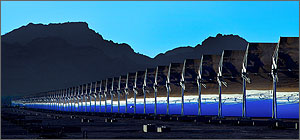
Abengoa is erecting more than 3,200 mirrored parabolic troughs at its Solana plant near Gila Bend, Ariz. When at full operation, the CSP plant will serve more than 70,000 homes. Credit: Dennis Schroeder

It's 4:45 on a sweltering August afternoon, and the rooftop solar panels are starting to lose juice. The sun's lower angles and that huge cottonwood tree are interfering with the efficient photon-to-electricity transfer.

What is an environmentally conscious — but air-conditioning-loving — homeowner to do?

Peak demand for electricity in the United States typically hits between 4 p.m. and 8 p.m., which doesn't quite line up with the sun's schedule. It's fortunate that the sun is high in the sky during many of the hours when the air conditioning is in demand. But in summer, people tend to need air conditioning during the dinner hour and beyond, when kitchen appliances are whirring, lights are on, and TVs are blaring.

To the rescue comes concentrating solar power (CSP), a technology being tested and deployed by utilities in America's deserts and southern Spain.

New analysis at the U.S. Department of Energy's (DOE) National Renewable Energy Laboratory (NREL) has found that CSP, with its greater grid flexibility and ability to store energy for as long as 15 hours, can enhance total solar power generation and actually give photovoltaic (PV) systems a greater presence on the grid.

PV panels convert photons from the sun directly into electrons for electricity — and are grabbing real estate on rooftops across the Americas, Europe, and Asia.

CSP technologies use mirrors to reflect and concentrate sunlight onto receivers that collect the sun's heat. This thermal energy can then be used to drive a steam turbine that produces electricity for utilities.

Thermal Storage Can Even Out the Bumps

Like Edison and Tesla or Dempsey and Tunney, the two major solar energy technologies never meant to play nice. Each had its niche — and its dreams of market share.

But that's changing, said NREL analyst Paul Denholm, co-author with Mark Mehos of the study "Enabling Greater Penetration of Solar Power via Use of CSP with Thermal Energy Storage."

Think of power from PV as a roller coaster of highs and lows, and power from CSP, via thermal energy storage, as a gently rolling train.

PV panels and wind turbines contribute electricity to the grid, but without the ability to store that power, they cannot supply the grid after the sun sets, or after the wind dies. Even passing clouds can cause drops in the amount of solar energy that gets on the grid.

Large fossil-fueled and nuclear power plants can't be quickly stopped or started to accommodate variable energy sources such as solar and wind energy.

CSP can even out these ebbs and flows because it can store power and ramp up output when the amount of direct wind or solar power drops.

Crews work around the clock installing mirrored parabolic trough collectors — built on site — that will cover 3 square miles at Abengoa's Solana Plant. When finished, the plant will generate 280 megawatts of clean, sustainable power.
Credit: Dennis Schroeder

Grid Flexibility is the Key

"It all gets down to grid flexibility," Denholm said. "What sets of grid technologies do you deploy to make the grid respond faster and over a greater range to the input of variable energy such as solar and wind?

"If you can't respond quickly, you end up potentially throwing away wind and solar energy.

"We know that the more wind and solar you add to the grid, the harder it is to balance the grid and maintain reliability."

A CSP plant works by heating a heat transfer fluid that is used to boil water to make steam. But because of thermal inertia, by the time that fluid gets through the system's pipes to the power plant, perhaps 10 or 15 minutes have passed.

When a cloud passes over a PV panel, the drop in energy production is immediate. But because of the 10 or 15 minutes of thermal inertia, a cloud passing over a CSP tower doesn't cause this immediate drop. Nor is there the immediate surge when sunlight returns.

"The change is more gradual," Denholm said. "That's one reason CSP can bring a greater quality to the grid."

Still, the greater potential for CSP — and for CSP helping PV to expand its role on the grid — is its capacity to store the energy it captures from the sun for several hours, making it a source of reliable energy after the sun sets.

"CSP can fill in that gap in the evening when there's peak demand for electricity," Denholm said. "Together, the solar resource can provide all that peak demand. And together they can reduce or eliminate the need to build new power plants for those peak periods."

Molten Salts a Low-Cost Solution

Thermal energy storage at CSP plants "is low-cost because it's not exotic," Denholm said. "It's some large tanks with some media to store energy before you use it to boil the water." The best medium for storage available today is molten salt, NREL's Greg Glatzmaier said.

Molten salts are abundant and not very costly. They behave themselves, neither decomposing nor volatizing at the high temperature needed in a CSP plant — about 565 degrees Celsius (°C).

At a typical molten-salt CSP plant, the salts are stored in two tanks, one much hotter than the other.

In the case of a power tower CSP plant, in which the mirrors focus the sun's rays on one receiver atop a tower, the lower-temperature tank is at about 293°C, while the higher-temperature tank is at 565°C, Glatzmaier said.

The salt is pumped from the "cold" tank to the power tower, where it collects the solar energy that's focused on the receiver, raising its average temperature. The salts then descend into the "hot" tank, where they can maintain this very hot temperature for several days, though typically they are used within hours.

The salt in the hot tank is then sent to a heat exchanger that generates the steam needed to turn the turbines at a power plant. The turbines generate electricity that goes to homes and businesses.

As they exit the steam generator, the salts cool, and by the time they return to the cold tank, they measure at about 293°C.

When the sun is shining, the CSP plant can take the salts out of the cold tank, heat them up at the tower's receiver, and then dump them into the hot tank for storage, Glatzmaier said. "If you come to the end of the day and the hot tank is pretty full, you can keep generating electricity by withdrawing the salts from the hot tank to generate steam."

It's a continual balancing act. If all the salt is in the cold tank, no stored energy is available. If it's all in the hot tank, there's plenty of energy stored for later use, but nothing to replenish the system.

Molten salts tend to freeze at about 200°C, so as long as the two tanks range between 293°C and 565°C, the salts are in no danger of reverting to a solid state. At room temperature, the salts look like powdery white table salt. At the higher temperatures in a CSP plant, the salts look like water.

The molten salts used for storage are a mix of sodium nitrate and potassium nitrate. Sodium nitrate is mined from dry lake beds in Chile, in surroundings similar to the Utah salt flats. Potassium nitrate also occurs in nature and is mined in Chile, Ethiopia, and elsewhere.

The tanks that hold the molten salts at Abengoa's Solana Plant are enormous. The salts can keep the solar-heated fluids very hot for several hours, so they can be transferred to turbines to produce electricity even when the sun isn't shining. Credit: Dennis Schroeder

Plants with Storage in Spain, Nevada, Arizona, California

Abengoa Solar is building a 250-megawatt CSP plant near Gila Bend, Ariz., that will cover 1,900 acres and use 900,000 mirrors to direct sunlight to heat a working fluid inside its tubes. The plant's six hours of thermal storage mean it can deliver electricity after the sun sets to approximately 70,000 homes.

The 19.9-megawatt power tower run by Gemasolar near Granada in southern Spain is configured to store enough energy during the summer to provide solar-generated electricity 24 hours a day, Glatzmaier said. In the winter, when there's less sunshine, electricity comes from more conventional sources a few hours each day. The system aims to power 25,000 homes and reduce carbon dioxide emissions by more than 30,000 tons a year.

SolarReserve is building the 110-megawatt Crescent Dunes Solar Energy Project near Tonopah, Nev., which will use molten salt to store the sun's energy as heat for several hours. It will include more than 17,000 mirrors to focus the sun's light on a tower 640 feet high.

BrightSource is building an even larger CSP project in the Mojave Desert near Needles, Calif., that will have storage for just a couple of hours a day — but this will be enough to serve more than 140,000 homes during peak hours. Company executives say the plant will reduce carbon dioxide emissions by more than 400,000 tons per year.

PV/CSP Symbiosis Makes Economic Sense

The cost of PV has been plummeting, and it has a cost advantage over CSP. But CSP has the advantage of storage, and so teamed with PV can improve the benefits and bottom lines of both technologies. Storage does raise the price of a CSP plant, but "if you're running your turbine more hours in a day, you're amortizing your turbine cost over more generation time, and there's a real cost benefit there," Glatzmaier said. The bottom line: when storage is added to a CSP plant, it increases the value of its electricity — both its energy value and its capacity value.

Solar plants also can store energy in batteries, but at least for now, that approach is quite expensive. Other thermal storage technologies being investigated by researchers include phase-change or thermal-chemical storage.

Denholm and Mehos caution that the preliminary analysis in their study will require more advanced grid simulations to verify the actual ability of CSP to help wind and PV gain a larger presence on the grid. An important next step, they say, would be more complete simulations using utility-grade software. That will answer questions on the realistic performance of the generation fleet, transmission constraints, and actual CSP operations.

Source: National Renewable Energy Laboratory (NREL)


Related Information:
 

Thursday, February 9, 2012

New solar cells could increase the maximum efficiency of solar panels by over 25%

Engineerblogger
Feb 9, 2012


Solar Cell: Cambridge University


Scientists from the Cavendish Laboratory, the University’s Department of Physics, have developed a novel type of solar cell which could harvest energy from the sun much more efficiently than traditional designs. The research, published today in the journal NanoLetters, could dramatically improve the amount of useful energy created by solar panels.

Solar panels work by absorbing energy from particles of light, called photons, which then generate electrons to create electricity. Traditional solar cells are only capable of capturing part of the light from the sun and much of the energy of the absorbed light, particularly of the blue photons, is lost as heat. This inability to extract the full energy of all of the different colours of light at once means that traditional solar cells are incapable of converting more than 34% of the available sunlight into electrical power.

The Cambridge team, led by Professor Neil Greenham and Professor Sir Richard Friend, has developed a hybrid cell which absorbs red light and harnesses the extra energy of blue light to boost the electrical current. Typically, a solar cell generates a single electron for each photon captured. However, by adding pentacene, an organic semiconductor, the solar cells can generate two electrons for every photon from the blue light spectrum. This could enable the cells to capture 44% of the incoming solar energy.

Bruno Ehrler, the lead author on the paper, said: “Organic and hybrid solar cells have an advantage over current silicon-based technology because they can be produced in large quantities at low cost by roll-to-roll printing. However, much of the cost of a solar power plant is in the land, labour, and installation hardware. As a result, even if organic solar panels are less expensive, we need to improve their efficiency to make them competitive. Otherwise, it’d be like buying a cheap painting, only to find out you need an expensive frame.”

Mark Wilson, another author on the paper, said: “I think it’s very important that we move towards sustainable sources of energy, and it’s exciting to help explore possible solutions.”

Dr. Akshay Rao, co-author on the paper noted: “This is just the first step towards a new generation of solar cells and we are very excited to be a part of this effort.”

The research was funded by the Engineering and Physical Sciences Research Council (EPSRC).

Source: Cambridge University

Monday, February 6, 2012

Harnessing nature’s solar cells: Photovoltaic panels made from plant material could become a cheap, easy alternative to traditional solar cells

Engineerblogger
Feb 5, 2012


Within a few years, people in remote villages in the developing world may be able to make their own solar panels, at low cost, using otherwise worthless agricultural waste as their raw material.

That’s the vision of MIT researcher Andreas Mershin, whose work appears this week in the open-access journal Scientific Reports. The work is an extension of a project begun eight years ago by Shuguang Zhang, a principal research scientist and associate director at MIT’s Center for Biomedical Engineering. Zhang was senior author of the new paper along with Michael Graetzel of Switzerland’s École Polytechnique Fédérale de Lausanne.

In his original work, Zhang was able to enlist a complex of molecules known as photosystem-I (PS-I), the tiny structures within plant cells that carry out photosynthesis. Zhang and colleagues derived the PS-I from plants, stabilized it chemically and formed a layer on a glass substrate that could — like a conventional photovoltaic cell — produce an electric current when exposed to light.

But that early system had some drawbacks. Assembling and stabilizing it required expensive chemicals and sophisticated lab equipment. What’s more, the resulting solar cell was weak: Its efficiency was several orders of magnitude too low to be of any use, meaning it had to be blasted with a high-power laser to produce any current at all.

Now Mershin says the process has been simplified to the point that virtually any lab could replicate it — including college or even high school science labs — allowing researchers around the world to start exploring the process and making further improvements. The new system’s efficiency is 10,000 times greater than in the previous version — although in converting just 0.1 percent of sunlight’s energy to electricity, it still needs to improve another tenfold or so to become useful, he says.

The key to achieving this huge improvement in efficiency, Mershin explains, was finding a way to expose much more of the PS-I complex per surface area of the device to the sun. Zhang’s earlier work simply produced a thin flat layer of the material; Mershin’s inspiration for the new advance was pine trees in a forest.

Mershin, a research scientist in the MIT Center for Bits and Atoms, noticed that while most of the pines had bare trunks and a canopy of branches only at the very top, a few had small branches all the way down the length of the trunk, capturing any sunlight that trickled down from above. He decided to create a microscopic forest on a chip, with PS-I coating his “trees” from top to bottom.

Turning that insight into a practical device took years of work, but in the end Mershin was able to create a tiny forest of zinc oxide (ZnO) nanowires as well as a sponge-like titanium dioxide (TiO2) nanostructure coated with the light-collecting material derived from bacteria. The nanowires not only served as a supporting structure for the material, but also as wires to carry the flow of electrons generated by the molecules down to the supporting layer of material, from which it could be connected to a circuit. “It’s like an electric nanoforest,” he says.

As an bonus, both zinc oxide and titanium dioxide — the main ingredient in many sunscreens — are very good at absorbing ultraviolet light. That’s helpful in this case because ultraviolet tends to damage PS-I, but in these structures that damaging light gets absorbed by the support structure.

Mershin thinks that because he and his colleagues have now lowered the barrier to entry for further work on these materials, progress toward improving their efficiency should be rapid. Ultimately, once the efficiency reaches 1 or 2 percent, he says, that will be good enough to be useful, because the ingredients are so cheap and the processing so simple.

“You can use anything green, even grass clippings” as the raw material, he says — in some cases, waste that people would otherwise pay to have hauled away. While centrifuges were used to concentrate the PS-I molecules, the team has proposed a way to achieve this concentration by using inexpensive membranes for filtration. No special laboratory conditions are needed, Mershin says: “It can be very dirty and it still works, because of the way nature has designed it. Nature works in dirty environments — it’s the result of billions of experiments over billions of years.”

Because the system is so cheap and simple, he hopes this will become a “way of getting low-tech electricity to people who have never been thought of as consumers or producers of solar-power technology.” He hopes the instructions for making a solar cell will be simple enough to be reduced to “one sheet of cartoon instructions, with no words.” The only ingredient to be purchased would be chemicals to stabilize the PS-I molecules, which could be packaged inexpensively in a plastic bag.

Essentially, Mershin says, within a few years a villager in a remote, off-grid location could “take that bag, mix it with anything green and paint it on the roof” to start producing power, which could then charge cellphones or lanterns. Today, the most widely used source of lighting in such locations is kerosene lanterns — “the most expensive, most unhealthy” form of lighting there is, he says. “Nighttime illumination is the number one way to get out of poverty,” he adds, because it enables people who work in the fields all day to read at night and get an education.

Babak Parviz, an associate professor of electrical engineering at the University of Washington who specializes in bionanotechnology, says this is “a very exciting paper and a very nice step toward integrating biomolecules for building solar cells. This shows a very promising and creative first step toward building organic photovoltaic cells that can use biologically (naturally) produced cores.” He adds that while the present system still needs further development, “further work in the field can perhaps improve the stability and performance of these devices.”

The research was funded in part by an unrestricted grant from Intel Corp., and also included researchers at the University of Tennessee.

Source: MIT News

Human Waste-Powered Robots May Be Future of Machines

Scientific American
Feb 5, 2012
 
EcoBot-III was able to both eat and crap inside its lab environment. Image: Bristol Robotics Laboratory, UK

Today's robots that fly, jump or roll around must refuel or recharge as does any gadget that runs out of energy. Tomorrow's new generation of self-sustaining robots might keep going nearly forever by grazing on dead insects, rotting plant matter or even human waste.

The vision of robots capable of plugging themselves into the natural world of living organisms has begun taking shape in several labs around the world, and even NASA has shown renewed interest in powering space robots with microbes. But one British lab has already been building on the work of robotics pioneers to create small "EcoBots" that extract energy from microbial fuel cells since 2002.

"Robots that eat biological fuels could find enough fuel almost anywhere," said John Greenman, a microbiologist at the Bristol Robotics Laboratory, a joint venture between the University of the West of England and the University of Bristol. "There is organic matter anywhere on Earth — leaves and soil in the forest, or even human waste such as urine and feces."

The first EcoBot (created in 2003) was powered by E. coli bacteria feeding on refined sugar. Then "EcoBot-II" (2005) harnessed sludge microbes to break down dead flies, prawn shells and rotten apples. Finally, "EcoBot-III" (2010) showed how a "digesting" robot could also dump its leftover waste, so that its microbes wouldn't be poisoned by their own filth and could keep powering the robot.

"EcoBot-III is a robot that collects its own food and water from the environment," said Ioannis Ieropoulos, a roboticist at the Bristol Robotics Laboratory (BRL). "It performs the task we design it to do, and at the end of the day, it gets rid of its own waste. It literally craps into its own 'litter' tray."

Ieropoulos, Greenman and BRL Director Chris Melhuish, give credit to other researchers for first showing how robots could use bacteria, and for pioneering the development of microbial fuel cells powered by sludge. But they have pushed the field forward by making robots capable of performing tasks — such as maintaining a circulatory system and wirelessly reporting on their environment while moving toward food, water or light — when solely powered by microbial fuel cells (MFCs) to digest organic matter and dump any waste.

"We know MFCs will last as long as they're fed; there's nothing mechanical to go wrong with them," Greenman told InnovationNewsDaily. "They could go 20 or 30 years. As long as the microbes grow, they can keep going."

The EcoBot team's work with such technology has not gone unnoticed. They received funding from the Bill & Melinda Gates Foundation in late 2011 so that they could push the limits of stacking microbial fuel cells that help tackle sanitation and energy needs by turning human urine or waste into useful electricity for radios or other gadgets.

Human waste might also someday help power space robots that accompany astronauts on long-distance space missions or to planetary colonies, Ieropoulos said. On Earth, the robots might crawl through the debris of growing cities, or survive on their own for years in the great outdoors.
To read more click here...

Related Information:

Saudi Aramco develops fuel formula to cut gas engines’ CO2 emissions

Engineerblogger
Feb 5, 2012


Credit: Saudi Aramco

A team from Saudi Aramco’s Research & Development Center (R&DC) and FEV, an engine design company in Germany, recently participated in a technology demonstration event in Aachen, Germany. The event marked the culmination of a project that was developed as a means of showcasing the potential of specific fuel formulas in lowering the carbon dioxide (CO2) emissions in modern gasoline engines.


The scientists of R&DC’s Fuel Team chose an innovative approach in fuel development by not working on future fuels in isolation, but rather looking at the fuel and the engine as a single system to be optimized synergistically. For the purpose of this research, R&DC has partnered with FEV, which brought the engine testing expertise to the table.

“The joint research has resulted in experimental fuels that enable future engines to be even smaller and capable of running on higher boosting pressures, without compromising performance,” said Faisal M. Al-Faqeer, manager of R&DC. “The greatest achievement though is that this fuel/engine combination consumes significantly less fuel per kilometer travelled and consequently will emit less CO2, while it is expected that it will not increase the cost of motoring.”

During the event, the first prototype car using this fuel/engine concept was presented by the project scientists. Members of the management of R&DC and FEV were able to get firsthand experience by driving a car fueled by Saudi Aramco’s new experimental fuel. “FEV’s own test track provided the ideal environment for such a test, where driving patterns from city cruising to high speed motorway travel could be realized in a safe and controlled way,” said Amer A. Amer, Fuel Technology R&D Team leader.

The experience showed that this future fuel concept could be achieved without compromising car performance. The car was driven with the experimental fuel, showing that this new crude oil-based product developed by Saudi Aramco is compatible with existing engine technology. For R&DC, this marks the first step toward becoming a leading force in research and development of future fuels for transportation.

“As a next step, the Saudi Aramco team has started to assess implications from producing such fuels, looking at energy needs and consequently the CO2 footprint of manufacturing and associated cost,” said Amer.

Al-Faqeer commented on the unique approach adopted by R&DC in taking research on future fuels as “a system approach in cooperation with a competent partner from the field of engine research and development.” He continued “this has proven to be very successful, demonstrating the potential benefit, both in terms of CO2 reduction and potential cost.”

The skills of Saudi Aramco’s scientists complement perfectly those of their FEV counterparts. The teams have now set their sights on another challenge for the coming year: focusing on demonstration of economic and ecological benefits in a diesel type fuel/engine system.

Source: Saudi Aramco

Friday, February 3, 2012

Biosolar Breakthrough Promises Cheap, Easy Green Electricity

Engineerblogger
Feb 3, 2012


Barry D. Bruce

Barry D. Bruce, professor of biochemistry, cellular and molecular biology, at the University of Tennessee, Knoxville, is turning the term “power plant” on its head. The biochemist and a team of researchers have developed a system that taps into photosynthetic processes to produce efficient and inexpensive energy.

Bruce collaborated with researchers from the Massachusetts Institute of Technology and Ecole Polytechnique Federale in Switzerland to develop a process that improves the efficiency of generating electric power using molecular structures extracted from plants. The biosolar breakthrough has the potential to make “green” electricity dramatically cheaper and easier.

“This system is a preferred method of sustainable energy because it is clean and it is potentially very efficient,” said Bruce, who was named one of “Ten Revolutionaries that May Change the World” by Forbes magazine in 2007 for his early work, which first demonstated biosolar electricity generation. “As opposed to conventional photovoltaic solar power systems, we are using renewable biological materials rather than toxic chemicals to generate energy. Likewise, our system will require less time, land, water and input of fossil fuels to produce energy than most biofuels.”

Their findings are in the current issue of Nature: Scientific Reports.

To produce the energy, the scientists harnessed the power of a key component of photosynthesis known as photosystem-I (PSI) from blue-green algae. This complex was then bioengineered to specifically interact with a semi-conductor so that, when illuminated, the process of photosynthesis produced electricity. Because of the engineered properties, the system self-assembles and is much easier to re-create than his earlier work. In fact, the approach is simple enough that it can be replicated in most labs—allowing others around the world to work toward further optimization.

“Because the system is so cheap and simple, my hope is that this system will develop with additional improvements to lead to a green, sustainable energy source,” said Bruce, noting that today’s fossil fuels were once, millions of years ago, energy-rich plant matter whose growth also was supported by the sun via the process of photosynthesis.

This green solar cell is a marriage of non-biological and biological materials. It consists of small tubes made of zinc oxide—this is the non-biological material. These tiny tubes are bioengineered to attract PSI particles and quickly become coated with them—that’s the biological part. Done correctly, the two materials intimately intermingle on the metal oxide interface, which when illuminated by sunlight, excites PSI to produce an electron which “jumps” into the zinc oxide semiconductor, producing an electric current.

The mechanism is orders of magnitude more efficient than Bruce’s earlier work for producing bio-electricity thanks to the interfacing of PSI with the large surface provided by the nanostructured conductive zinc oxide; however it still needs to improve manifold to become useful. Still, the researchers are optimistic and expect rapid progress.

Bruce’s ability to extract the photosynthetic complexes from algae was key to the new biosolar process. His lab at UT isolated and bioengineered usable quantities of the PSI for the research.


Algae could be the next power source. Credit: University of Tennessee, Knoxville

Andreas Mershin, the lead author of the paper and a research scientist at MIT, conceptualized and created the nanoscale wires and platform. He credits his design to observing the way needles on pine trees are placed to maximize exposure to sunlight.

Mohammad Khaja Nazeeruddin in the lab of Michael Graetzel, a professor at the Ecole Polytechnique Federale in Lausanne, Switzerland, did the complex testing needed to determine that the new mechanism actually performed as expected. Graetzel is a pioneer in energy and electron transfer reactions and their application in solar energy conversion.

Michael Vaughn, once an undergraduate in Bruce’s lab and now a National Science Foundation (NSF) predoctoral fellow at Arizona State University, also collaborated on the paper.

“This is a real scientific breakthrough that could become a significant part of our renewable energy strategy in the future,” said Lee Riedinger, interim vice chancellor for research. “This success shows that the major energy challenges facing us require clever interdisciplinary solutions, which is what we are trying to achieve in our energy science and engineering PhD program at the Bredesen Center for Interdisciplinary Research and Graduate Education of which Dr. Bruce is one of the leading faculty.”

The Bredesen Center is a joint UT/Oak Ridge National Laboratory academic unit. Bruce is also a co-principal investigator and scientific thrust leader in TN: SCORE, the Tennessee Solar Conversion and Storage Using Outreach, Research and Education. The $20 million project is funded by the NSF and focuses on promoting research and education on solar energy problems across Tennessee. Additionally, he co-founded and is associate director of UT’s Sustainable Energy Education.

Bruce’s work is funded by the Emerging Frontiers Program at the National Science Foundation.


Source: University of Tennessee, Knoxville

Related Information:

Thursday, January 26, 2012

Health and Environmental Effects of Nanomaterials Remain Uncertain; Cohesive Research Plan Needed to Help Avoid Potential Risks From Rapidly Evolving Technology

Engineerblogger
Jan 26, 2012


Despite extensive investment in nanotechnology and increasing commercialization over the last decade, insufficient understanding remains about the environmental, health, and safety aspects of nanomaterials. Without a coordinated research plan to help guide efforts to manage and avoid potential risks, the future of safe and sustainable nanotechnology is uncertain, says a new report from the National Research Council. The report presents a strategic approach for developing research and a scientific infrastructure needed to address potential health and environmental risks of nanomaterials. Its effective implementation would require sufficient management and budgetary authority to direct research across federal agencies.

Nanoscale engineering manipulates materials at the molecular level to create structures with unique and useful properties -- materials that are both very strong and very light, for example. Many of the products containing nanomaterials on the market now are for skin care and cosmetics, but nanomaterials are also increasingly being used in products ranging from medical therapies to food additives to electronics. In 2009, developers generated $1 billion from the sale of nanomaterials, and the market for products that rely on these materials is expected to grow to $3 trillion by 2015.

The committee that wrote the report found that over the last seven years there has been considerable effort internationally to identify research needs for the development and safe use of nanotechnology, including those of the National Nanotechnology Initiative (NNI), which coordinates U.S. federal investments in nanoscale research and development. However, there has not been sufficient linkage between research and research findings and the creation of strategies to prevent and manage any risks. For instance, little progress has been made on the effects of ingested nanomaterials on human health and other potential health and environmental effects of complex nanomaterials that are expected to enter the market over the next decade. Therefore, there is the need for a research strategy that is independent of any one stakeholder group, has human and environmental health as its primary focus, builds on past efforts, and is flexible in anticipating and adjusting to emerging challenges, the committee said.

Because the number of products containing nanoscale materials is expected to explode, and future exposure scenarios may not resemble those of today, selecting target materials to study on the basis of existing market size -- as is the practice now -- is problematic. To help guide research, the committee noted the following four research categories, which should be addressed within five years:
  •  identify and quantify the nanomaterials being released and the populations and environments being exposed;
  • understand processes that affect both potential hazards and exposure; 
  • examine nanomaterial interactions in complex systems ranging from subcellular to ecosystems; and 
  • support an adaptive research and knowledge infrastructure for accelerating progress and providing rapid feedback to advance research.
While surveying the existing resources for research, the committee acknowledged a gap between funding and the level of activity required to support the committee's strategy. The committee concluded that any reduction in the current funding level of approximately $120 million per year over the next five years for health and environmental risk research by federal agencies would be a setback to nanomaterials risk research. Moreover, additional modest resources from public, private, and international initiatives are needed in critical areas -- informatics, nanomaterial characterization, benchmarking nanomaterials, characterization of sources, and development of networks for supporting collaborative research -- to derive maximum strategic value from the research investments.

Implementation of the strategy should also include the integration of domestic and international participants involved in nanotechnology-related research, including the NNI, federal agencies, the private sector, non-governmental organizations, and the academic community. The committee said that the current structure of the NNI -- which has only coordinating functions across federal agencies and no top-down budgetary or management authority to direct nanotechnology-related environmental, health, and safety research -- hinders its accountability for effective implementation. In addition, there is concern that dual and potentially conflicting roles of the NNI, such as developing and promoting nanotechnology while identifying and mitigating risks that arise from its use, impede application and evaluation of health and environmental risk research. To carry out the research strategy effectively, a clear separation of management and budgetary authority and accountability between promoting nanotechnology and assessing potential environmental and safety risks is essential.

The study was sponsored by the U.S. Environmental Protection Agency. The National Academy of Sciences, National Academy of Engineering, Institute of Medicine, and National Research Council make up the National Academies. They are independent, nonprofit institutions that provide science, technology, and health policy advice under an 1863 congressional charter. Panel members, who serve pro bono as volunteers, are chosen by the Academies for each study based on their expertise and experience and must satisfy the Academies' conflict-of-interest standards. The resulting consensus reports undergo external peer review before completion.

Source: National Academy of Sciences

Additional Information:

Wednesday, January 25, 2012

Fold-up car of the future unveiled at EU

Engineerblogger
Jan 25, 2012


European Commission Chairman Jose Manuel Barroso unveils at EU headquarters in Brussels the first prototype of a revolutionary electric fold-up car designed in Spain's Basque country, the "Hiriko", the Basque word for "urban"

A tiny revolutionary fold-up car designed in Spain's Basque country as the answer to urban stress and pollution was unveiled Tuesday before hitting European cities in 2013.

The "Hiriko", the Basque word for "urban", is an electric two-seater with no doors whose motor is located in the wheels and which folds up like a child's collapsible buggy, or stroller, for easy parking.

Dreamt up by Boston's MIT-Media lab, the concept was developed by a consortium of seven small Basque firms under the name Hiriko Driving Mobility, with a prototype unveiled by European Commission president Jose Manuel Barroso.

Demonstrating for journalists, Barroso clambered in through the fold-up front windscreen of the 1.5-metre-long car.

"European ideas usually are developed in the United States. This time an American idea is being made in Europe," consortium spokesman Gorka Espiau told AFP.

Its makers are in talks with a number of European cities to assemble the tiny cars that can run 120 kilometres (75 miles) without a recharge and whose speed is electronically set to respect city limits.

They envisage it as a city-owned vehicle, up for hire like the fleets of bicycles available in many European cities, or put up for sale privately at around 12,500 euros.

Several cities have shows interest, including Berlin, Barcelona, San Francisco and Hong Kong. Talks are underway with Paris, London, Boston, Dubai and Brussels.

The vehicle's four wheels turn at right angles to facilitate sideways parking in tight spaces.

The backers describe the "Hiriko" project as a "European social innovation initiative offering a systematic solution to major societal challenges: urban transportation, pollution and job creation."

Source: AFP

Thursday, January 19, 2012

Alstom and SSE Renewables create joint venture to co-develop wave energy project in Scotland

Engineerblogger
Jan 19, 2012


Alstom and the leading Scottish marine developer SSE Renewables have signed a new joint venture agreement to develop the Costa Head Wave Project, an up to 200 Megawatts (MW) wave energy site located north of mainland Orkney, in The Crown Estate’s Pentland Firth and Orkney Waters Strategic Area.

Alstom and SSE Renewables will work together to obtain the necessary permits and intend to populate the site with AWS-III wave energy converters, a technology currently under development by AWS Ocean Energy Ltd, in which Alstom acquired a 40% equity share in June 2011.

The Costa Head site is located in water depths of 60 – 75m approximately 5km to the north of Orkney Mainland. SSE Renewables and Alstom propose to carry out detailed site surveys and an environmental impact assessment (EIA),to develop the site with an initial phase of around 10MW, before moving on to install the full site capacity.

Established in 2004, AWS Ocean Energy is focused on the development and delivery of its AWS-III wave energy converter, a floating device with a rated power output of 2.5 MW. A 1:9 scale model of the AWS-III was tested in Loch Ness in 2010. Full scale component testing will commence in 2012 with the support of the Scottish Enterprise-administered WATERS fund (Wave and Tidal Energy: Research, Development and Demonstration Support), with a full-scale prototype planned for deployment at the European Marine Energy Centre in 2014.

Wave energy is a widely distributed renewable resource worldwide, with an estimated potential market of 200 to 300 Gigawatts(GW). Its proximity to densely populated regions of Europe and North America makes it an attractive new source of renewable energy. The AWS-III technology consists of a multi-cell array of flexible membrane absorbers which convert wave power to pneumatic power through compression of air within cells that are inter-connected. Turbine-generator sets are provided to convert the pneumatic power to electricity.

A typical AWS-III device will comprise an array of 12 cells, each measuring around 16m wide by 8m deep, arranged around a structure with overall beam of up to 60m. Such a device has a capacity of 2.5 MW whilst having a structural steel weight of less than 1300 tonne. The AWS-III will be slack moored in water depths of 65 to 150m using standard mooring spreads. Devices will be arranged in arrays or ‘farms’ of up to several hundred MW total rating. Each AWS-III will be connected to a central offshore substation via a high-voltage umbilical link. “The selection of the AWS-III system for this exciting and ground-breaking project is a significant endorsement of our technology and team. We firmly believe that the AWS-III will become the established choice for utility scale offshore wave power generation. We look forward to working with Alstom and SSE to deliver Costa Head “ said Simon Grey, Chief Executive of AWS Ocean Energy Ltd.

"We are delighted to announce our agreement with SSE Renewables, one of the leading developer of marine energy in the world, to develop Costa Head, which is the largest wave energy site being developed today in the world. When completed, it will make a valuable contribution to the UK's renewable energy targets," said Jérôme Pécresse, President, Alstom Renewable Power and Senior Vice President, Alstom Hydro. "This project places Alstom at the forefront of the fast-developing ocean energy sector along with our offshore wind and tidal energy businesses. It demonstrates the strength of our offer as a leading supplier of clean energy solutions and of our involvement in all renewable energy sources in Scotland, the potential of which is considerable."
SSE Renewables, the leading wave and tidal utility in Scotland, received exclusive development rights to the Costa Head site from the Crown Estate in 2010, and with partners is currently developing half of the 1.6 GW of wave and tidal sites leased by the Crown Estate as part of a commercial leasing programme for marine energy projects. “We are delighted to enter into this partnership with Alstom on the Costa Head Project. As a leading global provider of energy solutions and developer of marine technologies and with their interest in AWS Ocean Energy they are a very strong partner to bring on board. This partnership represents a significant milestone for the Costa Head Project and we look forward to working together with Alstom on the successful development of this important wave site”, said John Thouless, Head of Marine Development at SSE Renewables.

Source: Alstom