Pages

Subscribe:

Labels

038628037504 (1) 10150 (1) 10BURIED (1) 10Count (1) 110011040 (1) 115Ounce (1) 1200mg (1) 12BSN (1) 12Count (2) 12CountNutricor (1) 12CountWWSN (1) 12Fresh (1) 12Stacker (3) 12VPX (1) 140243 (1) 14Servings (1) 158Ounce (1) 15Ounce (1) 16Ounce (2) 1716 (1) 17Skque (1) 1lbinLife (1) 2000Hrs (1) 2000mg (1) 200Watt (1) 2021A (1) 20OunceNatures (1) 2412Ounce (1) 24Count (1) 24EAS59134 (1) 24FRS (1) 24Guru (1) 24Guru01GR124 (2) 24Nestle (2) 24Pediasure (2) 24Peptamen (1) 24PieceDisplay (1) 24Solis (2) 27ReSource (2) 2Biochem (1) 2Dynamic (1) 2Jarrow (1) 2Muscle (1) 2Natures (1) 2Ounce (3) 2Pound (1) 30Day (1) 328601 (1) 334928 (1) 336gOptimum (1) 37Ounce (1) 3Ensure (1) 3M (1) 414 (1) 432500 (1) 48Boost (1) 48Fluid (1) 48ml (1) 4Ensure (1) 4Isopure (1) 5000mg (1) 527408 (1) 5511786 (1) 574400 (1) 5Hour (2) 5Ounces (1) 600Kendall (1) 662380 (1) 6Beneprotein (1) 6Proteinex (1) 70951 (1) 750mlNutriPrima (1) 845Ounce (1) 84Fluid (2) 84OuncesLiquid (1) 89Inch (1) 8nuun (2) 8Ounce (7) 99369FR (1) ABB (3) Academy (1) ACCENTS (1) Acia162Ounces (1) Acsry (1) Active (2) Adapter (1) AdapterBattery (1) Advance (1) Advanced (1) Advantage (1) AdvantEdge (1) Africa (29) African (1) Agaricus (1) AiCoco (1) AIDSTrustex (1) Airbrush (1) Airbus (6) Aircraft (94) AISI (1) Ajmeras (1) Alchohol (1) Alertness (1) Alfalfa (2) Alive (1) Allergy (1) Allspice (8) Alpine (1) Alstom (2) Alternative (1) Amarillo (1) Amazing (3) Amazon (2) American (1) animal (11) Annual Reports (155) Antioxidant (1) Anwar Ibrahim (1) Apple (1) Applied Materials (1) Arrowroot (1) AshtonDrake (1) Asia (72) Assorted (1) Atkins (1) Audi (1) Australia (21) Automotive (250) Automotive Technology (183) Ayurvedic (1) BABIES (1) Babys (1) Bacopa (1) BagAtkins2627 (1) BagsTraditional (1) BagSun (1) Balanced (1) Ballard Power System (1) Banaba (2) Baram Dam (1) Baram Regatta (1) Bariatric (1) Barisan Nasional (2) Barisan Nasional Helps Penan (1) Barista (2) Barley (2) barsBiochem (1) Basement (1) BASF (2) Basics (1) Batu Lawi (1) Bayer (1) BEA1017OZ (1) Beachbody (1) Beaded (1) Beaumont (1) beautiful girl image (19) Beauty (2) Beneprotein (2) Berries (3) Berry (4) BerryLiving (1) Beverage (1) Bicycle (1) BioAstin (1) Biochem (4) Biofuel (12) Biogenesis (2) BlackBlender (1) Blend (1) Blender (4) Blueberry (1) BlueStereo (1) BMF (1) BMW (7) BMX (1) BN (1) Boeing (4) Bombardier (4) Book (1) Borneo (6) Bottle (8) BottleProStat (1) Bottles (15) BottleScivation (1) bottlesEnsure (2) BottlesMio (1) BoxChenille (1) BoxDarice140243 (1) BOXESAmerican (1) BoxesFRSPowder (1) BoxPremier (1) BP (2) Brands (1) Brands833667000102 (1) Brazil (10) Brazilian (1) Breeze (3) BrewersBarista (1) BRIC (118) Brikpaks (3) Brownie (1) Bruno Manser (1) Bruno Manser Fund (3) Bruno Manser Fund Fraud (1) Bruno Manser Fund Frauds (1) Bruno Manser Lies (2) BTL410400 (1) Bubbles (1) Burner (1) business (72) Butchers (1) Butter (1) Butterscotch (1) Cable (1) Cables (1) Calcium (2) California (1) Calorie (3) Camera (1) Canada (11) Candela (1) Canister (2) CanisterCLICK (1) Canisters (1) Canning (1) Capramilk (1) CapsSwanson (1) Capsule (5) Capsules (6) CapsulesEAS (1) Caraway (1) Cardio (1) Carnation (1) CaseEnsure (2) CaseNestle (2) Celebrity (22) CellularFactory (1) Celsius (1) Certification (28) Certified (2) Chameleon (1) Charger (1) Charter/Terms of Reference (27) CHEAP (135) Chenille (1) Cherry (1) CherryZydot (1) Chevron (1) Chewing (1) Chile (1) China (99) Chipotle (1) Chlorophyll (1) Chocolate (7) Chocolate8 (1) Choice (2) Cholesterol (1) Chrome (1) Chrysler (1) Chunho (1) Citrifolia (1) Citroen (1) Citroën (1) Citrus (2) Civil Service (1) CK Morris Associates (1) Clare Rewcastle Brown (2) Class (1) Classic (2) Clinical (1) CNST (1) Coenzyme (1) Coffee (4) Coffee11001105 (1) Coffee7DSC2B (1) Coffeehouse (1) Cold Fusion (1) Coldkicker (1) Collectable (1) Collection (1) Colored (1) Colors (1) Communications (14) Company (2) COMPLETE (4) Complex (1) Computer (1) Concentrate (1) Concentrated (1) Concepts645654 (1) Condoms (1) Container (7) CONTROL20BGSee (1) Corrections (3) CosMedix (1) count (1) countAmscan (1) CountMy (1) Crayola (3) Criminal (4) Cruiser (1) Crunch (1) Cytosport (2) Daimler (3) Dam (1) DAP (1) DAP Lies (1) Darice (1) DARPA (18) Dato Roland Sagah Wee Inn (1) Defence (60) Defense (61) Delight (2) description (1) Desert (7) Design (65) DESIGNER (3) Desktop (1) detail (1) Detroit (1) Development (1) Dexatrim (1) diameter (1) diameterGaming (1) Diecast (1) Dinosaur (1) DISCOUNT (4) Discover (1) Disney (1) Doctors (1) DoE (8) DolphinsSticky (1) DOMAGRON (1) Dow Corning Corp (2) DP9260 (1) DRA6329 (1) Dragon (1) Dressing (1) Drink (11) Drinkin (1) drinksNVE (1) Dupont (2) dv9657clSIBCORP (1) Dymatize (3) DYMMGV (1) DYNAMIC (5) EachHager (1) EADS (12) ecigs (1) Eco-Tourism (1) Economy (14) Education (1404) Electra (1) Electric Grid (1) Electrolyte (4) ELP3STSL (1) Endorush (1) Endurox (2) Energizing (1) Energy (540) English Article (20) Enhanced (1) Enhancer (1) Enlive (2) Ensure (12) Enterprise (1) Environment (170) Enzymatic (1) Eraser (1) ERECTION (1) Ergonomics (4) ESA (4) Espresso (1) Essence (2) Essentials (3) EssentialsHSE (1) ethnic group (1) Europe (201) Executive/External Ombuds (2) Extended (2) ExtenderBadger (1) Extension (1) Extern/Intern (20) Extract (5) Extreme (21) Factor (1) Factors (3) Fantastic (1) Fatigued (1) Faucet (1) feature (9) Featuring (1) Fellowes (1) Fillet (1) First Energy (6) Fitera (2) FlatScreen (1) Flavor (1) FlavorBeachbody (1) Focus28 (1) Ford Motors (7) Foreign NGOs (2) Forest (1) formula (5) Formulas (1) Forts (1) FORUM (1) Fragrance (1) France (12) Frappuccino (1) FreeHubner (1) French (2) Friday Poll (13) Frontier (1) Frost (1) Fruits (1) Ft1140Alessco (1) Ft132Alessco (1) FToys (1) Fudge (1) Fuel Cell (26) Fujitsu (2) funny (19) Gadget (6) Galleries (1) Gallon (1) GameJax2000 (1) Games (1) General Electric (21) General Motors (15) Genesis (1) Georges (1) Germany (28) Go02658 (1) Golden (1) Goldfinch (2) Goodyear (1) Google (6) Gordoni (1) Gourmet (1) Government (333) Grape (2) Grape5 (1) Green Energy (544) Greens (2) GripAlex (1) Ground (7) Guarana (1) Halal Hub (1) Hammer (1) Hardware (1) Hasbro (1) Hawaiian (1) health (19) Health Care (87) Healthy (4) Herbal (5) Herbals (1) Himalayan (1) Holiday (1) Honda (4) Honeywell (1) Hoodia (1) HPCompaq (1) Hubner (1) human capital development (1) Humor (18) Hydration (2) hydration8PKNUUNLL (1) Hydrive (1) Hyundai (2) IBM (2) Illegal Demonstrations (1) iMicro (1) IMMICRP (1) India (23) information (8) Infrastructure (44) inLife (1) Inside Invester Ltd (1) Instantized (1) Institute (1) International (338) Internet (7) Intestinal (2) Investment (187) IOA News (168) ISO (1) ISO100 (1) Isolate (2) Isopure (4) Isotonix (1) Italian (2) Italy (1) Jabatan Penerangan (1) Jameson Ahip Nawie (1) Japan (57) JarALTERNATIVE (1) JarDoctors (1) Jarrow (1) Job Postings (339) Johnson Controls (1) Journey (2) Juice (2) JUICECRANBERRYOG2 (1) JuiceTahitian (1) Kangmei (1) KCups (1) Kerlix (1) Kettler (1) Kettler8852600 (1) Keurig (1) Keyboard (1) Kiddio (1) KitBerg (1) KiteSpiderMan (1) KitGoldfinch (1) Kombucha (2) KombuchaKIT (1) Kraft911501 (1) Kuching (1) Laboratories (1) Langnickel (1) LaptopNotebook (1) lbBioGenesisRICE3 (1) lbsNatural (1) Leading Indicators (450) Lean (10) LeapFrog (3) Learning (1) Leaves (2) Leccino (1) Legislation (65) Lemonade (2) Lemonlime (1) Len Talif (1) License (1) Lifetime (2) Light (1) LightHog (1) LINERBLADDER (1) Liquid (20) LiquidDeSouzas (1) Litigation (45) Living (2) Lockheed Martin (6) Looking (1) Lubricants (1) Lubricated (1) Macbook (1) Malaysia (4) MaleFemale (1) Management (16) Manufacturing (394) Marine Technology (2) Materials (446) Mazda (2) Medical (84) Medicinals (1) MEGAWING (1) Mental (1) Mercedes-Benz (3) Merdeka (2) Metabolic (1) MetaboLife (1) Metallic (1) Metamucil (1) MetersCables (1) Middle East (16) Miniatures (1) MioEnergy (1) Miradent (1) Miri (1) MIRROR (1) Mitsubishi (4) Monkey (2) Monster (1) Morinda (1) Morton (1) Mosacis (1) Mosaics (1) Mothers (1) MountScotty245 (1) MultiPackCELSIUS (1) MultiPackDYNAMIC (2) MultiPackLILY (1) MultiPackLIQUID (1) MultiPackMACA (1) MultiPackONLY (1) Multiracial (1) Mulu (1) Muscle (1) Muscletech (2) Myoplex (1) Nanotechnology (279) NASA (22) National Laboratory (46) Natural (12) natural phenomena (11) Naturally (1) Naturals (3) Natures (6) Naturessunshine (4) nc8000 (1) nc8220 (1) nc8230 (1) Nesting (1) Nestle (2) Netbook (1) New Programs (133) New Zealand (2) NGO's (213) NGOs (1) Nickel Hydrogen (1) Nissan (8) NIST (5) North America (18) Northrop Grumman (1) Norway (1) NovoAndina (2) Noxide (1) NREL (8) NSF (3) NTT Data (1) Nuclear (45) Numbers (1) Nuspeed (1) Nutrex (1) Nutricor (1) Nutrient (2) Nutrients (1) NutriPrima (1) Nutrition (15) Nutritional (5) NutritionON45 (1) nw8000 (1) nw8240 (1) Offshore (7) OilsAWM (1) OintmentWounded (1) Olives (1) Onshore (2) Optical Technology (28) Optimum (4) Optisource (2) Orang Ulu (1) Orange (7) OrangeHigh5 (1) Organic (12) Original (2) Other Ombuds (145) Otomotif (2) ounce (1) Ounces (5) OuncesSea (1) OunceThe (1) Outside the Standards (62) Oxford Business Group (1) OyToys (1) OzAfrican (1) ozNatures (1) Packages (1) Packet (1) Packets (1) PacketsNatures (1) PacketsUltima (1) Packs (2) PackStarbucks (1) PadCrayola (1) Paradise (1) Parazyme (1) Parents (1) Parmigiani (1) Pavilion (1) Pecan (1) Pediasure (3) Pehin Sri Haji Abdul Taib Mahmud (1) Penan (9) Pepper (1) Peppermint (1) Peptamen (1) Peter Jaban (2) Pharma (1) Pharmaceuticals (1) Phillips (1) Pickling (1) Pieces (1) PineappleGU (1) PinkBlender (2) PKR (1) PlantBased (1) Plantiva (1) Plastic (8) PN0223 (1) Pomegranate (1) PomegranateGU (1) Porsche (1) PostCXDNSR105 (1) Poundlb (1) Pounds (1) PoundsClif (1) Powder (20) Powdered (1) PowderEndurox (1) PP1235BBS (1) Practice Pointers (185) Prebio (1) PregNatal (1) Premier (1) Premium (3) preservatives (1) Preston (1) Private Sector (174) Proasis (1) Products (2) Professional Devt. (254) Profiles (257) Projector (1) Proscience (1) ProStat (2) protein (14) Proteinex (1) Protidiet (1) Proxima (1) Pudding (1) Punch (1) Purpose (1) Puzzle (1) R. Palan and Sabariah Putit (1) R4Lemon (1) Rail (41) RAINBOW (1) Rainforest (2) Raspberry (1) REA6048 (1) ReadytoDrink (1) Reaper (1) Recovery (2) Regional Events (101) Regular (2) Release (2) Remedies (1) REMEDIES4582008 (1) Replacement (2) Replenisher (3) ReplenisherUltima (1) Research (1) Research and Development (825) ReSource (4) Results (1) Revitalization (1) Roasted (1) Robotic Technology (124) Rocket (2) Rolls royce (7) Rooibos (1) Rosemary (1) ROSSLARE (1) Russell (1) Russia (17) Safety (15) Sains (20) SaltFree (1) Samalaju (4) Sammons (1) Samsung (1) Sarawak (13) Sarawak 10th State Election (1) Sarawak Borneo (7) Sarawak Budget 2012 (1) Sarawak Corridor of Renewable Energy (SCORE) (8) Sarawak Development (1) Sarawak Economics (1) Sarawak Economy (6) Sarawak ethnic groups (1) Sarawak Forest Corporation (2) Sarawak Politics (4) Sarawak Rainforest (2) Sarawakian (7) Satellite (6) Saudi Aramco (1) ScaledStar (1) Scholarly Articles/Research (102) science (50) Scivation (1) ScottishPower Renewables (1) Scotty (1) Seasoning (1) SEB (1) Secura (1) Seks (12) Senior Citizens (1) Series (1) serving (2) Servings (2) servingsBariatric (1) Shades (1) shake (4) Shaker (1) SHEETSHygloss (1) Shell (1) ShotCL27752 (1) Siemens (8) Silicone (1) Silver (1) Singapore (2) Single (1) Sleeve (1) SlimFast (1) Slimming (1) SlimStyles (1) SM005Grey (1) Smart (1) smartphone (1) Smoke (1) Smoothie (2) Smore (1) SoftCarpets (2) Softgels (1) Sony (1) Souffle (1) Source (2) South Africa (11) South America (11) South Korea (1) Space Technology (69) Sparkling (1) SpiderMan (1) Sponge (1) SpongeSammons (1) Sport (8) Sports (7) Springtime (1) Stacker (4) Starbucks (1) Starwest (2) Stems (1) Stereo (1) Sterile (1) Sticker (1) Sticky (1) Stomach (2) Strawberry (3) Strength (3) Strive (1) SumoMESUMO66897 (1) Sundries (5) Sunkist (1) Sunwarrior (1) SuperGreens (1) Supplement (4) Supplier (1) supply (3) Support (4) Supreme (2) Sustainable Forest Management Policy (2) Switzerland (2) System (3) Tablet (2) Tablets (3) TabletsTwinlab (1) Tahatian (1) Tahitian (1) Taib Mahmud (6) Taisho (1) Tanjung Manis (1) Tanjung Manis Halal Hub (1) Tartar (2) Tata (4) Tattoos (1) Technology (562) Temporary (2) Temptations (1) Tesla (1) Testors (1) Thalgo (1) The Report 2011 (1) Therapeutic (1) TinTea (1) Tips (25) Tokuyama (1) Topical (1) totalBoost (1) Toyota (15) Toys21030000 (1) ToyTote (1) Transitions (255) Transphorm (1) Transport (135) TREASURE (1) TrikeKiddio (1) Tropical (2) Trumans (1) Trustex (1) Tubes30 (1) Twinlab (2) Twistables (1) Two Hats (2) Uganda (1) UK (107) Ulticare (1) Ultima (3) Ultimate (1) Ulu Baram (1) Unflavored (1) Unibody (1) Unique (53) United States (281) University (1) Unknown (1) Uranium (1) USDA (1) Vale (1) Vanilla (10) Vanilla8 (1) Varcho (1) Variety (3) VegCap (3) Vehicle (1) Video (30) Viennese (1) Visitor Advice (70) VIT033 (1) Vitacost (5) Vitalyte (1) Volkswagen (5) Volvo (2) VTL200CIR (1) Warrior (3) WarsATST (1) Water resources (1) Water Technology (28) Watermelon (1) Wedding (1) Weight (2) Whole (2) Wild10650 (1) Wooden (1) World news (67) Worldwide (1) Wounded (1) Xtend (1) Xtreme (1) Xylitol (1) ZeroCherry (1) ZipFizz (1) ZoomOxo4113600 (1) ZZP88103 (1)

Showing posts with label Fuel Cell. Show all posts

Thursday, March 8, 2012

Fuel cell technology could be under your car bonnet by 2017

Engineerblogger
March 8, 2012


Credit: Carbon Trust

Carbon Trust has given a £1m boost to four UK fuel cell pioneers. Their cutting-edge technology could be used under the bonnet of mass-produced hydrogen-powered cars as early as 2017. Major manufacturers have already built hydrogen-powered fuel cell cars, but the real challenge is to bring down the costs and, in the global race to do this, UK technologies are now in pole position.

Having identified an opportunity to combine innovative technology from Runcorn-based ACAL Energy and Sheffield-based ITM Power, the Carbon Trust is providing £500k of funding to the companies to develop a new hybrid high-power, low-cost fuel cell design.

Carbon Trust is also backing a project based at Imperial College London (Imperial) and University College London (UCL) with £500k to develop a fuel cell that could offer significant cost savings by using existing high-volume manufacturing techniques employed in the production of printed circuit boards.

The funding comes from the Carbon Trust’s Polymer Fuel Cells Challenge (PFCC) which was launched in 2009 to support the Department for Energy and Climate Change’s objectives to develop lower cost fuel cells and coincides with the recent launch of the Government’s UKH2Mobility project to ensure the UK is well positioned for the commercial roll-out of hydrogen fuel cell vehicles.

Dr Ben Graziano, Technology Commercialisation Manager at the Carbon Trust, said:

“The UK’s home-grown automotive industry hasn’t been the runaway success story many would have hoped for, but British technology is in pole position to be under the bonnet of a next generation of mass-produced hydrogen-powered cars. After a lot of hype, fuel cell technology is now a great growth opportunity for the UK. The funding that we have received from the Department for Energy and Climate Change has enabled us to support the development of some truly world-class British technologies that could slash the costs of fuel cells and transform how we all get about; by 2017 British fuel cell technologies could be powering your car.”

Simon Bourne, CTO, ITM Power Plc, said:

“The PFCC has afforded ITM the opportunity to build on its ground breaking laboratory results via a structured programme to de-risk its membrane technology. With the high level introductions the Carbon Trust has made with commercial end users and the continued success of subsequent material evaluation studies, ITM is in a very strong position to exploit this exciting new fuel cell technology.”

Amanda Lyne, VP of Strategic Business Development and Marketing, ACAL Energy Ltd said:

"It is excellent news that automotive OEMs are committed to the launch of hydrogen fuel cell electric vehicles in 2015 timescales, and that the UK will be among the early adopters. However it is clear that continuous efforts to reduce cost will be necessary to ensure that H2FC vehicles are affordable for mass markets. This funding from the Carbon Trust PFCC is perfectly targeted to ensure that British innovation can be at the forefront of the process to get the economics of the technology right."

Carbon Trust’s Polymer Fuel Cells Challenge aims to speed the UK towards world-beating fuel cell solutions that can grab a significant share of a market that the Carbon Trust has estimated to be worth $26bn in 2020. About the projects:

ACAL Energy/ITM Power

Carbon Trust, which has already supported ACAL Energy and ITM Power in de-risking their unique technologies, saw an opportunity to combine these innovations to demonstrate a fuel cell that could be far cheaper to manufacture, more efficient, produce the required power and be compact enough to fit under the bonnet of tomorrow’s cars. ACAL Energy brings a revolutionary new design of fuel cell inspired by the human lung and bloodstream that is highly durable, virtually platinum-free and also significantly cheaper to produce. ITM Power brings a unique membrane technology (which has been evaluated by several global companies), proven to produce world-beating power density (widely recognised as the single most important factor in reducing fuel cell costs), which could be in fuel cell cars by as early as 2017.

ITM’s current order book for delivery in the current financial year is £0.5m. The company has recruited seven staff in the last 12 months and is currently seeking to recruit ten more. ACAL Energy has raised £6.1m of investment since March 2010 and its staff is set to increase from 25 at that time to 35 by April 2012.

Imperial/UCL

The Imperial and UCL project is developing a fuel cell stack that could offer significant cost savings by using existing high-volume manufacturing techniques employed in the production of printed circuit boards. By simplifying the design and manufacture, this could reduce the costs of a fuel cell stack by more than 20%. Imperial Innovations and UCL Business are collaborating with the project to assist commercialisation of the technology.

Source:  Carbon Trust

Related Information:

Tuesday, February 21, 2012

Testing a fuel cell on a ship

Engineerblogger
Feb 21, 2012


Viking Lady

The financial crisis is not putting a stop to the world’s first ship with a fuel cell. The testing of this technology, which may halve the climate emissions from shipping, starts in a couple of months.

A rather unusual offshore supply ship is being built at the Westcon shipyard in Norway. The gas-driven supply ship, which belongs to the Eidesvik shipping company, will be the test centre for the world’s first fuel cell on board a merchant vessel.

The Viking Lady will be this pioneering shipowner’s third supply ship to be run on LNG. This gas will also be the fuel for the 320 kW fuel cell. This is in principle sufficient to act as an auxiliary engine to ensure a power supply on board, but not enough for propulsion.

The first step Fuel cells in ships may lead to an environmental revolution in shipping. The Norwegian-German Fellowship project is, however, just the beginning. Following the hopefully successful demonstration will be more developments on reducing cost and physical volume and increasing lifetime and reliability. The fuel cell on the Viking Lady is being built in addition to a normal auxiliary engine, but will be connected to the systems on board so that it can provide a small contribution to the operations.

However, the most important thing will be to conduct research and gain experience so that fuel cells have a future in shipping.

"A huge amount of work remains to be done. But owing to high efficiency and clean emissions, I am convinced that fuel cells are the way of the future; onshore, offshore and onboard ships," says DNV’s project manager Tomas H. Tronstad.

Challenges at sea 
The fuel cell being tested on the Viking Lady has been developed by Germany’s MTU Onsite Energy.

More than 50 fuel cells of the same type are used as back-up power generators on shore, for instance in hospitals and universities. But it is one thing to stand firmly and quietly on land and quite another to place the sensitive technology on a ship that rolls and pitches in the waves and in a tough, salty climate.

"One of the biggest challenges is to ‘marinefy’ the technology and to integrate the fuel cell with the traditional machinery-, control- and electro systems," says Mr Tronstad.

In the German-Norwegian project, the fuel cell, all the equipment and the ship will be adapted and modified. Many companies and partners are providing technology and equipment.

Ship-design company Vik-Sandvik is designing and adapting the ship and equipment location, while Wärtsilä Norway has put together a package of electrical and control systems that are being built in a separate container. DNV has examined the safety and risk aspects and prepared classification rules.

In such a pioneering project, the importance of class is highlighted when it comes to safeguarding the interfaces between the various machinery disciplines.

Tests on shore 
The next milestone is testing parts of the equipment on shore at Wärtsilä’s facility at Stord in Norway. The fuel cell itself will be in another, larger container, which is almost finished.

The actual heart of the engine, its core, has not arrived in Norway yet, but it will do so in a few months.

"The timetable is being kept. The first equipment testing started on shore in April," states Mr Tronstad.

Eidesvik took delivery of the ship in March and will start to lift components on board later this summer.

"The goal is to start testing in the sea in September. Everything is on schedule," says project developer Kjell Sandaker of Eidesvik.

Monetary challenges This has not been the case all the time. Project manager Mr Tronstad had to go around ministries and government bodies many times to obtain the public grants for this development project in 2006.

Following a cautious start in 2003, there was a need for almost NOK 100 million to get to the next phase. That meant that around NOK 50 million was required from public funds. Not an easy amount to obtain from those sources.

In total the project budget is NOK 115 million over six years, with roughly 45% funding from the Research Council of Norway, Innovation Norway and German state funding. The remaining 55% is covered by the private partners .


Friday, January 27, 2012

Novel Materials for Hydrogen Storage

Engineerblogger
Jan 27, 2012


Berkeley Lab scientist Jeffrey Long co-leads a project to develop novel materials for hydrogen storage. (Credit: Roy Kaltschmidt/Berkeley Lab)


The biggest challenge with hydrogen-powered fuel cells lies in the storage of hydrogen: how to store enough of it, in a safe and cost-effective manner, to power a vehicle for 300 miles? Lawrence Berkeley National Laboratory (Berkeley Lab) is aiming to solve this problem by synthesizing novel materials with high hydrogen adsorption capacities.

The U.S. Department of Energy recently awarded Berkeley Lab a three-year, $2.1 million grant for the project, which will also include contributions by the National Institute of Standards and Technology (NIST) and General Motors (GM). The grant was part of more than $7 million awarded by DOE last month for hydrogen storage technologies in fuel cell electric vehicles.

“We’re working on materials called metal-organic frameworks to increase the capacity of hydrogen gas in a pressure cylinder, which would be the fuel tank,” said Jeffrey Long, a Berkeley Lab scientist who co-leads the project along with Berkeley Lab chemist Martin Head-Gordon. “With these materials, we’re working on storing the hydrogen without the use of very high pressures, which will be safer and also more efficient without the significant compression energy losses.”

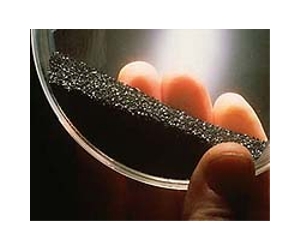
Metal-organic frameworks (MOFs) are three-dimensional sponge-like framework structures that are composed primarily of carbon atoms and are extremely lightweight. “What’s very special about these materials is that you can use synthetic chemistry to modify the surfaces within the materials and make it attractive for hydrogen to stick on the surface,” Long explained.

Separately, Long is also using MOFs in a carbon capture project, in which the material would selectively absorb carbon dioxide over nitrogen. For the fuel cell project, the trick lies not in getting the MOF to select hydrogen out of a mixture but to store as much hydrogen as possible.

Currently, vehicles using hydrogen fuel cells can achieve a range of close to 300 miles—but only if the hydrogen is stored at extremely high pressures (600 to 700 bar), which is expensive and potentially unsafe. It is also energy intensive to pressurize the hydrogen.

So far Long has succeeded in more than doubling hydrogen capacity, but only at very low temperatures (around 77 Kelvin, or -321 Fahrenheit). “It’s still very much basic research on how to create revolutionary new materials that would boost the capacity by a factor of four or five at room temperature,” he said. “We have an idea of what kinds of frameworks we might make to do this.”

Long’s approach is to create frameworks with lightweight metal sites on the surface, making it attractive for hydrogen molecules to bind to the sites. “Our approach has been to make some of the first metal-organic frameworks that have exposed metal cations on the surface,” he said. “Now we need to figure out ways of synthesizing the materials so that instead of one hydrogen molecule we can get two or three or even four hydrogen molecules per metal site. Nobody’s done that.”

This is where Head-Gordon, a computational chemist, comes in. He will work on theoretical understanding of MOFs so that he can try to predict their hydrogen storage properties and then instruct Long’s team as to what kind of material to synthesize. “He can do calculations on a lot of different target structures and say, here’s the best one for you guys to spend time trying to make, because synthetic chemistry is very cost and labor intensive,” Long said.

The scientist at GM will aid in providing accurate high-pressure measurements. The NIST scientist is an expert in neutron diffraction and neutron spectroscopy, which will allow Long and his team to pinpoint where exactly the hydrogen is going and verify that it is binding to the metals.

Source: Lawrence Berkeley National Laboratory (Berkeley Lab)

Monday, January 9, 2012

Powering insect cyborgs with an implantable biofuel cell

Engineerblogger
Jan 9, 2012


Researchers have developed a biofuel cell to enable the development of 'insect cyborgs' Image: Shutterstock

Research into developing insect cyborgs for use as first responders or super stealthy spies has been going on for a while now. Most research has focused on using batteries, tiny solar cells or piezoelectric generators to harvest kinetic energy from the movement of an insect's wings to power the electronics attached to the insects. Now a group of researchers at Case Western Reserve University have created a power supply that relies just on the insect's normal feeding.

Recognizing that using a real insect is much easier than starting from scratch to create a device that works like an insect, Case Western Reserve chemistry professor teamed up with graduate student Michelle Rasmussen, biology professor Roy E. Ritzmann, chemistry professor Irene Lee and biology research assistant Alan J. Pollack to develop an implantable biofuel cell to provide usable power for the various sensors, recording devices, or electronics used to control an insect cyborg.

To convert chemical energy harvested from the insect and turn it into electricity, the team used two enzymes in series to create the anode. The first enzyme breaks down the sugar trehalose, which a cockroach constantly produces from its food, into two simpler sugars, called monosaccarides, while the second enzyme oxidizes the monosaccarides to release electrons. A current them flows as the electrons are drawn to the cathode, where oxygen from air takes up the electrons and is reduced to water.

After testing the system using trehalose solution, the team inserted prototype electrodes in a blood sinus away from critical organs in the abdomen of a female cockroach. The cockroaches suffered no long-term damage, which the researchers say bodes well for long-term use.

"Insects have an open circulatory system so the blood is not under much pressure," Ritzmann explained. "So, unlike say a vertebrate, where if you pushed a probe into a vein or worse an artery (which is very high pressure) blood does not come out at any pressure. So, basically, this is really pretty benign. In fact, it is not unusual for the insect to right itself and walk or run away afterward."

Using an instrument called a potentiostat, the team determined the maximum power density of the fuel cell reached nearly 100 microwatts per square centimeter at 0.2 volts, with a maximum current density of about 450 microamps per square centimeter.

The researchers are now working to miniaturize the fuel cell so that it can be fully implanted into an insect while still allowing it to run or fly normally and examining which materials might last for a long time inside an insect. They are also working with other researchers to develop a signal transmitter that can run on little energy and also exploring how to add a lightweight rechargeable battery to the system.

"It's possible the system could be used intermittently," Scherson said. "An insect equipped with a sensor could measure the amount of noxious gas in a room, broadcast the finding, shut down and recharge for an hour, then take a new measurement and broadcast again."

The Case Western Reserve University team's work was published last week in the Journal of the American Chemical Society.


Source: Gizmag

Wednesday, January 4, 2012

N.E. Chemcat Corporation Licenses Brookhaven Lab's Electrocatalyst Technology for Fuel Cells in Electric Vehicles

Engineerblogger
Jan 4, 2012


(From left) Brookhaven National Laboratory chemists Kotaro Sasaki, Radoslav Adzic, Jia Wang, and Miomir Vukmirovic work on the recently licensed electrocatalysts using a new electron microscope in their laboratory.

N.E. Chemcat Corporation, Japan’s leading catalyst and precious metal compound manufacturer, has licensed electrocatalysts developed by scientists at the U.S. Department of Energy’s Brookhaven National Laboratory that can reduce the use of costly platinum and increase the effectiveness of fuel cells for use in electric vehicles. In addition, the license includes innovative methods for making the catalysts and an apparatus design used in manufacturing them.

Platinum is the most efficient electrocatalyst for fuel cells, but platinum-based catalysts are expensive, unstable, and have low durability. The newly licensed electrocatalysts have high activity, stability, and durability, while containing only about one tenth the platinum of conventional catalysts used in fuel cells, reducing overall costs.

The electrocatalysts consist of a palladium or a palladium alloy nanoparticle core covered with a monolayer – one-atom thick – platinum shell. This palladium-platinum combination notably improves oxygen reduction at the cathode of a hydrogen/oxygen fuel cell. This type of fuel cell produces electricity using hydrogen as fuel, and forms water as the only byproduct.

Radoslav Adzic, the Brookhaven Lab senior chemist who led the team that developed the catalysts, said, “We are delighted that N.E. Chemcat Corporation has licensed our platinum monolayer electrocatalyst technology. We hope that it will facilitate the development of affordable and reliable fuel cell electric vehicles, which would be very beneficial for the environment since they produce no harmful emissions. Also, the use of nonrenewable fossil fuels for transportation that contribute to global warming would be greatly reduced, prolonging their availability for other uses in the future.”

Source:  Brookhaven National Laboratory

Monday, December 19, 2011

Fuel Cells: A Clean Energy Alternative at New World Trade Center, New York City’s Octagon

CleanTechnica
Dec 18, 2011


Photo courtesy UTC Power

Our posting of UTC Power’s February 2011 infographic comparing the energy conversion and green tech attributes of their 400 kilowatt (kW) model PureCell with that of the equivalent solar and wind power systems generated a number of comments and criticism.

Looking to clarify matters and respond to readers’ comments, including adding information about the infographic’s underlying assumptions and data sources, I got back in touch with UTC Power’s marketing and communications manager Mike Glynn with the help of the MSL Group’s Mary McCeney. I believe it pays to keep an open mind when considering clean, green energy alternatives.

In the process, I learned about two high-profile applications of UTC Power’s PureCell fuel cell systems. First, 12 UTC Power PureCell Model 400 fuel cell stacks are now on site at the new World Trade Center in downtown New York City. Providing 4.8 megawatts (MW) of clean power when operational, the combined systems will rank as one of the largest fuel cell installations in the world, according to UTC.

In a second installation, solar and fuel cell power are both providing clean energy at The Octagon, a mixed-use residential and commercial building complex on Roosevelt Island in midtown Manhattan. A 50kW solar power array and a PureCell Model 400, 400kW system are supplying 50% of the building’s power needs.
To read more click here...

Monday, December 5, 2011

Gasoline Fuel Cell Would Boost Electric Car Range

Technology Review
Dec 2, 2011
 
Gas guzzler: The fuel cell developed at the University of Maryland. Credit:
University of Maryland


If you want to take an electric car on a long drive, you need a gas-powered generator, like the one in the Chevrolet Volt, to extend its range. The problem is that when it's running on the generator, it's no more efficient than a conventional car. In fact, it's even less efficient, because it has a heavy battery pack to lug around.

Now researchers at the University of Maryland have made a fuel cell that could provide a far more efficient alternative to a gasoline generator. Like all fuel cells, it generates electricity through a chemical reaction, rather than by burning fuel, and can be twice as efficient at generating electricity as a generator that uses combustion.

The researchers' fuel cell is a greatly improved version of a type that has a solid ceramic electrolyte, and is known as a solid-oxide fuel cell. Unlike the hydrogen fuel cells typically used in cars, solid-oxide fuel cells can run on a variety of readily available fuels, including diesel, gasoline, and natural gas. They've been used for generating power for buildings, but they've been considered impractical for use in cars because they're far too big and because they operate at very high temperatures—typically at about 900 ⁰C.

By developing new electrolyte materials and changing the cell's design, the researchers made a fuel cell that is much more compact. It can produce 10 times as much power, for its size, as a conventional one, and could be smaller than a gasoline engine while producing as much power.

The researchers have also lowered the temperature at which the fuel cell operates by hundreds of degrees, which will allow them to use cheaper materials. "It's a huge difference in cost," says Eric Wachsman, director of the University of Maryland Energy Research Center, who led the research. He says the researchers have identified simple ways to improve the power output and reduce the temperature further still, using methods that are already showing promising results it the lab. These advances could bring costs to a point that they are competitive with gasoline engines. Wachsman says he's in the early stages of starting a company to commercialize the technology.
To read more click here...


Related Information:

Thursday, November 24, 2011

Three-Dimensional Characterization of Catalyst Nanoparticles

Engineerblogger
Nov 23, 2011


Depiction of catalyst nanoparticles: The particles (coloured)
adhere to a substrate (grey). They are imaged by electron
tomography. For imaging, the data are processed using novel
algorithms.


Catalysts will forever be a part of modern technology. They are crucial to industrial chemical processes, are fundamental to low-emission cars and will be essential for energy production inside next generation fuel cells. In a cooperative between Helmholtz Zentrum Berlin (HZB) and the Federal Institute for Materials Research and Testing (BAM), scientists have produced the first three-dimensional representations of ruthenium catalyst particles only two nanometres in diameter using electron tomography.

Employing new processing algorithms, the scientists were then able to analyze and assess the chemically active, free surfaces of the particles. This detailed particle study provides insights into the action of catalysts that will play a key role in the fuel cell-powered cars of the future. The results are published in the Journal of the American Chemical Society (JACS).

To gain a fuller understanding of the action of catalyst particles and to enhance them accordingly, it is extremely important to know their three-dimensional shape and structure. The problem is these particles are typically only around two nanometres in size, some ten thousand times smaller than the thickness of a human hair. As part of his doctoral work, HZB physicist Roman Grothausmann, together with colleagues from HZB and BAM, has managed to analyze in three dimensions special catalyst nanoparticles developed at HZB for use in polymer electrolyte membrane (PEM) fuel cells in cars and busses. The scientists employed a special technique called electron tomography. This technique is similar to computer tomography (CT), as used in medicine, with the difference that the nanoparticles are scanned at much higher resolution. Grothausmann took many individual electron micrographs from different angles. Scientists from BAM then calculated 3D images in very sharp detail using a novel mathematical reconstruction algorithm.

Inside a fuel cell, catalysis takes place on the surface of the catalyst material. Since catalyst materials are often very expensive – platinum, for example – the aim is to obtain as large a surface area on the tiny particles as possible. Nanoparticles have an especially large surface area compared to their volume. At the atomic scale, however, not all areas of the particle surface are equal: Some parts of the surface allow a higher conversion rate of chemical to electrical energy than other areas, depending on their specific properties. Since the particles of a heterogenic catalyst do not float around freely but rest on a substrate instead, only a portion of each catalyst nanoparticle’s surface is available for catalysis. The reactive materials can only reach these uncovered surfaces. Yet, the electrically conductive connection between the nanoparticles and substrate is just as important for closing the circuit of the fuel cell. Grothausmann and colleagues measured both the uncovered and covered surfaces of a few thousand nanoparticles to determine the size and shape distribution of the nanoparticles. It turns out many of the nanoparticles deviate from spherical symmetry, which increases their surface to volume ratio. Next, they analyzed the alignment of the nanoparticles to the local surface of the substrate. Statistically, this shows how frequently the rough and particularly reactive surface areas of the nanoparticles remain uncovered.

Electron tomography is a method for directly imaging 3D structures, and serves as a reference for better understanding data obtained using other methods. The catalyst studied in this case accelerates the reduction of oxygen to water in PEM fuel cells. Instead of the typically used and very expensive platinum, the more affordable material ruthenium was used. This doctorate helps to understand these novel materials and how to optimize them for use in the next generation of fuel cells.

Source:  Helmholtz-Zentrum Berlin für Materialien und Energie


Additional Information:

Monday, November 21, 2011

Team develops lab-on-a-chip device featuring micro fuel cell

The Engineer
Nov 21, 2011

Researchers have built a completely autonomous lab-on-a-chip device, which has an integrated micro fuel cell.

Methanol fuel is used to power the electronics while carbon dioxide (CO2), produced as reaction by-product, pumps the liquid analytes around the channels.

Microfluidic technologies have been touted for some time, and while small devices have been demonstrated they typically rely on large and expensive external equipment such as compressors and various electronic components.

This essentially renders them unsuitable for applications such as point-of-care diagnostics and field work in developing nations.

Around six years ago, a team of Spanish researchers from the National Centre for Microelectronics (CNM) in Barcelona came across the lab-on-a-chip problem.

‘We attended two or three microTAS [Micro Total Analysis Systems] conferences and saw that there were many platforms and a lot of technologies but not many commercial products,’ Dr Neus Sabaté of the CNM told The Engineer.

‘The two main reasons seemed to be the lack of autonomy of these devices and the lack of consensus of which was the best technology to put everything together.’

At this stage, the researchers began investigating micro fuel cells, at a time when there was talk of them being used in laptops and mobile phones.
To read more click here...

Tuesday, November 15, 2011

Looking into the Atomic World of Fuel-Cell Catalysts

Engineerblogger
Nov 15, 2011

Illustration of PEM fuel cell where atomic-scale alloying structure and surface distribution of trimetallic nanocatalyst was tuned by thermal treatment temperature and then studied using EMSL’s X-ray photoelectron spectrometer and catalytic reactor

Fuel cells hold the promise of green power, but a major challenge in making them practical for large-scale commercial application is overcoming the high cost of the platinum catalysts required for oxygen reduction reaction in the air cathode. Multimetallic alloy catalysts such as carbon-supported platinum-nickel-iron (PtNiFe/C) are being explored as means to both reduce the cost and increase the activity of catalysts. A research team from State University of New York at Binghamton, in collaboration with scientists from Pennsylvania State University and from EMSL, recently reported new insights into how the atomic-scale structure of nanoengineered trimetallic alloy catalysts can be tuned to affect the fuel-cell performance. This insight into the atomic world of structural tuning is key information for scientists who seek to engineer the catalysts to maximize their catalytic activity and stability (activity over time).

After synthesizing a PtNiFe/C catalyst nanoengineered for high electrocatalytic activity in oxygen reduction reaction, the research team treated the catalyst at different temperatures (e.g., 400–800°C) to further tune the catalytic activity. The catalytic activity and stability were then determined using a rotating disk electrode and a proton exchange membrane (PEM) fuel cell.

Both measurement methods showed that specific activity (rate of catalytic activity) increased with increasing treatment temperature, but the catalytic mass activity (activity per amount of catalyst) showed the opposite trend. A detailed X-ray absorption fine-structure (XAFS) spectrographic analysis of the atomic-scale coordination structures revealed increased hetero-atomic coordination with improved alloying structures for the trimetallic catalyst treated at the higher temperature, explaining the increased rate of catalytic activity. X-ray photoelectron spectroscopy (XPS) analysis further revealed a reduced surface concentration of platinum for the high-temperature-treated catalyst, explaining the decreased mass activity. The detailed understanding of such atomic-scale alloying structure and platinum surface distribution provides new information needed for nanoengineering design of low-cost, active, and robust alloy catalysts to enable green power devices.

Source: Pacific Northwest National Laboratory (PNNL)

Additional Information:

Friday, July 15, 2011

Fuel cell mobile lighting system featured at Space Shuttle Atlantis launch

Sandia National Laboratories
July 14, 2011


Fuel cells are used in the space shuttle as one component of the electrical power system, so perhaps it was appropriate that a hydrogen fuel cell-powered mobile lighting system could be seen on the grounds of the Kennedy Space Center as the Space Shuttle Atlantis launched into space last week, the 135th and final mission for the NASA Space Shuttle Program.

The lighting system, sponsored by the U.S. Department of Energy (DOE) Office of Energy Efficiency and Renewable Energy (EERE) in conjunction with Boeing Co., and developed by Sandia National Laboratories with several industry partners, was deployed to the site of the final space shuttle launch and observed by visitors, shuttle astronauts and members of the international media.

The unit provided lighting in the international press area, and its auxiliary power was used to conveniently recharge the camera battery packs for a number of photographers at the event. The NASA deployment was the latest in a series of high-profile test sites where the lighting system has been utilized.

The hydrogen fuel cell-powered mobile lighting system is a clean, quiet and efficient alternative to traditional technologies commonly powered by diesel fueled generators. The system features a fuel cell running on pure hydrogen, resulting in zero-emission electrical power. The fuel cell produces electricity for an advanced, power-saving Light Emitting PlasmaTM (LEP) lighting system and additional auxiliary power up to 2.5 kW, which allows additional equipment (such as power tools, public address systems or security metal detectors) to be powered by the unit at the same time the system is providing illumination.

Current mobile lighting typically uses diesel fueled generators that produce greenhouse gases such as carbon dioxide nitrogen oxides, which produce pollutants and create smog, and soot, making them environmentally objectionable. In addition, diesel units are noisy and can create a safety hazard when construction personnel are distracted and cannot hear oncoming traffic.

Sandia researchers estimate that a single hydrogen fuel cell-powered lighting system would offset 900 gallons of diesel fuel per year and completely eliminate soot, nitrogen-oxide and carbon-dioxide emissions, allowing the system to be used indoors in contrast to current diesel technology.

“This hydrogen fuel cell-powered mobile lighting system has the very real potential to drastically reduce dependence on diesel-fueled mobile lighting across the United States and abroad,” said Lennie Klebanoff, Sandia’s project lead.
To read more click here...

Tuesday, June 21, 2011

Carnegie Mellon Engineering Professors Create World's Smallest Fuel Cell Powered By Biology

Carnegie Mellon University
June 17, 2011

Carnegie Mellon University's Kelvin B. Gregory and Philip R. LeDuc have created the world's smallest fuel cell powered by bacteria. Future versions of the biology-powered fuel cell could be used for self-powered sensing devices in remote locations where batteries are impractical, such as deep ocean or geological environments.

"We have developed a biological fuel cell which uses microbial electricity generation enabled by microfluidic flow control to produce power," said Gregory, an assistant professor of civil and environmental engineering at Carnegie Mellon.

The new device, the size of a single strand of human hair, generates energy from the metabolism of bacteria on thin gold plates in micro-manufactured channels. The fuel cell recruits necessary bacteria to create a biofilm that utilizes natural organic compounds as fuel to generate power.

Future versions of this tiny bacteria-powered fuel cell could replace batteries in microelectronic devices. While batteries are used to do that today, fuel cells are able to store more energy in the same space.

"Our biology-powered fuel cell could be less costly to make and more easily deployed in remote areas than conventional batteries that require invasive maintenance," said LeDuc, an associate professor of mechanical engineering with courtesy appointments in Biomedical Engineering, Biological Sciences and Computational Biology departments.

Both researchers report that the evolution of microbial electricity generation is motivated by the potential for renewable energy sources and waste biomass to serve as a fuel for large-scale electricity generation.

"Our work also is prompted by increased interest in improved battery technology for small scale electronic devices and sensors," Gregory said.

Wednesday, June 15, 2011

Can a greenhouse grow energy savings, too?

Pacific Northwest National Laboratory
June 14, 2011


A grocery store, greenhouse, hotel and community college will be among a diverse group of West Coast organizations testing the next generation of fuel cells that produce both electric power and heat while saving energy, thanks to a $2.8 million combined industry and government award announced today by the Department of Energy's Pacific Northwest National Laboratory. The federal portion of funding for this award was provided by DOE's Office of Energy Efficiency and Renewable Energy - Fuel Cell Technologies Program.

ClearEdge Power of Hillsboro, Ore., will install its ClearEdge5 combined heat and power fuel cell system at 10 different businesses in California and Oregon, while PNNL will monitor the systems and measure the energy savings the systems are expected to provide.

"Combined heat and power fuel cell systems can help smaller commercial buildings with high energy demands reap significant savings in energy cost and use," said Mike Rinker, the research program manager at PNNL. "We anticipate that this type of a system could reduce the fuel costs and carbon footprint of a commercial building by approximately 40 percent, compared with conventional electricity and heat use."

Wednesday, May 4, 2011

FuelCell Energy To Develop Clean-Coal Fuel Cell Power Plant

Danbury CT (SPX)
May 04, 2011
FuelCell Energy has announced an $11.7 million cost share award from the U.S. Department of Energy (DOE) for Phase III of the Solid State Energy Conversion Alliance (SECA) coal-based systems program. The SECA program is a collaboration among the Federal Government, private industry, and academia to develop megawatt-class solid oxide fuel cell (SOFC) power plants that use coal syngas to generate electricity.

Power generation from coal syngas advances the nation's energy security while reducing greenhouse gas emissions. The total Phase III program cost is $11.7 million, of which $8.2 million will be funded by the DOE.

Monday, April 25, 2011

Say Hello to Cheaper Hydrogen Fuel Cells

Los Alamos National Laboratory
April 22, 2011
Los Alamos National Laboratory scientists have developed a way to avoid the use of expensive platinum in hydrogen fuel cells, the environmentally friendly devices that might replace current power sources in everything from personal data devices to automobiles.

In a paper published today in Science, Los Alamos researchers Gang Wu, Christina Johnston, and Piotr Zelenay, joined by researcher Karren More of Oak Ridge National Laboratory, describe the use of a platinum-free catalyst in the cathode of a hydrogen fuel cell. Eliminating platinum—a precious metal more expensive than gold—would solve a significant economic challenge that has thwarted widespread use of large-scale hydrogen fuel cell systems.
To read more click here...

Wednesday, April 20, 2011

NRL Scientists Demonstrate Novel Ionic Liquid Batteries

U.S. Naval Research Lab
April 15, 2011

Scientists at the NRL Materials Science and Technology Division are providing solid evidence that there is a new route towards developing novel, lightweight energy storage devices. By moving away from centuries of caustic, hazardous aqueous-based battery cells and instead using non-volatile, thermally-stable ionic liquids, scientists predict multiple new types of batteries. Rather than depend on highly acidic electrolytes, ionic liquids are used to create a solid polymer electrolyte composed of an ionic liquid and polyvinyl alcohol, developing novel types of solid state batteries with discharge voltages ranging up to 1.8 volts.
To read more click here...

Cooling Down Solid-Oxide Fuel Cells

Technology Review
April 20, 2011

Startup company SiEnergy Systems has overcome a major barrier to commercializing solid-oxide fuel cells with a prototype that operates at temperatures hundreds of degrees lower than those on the market today. Working with Harvard materials science professor Shriram Ramanathan, SiEnergy Systems, based in Boston, has demonstrated a solid-oxide fuel cell that can operate at 500 degrees Celsius, as opposed to the 800 to 1,000 degrees required by existing devices. This allows the cell, which uses a thin-film electrolyte mechanically supported by a metal grid, to be much larger than similar devices fabricated before—on the order of centimeters in area, the size needed for practical applications, rather than micrometers.
To read more click here...

Monday, April 18, 2011

Novel Ionic Liquid Batteries

Science Daily
April 15, 2011

Scientists at the NRL Materials Science and Technology Division are providing solid evidence that there is a new route towards developing novel, lightweight energy storage devices. By moving away from centuries of caustic, hazardous aqueous-based battery cells and instead using non-volatile, thermally-stable ionic liquids, scientists predict multiple new types of batteries.
To read more click here...

Project focuses on factors that affect fuel-cell performance

The Engineer
April 18, 2011


UK and Indian researchers are to work together on a project to obtain a greater understanding of the factors that affect fuel-cell performance and durability, particularly in relation to using readily available fuels, including waste biogas.
Prof Mark Ormerod of Keele University’s Research Institute for the Environment, Physical Sciences and Applied Mathematics is heading the collaborative team of six leading research groups from the UK and India.

Tuesday, April 5, 2011

Scientists demonstrate the first macro-scale thin-film solid-oxide fuel cell

Rdmag.com
April 5, 2011

Materials scientists at the Harvard School of Engineering and Applied Sciences (SEAS) and SiEnergy Systems LLC have demonstrated the first macro-scale thin-film solid-oxide fuel cell (SOFC).

While SOFCs have previously worked at the micro-scale, this is the first time any research group has overcome the structural challenges of scaling the technology up to a practical size with a proportionally higher power output.
To read more click here...