Pages

Subscribe:

Labels

038628037504 (1) 10150 (1) 10BURIED (1) 10Count (1) 110011040 (1) 115Ounce (1) 1200mg (1) 12BSN (1) 12Count (2) 12CountNutricor (1) 12CountWWSN (1) 12Fresh (1) 12Stacker (3) 12VPX (1) 140243 (1) 14Servings (1) 158Ounce (1) 15Ounce (1) 16Ounce (2) 1716 (1) 17Skque (1) 1lbinLife (1) 2000Hrs (1) 2000mg (1) 200Watt (1) 2021A (1) 20OunceNatures (1) 2412Ounce (1) 24Count (1) 24EAS59134 (1) 24FRS (1) 24Guru (1) 24Guru01GR124 (2) 24Nestle (2) 24Pediasure (2) 24Peptamen (1) 24PieceDisplay (1) 24Solis (2) 27ReSource (2) 2Biochem (1) 2Dynamic (1) 2Jarrow (1) 2Muscle (1) 2Natures (1) 2Ounce (3) 2Pound (1) 30Day (1) 328601 (1) 334928 (1) 336gOptimum (1) 37Ounce (1) 3Ensure (1) 3M (1) 414 (1) 432500 (1) 48Boost (1) 48Fluid (1) 48ml (1) 4Ensure (1) 4Isopure (1) 5000mg (1) 527408 (1) 5511786 (1) 574400 (1) 5Hour (2) 5Ounces (1) 600Kendall (1) 662380 (1) 6Beneprotein (1) 6Proteinex (1) 70951 (1) 750mlNutriPrima (1) 845Ounce (1) 84Fluid (2) 84OuncesLiquid (1) 89Inch (1) 8nuun (2) 8Ounce (7) 99369FR (1) ABB (3) Academy (1) ACCENTS (1) Acia162Ounces (1) Acsry (1) Active (2) Adapter (1) AdapterBattery (1) Advance (1) Advanced (1) Advantage (1) AdvantEdge (1) Africa (29) African (1) Agaricus (1) AiCoco (1) AIDSTrustex (1) Airbrush (1) Airbus (6) Aircraft (94) AISI (1) Ajmeras (1) Alchohol (1) Alertness (1) Alfalfa (2) Alive (1) Allergy (1) Allspice (8) Alpine (1) Alstom (2) Alternative (1) Amarillo (1) Amazing (3) Amazon (2) American (1) animal (11) Annual Reports (155) Antioxidant (1) Anwar Ibrahim (1) Apple (1) Applied Materials (1) Arrowroot (1) AshtonDrake (1) Asia (72) Assorted (1) Atkins (1) Audi (1) Australia (21) Automotive (250) Automotive Technology (183) Ayurvedic (1) BABIES (1) Babys (1) Bacopa (1) BagAtkins2627 (1) BagsTraditional (1) BagSun (1) Balanced (1) Ballard Power System (1) Banaba (2) Baram Dam (1) Baram Regatta (1) Bariatric (1) Barisan Nasional (2) Barisan Nasional Helps Penan (1) Barista (2) Barley (2) barsBiochem (1) Basement (1) BASF (2) Basics (1) Batu Lawi (1) Bayer (1) BEA1017OZ (1) Beachbody (1) Beaded (1) Beaumont (1) beautiful girl image (19) Beauty (2) Beneprotein (2) Berries (3) Berry (4) BerryLiving (1) Beverage (1) Bicycle (1) BioAstin (1) Biochem (4) Biofuel (12) Biogenesis (2) BlackBlender (1) Blend (1) Blender (4) Blueberry (1) BlueStereo (1) BMF (1) BMW (7) BMX (1) BN (1) Boeing (4) Bombardier (4) Book (1) Borneo (6) Bottle (8) BottleProStat (1) Bottles (15) BottleScivation (1) bottlesEnsure (2) BottlesMio (1) BoxChenille (1) BoxDarice140243 (1) BOXESAmerican (1) BoxesFRSPowder (1) BoxPremier (1) BP (2) Brands (1) Brands833667000102 (1) Brazil (10) Brazilian (1) Breeze (3) BrewersBarista (1) BRIC (118) Brikpaks (3) Brownie (1) Bruno Manser (1) Bruno Manser Fund (3) Bruno Manser Fund Fraud (1) Bruno Manser Fund Frauds (1) Bruno Manser Lies (2) BTL410400 (1) Bubbles (1) Burner (1) business (72) Butchers (1) Butter (1) Butterscotch (1) Cable (1) Cables (1) Calcium (2) California (1) Calorie (3) Camera (1) Canada (11) Candela (1) Canister (2) CanisterCLICK (1) Canisters (1) Canning (1) Capramilk (1) CapsSwanson (1) Capsule (5) Capsules (6) CapsulesEAS (1) Caraway (1) Cardio (1) Carnation (1) CaseEnsure (2) CaseNestle (2) Celebrity (22) CellularFactory (1) Celsius (1) Certification (28) Certified (2) Chameleon (1) Charger (1) Charter/Terms of Reference (27) CHEAP (135) Chenille (1) Cherry (1) CherryZydot (1) Chevron (1) Chewing (1) Chile (1) China (99) Chipotle (1) Chlorophyll (1) Chocolate (7) Chocolate8 (1) Choice (2) Cholesterol (1) Chrome (1) Chrysler (1) Chunho (1) Citrifolia (1) Citroen (1) Citroën (1) Citrus (2) Civil Service (1) CK Morris Associates (1) Clare Rewcastle Brown (2) Class (1) Classic (2) Clinical (1) CNST (1) Coenzyme (1) Coffee (4) Coffee11001105 (1) Coffee7DSC2B (1) Coffeehouse (1) Cold Fusion (1) Coldkicker (1) Collectable (1) Collection (1) Colored (1) Colors (1) Communications (14) Company (2) COMPLETE (4) Complex (1) Computer (1) Concentrate (1) Concentrated (1) Concepts645654 (1) Condoms (1) Container (7) CONTROL20BGSee (1) Corrections (3) CosMedix (1) count (1) countAmscan (1) CountMy (1) Crayola (3) Criminal (4) Cruiser (1) Crunch (1) Cytosport (2) Daimler (3) Dam (1) DAP (1) DAP Lies (1) Darice (1) DARPA (18) Dato Roland Sagah Wee Inn (1) Defence (60) Defense (61) Delight (2) description (1) Desert (7) Design (65) DESIGNER (3) Desktop (1) detail (1) Detroit (1) Development (1) Dexatrim (1) diameter (1) diameterGaming (1) Diecast (1) Dinosaur (1) DISCOUNT (4) Discover (1) Disney (1) Doctors (1) DoE (8) DolphinsSticky (1) DOMAGRON (1) Dow Corning Corp (2) DP9260 (1) DRA6329 (1) Dragon (1) Dressing (1) Drink (11) Drinkin (1) drinksNVE (1) Dupont (2) dv9657clSIBCORP (1) Dymatize (3) DYMMGV (1) DYNAMIC (5) EachHager (1) EADS (12) ecigs (1) Eco-Tourism (1) Economy (14) Education (1404) Electra (1) Electric Grid (1) Electrolyte (4) ELP3STSL (1) Endorush (1) Endurox (2) Energizing (1) Energy (540) English Article (20) Enhanced (1) Enhancer (1) Enlive (2) Ensure (12) Enterprise (1) Environment (170) Enzymatic (1) Eraser (1) ERECTION (1) Ergonomics (4) ESA (4) Espresso (1) Essence (2) Essentials (3) EssentialsHSE (1) ethnic group (1) Europe (201) Executive/External Ombuds (2) Extended (2) ExtenderBadger (1) Extension (1) Extern/Intern (20) Extract (5) Extreme (21) Factor (1) Factors (3) Fantastic (1) Fatigued (1) Faucet (1) feature (9) Featuring (1) Fellowes (1) Fillet (1) First Energy (6) Fitera (2) FlatScreen (1) Flavor (1) FlavorBeachbody (1) Focus28 (1) Ford Motors (7) Foreign NGOs (2) Forest (1) formula (5) Formulas (1) Forts (1) FORUM (1) Fragrance (1) France (12) Frappuccino (1) FreeHubner (1) French (2) Friday Poll (13) Frontier (1) Frost (1) Fruits (1) Ft1140Alessco (1) Ft132Alessco (1) FToys (1) Fudge (1) Fuel Cell (26) Fujitsu (2) funny (19) Gadget (6) Galleries (1) Gallon (1) GameJax2000 (1) Games (1) General Electric (21) General Motors (15) Genesis (1) Georges (1) Germany (28) Go02658 (1) Golden (1) Goldfinch (2) Goodyear (1) Google (6) Gordoni (1) Gourmet (1) Government (333) Grape (2) Grape5 (1) Green Energy (544) Greens (2) GripAlex (1) Ground (7) Guarana (1) Halal Hub (1) Hammer (1) Hardware (1) Hasbro (1) Hawaiian (1) health (19) Health Care (87) Healthy (4) Herbal (5) Herbals (1) Himalayan (1) Holiday (1) Honda (4) Honeywell (1) Hoodia (1) HPCompaq (1) Hubner (1) human capital development (1) Humor (18) Hydration (2) hydration8PKNUUNLL (1) Hydrive (1) Hyundai (2) IBM (2) Illegal Demonstrations (1) iMicro (1) IMMICRP (1) India (23) information (8) Infrastructure (44) inLife (1) Inside Invester Ltd (1) Instantized (1) Institute (1) International (338) Internet (7) Intestinal (2) Investment (187) IOA News (168) ISO (1) ISO100 (1) Isolate (2) Isopure (4) Isotonix (1) Italian (2) Italy (1) Jabatan Penerangan (1) Jameson Ahip Nawie (1) Japan (57) JarALTERNATIVE (1) JarDoctors (1) Jarrow (1) Job Postings (339) Johnson Controls (1) Journey (2) Juice (2) JUICECRANBERRYOG2 (1) JuiceTahitian (1) Kangmei (1) KCups (1) Kerlix (1) Kettler (1) Kettler8852600 (1) Keurig (1) Keyboard (1) Kiddio (1) KitBerg (1) KiteSpiderMan (1) KitGoldfinch (1) Kombucha (2) KombuchaKIT (1) Kraft911501 (1) Kuching (1) Laboratories (1) Langnickel (1) LaptopNotebook (1) lbBioGenesisRICE3 (1) lbsNatural (1) Leading Indicators (450) Lean (10) LeapFrog (3) Learning (1) Leaves (2) Leccino (1) Legislation (65) Lemonade (2) Lemonlime (1) Len Talif (1) License (1) Lifetime (2) Light (1) LightHog (1) LINERBLADDER (1) Liquid (20) LiquidDeSouzas (1) Litigation (45) Living (2) Lockheed Martin (6) Looking (1) Lubricants (1) Lubricated (1) Macbook (1) Malaysia (4) MaleFemale (1) Management (16) Manufacturing (394) Marine Technology (2) Materials (446) Mazda (2) Medical (84) Medicinals (1) MEGAWING (1) Mental (1) Mercedes-Benz (3) Merdeka (2) Metabolic (1) MetaboLife (1) Metallic (1) Metamucil (1) MetersCables (1) Middle East (16) Miniatures (1) MioEnergy (1) Miradent (1) Miri (1) MIRROR (1) Mitsubishi (4) Monkey (2) Monster (1) Morinda (1) Morton (1) Mosacis (1) Mosaics (1) Mothers (1) MountScotty245 (1) MultiPackCELSIUS (1) MultiPackDYNAMIC (2) MultiPackLILY (1) MultiPackLIQUID (1) MultiPackMACA (1) MultiPackONLY (1) Multiracial (1) Mulu (1) Muscle (1) Muscletech (2) Myoplex (1) Nanotechnology (279) NASA (22) National Laboratory (46) Natural (12) natural phenomena (11) Naturally (1) Naturals (3) Natures (6) Naturessunshine (4) nc8000 (1) nc8220 (1) nc8230 (1) Nesting (1) Nestle (2) Netbook (1) New Programs (133) New Zealand (2) NGO's (213) NGOs (1) Nickel Hydrogen (1) Nissan (8) NIST (5) North America (18) Northrop Grumman (1) Norway (1) NovoAndina (2) Noxide (1) NREL (8) NSF (3) NTT Data (1) Nuclear (45) Numbers (1) Nuspeed (1) Nutrex (1) Nutricor (1) Nutrient (2) Nutrients (1) NutriPrima (1) Nutrition (15) Nutritional (5) NutritionON45 (1) nw8000 (1) nw8240 (1) Offshore (7) OilsAWM (1) OintmentWounded (1) Olives (1) Onshore (2) Optical Technology (28) Optimum (4) Optisource (2) Orang Ulu (1) Orange (7) OrangeHigh5 (1) Organic (12) Original (2) Other Ombuds (145) Otomotif (2) ounce (1) Ounces (5) OuncesSea (1) OunceThe (1) Outside the Standards (62) Oxford Business Group (1) OyToys (1) OzAfrican (1) ozNatures (1) Packages (1) Packet (1) Packets (1) PacketsNatures (1) PacketsUltima (1) Packs (2) PackStarbucks (1) PadCrayola (1) Paradise (1) Parazyme (1) Parents (1) Parmigiani (1) Pavilion (1) Pecan (1) Pediasure (3) Pehin Sri Haji Abdul Taib Mahmud (1) Penan (9) Pepper (1) Peppermint (1) Peptamen (1) Peter Jaban (2) Pharma (1) Pharmaceuticals (1) Phillips (1) Pickling (1) Pieces (1) PineappleGU (1) PinkBlender (2) PKR (1) PlantBased (1) Plantiva (1) Plastic (8) PN0223 (1) Pomegranate (1) PomegranateGU (1) Porsche (1) PostCXDNSR105 (1) Poundlb (1) Pounds (1) PoundsClif (1) Powder (20) Powdered (1) PowderEndurox (1) PP1235BBS (1) Practice Pointers (185) Prebio (1) PregNatal (1) Premier (1) Premium (3) preservatives (1) Preston (1) Private Sector (174) Proasis (1) Products (2) Professional Devt. (254) Profiles (257) Projector (1) Proscience (1) ProStat (2) protein (14) Proteinex (1) Protidiet (1) Proxima (1) Pudding (1) Punch (1) Purpose (1) Puzzle (1) R. Palan and Sabariah Putit (1) R4Lemon (1) Rail (41) RAINBOW (1) Rainforest (2) Raspberry (1) REA6048 (1) ReadytoDrink (1) Reaper (1) Recovery (2) Regional Events (101) Regular (2) Release (2) Remedies (1) REMEDIES4582008 (1) Replacement (2) Replenisher (3) ReplenisherUltima (1) Research (1) Research and Development (825) ReSource (4) Results (1) Revitalization (1) Roasted (1) Robotic Technology (124) Rocket (2) Rolls royce (7) Rooibos (1) Rosemary (1) ROSSLARE (1) Russell (1) Russia (17) Safety (15) Sains (20) SaltFree (1) Samalaju (4) Sammons (1) Samsung (1) Sarawak (13) Sarawak 10th State Election (1) Sarawak Borneo (7) Sarawak Budget 2012 (1) Sarawak Corridor of Renewable Energy (SCORE) (8) Sarawak Development (1) Sarawak Economics (1) Sarawak Economy (6) Sarawak ethnic groups (1) Sarawak Forest Corporation (2) Sarawak Politics (4) Sarawak Rainforest (2) Sarawakian (7) Satellite (6) Saudi Aramco (1) ScaledStar (1) Scholarly Articles/Research (102) science (50) Scivation (1) ScottishPower Renewables (1) Scotty (1) Seasoning (1) SEB (1) Secura (1) Seks (12) Senior Citizens (1) Series (1) serving (2) Servings (2) servingsBariatric (1) Shades (1) shake (4) Shaker (1) SHEETSHygloss (1) Shell (1) ShotCL27752 (1) Siemens (8) Silicone (1) Silver (1) Singapore (2) Single (1) Sleeve (1) SlimFast (1) Slimming (1) SlimStyles (1) SM005Grey (1) Smart (1) smartphone (1) Smoke (1) Smoothie (2) Smore (1) SoftCarpets (2) Softgels (1) Sony (1) Souffle (1) Source (2) South Africa (11) South America (11) South Korea (1) Space Technology (69) Sparkling (1) SpiderMan (1) Sponge (1) SpongeSammons (1) Sport (8) Sports (7) Springtime (1) Stacker (4) Starbucks (1) Starwest (2) Stems (1) Stereo (1) Sterile (1) Sticker (1) Sticky (1) Stomach (2) Strawberry (3) Strength (3) Strive (1) SumoMESUMO66897 (1) Sundries (5) Sunkist (1) Sunwarrior (1) SuperGreens (1) Supplement (4) Supplier (1) supply (3) Support (4) Supreme (2) Sustainable Forest Management Policy (2) Switzerland (2) System (3) Tablet (2) Tablets (3) TabletsTwinlab (1) Tahatian (1) Tahitian (1) Taib Mahmud (6) Taisho (1) Tanjung Manis (1) Tanjung Manis Halal Hub (1) Tartar (2) Tata (4) Tattoos (1) Technology (562) Temporary (2) Temptations (1) Tesla (1) Testors (1) Thalgo (1) The Report 2011 (1) Therapeutic (1) TinTea (1) Tips (25) Tokuyama (1) Topical (1) totalBoost (1) Toyota (15) Toys21030000 (1) ToyTote (1) Transitions (255) Transphorm (1) Transport (135) TREASURE (1) TrikeKiddio (1) Tropical (2) Trumans (1) Trustex (1) Tubes30 (1) Twinlab (2) Twistables (1) Two Hats (2) Uganda (1) UK (107) Ulticare (1) Ultima (3) Ultimate (1) Ulu Baram (1) Unflavored (1) Unibody (1) Unique (53) United States (281) University (1) Unknown (1) Uranium (1) USDA (1) Vale (1) Vanilla (10) Vanilla8 (1) Varcho (1) Variety (3) VegCap (3) Vehicle (1) Video (30) Viennese (1) Visitor Advice (70) VIT033 (1) Vitacost (5) Vitalyte (1) Volkswagen (5) Volvo (2) VTL200CIR (1) Warrior (3) WarsATST (1) Water resources (1) Water Technology (28) Watermelon (1) Wedding (1) Weight (2) Whole (2) Wild10650 (1) Wooden (1) World news (67) Worldwide (1) Wounded (1) Xtend (1) Xtreme (1) Xylitol (1) ZeroCherry (1) ZipFizz (1) ZoomOxo4113600 (1) ZZP88103 (1)

Showing posts with label Space Technology. Show all posts

Wednesday, February 29, 2012

Seeking Cheaper, Nimbler Satellites and Safer Disposal of Space Debris

Engineerblogger
Feb 29, 2012


Credit: RPI


A new research program at Rensselaer Polytechnic Institute seeks to define the next-generation of low-orbit satellites that are more maneuverable, cheaper to launch, easier to hide, and longer lived. Additionally, this research holds the promise of guiding dead satellites and other space debris more safely to the Earth’s surface.

Led by Rensselaer faculty member Riccardo Bevilacqua, the research team is challenged with developing new theories for exploiting the forces of atmospheric drag to maneuver satellites in low-Earth orbits. Atmospheric drag is present up to 500 kilometers of altitude. Using this drag to alter the trajectory of a satellite alleviates the need to burn propellant to perform such action. Decreasing the amount of required propellant will make satellites weigh less, which reduces the overall cost of launching satellites into orbit.

Additionally, this new research holds the promise of using drag to control and maneuver dead satellites that are inoperable or have run out of propellant.

This project, titled “Propellant-free Spacecraft Relative Maneuvering via Atmospheric Differential Drag,” is funded by the Air Force Office of Scientific Research (AFOSR) Young Investigator Research Program with an expected three-year, $334,000 grant.

“Using differential drag to maneuver multi-spacecraft systems in low-Earth orbit is a new, non-chemical way to potentially reduce or even eliminate the need for propellant,” said Bevilacqua, assistant professor in the Department of Mechanical, Aerospace, and Nuclear Engineering (MANE) at Rensselaer. “Reducing the satellite’s overall mass at launch, by carrying less propellant, allows for easier, cheaper, and faster access to space. In addition, the ability to maneuver without expulsion of gases enables spacecraft missions that are harder to detect.”

Satellites experience drag while in low-Earth orbits, and this drag causes their orbits to decay—sending the satellites closer and closer to Earth. Bevilacqua wants to take advantage of this drag by attaching large retractable panels to satellites. When deployed, these panels would work like a parachute and create more drag in order to slow down or maneuver the satellite.

This type of system could be built into new satellites, or even designed as a separate device that could be attached to existing satellites already in orbit. The drag panel system would use electrical power—which can be recharged via solar panels—to perform its maneuvers. The system would not require any fuel or propellant. Bevilacqua said such a device could be attached to a dead satellite already in freefall, in order to help control where the satellite will land on the Earth’s surface.

This new project is a key component of Bevilacqua’s overall research portfolio, which focuses on the guidance, navigation, and control of multiple spacecraft. The overall trend in spacecraft design is to go smaller and smaller, he said. Today’s satellites are generally one big unit. In the future, satellite systems likely will be made up of many smaller satellites that join together and form one larger device. This type of modular system allows for individual components to be replaced or upgraded while the overall system remains functional in orbit. One of the major challenges to realizing this vision is developing a propellant-free means to maneuver small satellites so they’re able to rendezvous and join with one another. Differential drag could be one such way to accomplish this, Bevilacqua said.

Bevilacqua joined the Rensselaer School of Engineering faculty in 2010, before which he served as a lecturer and researcher at the Naval Postgraduate School in Monterey, Calif. He earned his laurea degree in aerospace engineering, and his doctoral degree in mathematical methods and models for applied sciences, both from the Sapienza University of Rome.

He is also a faculty member of the Center for Automation Technologies and Systems (CATS) at Rensselaer.


Source: Rensselaer Polytechnic Institute

Friday, February 3, 2012

Unraveling a Butterfly’s Aerial Antics Could Help Builders of Bug-Size Flying Robots

Engineerblogger
Feb 3, 2012


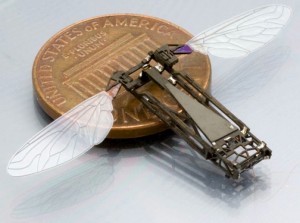
The butterfly research will aid the development of flying bug-size robots. Pictured is an insect-inspired flapping-wing micro air vehicle under development at Harvard. Photo provided by Robert J. Wood, associate professor, and Pratheev Sreetharan, Harvard Microrobotics Lab, Harvard University.

To improve the next generation of insect-size flying machines, Johns Hopkins engineers have been aiming high-speed video cameras at some of the prettiest bugs on the planet. By figuring out how butterflies flutter among flowers with amazing grace and agility, the researchers hope to help small airborne robots mimic these maneuvers.

U.S. defense agencies, which have funded this research, are supporting the development of bug-size flyers to carry out reconnaissance, search-and-rescue and environmental monitoring missions without risking human lives. These devices are commonly called micro aerial vehicles or MAVs.

“For military missions in particular, these MAVs must be able to fly successfully through complex urban environments, where there can be tight spaces and turbulent gusts of wind,” said Tiras Lin, a Whiting School of Engineering undergraduate who has been conducting the high-speed video research. “These flying robots will need to be able to turn quickly. But one area in which MAVs are lacking is maneuverability.”

To address that shortcoming, Lin has been studying butterflies. “Flying insects are capable of performing a dazzling variety of flight maneuvers,” he said. “In designing MAVs, we can learn a lot from flying insects.”

Lin’s research has been supervised by Rajat Mittal, a professor of mechanical engineering. “This research is important because it attempts to not only address issues related to bio-inspired design of MAVs, but it also explores fundamental questions in biology related to the limits and capabilities of flying insects,” Mittal said.

To conduct this study, Lin has been using high-speed video to look at how changes in mass distribution associated with the wing flapping and body deformation of a flying insect help it engage in rapid aerial twists and turns. Lin, a junior mechanical engineering major from San Rafael, Calif., recently presented some of his findings at the annual meeting of the American Physical Society’s Division of Fluid Dynamics. The student also won second-prize for his presentation of this research at a regional meeting of the American Institute of Aeronautics and Astronautics.

“Ice skaters who want to spin faster bring their arms in close to their bodies and extend their arms out when they want to slow down,” Lin said. “These positions change the spatial distribution of a skater’s mass and modify their moment of inertia; this in turn affects the rotation of the skater’s body. An insect may be able to do the same thing with its body and wings.”

Butterflies move too quickly for someone to see these wing tactics clearly with the naked eye, so Lin, working with graduate student Lingxiao Zheng, used high-speed, high-resolution videogrammetry to mathematically document the trajectory and body conformation of painted lady butterflies. They accomplished this with three video cameras capable of recording 3,000 one-megapixel images per second. (By comparison, a standard video camera shoots 24, 30 or 60 frames per second.)

The Johns Hopkins researchers anchored their cameras in fixed positions and focused them on a small region within a dry transparent aquarium tank. For each analysis, several butterflies were released inside the tank. When a butterfly veered into the focal area, Lin switched on the cameras for about two seconds, collecting approximately 6,000 three-dimensional views of the insect’s flight maneuvers. From these frames, the student typically homed in on roughly one-fifth of a second of flight, captured in 600 frames. “Butterflies flap their wings about 25 times per second,” Lin said. “That’s why we had to take so many pictures.”

The arrangement of the three cameras allowed the researchers to capture three-dimensional data and analyze the movement of the insects’ wings and bodies in minute detail. That led to a key discovery.

Earlier published research pointed out that an insect’s delicate wings possess very little mass compared to the bug’s body. As a result, those scholars concluded that changes in spatial distribution of mass associated with wing-flapping did not need to be considered in analyzing an insect’s flight maneuverability and stability. “We found out that this commonly accepted assumption was not valid, at least for insects such as butterflies,” Lin said. “We learned that changes in moment of inertia, which is a property associated with mass distribution, plays an important role in insect flight, just as arm and leg motion does for ice skaters and divers.”

He said this discovery should be considered by MAV designers and may be useful to biologists who study insect flight dynamics.

Lin’s newest project involves even smaller bugs. With support from a Johns Hopkins Provost’s Undergraduate Research Award, he has begun aiming his video cameras at fruit flies, hoping to solve the mystery of how these insects manage to land upside down on perches.

The insect flight dynamics research was funded by the U.S. Air Force Office of Scientific Research and the National Science Foundation.


Analyzing mechanics of butterflies in flight


Source: Johns Hopkins University


Related Information:

Thursday, February 2, 2012

Northrop Grumman Tapped by NASA to Develop Solar Electric Propulsion Flight Concepts for Future Space Missions

Engineerblogger
Feb 2, 2012


Northrop Grumman Corporation was recently awarded a contract to study high-power solar electric propulsion flight system technology for NASA deep space and human exploration missions.

"In collaboration with our partners, we are working on alternatives to the typical solar array approach," said Jim Munger, solar electric propulsion program manager, Northrop Grumman Aerospace Systems. "Our concept will be scalable to 300 kilowatts and beyond and have the potential for reducing the cost and complexity of high-power requirements."

The company is partnered with Sandia National Laboratories and the University of Michigan's Department of Aerospace Engineering to create a technology road map for near-term NASA space missions.

NASA's goal is to develop a high-power solar electric propulsion system for a "space tugboat" that can ferry satellites from Low Earth Orbit (LEO) to Geosynchronous Earth Orbit (GEO), saving fuel and secondary booster costs. The availability of a solar-powered vehicle would make it possible to launch spacecraft to LEO, then ferry them to GEO, allowing much heavier payloads to reach GEO while still using existing launch vehicles.

The study is designed to develop mission concepts that will be using technology at NASA Technology Readiness Level (TRL) 5 or greater, which means that a basic prototype has been validated in a relevant environment (simulating space) and includes initial integration at some level with other operational systems.

Sandia National Laboratories is a multiprogram laboratory operated by Sandia Corporation for the U.S. Department of Energy's National Nuclear Security Administration. With facilities in Albuquerque, N.M., and Livermore, Calif., Sandia has major research and development responsibilities in national security, energy and environmental technologies, and economic competitiveness.

The Department of Aerospace Engineering at the University of Michigan, Ann Arbor, Mich., has been recognized as one of the leading departments of its kind in the country. Professor Alec D. Gallimore will lead the department's effort for Northrop Grumman.

NASA Glenn Research Center, Cleveland, Ohio, will manage the project. In addition to other numerous technology development activities, the Center designs game-changing technology for spaceflight that enables further exploration of the universe. Northrop Grumman is a leading global security company providing innovative systems, products and solutions in aerospace, electronics, information systems, and technical services to government and commercial customers worldwide.

Source:  Northrop Grumman Corporation

Wednesday, January 25, 2012

Aero-engineers debut open-source fluid dynamics design application

Engineerblogger
Jan 25, 2012


This image, generated by SU2 in the Aerospace Design Lab, shows air pressure on the structure of a commercial airliner in flight. Credit: Stanford University

Stanford University Unstructured (SU2) is an open-source software package that gives advanced engineering students a crucial leg up on the time-consuming process of writing their own code to optimize aerospace designs — offering for free what commercial applications command thousands of dollars to do.

Each fall at technical universities across the world, a new crop of aeronautical and astronautical engineering graduate students settle in for the work that will consume them for the next several years. For many, their first experience in these early months is not with titanium or aluminum or advanced carbon-fiber materials that are the stuff of airplanes, but with computer code.

Thanks to a team of engineers in the Aerospace Design Lab at Stanford University, however, those days of coding may soon go the way of the biplane. At a recent demonstration, the Stanford team debuted "Stanford University Unstructured" (SU2), an open-source application that models the effects of fluids moving over aerodynamic surfaces such as fuselages, hulls, propellers, rotors, wings, rockets and re-entry vehicles.

Dubbed SU2 for short, the application incorporates everything engineers need to perform a complete design loop for optimizing the shapes of aerospace systems. While commercial programs offering similar capabilities are available, they can be prohibitively expensive. SU2, on the other hand, can be downloaded for free from the lab's website.

In engineering circles, the discipline is known as computational fluid dynamics, or CFD. Creating custom software applications to accurately model the interactions of an object in flight can take months, even years, to write and perfect. And yet, when the student graduates, the software is often forgotten.

"These are incredibly complex calculations involving innumerable variables," said Tom Taylor, a doctoral candidate who studies the dynamics of fluid flows beyond the sound barrier. "Essentially, every student has to create their own code for their specific designs, even though the equations at the core are virtually identical."

Brainchild

SU2 is the product of a team led by research associate Francisco Palacios, in the Aerospace Design Lab, who works on complex simulations of the propulsion systems in hypersonic vehicles.

Palacios witnessed all the coding the students around him were doing and, realizing that much of it was built upon a common foundation, decided to combine their work. Palacios, together with lab director Juan Alonso, then led a team of multi-disciplinary engineers in compiling, debugging and documenting the application that became SU2.

"The commercially available software is out of reach for most students," said Palacios, "and does not allow for modifications to the source code that are needed for doctoral-level research. It occurred to us that all this time and effort could be combined and packaged to allow students to focus more on their research problems and less on writing code."

Dynamic applications

Fluid dynamics applies to any three-dimensional structure moving through a medium, including air, water, chemicals and even blood.

"People can use this for everything from rockets to the design of more efficient wind turbines, and even boats, racecars and more," said PhD candidate Sean Copeland, who specializes in re-entry of space vehicles.

"Just plug in the geometry of your plane or wing or rotor, and tell the program to increase lift or reduce drag, for instance," said Tom Economon, a doctoral student working on efficient and quiet engine design. "SU2 goes to work, optimizing the shape for you in an automated way, showing you exactly where to alter your designs for maximum effect."

"I often work on modeling plasmas," said PhD candidate Amrita Lonkar, who studies flow control over wind turbines. "It was really easy – so easy – to modify the program for my research. For me, it reduced about a year's worth of work to just four months."

Open source, open possibilities

SU2 is a freely customizable software package. In true open-source fashion, developers, designers and engineers are encouraged to make the software their own, customizing the application to fit their needs.

"We welcome corrections, additions and improvements to our application," said Palacios. "They help everyone."

Of all SU2's many virtues, however, the most promising is perhaps its documentation, including a quick-start guide and in-depth tutorials. Absent or inadequate documentation is a problem that plagues many scientific computer codes.

"These materials are exhaustive and continually updated," said Taylor. "Students can hit the ground running."

Like the source code, the documentation and training are available via the website, which also includes a public forum where users and developers can seek advice and post support questions to a growing SU2 community.

"We are proud of SU2. We hope that students will use it to focus not on coding, but on their research creating better aerodynamic designs," said Palacios. "This is, after all, the real reason they came to school."

The Stanford Aerospace Design Lab is led by associate professor Juan J. Alonso and assistant professor (consulting) Karthik Duraisamy. Research associate Michael Colonno, post-doctoral researcher Jason Hicken and doctoral candidate Alejandro Campos also contributed to SU2.

Source: Stanford University

Wednesday, December 14, 2011

New operating system for space: High-tech tycoons

Engineerblogger
Dec 14, 2011


In this artist's rendering provided by Stratolaunch Systems, a planned plane that would launch cargo and astronauts into space is seen. Microsoft co-founder Paul Allen and aerospace pioneer Burt Rutan are building the plane, in the latest of several ventures fueled by technology tycoons clamoring to write America's next chapter in spaceflight.


The tycoons of cyberspace are looking to bankroll America's resurgence in outer space, reviving "Star Trek" dreams that first interested them in science.

Microsoft co-founder Paul Allen made the latest step Tuesday, unveiling plans for a new commercial spaceship that, instead of blasting off a launch pad, would be carried high into the atmosphere by the widest plane ever built before it fires its rockets.

He joins Silicon Valley powerhouses Elon Musk of PayPal and Jeff Bezos of Amazon.com Inc. in a new private space race that attempts to fill the gap left when the U.S. government ended the space shuttle program.

Musk, whose Space Exploration Technologies will send its Dragon capsule to dock with the International Space Station in February, will provide the capsule and booster rocket for Allen's venture, which is called Stratolaunch. Bezos is building a rival private spaceship.

Allen is working with aerospace pioneer Burt Rutan, who collaborated with the tycoon in 2004 to win a $10 million prize for the first flight of a private spaceship that went into space but not orbit.

Allen says his enormous airplane and spaceship system will go to "the next big step: a private orbital space platform business."

The new system is "a radical change" in how people can get to space, and it will "keep America at the forefront of space exploration," Allen said.

Their plane will have a 380-foot (116-meter) wingspan — longer than a football field and wider than the biggest aircraft ever, Howard Hughes' Spruce Goose.

It will launch a space capsule equipped with a booster rocket, which will send the spacecraft into orbit. This method saves money by not using rocket fuel to get off the ground. The spaceship may hold as many as six people.

"When I was growing up, America's space program was the symbol of aspiration," said Allen, who mentioned his love of science fiction and early human spaceflights. "For me, the fascination with space never ended. I never stopped dreaming what might be possible."

For those attracted to difficult technical challenges, space is the ultimate challenge, Allen said.

"It's also the ultimate adventure. We all grew up devouring science fiction and watching Mercury and Gemini, Apollo and the space shuttle. And now we are able to be involved in moving things to the next level," he said, adding that he admires people like Simonyi who have gone into space to experience it.

Allen is not alone in having such dreams, and the money to gamble on making them come true.

Bezos set up the secretive private space company Blue Origin, which has received $3.7 million in NASA start-up funds to develop a rocket to carry astronauts. Its August flight test ended in failure.

"Space was the inspiration that got people into high-tech ... at least individuals in their 40s and 50s," said Peter Diamandis, who created the space prize Allen won earlier and is a high-tech mogul-turned space business leader himself. "Now they're coming full circle."


In Seattle, call for a twin-fuselage aircraft with wings longer than a football field to carry a rocket high into the atmosphere and drop it, avoiding the need for a launch pad and the expense of additional rocket fuel. Allen, who teamed up with Rutan in 2004 to send the first privately financed, manned spacecraft into space, said his new project would "keep America at the forefront of space exploration" and give a new generation of children something to dream about. (AP Photo/Strautolaunch Systems)


Diamandis helped found a company that sends tourists to space for at least $25 million a ride, and seven of the eight rides involved high-tech executives living out their space dreams. One is a former Microsoft colleague of Allen's, Charles Simonyi, who paid at least $20 million apiece for two rides into orbit and attended Allen's Tuesday news conference, saying he wouldn't mind a third flight.

"Space has a draw for humanity," not just high-tech billionaires, Simonyi said, but he acknowledged that most people don't have the cash to take that trip.

Space experts welcome the burst of high-tech interest in a technology that 50 years ago spurred the development of computers.

"Space travel the way we used to do it has a '50s and '60s ring to it," said retired George Washington University space policy professor John Logsdon. "These guys have a vision of revitalizing a sector that makes it 21st century."

But Logsdon said the size of the capsule and rocket going to space seemed kind of small to him, only carrying 13,000 pounds (5,897 kilograms). It didn't seem like a game-changer, he said.

Stratolaunch's air-launch method is already used by an older rocket company, Orbital Sciences Corp., to launch satellites. It's also the same method used by the first plane to break the sound barrier more than 50 years ago.

Stratolaunch, to be based in Huntsville, Alabama, bills its method of getting to space as "any orbit, any time." Rutan will build the carrier aircraft, which will use six 747 engines. The first unmanned test flight is tentatively scheduled for 2016.

NASA, in a statement, welcomed Allen to the space business, saying his plan "has the potential to make future access to low-Earth orbit more competitive, timely, and less expensive."

Unlike its competitors, Allen's company isn't relying on start-up money from NASA, which is encouraging private companies to take the load of hauling cargo and astronauts to low Earth orbit and the International Space Station. The space agency, which retired the space shuttle fleet earlier this year, plans to leave that more routine work to private companies and concentrate on deep space human exploration of an asteroid, the moon and even Mars.

Allen said his interest comes not just because of the end of the shuttle program or changes in government funding for space, but he does see an incredible opportunity right now for the private sector to move the needle on space travel.

Allen's company is looking at making money from tourists and launching small communications satellites, as well as from NASA and the Defense Department, said former NASA Administrator Michael Griffin, a Stratolaunch board member who spoke at a Tuesday news conference.

Just three months ago, Griffin was testifying before Congress that he thought the Obama administration's reliance on private companies for space travel "does not withstand a conventional business case analysis."

This is different because it's private money, with no help or dependence on government dollars, said Griffin, who served under President George W. Bush.

Allen and Rutan collaborated on 2004's SpaceShipOne, which was also launched in the air from a special aircraft in back-to-back flights. Sir Richard Branson's Virgin Galactic licensed the technology and is developing SpaceShipTwo to carry tourists to space. But Allen's first efforts were more a hobby, while this would be more a business, Logsdon said.

SpaceShipOne cost $28 million, but this will cost much more, officials said.

Allen left Microsoft Corp. in 1983 and has pursued many varied interests since then.

Allen said this venture fits with his technology bent.

"I'm a huge fan of anything to push the boundaries of science," Allen said.


Source: The Associated Press

Additional Information:

Thursday, December 8, 2011

Exploring Earth's atmosphere using the world’s first fully ‘rapid prototyped’ air vehicle

Engineerblogger
Dec 8, 2011


The ASTRA Atom

Engineering scientists at the University of Southampton are flying the world’s first fully rapid prototyped air vehicle this week, to help develop new technologies that probe the Earth's atmosphere using an unmanned platform.

The vehicle is part of the Atmospheric Science Through Robotic Aircraft (ASTRA) project, and it aims to demonstrate how a low-cost, bespoke high altitude platform could be developed and manufactured over a period of mere days and used to send a payload with atmospheric monitoring equipment into the upper atmosphere.

The entire structure of the balloon-borne pod – dubbed the ASTRA Atom -- has been printed, and the on-board data logging equipment has been built using Microsoft's rapid electronic prototyping toolkit .NET Gadgeteer. The Atom was printed on the University’s 3Dprinter, which fabricates plastic objects, building up the item layer by layer.

The aircraft is protected by two foam ‘orbits’, manufactured using a computer-controlled hot wire cutter at the University’s Engineering Design and Manufacturing Centre, which are designed to break on landing and absorb the energy of the impact.

Dr András Sóbester, University of Southampton Lecturer and a Royal Academy of Engineering Research Fellow, says: “The rapid prototyping of bespoke platforms like the ASTRA Atom enables scientists to deliver a variety of instruments far into the stratosphere after a very short design and manufacture cycle. This may be required for testing purposes, as part of an iterative development process or there may be a sudden need to make observations of phenomena such as volcano eruptions or nuclear fallout. In such cases, rapid prototyping translates into fast response and timely measurements that could not be obtained in other ways.”

Dr Steven Johnston, from the University of Southampton’s Microsoft Institute of High Performance Computing, adds: “The challenges of developing such systems are varied as the aircraft has to be able to operate in the harsh, low pressure, low density environment of the upper stratosphere, as well as in the dense and turbulent lower troposphere. Additionally, weight and power requirements of all on-board systems have to be minimised. The need to keep weight and cost to a minimum, while providing bespoke architectures demands novel manufacturing technologies, such as 3D printing, too.

“Using conventional materials and manufacturing techniques, such as composites, developing such platforms would normally take months. Furthermore, because no tooling is required for manufacture, radical changes to the shape and scale of the ‘pod’ can be made with no extra cost.”

The ASTRA aircraft will have its maiden flight Wednesday 07 December at Microsoft Research’s 8th annual Think Computer Science event at The Imperial War Museum in Duxford. The event is a unique opportunity for year 8 and 9 students to gain an insight into the work of scientists and view a selection of the latest technologies in development through presentations and interactive demos.

Source:  University of Southampton

Additional Information:

Thursday, November 24, 2011

Reliable nuclear device to heat, power Mars Science Lab

Engineerblogger
Nov 24, 2011

NASA's Mars Science Laboratory mission, which is scheduled to launch this week, has the potential to be the most productive Mars surface mission in history. That's due in part to its nuclear heat and power source.

When the rover Curiosity heads to space as early as Saturday, it will carry the most advanced payload of scientific gear ever used on Mars' surface. Those instruments will get their lifeblood from a radioisotope power system assembled and tested at Idaho National Laboratory. The Multi-Mission Radioisotope Thermoelectric Generator is the latest "space battery" that can reliably power a deep space mission for many years.

The device provides a continuous source of heat and power for the rover's instruments. NASA has used nuclear generators to safely and reliably power 26 missions over the past 50 years. New generators like the one destined for Mars are painstakingly assembled and extensively tested at INL before heading to space.

"This power system will enable Curiosity to complete its ambitious expedition in Mars' extreme temperatures and seasons," said Stephen Johnson, director of INL's Space Nuclear Systems and Technology Division. "When the unit leaves here, we’ve verified every aspect of its performance and made sure it’s in good shape when it gets to Kennedy Space Center."

The power system provides about 110 watts of electricity and can run continuously for many years. The nuclear fuel is protected by multiple layers of safety features that have each undergone rigorous testing under varied accident scenarios.

The INL team began assembling the mission's power source in summer 2008. By December of that year, the power system was fully fueled, assembled and ready for testing. INL performs a series of tests to verify that such systems will perform as designed during their missions. These tests include:
  • Vibrational testing to simulate rocket launch conditions.
  • Magnetic testing to ensure the system's electrical field won't affect the rover's sensitive scientific equipment. 
  • Mass properties tests to determine the center of gravity, which impacts thruster calculations for moving the rover.
  • Thermal vacuum testing to verify operation on a planet’s surface or in the cold vacuum of space.

INL completed its tests in May 2009, but by then the planned September 2009 launch had been delayed until this month because of hurdles with other parts of the mission. So INL stored the power system until earlier this summer, when it was shipped to Kennedy Space Center and mated up with the rover to ensure everything fit and worked as designed.

The system will supply warmth and electricity to Curiosity and its scientific instruments using heat from nuclear decay. The generator is fueled with a ceramic form of plutonium dioxide encased in multiple layers of protective materials including iridium capsules and high-strength graphite blocks. As the plutonium naturally decays, it gives off heat, which is circulated through the rover by heat transfer fluid plumbed throughout the system. Electric voltage is produced by using thermocouples, which exploit the temperature difference between the heat source and the cold exterior. More details about the system are in a fact sheet here: http://www.inl.gov/marsrover/.

Curiosity is expected to land on Mars in August 2012 and carry out its mission over 23 months. It will investigate Mars' Gale Crater for clues about whether environmental conditions there have favored the development of microbial life, and to preserve any evidence it finds.

NASA chose to use a nuclear power source because solar power alternatives did not meet the full range of the mission's requirements. Only the radioisotope power system allows full-time communication with the rover during its atmospheric entry, descent and landing regardless of the landing site. And the nuclear powered rover can go farther, travel to more places, last longer, and power and heat a larger and more capable scientific payload compared to the solar power alternative NASA studied.

Source: Idaho National Laboratory (INL)

Related Article:

Tuesday, November 15, 2011

Orbital solar plants could help solve Earth’s energy crisis

Engineerblogger
Nov 15, 2011


An artist's rendering provided by SpaceWorks Engineering, Inc. shows a modern design for an orbital power plant beaming renewable energy to the developing world in this image released to Reuters on November 12, 2011. The sun's abundant energy, if harvested in space, could provide a cost-effective way to meet global power needs in as little as 30 years with seed money from governments, according to a study by an international scientific group. Orbiting power plants capable of collecting solar energy and beaming it to Earth appear "technically feasible" within a decade or two based on technologies now in the laboratory, a study group of the Paris-headquartered International Academy of Astronautics said. Photo by Reuters


The sun’s abundant energy, if harvested in space, could provide a cost-effective way to meet global power needs in as little as 30 years with seed money from governments, according to a study by an international scientific group.

Orbiting power plants capable of collecting solar energy and beaming it to Earth appear “technically feasible” within a decade or two based on technologies now in the laboratory, a study group of the Paris-headquartered International Academy of Astronautics said.

Such a project may be able to achieve economic viability in 30 years or less, it said, without laying out a road map or proposing a specific architecture.

“It is clear that solar power delivered from space could play a tremendously important role in meeting the global need for energy during the 21st century,” according to the study led by John Mankins, a 25-year NASA veteran and the U.S. space agency’s former head of concepts.

The academy is headed by Madhavan Nair, former chairman of the Indian Space Research Organization. The study was billed as the first broadly based international assessment of potential paths to collecting solar energy in space and delivering it to markets on Earth via wireless power transmission.

The study said government pump-priming likely would be needed to get the concept, known as space solar power, to market. Private-sector funding is unlikely to proceed alone because of the “economic uncertainties” of the development and demonstration phases and the time lags, the study said.

Both governments and the private sector should fund research to pin down the economic viability of the concept, the study said, amid concerns about humankind’s continuing reliance on finite fossil fuels that contribute to global pollution.

The study did not estimate a potential overall price tag for completing the project.

Space solar power is a potential long-term energy solution for Earth with “essentially zero” terrestrial environmental impact, according to the National Space Society, an advocacy group set to hold a news conference in Washington on Monday to publicize the academy’s 248-page final report.

A copy of the study was obtained by Reuters ahead of its release.

The idea is to put first one, then a few, and later scores of solar-powered satellites in geosynchronous orbit over the equator. Each as wide as several kilometres across (one kilometre equals 0.6 miles), the spacecraft would collect sunlight up to 24 hours a day, compared with half that, at most, for surface panels now used to turn sunlight into electricity.

The power would be converted to electricity on-board and sent to wherever it is needed on Earth by a large microwave-transmitting antenna or by lasers, then fed into a power grid.

Skeptics deem the concept a nonstarter, at least until the cost of putting a commercial power plant into orbit drops by a factor of 10 or more. Other hurdles include space debris, a lack of focused market studies and high development costs.

The study, conducted from 2008 to 2010 then subjected to peer review, found that the commercial case had substantially improved during the past decade, partly as a result of government incentives for nonpolluting “green” energy systems.

A pilot project to demonstrate the technology even as big as the 400-tonne International Space Station could go ahead using low-cost expendable launch vehicles being developed for other space markets, Mankins said in a telephone interview.

A moderate-scale demonstration would cost tens of billions of dollars less than previously projected as a result of not needing costly, reusable launch vehicles early on, said Mr. Mankins, president of Artemis Innovation Management Solutions LLC, a California consultancy.

“This was a really important finding,” Mr. Mankins said, referring to a relatively modestly priced pilot project.

‘IT’S A START’ His company has been awarded a NASA contract of a little less than $100,000 to pursue space-based solar power options – small “but at least it’s a start,” Mr. Mankins said.

Ultimately, tens of billions of dollars would be needed to develop and deploy a sufficiently low-cost fleet of reusable, earth-to-orbit vehicles to launch full-scale commercial solar power satellites, the study group estimated.

The group said the necessary research and development work should be undertaken by countries and organizations in concert, including space agencies, companies, universities and nongovernmental organizations.

International interest in the concept has grown during the past decade, spurred in part by fears that in coming decades global production of petroleum and possibly other fossil fuels will peak and start to decline.

Adding to a quest for new energy sources are projected jumps in worldwide per capita demand for energy to fuel economic development and concern over the accumulation in Earth’s atmosphere of fossil fuel-derived greenhouse gases.

The idea of harnessing solar power in space has been studied off and on for 40 years, including by the U.S. Energy Department and NASA.

U.S. and Indian business, policy and national security analysts in September called for a joint U.S.-Indian feasibility study on a co-operative program to develop space-based solar power with a goal of fielding a commercially viable capability within two decades.

The study group, co-sponsored by the Council on Foreign Relations think tank and Aspen Institute India, included former U.S. Director of National Intelligence Dennis Blair and Naresh Chandra, a former Indian ambassador to the United States.

Colonel Michael Smith, the U.S. Air Force’s chief futurist as director of the Center for Strategy and Technology at Maxwell Air Force Base in Alabama, said the idea has the potential to send safe, clean electrical energy worldwide “if we can make it work.”

“Isn’t that what government and industry should be working to do?” he said in a telephone interview.

Jeff Peacock, who heads satellite-builder Boeing Co’s ground-based solar cell product line, said in theory it could double the amount of solar power collected, compared with the Earth-bound technology equivalent.

Source: Globe and Mail

Friday, October 28, 2011

The Energy that Drives the Stars – Different Technologies for Unique Demands

Lawrence Berkeley National Laboratory
Oct 27, 2011


The NDCX-II accelerator is specifically designed to study warm dense matter. By using an induction accelerator and a neutralized drift compression system, the ion pulse can be shaped to deliver most of its energy to the target surface.


A video simulation of how the NDCX-II accelerator and neutralized drift compression system shape ion pulses to deliver most of their energy on target.


Berkeley Lab, a partner in the Heavy Ion Fusion Sciences Virtual National Laboratory (HIFS VNL) with Lawrence Livermore and the Princeton Plasma Physics Laboratory, has been a leader in developing a special kind of accelerator for experiments aimed at fusion power, called an induction accelerator. The induction principle is like a string of transformers with two windings, where the accelerator beam itself is the second winding. Induction accelerators can handle ions with suitable kinetic energy at higher currents (many more charged particles in the beam), much more efficiently than RF accelerators.

“Choosing the best kind of accelerator and the best kind of target are just the start of the fusion-power challenge,” says Seidl. “To put the right amount of energy on the target in the right pattern, scores of beams are needed – and it must be possible to focus them tightly onto a target, only a few millimeters wide, at a distance of several meters. New targets have to be injected into the chamber five to ten times each second, and the chamber has to be designed so the energy from ignition is recovered. Meanwhile the final beam-focusing elements have to be protected from the explosion debris, the energetic particles, and the x-rays.”

Some of these challenges would be easier to meet if the target didn’t have to be hit from both sides at once. Researchers are encouraged by indications that target burning, hot enough to spark and sustain ignition, can be initiated with fewer beams illuminating the target from only one side.

This side of fusion: warm dense matter

While investigating approaches to heavy-ion fusion, Berkeley Lab and its partners in the HIFS VNL are also tackling other scientific questions related to heating matter to high temperatures with ion beams. The current research program is designed to produce a state of matter that’s on the way to fusion but not as hot – a state perhaps facetiously called warm dense matter, which is “warm” (10,000 degrees Kelvin or so) only by comparison to the millions of degrees typical of fusion reactions.

Not a heavy-ion experiment, the Neutralized Drift Compression Experiment II (NDCX-II) instead uses an induction linear accelerator to accelerate and compress bunches of very light lithium ions to moderate energies. NDCX-II confronts a problem common to all accelerators, the space-charge problem, in which particles of the same charge – positive, in the case of atomic ions – repel each other; the bunches try to blow themselves up. For a given number of ions per bunch, this sets a lower limit on the pulse length.
To read more click here...


Related Information:

    Thursday, October 27, 2011

    The world's first spherical flying machine

    Engineerblogger
    Oct 27, 2011


    Announced last summer by the Technical Research and Development Institute at Japan's Ministry of Defense (JMD) and recently unveiled at Digital Content Expo 2011. The world's first spherical flying machine will likely be deployed in search and rescue operations deemed unsuitable for traditional aircraft. As for other possible uses, the sky just may be the limit.

    This machine can hover like a helicopter, and take-off and land vertically. But because it works like a propeller plane standing vertically, it can fly forward at high speed using wings, which a helicopter can't do. This machine also has three gyro sensors, so even if it hits an obstacle, it can maintain its attitude and keep flying through automatic control.

    "Because the exterior is round, this machine can land in all kinds of attitudes, and move along the ground. It can also keep in contact with a wall while flying. Because it's round, it can just roll along the ground, but to move it in the desired direction, we've brought the control surfaces, which are at the rear in an ordinary airplane, to the front."

    "In horizontal flight, the propeller provides the propulsive force, while the wings provide lift. For the machine to take off or land in that state, it faces upward. When it does so, the propeller provides buoyancy. At that time, too, the control surfaces provide attitude control. After landing, the machine moves along the ground using the control surfaces and propeller."

    "In our aircraft R&D, we have a plane that can stand up vertically after flying horizontally. But the problem with that plane is, take-off and landing are very difficult. As one idea to solve that problem, we thought of making the exterior round, or changing the method of attitude control. That's how we came up with this machine, to test the idea."

    "All we've done is build this from commercially available parts, and test whether it can fly in its round form. So its performance as such has absolutely no significance. But we think it can hover for eight minutes continuously, and its speed can go from zero, when it's hovering, to 60 km/h."

    This flying machine weighs 350 g, is 42 cm in diameter, and is made of commercially available parts costing a total of around US$1,400. As it can take off and land anywhere, it's hoped that this machine will be able to reach places that were hard to access by air before, for use in rescue and reconnaissance.

    Source: Diginfo.tv

    Tuesday, October 25, 2011

    Solar Ship: The aircraft transport without dependency

    Engineerblogger
    Oct 25, 2011


    There has been resurgence of interest in airships for military and commercial such as the High Altitude Long Endurance-Demonstrator (HALE-D) by Lockheed Martin's and Hybrid Air Vehicles (HAV) heavy-lift variant of Northrop Grumman's Long-Endurance Multi-Intelligence Vehicle (LEMV). Similar to HAV's design, this concept from the Canadian based company Solar Ship is a hybrid airship which relies on aerodynamics to help provide lift, and like the HALE-D, it would have its top surface area covered in solar cells to provide energy and minimize its carbon footprint.

    Although the Solar Ship aircraft would be filled with helium, under normal circumstances they would rely on the aerodynamic lift provided by their wing shape to provide more than half the lift required to get them off the ground. Additionally, the aircraft could also fly when filled with plain old air. Jay Godsall, Solar Ship's founder, told the Toronto Star that the aircraft will be able to go where there's no roads, no airstrips, and where planes and helicopters can't reach on a tank of fuel.

    Solar Ship says the aircraft's electric motor can either be powered solely by the energy provided by the on board batteries, or by the photovoltaic cells covering the top surface of the wing.  This feature has already been achieved by a conventional airplane design in the form of Solar Impulse.

    The company points out that such heavier-than-air airships provide numerous advantages over their lighter-than-air brethren. Firstly, no mooring infrastructure or ballast weight is required to keep the aircraft from floating away during loading or unloading, making them more practical for the remote locations in which they are designed to operate. Additionally, not relying on buoyancy for lift means the aircraft can be smaller than lighter-than-air aircraft carrying the same payload. They are also more structurally robust and more maneuverable and resistant to wind and weather conditions.

    Eventually, three sizes of craft will be on offer - asmall Caracal, amedium-sized Chui, and awhopping great big hauler Nanuq, whichis designed to carry payloads of up to 30 tonnes (66,139 lb).

    Solar Ship has already built and flown a 10 m (33 ft) prototype.  Further tests and demonstrations of the craft will be conducted in summer 2013, with a test of a smaller ship due in late2012 in Africa. The videos provides a glimpse of the company's vision for the future in which it sees a wide range of uses for its heavier-than-air aircraft, from delivery of urgent medical supplies to remote communities and disaster relief, to environmental monitoring and military applications.


    Monday, October 24, 2011

    Why the Aerospace Industry Need to Use 'Should Costing'

    Industryweek.com
    Oct 24, 2011


    Should costing is a process, whereby one can determine the cost of the part or product, based on the raw materials used, manufacturing costs and overhead production costs.

    The aerospace industry today is a buyer driven market, where reducing product cost and delivery cycle time are critical for aerospace OEMs and their key suppliers to remain competitive. However, these companies produce highly complex products that require long development cycles and are manufactured in low volumes.

    Aerospace companies continue to face (and address) challenges in managing product costs over a very long lifecycle of their aircrafts. It is very clear that these companies have to embrace a more concurrent approach to their operational processes and constantly review product costs to identify opportunities for cost reduction.

    Since most of the aerospace OEMs source a large percentage of their component from suppliers (commonly 50-70%), this area requires special focus. It is important for OEMs to understand the costs involved in production of a part or a component sourced from an external supplier, as it will enable effective price negotiations with suppliers and also help assess the capability of potential suppliers. Understanding of component costing and measurement systems are aligned with the lean philosphy, and complements value stream organization by driving continous improvement and supporting pull and flow production.

    Companies worldwide should aim to identify the major cost drivers of components they design, manufacture and procure, much earlier in the product development cycle. With cost assessments early in the product development process, one can eliminate significant costs prior to production and get quantifiable savings in material, tooling, labor, and overhead, by evaluating alternative designs, processes and sources. 

    Current costing techniques vary throughout the aerospace industry and include the use of both proprietary and non-proprietary methods. Most companies still retain a traditional cost estimating department that uses experienced individuals backed by large proprietary databases. However, lack of adequate cost information can lead to poor decision making, time consuming redesigns, and high component costs. Zero based costing has been around for quite some time, but the availability of digital engineering models and specialized costing software have significantly enhanced the effectiveness of should costing and analysis.

    A well managed should costing and analysis initiative is clearly a critical activity for the aerospace companies, and sets the stage for consistent cost management, that leads to increase in profitability and stakeholder returns.

    What is Should Costing?

    Should costing is a process, whereby one can determine the cost of the part or product, based on the raw materials used, manufacturing costs and overhead production costs. This can be achieved by analyzing the engineering models to understand the raw material required, defining the manufacturing processes required to deliver the required form features, and calculating the total costs through the use of rate data related to material costs and processing costs. The ultimate goal of any should cost analysis initiative is to provide enough information to enable (depending on the stage) designers to modify raw material or form feature requirements, or enable suppliers to modify manufacturing processes with a view to reduce costs.

    Should costing, thus, provides a framework that enables a systematic focus on opportunities to reduce costs right from the conceptualization stage through the production life of the product.

     
    Steady State Execution Flow of Should Cost Estimation

    Scope of Should Costing in Aerospace

    Aerospace manufacturing has achieved significant productivity improvements over the years, through development of new processes and by performing multiple operations on a single machine. Kaizen (continuous improvement ) activities are also widely used in the aerospace industry to increase quality, and throughput, and reduce work-in-progress and setup times.

    Proliferation of should costing in product development lifecycle can help aerospace companies accurately estimate the costs associated with developing and producing components and products, and take timely decisions throughout the product development lifecycle. During design stage, it keeps the design engineers aware of movements in product cost and enables them to select most economical designs for manufacturing, improve material utilization, reduce number of features and relax tolerance during new product development. It also helps designers analyze the design and make timely trade-off decisions with respect to cost and functionality.
    To read more click here...

    Innovators Sought for DARPA Satellite Servicing Technology Program


    Engineerblogger
    Oct 24, 2011

    Phoenix seeks to repurpose ‘retired’ satellite components through GEO servicing

    More than $300 billion worth of satellites are estimated to be in the geosynchronous orbit (GEO—22,000 miles above the earth). Many of these satellites have been retired due to normal end of useful life, obsolescence or failure; yet many still have valuable components, such as antennas, that could last much longer than the life of the satellite. When satellites in GEO “retire,” they are put into a GEO disposal or “graveyard” orbit. That graveyard potentially holds tens to more than a hundred retired satellites that have components that could be repurposed – with the willing knowledge and sanction of the satellite’s owner. Today, DoD deploys new, replacement satellites at high cost—one of the primary drivers of the high cost is the launch costs, which is dependent on the weight and volume of antennas. The repurposing of existing, retired antennas from the graveyard represents a potential for significant cost savings.


    DARPA’s Phoenix program seeks to develop technologies to cooperatively harvest and re-use valuable components from retired, nonworking satellites in GEO and demonstrate the ability to create new space systems at greatly reduced cost. “If this program is successful, space debris becomes space resource,” said DARPA Director, Regina E. Dugan.

    This concept will require diverse expertise from the international and nontraditional space communities. For example, today’s ground-based robotics systems allow surgeons to perform telesurgery on a patient thousands of miles away, and advanced remote imaging systems used for offshore drilling view the ocean floor thousands of feet underwater. These types of capabilities, if re-engineered for zero gravity, high-vacuum and harsh radiation, could be used in space to allow the repurposing of valuable antennas from retired GEO satellites.

    “Satellites in GEO are not designed to be disassembled or repaired, so it’s not a matter of simply removing some nuts and bolts,” said David Barnhart, DARPA program manager. “This requires new remote imaging and robotics technology and special tools to grip, cut, and modify complex systems, since existing joints are usually molded or welded. Another challenge is developing new remote operating procedures to hold two parts together so a third robotic ‘hand’ can join them with a third part, such as a fastener, all in zero gravity. For a person operating such robotics, the complexity is similar to trying to assemble via remote control multiple Legos at the same time while looking through a telescope.”

    To optimally use those repurposed assets, the Phoenix program will develop low-cost, scalable electronics and structural modules that would allow localized control and communication with each other and a master satellite, ala DARPA’s System F6, that together harnesses the repurposed antennas. Phoenix specifically seeks technologies for developing a new class of small “satlets,” or nanosatellites, which can be sent more economically to the GEO region through existing ride-along services with commercial satellite launches and then robotically attached to the antenna of a nonfunctional cooperating satellite to essentially create a new space system. The nanosatellites may leverage the technologies, infrastructure, protocols and architecture developed within the ongoing System F6 program.

    Technical expertise is sought to design a payload orbital delivery system, or PODS, to safely house the satlets when they are launched aboard a commercial satellite.

    A separate on-orbit “tender,” or satellite servicing station, is planned to be launched into GEO. Once the tender arrives on-orbit, the PODS would be released from its ride-along host and linked with the tender to become part of the satellite servicing station’s “tool belt.” The tender plans to be equipped with grasping mechanical arms and remote vision systems to remove components and satlets from the PODS using unique space tools to be developed in the program.

    Critical to the success of the Phoenix program is active participation from both U.S. and international communities involved in vital technical areas such as:
    • Radiation tolerant microelectronics and memory storage. 
    • Distributed wireless mobile platform solutions for ad hoc connectivity and control.
    • Industrial electronic control systems.
    • Terrestrial microminiature guidance and control measurement units. 
    • Industrial robotics end effectors and tool changeout mechanisms and techniques. 
    • Computer-assisted medical robotics microsurgical telepresence, tools and imaging. 
    • Remote underwater imaging/vision technologies used in the offshore oil and gas drilling industry. 
    • Terrestrial manufacturing of high volume microelectronics and computer data storage. 
    • Terrestrial thermal management design technology of electronic devices and systems. 
    • Low-cost industrial manufacturing of high-volume sheet metal and other structural materials.
    • Additive manufacturing on various structural materials

    Source: DARPA

    Additional Information:

    Thursday, October 13, 2011

    Designs on a Mars Mission

    Engineerblogger
    Oct 13, 2011


    Studies of manned Mars missions have been conducted over the last two decades by NASA, other space agencies and non-government groups, including the Mars Society. NASA has developed a series of design reference missions to serve as guideposts toward sending a human crew to Mars, and for comparing different approaches and criteria.

    NASA's vision is to combine the knowledge gained from robotic Mars missions and the experience of human lunar missions to develop a plan to send people to Mars in the 2025–2030 timeframe.

    New technologies must be developed to transport the infrastructure, facilities and crew from Earth to Mars. The infrastructure and facilities also need to be developed. Advanced technology is needed to provide life support (particularly consumables) to the crew during all phases of the mission. If space exploration is about venturing to new worlds and understanding the universe in ever-increasing detail, robots will be essential in assisting the astronauts in a wide range of tasks.

    Depending upon the final mission architecture adopted, a manned Mars mission will require 250 to 500 metric tons of mass to be delivered to low Earth orbit—about two to four times the amount required to support a human lunar expedition.

    NASA estimates that a human Mars expedition will require the launch of two to four times the mass needed for a lunar mission. Most of the necessary technology has yet to be developed.

    The development of heavy-lift launch vehicles in the Saturn V class (or more powerful) would allow a moon mission to be accomplished in a single launch and Mars missions to be done in two to four launches. The on-time requirement for the Mars launches can be greatly mitigated by adopting mission strategies in which each booster sends its own payload directly to Mars independently. The crew leaves Earth only after it has been confirmed that all the other payloads have arrived on Mars safely. Such direct injection
    mission designs also eliminate the need for in-orbit assembly, and the costly orbital infrastructure required to support it.

    Three types of space propulsion systems can be considered: chemical propulsion, nuclear-thermal rockets, and electric propulsion.

    Chemical propulsion has already supported human lunar missions. However, the exhaust velocity obtainable by such systems is limited. Nuclear thermal rocket engines work by using a solid-core fission reactor to heat hydrogen propellant, which is passed through the engine block as a coolant and then ejected from the nozzle to produce thrust. Because such devices decouple the energy source from the motive mass, they can achieve significantly higher exhaust velocities than chemical engines. In a ground test program conducted jointly by NASA and the Atomic Energy Commission during the 1960s, nuclear thermal rocket engines were fired with thrust levels ranging from 15,000 to 250,000 pounds, and exhaust velocities of 8,500 m/s. Limited only by the temperature tolerance of reactor materials, exhaust velocities for this technology approaching 10,000 m/s appear achievable.

    Electric propulsion systems accelerate a charged propellant via electrostatic or magnetohydrodynamic processes. There is thus almost no limit to the theoretical exhaust velocity of such technology and, in fact, velocities of 50,000 to 100,000 m/s—10 to 20 times those of chemical engines—have been demonstrated. The problem, however, is that electric power must be supplied to drive such units. This could be done in space using either photovoltaic or nuclear sources, but the size of such systems would be considerable.

    In order to achieve Mars orbit insertion and descent to the surface, rather large accelerations are required. Until now, all Mars orbiting spacecraft have been captured into orbit using rocket propulsion. It would be highly advantageous from the point of view of reducing mission mass to accomplish this orbital capture maneuver using aero-braking (and aero-capture friction against the planet's atmosphere) in place of propellant.

    Equally important will be technologies that allow the crew to make use of resources they find on Mars. Local resource utilization, if feasible, would greatly reduce the costs and difficulty in transporting necessary materials from Earth. Not having to deliver fuel, for instance, could reduce mission mass significantly. It is believed Mars is a rich source of materials from which propellants could be made. Large regions of the Martian surface have been identified from orbit as containing more than 60 percent water by weight.

    Such water, now in frozen mud, could be accessed and electrolyzed to produce both oxygen and hydrogen rocket propellants. Hydrogen so obtained could also be reacted with the carbon dioxide that makes up the Martian atmosphere to produce methane and oxygen to fuel a rocket, or alternatively, methanol and oxygen for a fuel cell. Carbon dioxide, nitrogen, and water required for plant growth are plentiful on the Red Planet's surface. The rich carbon supply on Mars also suggests a possibility of local production of such essentials as plastics, lubricants, and synthetic fabrics.


    Source: ASME

    New Options Emerges For Aviation Fuel

    Engineerblogger
    Oct 13, 2011


    The jet engine fuel market is evolving. New fuels that could replace conventional petroleum-based liquid jet fuels that require no alterations to existing equipment are being developed. In fact, petroleum alternative fuels have advanced to the point that they have equivalent performance and can be used in existing fleets as “drop in” replacements. They can be co-mingled with existing fuels at airports at every stage of delivery, storage, distribution, and utilization in aircraft and their engines.

    The biofuel industry has seen much activity in the last several years in evaluating, testing, and certifying synthetic fuels for aviation. Conventional jet fuels are kerosene-type distillates such as Jet A (in the U.S.) and Jet A-1 (worldwide) for commercial aviation turbines, and jet propellant JP-8 and JP-5 for military jet engines. Two leading processes for producing synthetic paraffinic kerosene (SPKs), the same paraffins as traditional jet fuels, are Fischer-Tropsch (FT) Synthesis and hydrotreating to create hydrotreated renewable jet fuel (HRJ).

    Fischer-Tropsch Fuels In Use

    Most synthetic fuels flown by commercial airlines and U.S. military planes today are blends of FT fuels with traditional fuels. Many feedstocks produce a variety of petroleum-alternatives FT fuels:
    • Biomass-to-liquid (BTL) fuels use sources such as agricultural and forest residue, prairie grass, and municipal or industrial waste
    • Coal-to-liquid (CTL) fuels use coal
    • Coal-and-biomass-to-liquid (CBTL) fuels use a mixture of coal and biomass
    • Gas-to-liquid (GTL) fuels use natural gas.
    To create FT SPK fuels, feedstocks are first converted to syngas with a process called gasification, and then FT processing reacts these gases with carbon monoxide, hydrogen, and a catalyst to make long hydrocarbon chains. These chains are then “cracked” and separated into finished liquid jet fuels.

    The RAND Corporation, Santa Monica, CA, recently reported that a number of FT fuels are technically viable substitutions for fuels currently used in military aviation in the U.S. Their composition, purity, density, toxicity, thermal stability, and compatibility with other fluids and materials, among other properties, have been evaluated and shown to be equivalent to conventional fuels. Military aircraft including Army Black Hawk helicopters, Air Force F-15 Eagles, and many others, have passed successful test flights and are now certified to use blends of 50% FT-derived jet fuels with 50% JP-8 jet fuel.

    The American Society for Testing and Materials (ASTM) International Aviation Fuel Committee’s recent specification ASTM D7566 has enabled certified use of FT fuel blends of up to 50% in commercial aviation flights. Since the ASTM specification, FT blends have already been used by a number of airlines in normally scheduled passenger flights, while others such as Lufthansa have announced a six-month trial of commercial flights to study long-term effects of BTL fuels on engines beginning in April 2011.

    Hydrotreated Renewable Jet Fuels: Tested and Undergoing Certification

    A newer process for creating aviation fuels derived from renewable oil sources is HRJ processing. Fats or oils from nonfood, seed-bearing crops or algae are treated with hydrogen, which saturates the oil molecules and removes oxygen and contaminants. The result is similar to unfinished FT fuels, a long, straight hydrocarbon chain that must undergo similar cracking and separation finishing.

    Blends with algae-derived HRJ fuels have completed successful test flights in commercial jet engines, and progress is being made towards extending ASTM 7566 to allow for 50/50 blends of drop-in HRJ fuels with Jet A for commercial aircraft. HRJ certification is also under way for military aircraft.                                                          

    Blending for Aromatics

    SPK fuels lack aromatic hydrocarbons, which swell to seal o-rings and other elastomeric seals, so blends with conventional fuels that contain them are currently required for certification. New synthesized kerosene-containing aromatic (SKA) fuels are being evaluated for certification that may support longer term goals of producing fully synthetic replacement fuels that could be used without blending.

    These compatible fuels allow extensive aviation infrastructures and more diverse sources of fuel to be used.

    Source: ASME

    Tuesday, October 11, 2011

    Competition will bring space technology to Earth

    Engineerblogger
    Oct 11, 2011


    The Space for Growth programme will match funding for a range of projects proposed by industry in the areas of: satellite telecommunications; sensing; position, navigation and timing; and robotics, exploration and access to space.

    Science minister David Willetts said: ‘The UK space industry is an important driver of growth and supports thousands of the most high-tech jobs we have in this country.

    ‘This investment will take that success further, as part of the £10m for space technology announced in the Budget.

    ‘It will help innovative British businesses design and manufacture highly commercial, cutting-edge products that will be in global demand.’

    Space for Growth will provide up to £2m for flagship projects and up to £100,000 for smaller projects. All projects must be collaborative, business-led and have a clear route through to commercial exploitation.

    The money will come from the first round of investment from the UK’s National Space Technology Programme, funded by the UK Space Agency in partnership with the Technology Strategy Board (TSB) and the South East England Development Agency (SEEDA).

    Dr David Williams, chief executive of the UK Space Agency, said: ‘Having a National Space Technology Programme means helping UK researchers and businesses develop the technology and services for the future of space.’

    ‘The Agency is committed to maintaining the momentum that the UK has gained since our launch last year, and developing our domestic space capabilities will be a large part of that.’

    Oona Muirhead CBE, Chief Executive of SEEDA, said: ‘The South East is at the forefront of the global space industry and there are huge commercial and export opportunities for businesses, particularly in down-stream technologies such as phone applications.’

    The competition opens on 31 October and will be managed by the TSB.

    Source: The Engineer

    Wednesday, October 5, 2011

    Students building satellite that’s seen as future of space research

    UC Berkeley
    Oct 03, 2011


    Students assemble the CubeSat every day. starting from scratch, to figure out how the pieces fit together. (Roibín Ó hÉochaidh photo)


    Using needle-thin solder, tweezers and a very steady hand, Anna Espinal peers through a microscope and attaches capacitors the size of large grains of sand to boards no bigger than a credit card.

    Each board — she’s building eight — requires hundreds of capacitors, connected by circuits Espinal is laying down with more precision soldering.

    The circuit boards, along with a processor, will function as the brain of a tiny satellite called a CubeSat that an international team of engineering students is constructing in Berkeley’s Space Sciences Lab.

    If all goes as planned, Berkeley’s CubeSat will ride up into space on an Atlas rocket fired from Vandenberg Air Force Base in Southern California next June. It is being designed to spend a year in orbit, using a new miniature instrument to measure ions, electrons and neutral particles, and a magnetometer to measure currents generated during electrical storms, and radio the information back to Earth.

    Espinal arrived from Puerto Rico in July to work on the satellite. Just down the workbench from her, David Clarino, a recent Berkeley graduate in physics and electrical engineering, is figuring out the connections linking the processor, the boards and the satellite’s radio and scientific equipment.

    Downstairs in another lab, Berkeley senior Stephanie Taylor sits at a computer working out the flight software. A student in computer science and electrical engineering, she spent the summer before her senior year working at NASA and joined the CubeSat team in February.

    South Korean students working with her are helping Berkeley’s effort as well as learning what they need to know to build two just like it back home.

    In the basement, a group of mechanical engineers from Berkeley and Korea works to fit the pieces together, an intricate 3-D puzzle. Every day they start over, learning from the previous day’s experience how to adjust the boards, wires and equipment — including an aerial boom that extends to three feet — into the shiny little chassis.

    “This is probably the most complicated CubeSat anyone has ever fabricated,” says Thomas Immel, a research physicist at the lab and part of the faculty team supervising the project.
    To read more click here...

    Monday, October 3, 2011

    ESA centrifuge opens door to high-gravity worlds

    Engineerblogger
    Oct 03, 2011
    The LDC carrying one of the student's experiments.


    Astronauts’ jobs sometimes weigh heavy on them: crews returning from space briefly endure ‘g-loading’ more than four times Earth normal. Scientists interested in hypergravity need to create it for minutes, days or even weeks at a time. Fortunately, ESA’s Large Diameter Centrifuge does just that.

    Based at ESA’s ESTEC technical centre in Noordwijk, the Netherlands, the centrifuge is designed not for astronaut training but for research. Jointly financed by ESA and the Dutch government, the centrifuge is available for a variety of applications.

    “People propose all kinds of experiments – we assess them for scientific relevance, feasibility and safety,” explained ESA’s Jutta Krause.

    “We perform physical, biological, geological and even astrogeological tests – one team investigated how crater impacts vary under higher gravity.

    “In addition, the centrifuge is open for industrial users to test and qualify hardware.”

    “Last week, we hosted student teams from the latest round of ‘Spin your Thesis’, organised through ESA’s Education Office.”

    The 8 m-diameter centrifuge can create up to 20 g, with four gondolas holding up to 80 kg of experiments.


    ESA Large Diameter Ceentrifuge facility at ESTEC.


    Two more gondolas can be attached half way along the arm to provide different g-levels at the same time.

    “Experiments can be spun for up to six months at a time non-stop, at changing g-profiles if needed,” Jutta added. “After that, we have to stop for routine maintenance.”

    Students testing water drops and plant roots

    The latest Spin your Thesis campaign took place in September, following an earlier campaign in June. Another team will run their experiment at the end of November.

    Student teams are selected to take part by experts from ESA and the European Low Gravity Research Association.

    The ‘HyperDrop’ team from the Université Libre de Bruxelles in Belgium and Politecnico de Milano in Italy investigated how liquid droplets on a solid surface change shape as gravity shifts.

    “We’re interested in measuring changes to the angle of the droplets where their outside edge meets air,” explained Dmitry Zaitsev of HyperDrop.

    “We’re performing 15-minute experiments across seven different g rates with liquids on various surfaces.

    “It’s fairly fundamental research, but also has some practical applications. Spraying droplets onto surfaces is widely used in industry for cooling.

    “For instance, it is employed in some Formula One cars – they are subjected to very high accelerations while racing.”

    A second team, HyperMEA from the University of Florence in Italy, employed sophisticated electrical devices normally used in neurological studies to detect how maize roots respond to gravity shifts.

    “Our samples begin with four hours spinning at 2 g, then move up to 5 g for one to two hours,” commented Elisa Masi of HyperMEA.

    “The actual electrical effects involved are very small, so require around a day of analysis per single run.

    “We’re interested in the pattern of plant response to stress although there might one day be practical uses, such as helping with plant cultivation in space.”

    “Each team gets half a week when they are free to use the centrifuge as they wish,” said Francesco Emma of ESA’s Education Office.

    “This flexible access has already led to a number of studies submitted to scientific journals.” The call for proposals for 2012’s Spin your Thesis campaign will close on 12 December.

    Source: European Space Agency (ESA)

    Friday, September 16, 2011

    Reducing Jet Noise by Controlling Turbulence

    Engineerblogger
    Sept 15, 2011


    Airlines and aircraft manufacturers are under increasing pressure to keep noise levels low for airport personnel and for people in surrounding neighborhoods.

    In fact, about every 10 years, the International Civil Aviation Organization, whose recommendations influence policies in the United States and abroad, reduces the maximum noise an airplane can produce before it can be certified and sold to commercial airlines.

    Aircraft are barely able to meet the current levels now. When the noise levels drop again in a few years, no one has a ready-made solution, according to industry observers.

    Airplane waves

    On the surface, sound is a relatively simple phenomenon. A mechanical wave travels through a compressible medium, such as air, and reaches our eardrums where it is converted into an electric signal and interpreted by the brain. When the sound is generated by an airplane's jet engines, how can it be controlled without impacting the performance of the aircraft?

    Daniel Bodony, along with Jon Freund, and Jeonglae Kim, all of the University of Illinois at Urbana-Champaign (UIUC), is working on this very issue. Bodony is part of a NASA-funded effort to lessen jet engine noise by controlling the unsteady movement of air, also known as turbulence.

    Instead of working in a wind tunnel or laboratory, the team uses the Ranger supercomputer at the Texas Advanced Computing Center (TACC) to simulate the evolution of turbulence-generated sound waves from jet engine exhaust. The simulations help explain how sound is generated on the most basic level, and also how it can be controlled using a new device.

    "We're studying the controlled jet and the uncontrolled jet to understand what changes between them," Bodony said. "That's what experiments can't currently do and what is missing from our understanding of the science."

    Simulating flight

    Bodony, Freund and Kim use a numerical technique called "large eddy simulation" to simulate the motion of the air around the jet. The simulations show the amount of turbulence flowing in the jet and, importantly, the amount of sound this turbulence creates.

    "Unfortunately, the noise is not generated where you can control it directly, so you have to add a control someplace else, like on the nozzle, and tickle the flow in such a way that the sound is reduced at a later spot in the jet," Bodony explained.

    After conducting four years of research, Bodony and his collaborators have developed a novel technique to determine the optimal controller required to reduce jet noise. The controller is a plasma actuator based on those developed by colleagues at Ohio State--something like a giant spark plug--that alters the sound field by injecting heat.

    Reducing sound

    "We can't squash the turbulence," Bodony said. "Our controllers aren't that strong and it may not even be possible or desirable. As a result, we add additional perturbations to reorganize the pre-existing disturbances, so that the unsteady forces and stresses within the fluid are less."

    The simulations on Ranger determined the ideal timing and strength of the perturbations to reduce the engine's radiated sound without significantly altering its thrust. The first round of improvements showed the potential to reduce jet noise by three decibels, or the equivalent of 30 percent.

    "We can reduce the noise from these jets as well as the absolute best that has been found experimentally by trial and error," said Bodony.

    Active control

    Bodony is confident that with further refinements, his group will be able to reduce the noise level even further. They are also working to develop the system into an active flow control device, with the ability to turn on or off, or change the strength of the control, based on changing conditions. Results of the group's theoretical and simulation work were published online in the Journal of Sound and Vibration in February 2011, along with several conference papers and additional journal articles under peer review.

    The design insights that Bodony uncovered are expected to reduce the sound levels on "N+3" generation aircraft, NASA's shorthand for aircraft fielded three generations in the future. Bodony expects such a device, if successful, to enter the market in 10 to 15 years.

    If that sounds long, consider that the newly released Boeing 787, the first commercial airliner equipped with noise-controlling devices, called chevrons, contains elements designed 15 years ago.

    "This work is computationally and intellectually demanding," said Sanjiva Lele, a professor of mechanical engineering at Stanford University who is familiar with the research. "But if systematic methods to reduce noise can be found, the benefit to the aviation community would be tremendous."

    Source: National Science Foundation