Pages

Subscribe:

Labels

038628037504 (1) 10150 (1) 10BURIED (1) 10Count (1) 110011040 (1) 115Ounce (1) 1200mg (1) 12BSN (1) 12Count (2) 12CountNutricor (1) 12CountWWSN (1) 12Fresh (1) 12Stacker (3) 12VPX (1) 140243 (1) 14Servings (1) 158Ounce (1) 15Ounce (1) 16Ounce (2) 1716 (1) 17Skque (1) 1lbinLife (1) 2000Hrs (1) 2000mg (1) 200Watt (1) 2021A (1) 20OunceNatures (1) 2412Ounce (1) 24Count (1) 24EAS59134 (1) 24FRS (1) 24Guru (1) 24Guru01GR124 (2) 24Nestle (2) 24Pediasure (2) 24Peptamen (1) 24PieceDisplay (1) 24Solis (2) 27ReSource (2) 2Biochem (1) 2Dynamic (1) 2Jarrow (1) 2Muscle (1) 2Natures (1) 2Ounce (3) 2Pound (1) 30Day (1) 328601 (1) 334928 (1) 336gOptimum (1) 37Ounce (1) 3Ensure (1) 3M (1) 414 (1) 432500 (1) 48Boost (1) 48Fluid (1) 48ml (1) 4Ensure (1) 4Isopure (1) 5000mg (1) 527408 (1) 5511786 (1) 574400 (1) 5Hour (2) 5Ounces (1) 600Kendall (1) 662380 (1) 6Beneprotein (1) 6Proteinex (1) 70951 (1) 750mlNutriPrima (1) 845Ounce (1) 84Fluid (2) 84OuncesLiquid (1) 89Inch (1) 8nuun (2) 8Ounce (7) 99369FR (1) ABB (3) Academy (1) ACCENTS (1) Acia162Ounces (1) Acsry (1) Active (2) Adapter (1) AdapterBattery (1) Advance (1) Advanced (1) Advantage (1) AdvantEdge (1) Africa (29) African (1) Agaricus (1) AiCoco (1) AIDSTrustex (1) Airbrush (1) Airbus (6) Aircraft (94) AISI (1) Ajmeras (1) Alchohol (1) Alertness (1) Alfalfa (2) Alive (1) Allergy (1) Allspice (8) Alpine (1) Alstom (2) Alternative (1) Amarillo (1) Amazing (3) Amazon (2) American (1) animal (11) Annual Reports (155) Antioxidant (1) Anwar Ibrahim (1) Apple (1) Applied Materials (1) Arrowroot (1) AshtonDrake (1) Asia (72) Assorted (1) Atkins (1) Audi (1) Australia (21) Automotive (250) Automotive Technology (183) Ayurvedic (1) BABIES (1) Babys (1) Bacopa (1) BagAtkins2627 (1) BagsTraditional (1) BagSun (1) Balanced (1) Ballard Power System (1) Banaba (2) Baram Dam (1) Baram Regatta (1) Bariatric (1) Barisan Nasional (2) Barisan Nasional Helps Penan (1) Barista (2) Barley (2) barsBiochem (1) Basement (1) BASF (2) Basics (1) Batu Lawi (1) Bayer (1) BEA1017OZ (1) Beachbody (1) Beaded (1) Beaumont (1) beautiful girl image (19) Beauty (2) Beneprotein (2) Berries (3) Berry (4) BerryLiving (1) Beverage (1) Bicycle (1) BioAstin (1) Biochem (4) Biofuel (12) Biogenesis (2) BlackBlender (1) Blend (1) Blender (4) Blueberry (1) BlueStereo (1) BMF (1) BMW (7) BMX (1) BN (1) Boeing (4) Bombardier (4) Book (1) Borneo (6) Bottle (8) BottleProStat (1) Bottles (15) BottleScivation (1) bottlesEnsure (2) BottlesMio (1) BoxChenille (1) BoxDarice140243 (1) BOXESAmerican (1) BoxesFRSPowder (1) BoxPremier (1) BP (2) Brands (1) Brands833667000102 (1) Brazil (10) Brazilian (1) Breeze (3) BrewersBarista (1) BRIC (118) Brikpaks (3) Brownie (1) Bruno Manser (1) Bruno Manser Fund (3) Bruno Manser Fund Fraud (1) Bruno Manser Fund Frauds (1) Bruno Manser Lies (2) BTL410400 (1) Bubbles (1) Burner (1) business (72) Butchers (1) Butter (1) Butterscotch (1) Cable (1) Cables (1) Calcium (2) California (1) Calorie (3) Camera (1) Canada (11) Candela (1) Canister (2) CanisterCLICK (1) Canisters (1) Canning (1) Capramilk (1) CapsSwanson (1) Capsule (5) Capsules (6) CapsulesEAS (1) Caraway (1) Cardio (1) Carnation (1) CaseEnsure (2) CaseNestle (2) Celebrity (22) CellularFactory (1) Celsius (1) Certification (28) Certified (2) Chameleon (1) Charger (1) Charter/Terms of Reference (27) CHEAP (135) Chenille (1) Cherry (1) CherryZydot (1) Chevron (1) Chewing (1) Chile (1) China (99) Chipotle (1) Chlorophyll (1) Chocolate (7) Chocolate8 (1) Choice (2) Cholesterol (1) Chrome (1) Chrysler (1) Chunho (1) Citrifolia (1) Citroen (1) Citroën (1) Citrus (2) Civil Service (1) CK Morris Associates (1) Clare Rewcastle Brown (2) Class (1) Classic (2) Clinical (1) CNST (1) Coenzyme (1) Coffee (4) Coffee11001105 (1) Coffee7DSC2B (1) Coffeehouse (1) Cold Fusion (1) Coldkicker (1) Collectable (1) Collection (1) Colored (1) Colors (1) Communications (14) Company (2) COMPLETE (4) Complex (1) Computer (1) Concentrate (1) Concentrated (1) Concepts645654 (1) Condoms (1) Container (7) CONTROL20BGSee (1) Corrections (3) CosMedix (1) count (1) countAmscan (1) CountMy (1) Crayola (3) Criminal (4) Cruiser (1) Crunch (1) Cytosport (2) Daimler (3) Dam (1) DAP (1) DAP Lies (1) Darice (1) DARPA (18) Dato Roland Sagah Wee Inn (1) Defence (60) Defense (61) Delight (2) description (1) Desert (7) Design (65) DESIGNER (3) Desktop (1) detail (1) Detroit (1) Development (1) Dexatrim (1) diameter (1) diameterGaming (1) Diecast (1) Dinosaur (1) DISCOUNT (4) Discover (1) Disney (1) Doctors (1) DoE (8) DolphinsSticky (1) DOMAGRON (1) Dow Corning Corp (2) DP9260 (1) DRA6329 (1) Dragon (1) Dressing (1) Drink (11) Drinkin (1) drinksNVE (1) Dupont (2) dv9657clSIBCORP (1) Dymatize (3) DYMMGV (1) DYNAMIC (5) EachHager (1) EADS (12) ecigs (1) Eco-Tourism (1) Economy (14) Education (1404) Electra (1) Electric Grid (1) Electrolyte (4) ELP3STSL (1) Endorush (1) Endurox (2) Energizing (1) Energy (540) English Article (20) Enhanced (1) Enhancer (1) Enlive (2) Ensure (12) Enterprise (1) Environment (170) Enzymatic (1) Eraser (1) ERECTION (1) Ergonomics (4) ESA (4) Espresso (1) Essence (2) Essentials (3) EssentialsHSE (1) ethnic group (1) Europe (201) Executive/External Ombuds (2) Extended (2) ExtenderBadger (1) Extension (1) Extern/Intern (20) Extract (5) Extreme (21) Factor (1) Factors (3) Fantastic (1) Fatigued (1) Faucet (1) feature (9) Featuring (1) Fellowes (1) Fillet (1) First Energy (6) Fitera (2) FlatScreen (1) Flavor (1) FlavorBeachbody (1) Focus28 (1) Ford Motors (7) Foreign NGOs (2) Forest (1) formula (5) Formulas (1) Forts (1) FORUM (1) Fragrance (1) France (12) Frappuccino (1) FreeHubner (1) French (2) Friday Poll (13) Frontier (1) Frost (1) Fruits (1) Ft1140Alessco (1) Ft132Alessco (1) FToys (1) Fudge (1) Fuel Cell (26) Fujitsu (2) funny (19) Gadget (6) Galleries (1) Gallon (1) GameJax2000 (1) Games (1) General Electric (21) General Motors (15) Genesis (1) Georges (1) Germany (28) Go02658 (1) Golden (1) Goldfinch (2) Goodyear (1) Google (6) Gordoni (1) Gourmet (1) Government (333) Grape (2) Grape5 (1) Green Energy (544) Greens (2) GripAlex (1) Ground (7) Guarana (1) Halal Hub (1) Hammer (1) Hardware (1) Hasbro (1) Hawaiian (1) health (19) Health Care (87) Healthy (4) Herbal (5) Herbals (1) Himalayan (1) Holiday (1) Honda (4) Honeywell (1) Hoodia (1) HPCompaq (1) Hubner (1) human capital development (1) Humor (18) Hydration (2) hydration8PKNUUNLL (1) Hydrive (1) Hyundai (2) IBM (2) Illegal Demonstrations (1) iMicro (1) IMMICRP (1) India (23) information (8) Infrastructure (44) inLife (1) Inside Invester Ltd (1) Instantized (1) Institute (1) International (338) Internet (7) Intestinal (2) Investment (187) IOA News (168) ISO (1) ISO100 (1) Isolate (2) Isopure (4) Isotonix (1) Italian (2) Italy (1) Jabatan Penerangan (1) Jameson Ahip Nawie (1) Japan (57) JarALTERNATIVE (1) JarDoctors (1) Jarrow (1) Job Postings (339) Johnson Controls (1) Journey (2) Juice (2) JUICECRANBERRYOG2 (1) JuiceTahitian (1) Kangmei (1) KCups (1) Kerlix (1) Kettler (1) Kettler8852600 (1) Keurig (1) Keyboard (1) Kiddio (1) KitBerg (1) KiteSpiderMan (1) KitGoldfinch (1) Kombucha (2) KombuchaKIT (1) Kraft911501 (1) Kuching (1) Laboratories (1) Langnickel (1) LaptopNotebook (1) lbBioGenesisRICE3 (1) lbsNatural (1) Leading Indicators (450) Lean (10) LeapFrog (3) Learning (1) Leaves (2) Leccino (1) Legislation (65) Lemonade (2) Lemonlime (1) Len Talif (1) License (1) Lifetime (2) Light (1) LightHog (1) LINERBLADDER (1) Liquid (20) LiquidDeSouzas (1) Litigation (45) Living (2) Lockheed Martin (6) Looking (1) Lubricants (1) Lubricated (1) Macbook (1) Malaysia (4) MaleFemale (1) Management (16) Manufacturing (394) Marine Technology (2) Materials (446) Mazda (2) Medical (84) Medicinals (1) MEGAWING (1) Mental (1) Mercedes-Benz (3) Merdeka (2) Metabolic (1) MetaboLife (1) Metallic (1) Metamucil (1) MetersCables (1) Middle East (16) Miniatures (1) MioEnergy (1) Miradent (1) Miri (1) MIRROR (1) Mitsubishi (4) Monkey (2) Monster (1) Morinda (1) Morton (1) Mosacis (1) Mosaics (1) Mothers (1) MountScotty245 (1) MultiPackCELSIUS (1) MultiPackDYNAMIC (2) MultiPackLILY (1) MultiPackLIQUID (1) MultiPackMACA (1) MultiPackONLY (1) Multiracial (1) Mulu (1) Muscle (1) Muscletech (2) Myoplex (1) Nanotechnology (279) NASA (22) National Laboratory (46) Natural (12) natural phenomena (11) Naturally (1) Naturals (3) Natures (6) Naturessunshine (4) nc8000 (1) nc8220 (1) nc8230 (1) Nesting (1) Nestle (2) Netbook (1) New Programs (133) New Zealand (2) NGO's (213) NGOs (1) Nickel Hydrogen (1) Nissan (8) NIST (5) North America (18) Northrop Grumman (1) Norway (1) NovoAndina (2) Noxide (1) NREL (8) NSF (3) NTT Data (1) Nuclear (45) Numbers (1) Nuspeed (1) Nutrex (1) Nutricor (1) Nutrient (2) Nutrients (1) NutriPrima (1) Nutrition (15) Nutritional (5) NutritionON45 (1) nw8000 (1) nw8240 (1) Offshore (7) OilsAWM (1) OintmentWounded (1) Olives (1) Onshore (2) Optical Technology (28) Optimum (4) Optisource (2) Orang Ulu (1) Orange (7) OrangeHigh5 (1) Organic (12) Original (2) Other Ombuds (145) Otomotif (2) ounce (1) Ounces (5) OuncesSea (1) OunceThe (1) Outside the Standards (62) Oxford Business Group (1) OyToys (1) OzAfrican (1) ozNatures (1) Packages (1) Packet (1) Packets (1) PacketsNatures (1) PacketsUltima (1) Packs (2) PackStarbucks (1) PadCrayola (1) Paradise (1) Parazyme (1) Parents (1) Parmigiani (1) Pavilion (1) Pecan (1) Pediasure (3) Pehin Sri Haji Abdul Taib Mahmud (1) Penan (9) Pepper (1) Peppermint (1) Peptamen (1) Peter Jaban (2) Pharma (1) Pharmaceuticals (1) Phillips (1) Pickling (1) Pieces (1) PineappleGU (1) PinkBlender (2) PKR (1) PlantBased (1) Plantiva (1) Plastic (8) PN0223 (1) Pomegranate (1) PomegranateGU (1) Porsche (1) PostCXDNSR105 (1) Poundlb (1) Pounds (1) PoundsClif (1) Powder (20) Powdered (1) PowderEndurox (1) PP1235BBS (1) Practice Pointers (185) Prebio (1) PregNatal (1) Premier (1) Premium (3) preservatives (1) Preston (1) Private Sector (174) Proasis (1) Products (2) Professional Devt. (254) Profiles (257) Projector (1) Proscience (1) ProStat (2) protein (14) Proteinex (1) Protidiet (1) Proxima (1) Pudding (1) Punch (1) Purpose (1) Puzzle (1) R. Palan and Sabariah Putit (1) R4Lemon (1) Rail (41) RAINBOW (1) Rainforest (2) Raspberry (1) REA6048 (1) ReadytoDrink (1) Reaper (1) Recovery (2) Regional Events (101) Regular (2) Release (2) Remedies (1) REMEDIES4582008 (1) Replacement (2) Replenisher (3) ReplenisherUltima (1) Research (1) Research and Development (825) ReSource (4) Results (1) Revitalization (1) Roasted (1) Robotic Technology (124) Rocket (2) Rolls royce (7) Rooibos (1) Rosemary (1) ROSSLARE (1) Russell (1) Russia (17) Safety (15) Sains (20) SaltFree (1) Samalaju (4) Sammons (1) Samsung (1) Sarawak (13) Sarawak 10th State Election (1) Sarawak Borneo (7) Sarawak Budget 2012 (1) Sarawak Corridor of Renewable Energy (SCORE) (8) Sarawak Development (1) Sarawak Economics (1) Sarawak Economy (6) Sarawak ethnic groups (1) Sarawak Forest Corporation (2) Sarawak Politics (4) Sarawak Rainforest (2) Sarawakian (7) Satellite (6) Saudi Aramco (1) ScaledStar (1) Scholarly Articles/Research (102) science (50) Scivation (1) ScottishPower Renewables (1) Scotty (1) Seasoning (1) SEB (1) Secura (1) Seks (12) Senior Citizens (1) Series (1) serving (2) Servings (2) servingsBariatric (1) Shades (1) shake (4) Shaker (1) SHEETSHygloss (1) Shell (1) ShotCL27752 (1) Siemens (8) Silicone (1) Silver (1) Singapore (2) Single (1) Sleeve (1) SlimFast (1) Slimming (1) SlimStyles (1) SM005Grey (1) Smart (1) smartphone (1) Smoke (1) Smoothie (2) Smore (1) SoftCarpets (2) Softgels (1) Sony (1) Souffle (1) Source (2) South Africa (11) South America (11) South Korea (1) Space Technology (69) Sparkling (1) SpiderMan (1) Sponge (1) SpongeSammons (1) Sport (8) Sports (7) Springtime (1) Stacker (4) Starbucks (1) Starwest (2) Stems (1) Stereo (1) Sterile (1) Sticker (1) Sticky (1) Stomach (2) Strawberry (3) Strength (3) Strive (1) SumoMESUMO66897 (1) Sundries (5) Sunkist (1) Sunwarrior (1) SuperGreens (1) Supplement (4) Supplier (1) supply (3) Support (4) Supreme (2) Sustainable Forest Management Policy (2) Switzerland (2) System (3) Tablet (2) Tablets (3) TabletsTwinlab (1) Tahatian (1) Tahitian (1) Taib Mahmud (6) Taisho (1) Tanjung Manis (1) Tanjung Manis Halal Hub (1) Tartar (2) Tata (4) Tattoos (1) Technology (562) Temporary (2) Temptations (1) Tesla (1) Testors (1) Thalgo (1) The Report 2011 (1) Therapeutic (1) TinTea (1) Tips (25) Tokuyama (1) Topical (1) totalBoost (1) Toyota (15) Toys21030000 (1) ToyTote (1) Transitions (255) Transphorm (1) Transport (135) TREASURE (1) TrikeKiddio (1) Tropical (2) Trumans (1) Trustex (1) Tubes30 (1) Twinlab (2) Twistables (1) Two Hats (2) Uganda (1) UK (107) Ulticare (1) Ultima (3) Ultimate (1) Ulu Baram (1) Unflavored (1) Unibody (1) Unique (53) United States (281) University (1) Unknown (1) Uranium (1) USDA (1) Vale (1) Vanilla (10) Vanilla8 (1) Varcho (1) Variety (3) VegCap (3) Vehicle (1) Video (30) Viennese (1) Visitor Advice (70) VIT033 (1) Vitacost (5) Vitalyte (1) Volkswagen (5) Volvo (2) VTL200CIR (1) Warrior (3) WarsATST (1) Water resources (1) Water Technology (28) Watermelon (1) Wedding (1) Weight (2) Whole (2) Wild10650 (1) Wooden (1) World news (67) Worldwide (1) Wounded (1) Xtend (1) Xtreme (1) Xylitol (1) ZeroCherry (1) ZipFizz (1) ZoomOxo4113600 (1) ZZP88103 (1)

Showing posts with label Technology. Show all posts

Thursday, March 8, 2012

Shift to green energy sources could mean crunch in supply of scarce metals

Engineerblogger
March 8, 2012


A large-scale shift from coal-fired electric power plants and gasoline-fueled cars to wind turbines and electric vehicles could increase demand for two already-scarce metals — available almost exclusively in China — by 600-2,600 percent over the next 25 years, a new study has concluded. Published in the ACS journal Environmental Science & Technology, it points out that production of the two metals has been increasing by only a few percentage points per year.

Randolph E. Kirchain, Ph.D., and colleagues explain that there has been long-standing concern about a secure supply of the so-called rare earth elements, 17 elements adjacent on the periodic table of elements. These metals are used to make airplane components and lasers for medical imaging. Two of the rare earths, dysprosium and neodymium, are critical for current technologies for manufacturing wind turbines that generate electricity and electric vehicles. Those green technologies, Kirchain notes, would be essential in carrying out a proposed stabilization in atmospheric levels of carbon dioxide, the main greenhouse gas, at 450 parts per million. Kirchain’s team analyzed the supply of lanthanum, cerium, praseodymium, neodymium, samarium, europium, gadolinium, terbium, dysprosium and yttrium under various scenarios.

They projected the demand for these 10 rare earth elements through 2035. In one scenario, demand for dysprosium and neodymium could be higher than 2,600 and 700 percent respectively. To meet that need, production of dysprosium would have to grow each year at nearly twice the historic growth rate for rare earth supplies. “Although the RE [rare earth] supply base has demonstrated an impressive ability to expand over recent history, even the RE industry may struggle to keep up with that pace of demand growth,” the authors said. But they also point out that shortfalls in future supply could be mitigated “through materials substitution, improved efficiency, and the increased reuse, recycling, and use of scrap.”

Source:  American Chemical Society


Additional Information:

Related Information:

Introducing plug-and-play nanoelectromechanical systems (NEMS)

Engineerblogger
March 8, 2012


Silicon nitride beam flanked by two gold electrodes.  Schematic illustration of the 55-µm long silicon nitride beam (green) flanked by two gold electrodes (yellow). Artwork by Christoph Hohmann, Nanosystems Initiative Munich (NIM).

The measurement of very low concentrations of various agents plays an important role in medicine, pharmacology and food technology. So-called “nanomechanical resonators” – vibrating nanostrings – represent promising candidates for suitable detectors, because their oscillating motion is extremely sensitive to the binding of substances of interest. In recent years scientists have refined these techniques to the point where single atoms can now be detected. These analyses, however, have their shortcomings. They tend to be time-consuming, require expensive instrumentation and frequently operate only at temperatures near absolute zero. Recently, a group of physicists at the LMU developed a compact sensor architecture on the nanometer scale, which is easy to handle and works at room temperature.

The group is led by Dr. Eva Weig, who is also a member of the Nanosystems Initiative Munich (NIM). The new work builds on their initial demonstration of an efficient electrical interface for nanomechanical resonators which was published in Nature in 2009. They now describe a fully integrated nanomechanical sensor platform that permits robust and sensitive detection of tiny displacements.

The most important part of the nanosensor is a thin beam of highly stressed silicon nitride, about 50 micrometers in length and 200 nanometers wide, suspended between two silica supports. The large pre-stress on this “nano guitar string” allows one to drive its resonant motion with low excitation energy and gives rise to a high mechanical quality factor. The beam is flanked on each side by slightly elevated, parallel gold electrodes. An electric voltage is applied to the two gold electrodes, which act as a capacitor. The resulting electric field couples to the resonator. In the preceding 2009 Nature publication, this effect was employed to control and drive the vibration of the beam. In the new work, it is utilized to sense its motion. The measurement scheme is based on a simple effect: when the nanobeam oscillates up and down within the electric field, the capacitance between the two electrodes varies slightly. In order to pick up this tiny signal, the scientists devised an elegant extension of the existing setup. They incorporated a so-called microwave cavity into the design, which allows them to detect even the thermal motion of the suspended nanobeam.
The microwave cavity can be described as an electrical circuit formed by an inductor and a capacitor, which is connected to the gold electrodes. It is powered by a microwave signal and transmits the combined response of nanobeam and microwave cavity. This effectively allows one to employ the microwave cavity as an amplifier to enhance the signal generated by the moving nanoresonator. The measurement scheme combines two major advantages. Besides considerably enhancing the sensitivity, the microwave cavity can be easily connected to a whole set of nanobeams, which dramatically simplifies operation.

“This will enable the development of highly integrated sensors in the future,” says Thomas Faust, who is first author of the publication. In addition, the scientists have also demonstrated a back-action of the microwave cavity field on the oscillation of the nanomechanical resonator. In this way it is possible to directly drive the resonator motion into self-oscillation and to narrow the width of the peak down to only a few Hz. This offers a means of further enhancing the sensitivity of any future sensor. Furthermore, this latest version of the device is much easier to utilize than other existing solutions. “You only need to connect two cables and, in principle, you can obtain the read-out from thousands of resonators at the touch of a button.” explains Eva Weig. Because the system is simple to operate and is not susceptible to external influences, the new method should be suitable for use even under the non-ideal conditions found outside physics labs. (bige, NIM)

The work has been funded by the German Research Foundation (DFG) and the FET-Open project QNEMS of the European Commission.

Source:  Nanosystems Initiative Munich

Additional Information:

Fuel cell technology could be under your car bonnet by 2017

Engineerblogger
March 8, 2012


Credit: Carbon Trust

Carbon Trust has given a £1m boost to four UK fuel cell pioneers. Their cutting-edge technology could be used under the bonnet of mass-produced hydrogen-powered cars as early as 2017. Major manufacturers have already built hydrogen-powered fuel cell cars, but the real challenge is to bring down the costs and, in the global race to do this, UK technologies are now in pole position.

Having identified an opportunity to combine innovative technology from Runcorn-based ACAL Energy and Sheffield-based ITM Power, the Carbon Trust is providing £500k of funding to the companies to develop a new hybrid high-power, low-cost fuel cell design.

Carbon Trust is also backing a project based at Imperial College London (Imperial) and University College London (UCL) with £500k to develop a fuel cell that could offer significant cost savings by using existing high-volume manufacturing techniques employed in the production of printed circuit boards.

The funding comes from the Carbon Trust’s Polymer Fuel Cells Challenge (PFCC) which was launched in 2009 to support the Department for Energy and Climate Change’s objectives to develop lower cost fuel cells and coincides with the recent launch of the Government’s UKH2Mobility project to ensure the UK is well positioned for the commercial roll-out of hydrogen fuel cell vehicles.

Dr Ben Graziano, Technology Commercialisation Manager at the Carbon Trust, said:

“The UK’s home-grown automotive industry hasn’t been the runaway success story many would have hoped for, but British technology is in pole position to be under the bonnet of a next generation of mass-produced hydrogen-powered cars. After a lot of hype, fuel cell technology is now a great growth opportunity for the UK. The funding that we have received from the Department for Energy and Climate Change has enabled us to support the development of some truly world-class British technologies that could slash the costs of fuel cells and transform how we all get about; by 2017 British fuel cell technologies could be powering your car.”

Simon Bourne, CTO, ITM Power Plc, said:

“The PFCC has afforded ITM the opportunity to build on its ground breaking laboratory results via a structured programme to de-risk its membrane technology. With the high level introductions the Carbon Trust has made with commercial end users and the continued success of subsequent material evaluation studies, ITM is in a very strong position to exploit this exciting new fuel cell technology.”

Amanda Lyne, VP of Strategic Business Development and Marketing, ACAL Energy Ltd said:

"It is excellent news that automotive OEMs are committed to the launch of hydrogen fuel cell electric vehicles in 2015 timescales, and that the UK will be among the early adopters. However it is clear that continuous efforts to reduce cost will be necessary to ensure that H2FC vehicles are affordable for mass markets. This funding from the Carbon Trust PFCC is perfectly targeted to ensure that British innovation can be at the forefront of the process to get the economics of the technology right."

Carbon Trust’s Polymer Fuel Cells Challenge aims to speed the UK towards world-beating fuel cell solutions that can grab a significant share of a market that the Carbon Trust has estimated to be worth $26bn in 2020. About the projects:

ACAL Energy/ITM Power

Carbon Trust, which has already supported ACAL Energy and ITM Power in de-risking their unique technologies, saw an opportunity to combine these innovations to demonstrate a fuel cell that could be far cheaper to manufacture, more efficient, produce the required power and be compact enough to fit under the bonnet of tomorrow’s cars. ACAL Energy brings a revolutionary new design of fuel cell inspired by the human lung and bloodstream that is highly durable, virtually platinum-free and also significantly cheaper to produce. ITM Power brings a unique membrane technology (which has been evaluated by several global companies), proven to produce world-beating power density (widely recognised as the single most important factor in reducing fuel cell costs), which could be in fuel cell cars by as early as 2017.

ITM’s current order book for delivery in the current financial year is £0.5m. The company has recruited seven staff in the last 12 months and is currently seeking to recruit ten more. ACAL Energy has raised £6.1m of investment since March 2010 and its staff is set to increase from 25 at that time to 35 by April 2012.

Imperial/UCL

The Imperial and UCL project is developing a fuel cell stack that could offer significant cost savings by using existing high-volume manufacturing techniques employed in the production of printed circuit boards. By simplifying the design and manufacture, this could reduce the costs of a fuel cell stack by more than 20%. Imperial Innovations and UCL Business are collaborating with the project to assist commercialisation of the technology.

Source:  Carbon Trust

Related Information:

NIST Measurements May Help Optimize Organic Solar Cells

Engineerblogger
March 8, 2012


Light that strikes this organic solar cell causes electrons to flow between its layers, creating an electric current. Measurements made by the NIST/NRL research team determined the best thickness for the layers, a finding that could help optimize the cells performance.  Credit: NIST
Organic solar cells may be a step closer to market because of measurements taken at the National Institute of Standards and Technology (NIST) and the U.S. Naval Research Laboratory (NRL), where a team of scientists has developed a better fundamental understanding of how to optimize the cells’ performance.

Prototype solar cells made of organic materials currently lag far behind conventional silicon-based photovoltaic cells in terms of electricity output. But if even reasonably efficient organic cells can be developed, they would have distinct advantages of their own: They would cost far less to produce than conventional cells, could cover larger areas, and conceivably could be recycled far more easily.

The cells the team studied are made by stacking up hundreds of thin layers that alternate between two different organic materials—zinc pthalocyanine and C60, the soccer-ball shaped carbon molecules sometimes called buckminsterfullerenes, or “buckyballs.” Light that strikes this multilayered film excites all its layers from top to bottom, causing them to give up electrons that flow between the buckyball and pthalocyanine layers, creating an electric current.

Each layer is only a few nanometers thick, and varying their thickness has a dramatic effect on how much electrical current the overall cell puts out. According to NIST chemist Ted Heilweil, determining the ideal thickness of the layers is crucial to making the best-performing cells.

“In essence, if the layers are too thin, they don’t generate enough electrons for a substantial current to flow, but if they are too thick, many of the electrons get trapped in the individual layers,” says Heilweil. “We wanted to find the sweet spot.”

Finding that “sweet spot” involved exploring the relationship between layer thickness and two different aspects of the material. When light strikes the film, the layers generate an initial “spike” in current that then decays fairly quickly; the ideal cell would generate electrons as steadily as possible. Changing the layer thickness affects the initial decay rate, but it also affects the overall capacity of the material to carry electrons, so the team wanted to find the optimum combination of these two factors.

Paul Lane of NRL grew a number of films that had layers of different thickness, and the team made measurements at both labs that took the two factors into account, finding that layers of roughly two nanometers thick give the best performance. Heilweil says the results encourage him to think prototype cells based on this geometry can be optimized, though one engineering hurdle remains: finding the best way to get the electricity out.

“It’s still unclear how to best incorporate such thin nanolayers in devices,” he says. “We hope to challenge engineers who can help us with that part.”

Source: NIST

Additional Information:

    Exotic Material Shows Promise as Flexible, Transparent Electrode

    Engineerblogger
    March 8, 2012


    An array of microcircuits made of a 10-nanometer-thick film of bismuth sulfide, an exotic material called a topological insulator, on an insulating mica substrate can be flexed without damaging its electrical properties.
    Photo by Hailin Peng, Peking University.

    An international team of scientists with roots at SLAC and Stanford has shown that ultra-thin sheets of an exotic material remain transparent and highly conductive even after being deeply flexed 1,000 times and folded and creased like a piece of paper.

    The result could open this class of unusual materials, called topological insulators, to its first practical applications: flexible, transparent electrodes for solar cells, sensors and optical communications devices.

    “It’s rare for a good conductor to be both transparent and durable as well,” said Zhi-Xun Shen of SLAC and Stanford’s Institute for Materials and Energy Sciences (SIMES).

    Researchers led by Shen, Zhongfan Liu and Hailin Peng of Peking University in China, and Yulin Chen of Oxford University in England published their results last week in Nature Chemistry. Until recently, Peng and Chen were graduate students and postdoctoral researchers at Stanford and SIMES. They have continued to collaborate with Shen’s research team after being named professors at their current universities.

    The researchers made and tested samples of a compound in which sheets of bismuth and selenium, each just one atom thick, alternate to form five-layer units. The bonds between the units are weak, allowing the overall material to flex while retaining its durability. And as a topological insulator – a new state of quantum matter – the material conducts electricity only on its surface while its interior remains insulating, an unexpected property with unknown potential for fundamental research and practical applications.

    Since surface atoms dominate the structure of bismuth selenide, it is an exceptionally good electrical conductor – as good as gold. Unlike gold, however, bismuth selenide is transparent to infrared light, which we know as heat. While about half the solar energy that hits the Earth comes in the form of infrared light, few of today’s solar cells are able to collect it. The transparent electrodes on the surfaces of most cells are either too fragile or not transparent or conducting enough. The new material could get around that problem and allow cells to harvest more of the sun’s spectrum of wavelengths.

    The researchers’ experiments also showed that bismuth selenide does not degrade significantly in humid environments or when exposed to oxygen treatments that are common in manufacturing.

    “In addition to being a scientific success,” Chen said, “this demonstration should alert engineers and companies that topological insulators can also be important commercially.”

    Peng added, “Infrared light pulses carry phone calls and data through optical fiber networks, so bismuth selenide may be useful in communications devices. This material could also improve infrared sensors common in scientific equipment and aerospace systems.”

    Peng and colleagues made the bismuth selenide samples and conducted the flexing, conductivity and transparency tests in China. The researchers confirmed that the samples were topological insulators at the Stanford Synchrotron Radiation Lightsource’s Beam Line 5-4 at SLAC.

    Theorists first proposed topological insulators in 2004, and experimentalists made the first examples, using mercury telluride at very low temperatures, two years later. Guided by theory, Chen, Shen and colleagues proved in 2009 that cheaper, more abundant and easier-to-handle bismuth telluride and similar compounds containing antimony and selenium are topological insulators at room temperature. Also in 2009, Peng, Shen and colleagues discovered important electrical conduction behavior in bismuth selenide nanoribbons.


    Source:  SLAC National Accelerator Laboratory

    Wednesday, March 7, 2012

    Graphene Battery Turns Ambient Heat Into Electric Current

    Engineerblogger
    March 7, 2012


    Credit: Technology Review

    Here's an interesting idea for a battery. The thermal velocity of ions in aqueous solution is huge--hundreds of metres per second at room temperature. And yet few people have studied this process or its potential to generate current.

    Step forward Zihan Xu at The Hong Kong Polytechnic University and a few buddies who have not only studied this process but seemingly mastered it too.

    These guys have created a circuit consisting of an LED connected to a strip of graphene by some wire. They simply placed the graphene in a solution of copper chloride and watched. Sure enough, the LED lights up. (Actually, they needed six of these graphene circuits in series to generate the 2V needed to make the LED light up but you get the picture.)

    Here's what's going on, according to Zihan and co. The copper ions, which have a double positive charge, move through the solution at a rate of about 300 metres per second thanks to the thermal energy of the solution at room temperature.

    When an ion smashes into the graphene strip, the collision generates enough energy to kick a delocalised electron out of the graphene.

    The electron then has two options: it can either leave the graphene strip and combine with the copper ion or it can travel through the graphene strip and into the circuit.

    It turns out that the mobility of electrons is much higher in graphene than it is through the solution, so the electron naturally chooses the route through the circuit. It is this that lights up the LED.

    "The released electrons prefer to travel across the graphene surface...instead of going into the electrolyte solution. That is how the voltage was produced by our device," say Zihan and co.

    So the energy generated by this device comes from ambient heat. These guys say there were able to increase the current by heating the solution and also by accelerating the copper ions with ultrasound. They even claim to have kept their graphene battery running for 20 days on nothing but ambient heat.

    But there's an important question mark. One alternative hypothesis is that some kind of chemical reaction is generating the current, just as in an ordinary battery.

    However, Zihan and co say they ruled this out with a couple of control experiments. However, these are described in some supplementary material that they do not appear to have put on the arXiv. They'll need to make this available before others will take the claim seriously, of course.

    Taken at face value, however, this looks to be a hugely important result. Others have generated current in graphene simply by passing moving water over it, so it's not really a surprise that moving ions can do the job as well.

    It raises the prospect of clean, green batteries powered by nothing but ambient heat. As Zihan and co modestly put it: "it represents a huge breakthrough for the research of self-powered technology".

    Let's hope they're right. But for the moment at least, the jury must remain undecided.

    Source: Technology Review

    Additional Information:

    Robotic surgery popular, expensive, but is it more effective?

    Medill Reports
    March 7, 2012

    Da Vinci surgeries like this one may not be any more effective than the cheaper traditional surgeries. Credit: Lisa Weidenfeld/MEDILL

    The new Da Vinci surgical robot is a hit with patients, who request it for all kinds of procedures. But is it really more effective than traditional surgery -- or just more expensive? Some doctors argue that without much authoritative research, the Da Vinci robot is more a marketing tool than an improvement to surgery.

    Surgeries performed with the new, high-tech, da Vinci robot use a narrower blade and provide greater precision than traditional open surgeries, which are performed with a scalpel. The machines are maneuvered by a surgeon operating the robotic arms from behind a nearby console.

    There are 2,132 da Vinci systems world-wide, said Chris Simmonds, senior director of marketing services for manufacturer Intuitive Surgical, Inc. and that number is growing. But they do not come cheap. The machines each cost between $1.1 million and $2 million, with an additional cost of $100 thousand to $180 thousand for maintenance annually.

    In a 2011 study from Johns Hopkins University about the marketing of the da Vinci robot, 41 percent of hospital websites included a description of robotic surgery, with 89 percent of those descriptions claiming clinical superiority. Despite this claim, only 2 percent of those hospitals made a specific comparison to open or laparoscopic surgery, which involves inserting a camera through an incision. The marketing for robotic surgery may win over more converts than the results of the surgeries.

    “You start to see this is not just a trivial issue of exuberant marketing, but it is in some cases potentially inaccurate and really harmful, potentially harmful information, wrapped in the glitz and the glamor of a new technology,” said Gary Schwitzer, publisher of HealthNewsReview.org, a site devoted to reviewing media coverage of “medical treatments, tests, products and procedures.” Schwitzer has been reporting on health issues for more than 30 years.
    To read more click here...

    Tuesday, March 6, 2012

    Student Innovation at Rensselaer Polytechnic Institute Could Enable Better, Cheaper Detection of Hazardous Gases

    Engineerblogger
    March 6, 2012


    Credit: RPI

    Fazel Yavari has developed a new sensor to detect extremely small quantities of hazardous gases. Made from a 3-D foam of the world’s thinnest material—graphene—this sensor is durable, inexpensive to make, and opens the door to a new generation of gas detectors for use by bomb squads, defense and law enforcement officials, as well as applications in industrial settings.

    Yavari, a doctoral student in the Department of Mechanical, Aerospace, and Nuclear Engineering at Rensselaer Polytechnic Institute, is one of three finalists for the 2012 $30,000 Lemelson-MIT Rensselaer Student Prize. A public ceremony announcing this year’s winner will be held at 6:45 p.m. on Wednesday, March 7, in the auditorium of the Rensselaer Center for Biotechnology and Interdisciplinary Studies. For more information on the ceremony visit: http://www.eng.rpi.edu/lemelson


    Fazel Yavari: Credit: RPI

    Yavari’s project is titled “High Sensitivity Detection of Hazardous Gases Using a Graphene Foam Network,” and his faculty adviser is Nikhil Koratkar, professor of mechanical, aerospace, and nuclear engineering at Rensselaer.

    Detecting trace amounts of hazardous gases present within air is a critical safety and health consideration in many different situations, from industrial manufacturing and chemical processing to bomb detection and environmental monitoring. Conventional gas sensors are either too bulky and expensive, which limits their use in many applications, or they are not sensitive enough to detect trace amounts of gases. Also, many commercial sensors require very high temperatures in order to adequately detect gases, and in turn require large amounts of power.

    Researchers have long sought to leverage the power of nanomaterials for gas detection. Individual nanostructures like graphene, an atom-thick sheet of carbon atoms arranged like a nanoscale chicken-wire fence, are extremely sensitive to chemical changes. However, creating a device based on a single nanostructure is costly, highly complex, and the resulting devices are extremely fragile, prone to failure, and offer inconsistent readings.

    Yavari has overcome these hurdles and created a device that combines the high sensitivity of a nanostructured material with the durability, low price, and ease of use of a macroscopic device. His new graphene foam sensor, about the size of a postage stamp and as thick as felt, works at room temperature, is considerably less expensive to make, and still very sensitive to tiny amounts of gases. The sensor works by reading the changes in the graphene foam’s electrical conductivity as it encounters gas particles and they stick to the foam’s surface. Another benefit of the Yavari’s device is its ability to quickly and easily remove these stuck chemicals by applying a small electric current.

    The new graphene foam sensor has been engineered to detect the gases ammonia and nitrogen dioxide, but can be configured to work with other gases as well. Ammonia detection is important as the gas is commonly used in industrial processes, and ammonia is a byproduct of several explosives. Nitrogen dioxide is also a byproduct of several explosives, as well as a closely monitored pollutant found in combustion exhaust and auto emissions. Yavari’s sensor can detect both gases in quantities as small as 0.5 parts-per-million at room temperature.

    When he’s not studying or working in the lab, Yavari likes to keep active by playing tennis, cycling, or skiing. He also enjoys making time to travel around the United States and overseas. At home in Isfahan, Iran, Yavari’s parents are both high school teachers. They encouraged him as a child to study math and science, and today they are very proud of his accomplishments and cheering for him to win the $30,000 Lemelson-MIT Rensselaer Student Prize.

    Yavari received his bachelor’s degree in mechanical engineering from Shahrekord University in Iran, and his master’s degrees in mechanical engineering from the University of Tehran.

    After earning his doctoral degree later this year, Yavari plans to continue conducting research either in academia or the private sector.

    About the $30,000 Lemelson-MIT Rensselaer Student Prize
    The $30,000 Lemelson-MIT Rensselaer Student Prize is funded through a partnership with the Lemelson-MIT Program, which has awarded the $30,000 Lemelson-MIT Student Prize to outstanding student inventors at MIT since 1995.

    ABOUT THE LEMELSON-MIT PROGRAMCelebrating innovation, inspiring youth

    The Lemelson-MIT Program celebrates outstanding innovators and inspires young people to pursue creative lives and careers through invention.

    Jerome H. Lemelson, one of U.S. history’s most prolific inventors, and his wife, Dorothy, founded the Lemelson-MIT Program at the Massachusetts Institute of Technology in 1994. It is funded by The Lemelson Foundation and administered by the School of Engineering. The Foundation sparks, sustains, and celebrates innovation and the inventive spirit. It supports projects in the U.S. and developing countries that nurture innovators and unleash invention to advance economic, social, and environmentally sustainable development. To date The Lemelson Foundation has donated or committed more than U.S. $150 million in support of its mission.

    Source: Rensselaer Polytechnic Institute (RPI)


    Additional Information:

    Engineer discovers spider silk conducts heat as well as metals

    Engineeerblogger
    March 6, 2012


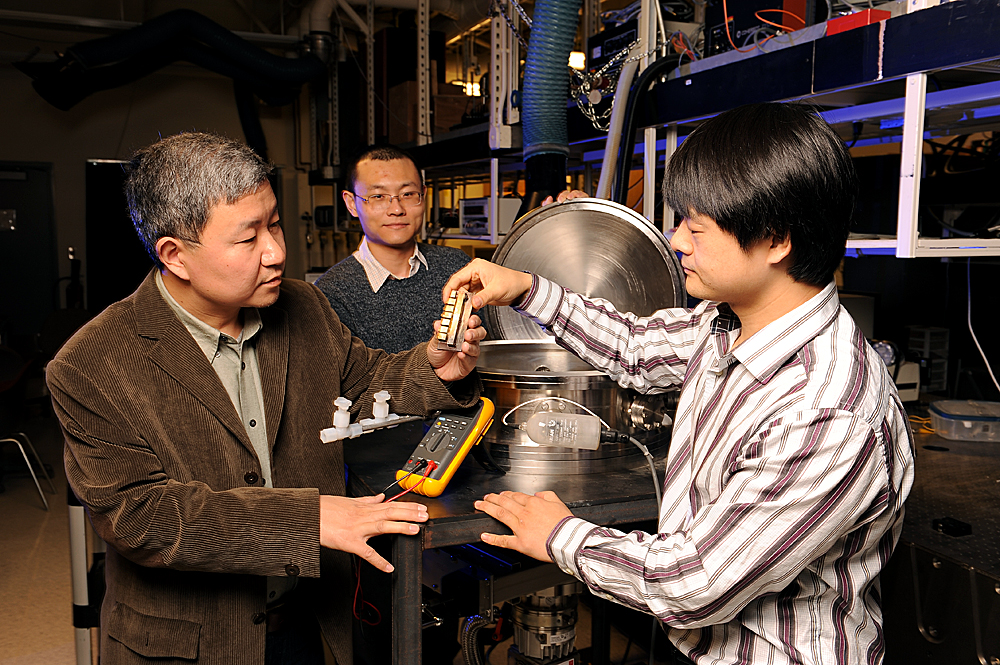
    Xinwei Wang, Guoqing Liu and Xiaopeng Huang, left to right, show the instruments they used to study the thermal conductivity of spider silk. Photo by Bob Elbert.

    Xinwei Wang had a hunch that spider webs were worth a much closer look.

    So he ordered eight spiders - Nephila clavipes, golden silk orbweavers - and put them to work eating crickets and spinning webs in the cages he set up in an Iowa State University greenhouse.

    Wang, an associate professor of mechanical engineering at Iowa State, studies thermal conductivity, the ability of materials to conduct heat. He's been looking for organic materials that can effectively transfer heat. It's something diamonds, copper and aluminum are very good at; most materials from living things aren't very good at all.

    But spider silk has some interesting properties: it's very strong, very stretchy, only 4 microns thick (human hair is about 60 microns) and, according to some speculation, could be a good conductor of heat. But nobody had actually tested spider silk for its thermal conductivity.

    And so Wang, with partial support from the Army Research Office and the National Science Foundation, decided to try some lab experiments. Xiaopeng Huang, a post-doctoral research associate in mechanical engineering; and Guoqing Liu, a doctoral student in mechanical engineering, helped with the project.

    "I think we tried the right material," Wang said of the results.

    What Wang and his research team found was that spider silks - particularly the draglines that anchor webs in place - conduct heat better than most materials, including very good conductors such as silicon, aluminum and pure iron. Spider silk also conducts heat 1,000 times better than woven silkworm silk and 800 times better than other organic tissues.

    A paper about the discovery - "New Secrets of Spider Silk: Exceptionally High Thermal Conductivity and its Abnormal Change under Stretching" - has just been published online by the journal Advanced Materials.

    "Our discoveries will revolutionize the conventional thought on the low thermal conductivity of biological materials," Wang wrote in the paper.

    The paper reports that using laboratory techniques developed by Wang - "this takes time and patience" - spider silk conducts heat at the rate of 416 watts per meter Kelvin. Copper measures 401. And skin tissues measure .6.

    "This is very surprising because spider silk is organic material," Wang said. "For organic material, this is the highest ever. There are only a few materials higher - silver and diamond."

    Even more surprising, he said, is when spider silk is stretched, thermal conductivity also goes up. Wang said stretching spider silk to its 20 percent limit also increases conductivity by 20 percent. Most materials lose thermal conductivity when they're stretched.

    That discovery "opens a door for soft materials to be another option for thermal conductivity tuning," Wang wrote in the paper.

    And that could lead to spider silk helping to create flexible, heat-dissipating parts for electronics, better clothes for hot weather, bandages that don't trap heat and many other everyday applications.

    What is it about spider silk that gives it these unusual heat-carrying properties?

    Wang said it's all about the defect-free molecular structure of spider silk, including proteins that contain nanocrystals and the spring-shaped structures connecting the proteins. He said more research needs to be done to fully understand spider silk's heat-conducting abilities.

    Wang is also wondering if spider silk can be modified in ways that enhance its thermal conductivity. He said the researchers' preliminary results are very promising.

    And then Wang marveled at what he's learning about spider webs, everything from spider care to web unraveling techniques to the different silks within a single web. All that has one colleague calling him Iowa State's Spiderman.

    "I've been doing thermal transport for many years," Wang said. "This is the most exciting thing, what I'm doing right now."

    Source: Iowa State University

    Additional Information:
    Related Articles:

    Is Seaweed the Future of Biofuel?

    Engineerblogger
    March 6, 2012


    Credit: TAU

    As scientists continue the hunt for energy sources that are safer, cleaner alternatives to fossil fuel, an ever-increasing amount of valuable farmland is being used to produce bioethanol, a source of transportation fuel. And while land-bound sources are renewable, economists and ecologists fear that diverting crops to produce fuel will limit food resources and drive up costs.

    Now, Prof. Avigdor Abelson of Tel Aviv University's Department of Zoology and the new Renewable Energy Center, and his colleagues Dr. Alvaro Israel of the Israel Oceanography Institute, Prof. Aharon Gedanken of Bar-Ilan University, Dr. Ariel Kushmaro of Ben-Gurion University, and their Ph.D. student Leor Korzen, have gone to the seas in the quest for a renewable energy source that doesn't endanger natural habitats, biodiversity, or human food sources.He says that marine macroalgae — common seaweed — can be grown more quickly than land-based crops and harvested as fuel without sacrificing usable land. It's a promising source of bioethanol that has remained virtually unexplored until now.

    The researchers are now developing methods for growing and harvesting seaweed as a source of renewable energy. Not only can the macroalgae be grown unobtrusively along coastlines, Prof. Abelson notes, they can also clear the water of excessive nutrients — caused by human waste or aquaculture — which disturb the marine environment.

    A man-made "ecosystem"

    While biomasses grown on land have the potential to inflict damage on the environment, the researchers believe that producing biofuel from seaweed-based sources could even solve problems that already exist within the marine environment. Many coastal regions, including the Red Sea in the south of Israel, have suffered from eutrophication — pollution caused by human waste and fish farming, which leads to excessive amounts of nutrients and detrimental algae, ultimately harming endangered coral reefs.

    Encouraging the growth of seaweed for eventual conversion into biofuel could solve these environmental problems. The system that the researchers are developing, called the "Combined Aquaculture Multi-Use Systems" (CAMUS), takes into account the realities of the marine environment and human activity in it. Ultimately, all of these factors function together to create a synthetic "man-made ecosystem," explains Prof. Abelson.

    Man-made fish feeders, which produce pollution in the form of excess nutrients and are generally considered harmful to the marine environment, would become a positive link in this chain. Used alongside an increased population of filter feeders such as oysters, which suck in extra particles and convert them food that the microalgae can consume, this "pollution" could be used to sustain a much greater yield of seaweed, which is needed for seaweed to become a sustainable source of fuel.

    "By employing multiple species, CAMUS can turn waste into productive resources such as biofuel, at the same time reducing pollution's impact on the local ecosystem," he says.

    Turning waste into opportunity

    The researchers are now working to increase the carbohydrate and sugar contents of the seaweed for efficient fermentation into bioethanol, and they believe that macroalgae will be a major source for biofuel in the future. The CAMUS system could turn seaweed into a sustainable bioethanol source that is productive, efficient, and cost-effective.

    Source: Tel Aviv University

    Monday, March 5, 2012

    Battery 500 Project: 800 km range for electrovehicles

    Engineerblogger
    March 5, 2012


    IBM's Battery 500 project, led by scientists at IBM Research – Almaden in California, is an interdisciplinary consortium to develop a lithium–air battery that aims to increase the range of electrovehicles to 500 miles (approximately 800 km). This is more than five times the range of today's batteries, which average some 150 km per charge. If the project is successful, battery-powered vehicles could finally become a practical reality and thus overcome the main obstacle to becoming generally accepted and widespread: In a recent survey conducted by IBM, 64% of consumers said that the limited range was their strongest objection to driving electrovehicles.

    Changing from gasoline to electricity as the main energy source for vehicles could be one of the most significant technological turning points in the history of our modern industrial society. However, progress has been slow in developing high-performance batteries. High manufacturing costs are another major factor that has limited the widespread acceptance and large-scale development of electrovehicles. Consumers' greatest fear is being stranded somewhere with an empty battery, and this fear is justified, as the range of most current battery-operated vehicles is only some 150 km. It appears unlikely that a realistic range can be achieved with today's battery technology, which must also have an acceptable weight and be available at reasonable prices.

    Rechargeable lithium–ion storage batteries like the ones used in cell phones or notebook computers offer only a fraction of the energy density—the amount of energy that can be stored per mass unit or volume unit—achieved by fossil fuels such as gasoline or diesel. Therefore this battery technology for electrovehicles is only of interest today for short distances or in hybrid-engine vehicles. If this situation is to be fundamentally changed, new types of batteries with significantly higher energy densities must replace today's lithium–ion batteries. IBM, world patent leader and active for decades in fundamental research, has launched a new project dubbed Battery 500 to tackle this problem. For this new project, IBM is leveraging its recent progress in the fields of materials science, nanotechnology, chemistry and supercomputing.

    An interdisciplinary team of scientists at IBM Research – Almaden in California and IBM Research – Zurich, together with leading universities, corporations and research institutes has been exploring a so-called lithium–air battery since mid-2009. The aim of this project is to develop a battery whose energy density is up to ten times higher than that of today's rechargeable lithium–ion batteries, thus providing electrovehicles with a range of up to 500 miles or 800 km. "With our lithium–air battery technology we hope to achieve a quantum leap that could be a breakthrough in electromobility," explains Dr. Winfried Wilcke, initiator and head of the Battery 500 project at IBM Research – Almaden. "This is yet another project of IBM's 'Smarter Planet' vision in which new mobility concepts play a vital role."

    "Airy" bundle of energy

    A major advantage of the lithium–air battery is that it takes oxygen from the atmosphere as its reacting agent. The oxygen is stored in light carbon nanostructures in the cathode, meaning that significantly more energy per kilogram battery weight can be stored than in today's batteries. A numerical example illustrates this advantage: a conventional lithium–ion battery with an energy content of 50 kilowatt hours (kWh) weighs about 500 kg. A range of 800 km would require an energy content of 150 kWh, which would mean a weight of 1.5 tons, which is clearly unrealistic for practical use in electrovehicles. In contrast, IBM scientists estimate that a 150 kWh lithium–air battery would weigh "only" about 150–300 kg.
    The theoretically achievable specific energy of a lithium–air battery (without the weight of the ambient oxygen) is greater than 11 kWh per kilogram (kWh/kg). Scientists predict that, in practice, a lithium–air battery could achieve about one-tenth of the theoretical specific energy. Taking the relative efficiency of combustion motors and electromotors into account, the difference in "practical" energy densities between electromotors and gasoline or diesel-powered motors is actually very small because electromotors have a very high efficiency of 85%. The lithium–air technology thus exhibits the greatest potential of all battery types researched to date.

    A battery that "breathes"

    Like all batteries, the basic construction of a lithium–air battery consists of two electrodes, in this case a metal electrode of lithium (the anode) and an oxygen-permeable electrode of a light carbon structure (the cathode). When the battery is discharged, the lithium atoms of the anode lose electrons and proceed as lithium ions through an electrically conducting electrolyte to the cathode, where they react with oxygen from the atmosphere. The product of this reaction is then deposited in the cathode. When the battery is charged, it releases the oxygen collected while the vehicle was being driven (discharged) back into the atmosphere. Metaphorically speaking, the battery "inhales" oxygen while discharging and "exhales" it again while being recharged.
    IBM scientists are focusing on so-called aprotic (non-watery) lithium–air batteries, which use organic liquids and lithium salts as electrolytes. Discharging the battery produces lithium peroxide (Li2O2)—but only when the right electrolytes are used—which is stored in the battery's cathode. During the charging process, the lithium peroxide breaks down into oxygen, which is released into the atmosphere, and lithium, which is stored in the battery's anode.

    From simulations and experiments to success

    The members of this project have already achieved major breakthroughs toward achieving their ambitious goal. For example, the functionality of this technology has been proved in principle on laboratory-scale models that unequivocally demonstrated the rechargeability of lithium–air batteries. The key to this first success was a combination of computer-based simulations and practical experiments. The team at the IBM Research – Zurich Laboratory performed so-called ab initio simulations to obtain new insights into the molecular-level processes that take place in lithium–air batteries. These highly complex simulations draw exclusively on basic laws of physics and physics models. In this way, interactions between atoms and molecules in a given system can be computed exactly. Performed on a petaflop IBM BlueGene/P supercomputer at Argonne National Laboratory, these simulations showed for the first time that the electrolytes used in conventional lithium–ion batteries do not work in lithium–air batteries, contrary to what was previously thought.

    "Our simulations allowed us to demonstrate the processes that actually take place during discharge. The carbon-based electrolyte reacts in an undesirable manner with the lithium peroxide and decompose as a result. This effectively destroys the lithium–air battery," explains Dr. Alessandro Curioni, head of the Computational Sciences research group at IBM Research – Zurich.
    Using a mass spectrometer developed specifically for the Battery 500 project, scientists were able to perform laboratory experiments that clearly confirm the electrolyte decomposition predicted by the simulations. "Simulations and experimental results have allowed us to identify stable electrolytes with which we were able to demonstrate the basic functionality of the charging and discharging processes," says project leader Wilcke. In addition, very high charge capacities have been demonstrated in the laboratory. A further fundamental result is the fact that, contrary to long-held assumptions, catalyzers are not kinetically necessary because the so-called overvoltage of the fundamental electrochemical reaction 2Li+ + O2 + 2- <=> Li2O2 is much smaller than originally thought. Nevertheless, the very low conductivity of lithium peroxide is a problem that is yet to be resolved.

    Still a "Grand Challenge"

    Several other veritable challenges remain for scientists to solve before lithium–air batteries can be implemented for practical purposes or fabricated industrially. It is therefore one of IBM Research's so-called "Grand Challenges"—ambitious and risky research projects with uncertain outcomes but very high potentials, such as the development of the WATSON supercomputer.
    Currently, scientists are seeking to increase the energy density of the battery, which is still far too low for real-life electromobility. Another challenge is the charging process, which is currently too slow. But even assuming that this can be improved markedly, it will not be possible, say, to charge the battery quickly during one's coffee break. Scientists are currently aiming for the capability to charge the battery overnight, which, based on the considerable range, should be sufficient. To solve the problem posed by lithium's susceptibility to humidity, the IBM team is also developing novel nanomembranes, which will be required in order to protect the sensitive lithium anode from steam and carbon dioxide in the atmosphere. Additional challenges are the long-term stability of the components' materials and the improved ability to suppress undesirable secondary reactions.

    Upon successful completion of the current research phase, the Battery 500 project could possibly be pursued with industrial partners to develop commercial models of the lithium–air battery in the timeframe of 2020 to 2030. Participants of the Battery 500 project include several other top-notch partners of German, Japanese and Korean corporations as well as additional American research institutions.


    Source: IBM

    Printing Muscle: 3D printer creates human tissues that could help speed drug discovery

    Engineerblogger
    March 5, 2012
     
    Credit: Frank Rogozienski/Wonderful Machine

    In a small clean room tucked into the back of San Diego–based startup Organovo, Chirag Khatiwala is building a thin layer of human skeletal muscle. He inserts a cartridge of specially prepared muscle cells into a 3-D printer, which then deposits them in uniform, closely spaced lines in a petri dish. This arrangement allows the cells to grow and interact until they form working muscle tissue that is nearly indistinguishable from something removed from a human subject.

    The technology could fill a critical need. Many potential drugs that seem promising when tested in cell cultures or animals fail in clinical trials because cultures and animals are very different from human tissue. Because Organovo's product is so similar to human tissue, it could help researchers identify drugs that will fail long before they reach clinical trials, potentially saving drug companies billions of dollars. So far, Organovo has built tissue of several types, including cardiac muscle, lung, and blood vessels.

    Unlike some experimental approaches that have used ink-jet printers to deposit cells, Organovo's technology enables cells to interact with each other much the way they do in the body. They are packed tightly together and incubated, prompting them to adhere to each other and trade chemical signals. When they're printed, the cells are kept bunched together in a paste that helps them grow, migrate, and align themselves properly. ­Muscle cells, for example, orient themselves in the same direction to create tissue that can contract.

    So far, Organovo has made only small pieces of tissue, but its ultimate goal is to use its 3-D printer to make complete organs for transplants. Because the organs would be printed from a patient's own cells, there would be less danger of rejection.

    Organovo plans to fund its organ-­printing research with revenue from printing tissues to aid in drug development. The company is undertaking experiments to prove that its technology can help researchers detect drug toxicity earlier than is possible with other tests, and it is setting up partnerships with major companies, starting with the drug giant Pfizer.

    Source: Technology Review

    Robotics: Present state and future trends

    Engineerblogger
    March 5, 2012


    Grunt work: This concept for a military robot would continue the tradition of machines taking on jobs that are dirty or dangerous

    Contemporary robots are used for jobs that are boring, dirty, or dangerous; or for tasks that require more speed, precision, or endurance than a human can provide.

    They perform almost all welding, painting, and assembly tasks in the automotive industry and have become a basic element of production in industries ranging from electronics to wood products. According to World Robotics, a 2008 report published by the International Federation of Robotics, the estimated number of industrial robots installed worldwide is more than one million—50% in Asia and Australia, 33% in Europe, and 17% in North America.

    An assessment of the international state of robotics R&D published in 2006 by the nonprofit analysis World Technology Evaluation Center (WTEC), found that the U.S. was leading in robot navigation in outdoor environments, robot architectures (the integration of control, structure, and computation), and in applications to space, defense, underwater systems, and some aspects of service and personal robots.

    Japan and Korea lead in technology for robot mobility, humanlike robots, and some aspects of service and personal robots (including entertainment). Europe led in mobility for structured environments, including urban transportation. Europe also has significant programs in elder care and home service robotics. Australia led in commercial applications of field robotics, particularly in such areas as cargo handling and mining, as well as in the theory and application of localization and navigation.

    The panel also reported that the U.S. lost its preeminence in industrial robotics at the end of the 1980s, and nearly all its robots for welding, painting, and assembly are imported from Japan or Europe.


    Cognitive robots can be used as home helpers, caregivers, or emergency and rescue aids.

    U.S. R&D efforts on robotics have focused primarily on military and defense-related applications—unmanned aerial, ground, and maritime systems, both surface and undersea. The Department of Defense plans to develop an increasingly sophisticated force of unmanned systems over the next 25 years and expects to integrate them with manned systems.

    In 2009, the DOD published the 25-year, unmanned-systems integrated roadmap to 2034. In July 2008, the Robotics Technology Consortium, Inc., was formed with 70 initial organizations, to speed the creation and deployment of ground robotics technology for the DOD and other U.S. government agencies. It has since grown to more than 200 member organizations.

    A congressional robotics caucus was formed in 2007 to broaden awareness among members of Congress and policy analysts of key issues facing the U.S. robotics industry. In May 2009, the caucus published A Roadmap for U.S. Robotics: From Internet to Robotics, a targeted R&D roadmap for nonmilitary applications of robotics in manufacturing, in medical and healthcare, in domestic and professional services, and in emerging technologies.

    In 2005, the European Robotics Technology Platform was formed to strengthen links between academia and industry, and to develop a research agenda of European robotics. In 2009, the industry group Coordination Action for Robotics in Europe (CARE) also published the Strategic Research Agenda for Robotics.

    In Japan, the Ministry of Economy, Trade, and Industry has sponsored robotics activities for a long time. A 2007 national technology roadmap by the Trade Ministry called for one million robots to be installed throughout the country by 2025.

    To alleviate a workforce shortage in the country, robots are expected to fill the jobs of 3.5 million people by 2025. The Japanese government also estimates that the nation may save as much as $21 billion on insurance payments in the same year by using robots to monitor the health of elderly people.

    In South Korea, a 10-year robotics initiative was launched along with a detailed roadmap to make the country the second-largest provider of robotics in the world, after Japan. Robot Land, a theme park being built near Seoul, is expected to open in 2013. The country’s forecasts include placing a robot in every household by 2020.

    Future Environments

    The convergence of technologies involving computing, communication, and intelligent interfaces with autonomous robotics suggests that networks of intelligent, autonomous robots may become the next disruptive technology.

    The concept of networking everyday objects and appliances in an ambient intelligent environment is not new. But the focus has usually been on the creation, delivery, and sharing of information, and not on the performance of physical tasks.

    Autonomous mobile robots may one day perform complex medical procedures, including surgery, on patients in dangerous or remote locations from battlefields to space, with little human guidance. Advances in miniaturization and bionanotechnology could lead to a new generation of nanorobots, which would revolutionize the medical industry. Nanobots may provide treatment at the cellular level, perhaps clearing clogged arteries, repairing genes, battling cancer cells, and delivering drugs.

    Cognitive robots can become available as office helpers or as robotic companions for guiding the blind and assisting the elderly. General-purpose anthropomorphic robots, with human-like hands, can be used in transforming manufacturing from resource-intensive to knowledge-intensive, and creating totally unmanned factories. Agricultural robotic scouts may roam the fields of the future to care for the plants, use sensors to provide detailed real-time information about the status of the crop, and apply data fusion techniques for making management decisions.

    Source: ASME

    Heart-powered pacemaker could one day eliminate battery-replacement surgery

    Engineerblogger
    March 5, 2012

    An artificial pacemaker from St. Jude Medical, with electrode.

    A new power scheme for cardiac pacemakers turns to an unlikely source: vibrations from heartbeats themselves.

    Engineering researchers at the University of Michigan designed a device that harvests energy from the reverberation of heartbeats through the chest and converts it to electricity to run a pacemaker or an implanted defibrillator. These mini-medical machines send electrical signals to the heart to keep it beating in a healthy rhythm. By taking the place of the batteries that power them today, the new energy harvester could save patients from repeated surgeries. That's the only way today to replace the batteries, which last five to 10 years.

    "The idea is to use ambient vibrations that are typically wasted and convert them to electrical energy," said Amin Karami, a research fellow in the U-M Department of Aerospace Engineering. "If you put your hand on top of your heart, you can feel these vibrations all over your torso."

    The researchers haven't built a prototype yet, but they've made detailed blueprints and run simulations demonstrating that the concept would work. Here's how: A hundredth-of-an-inch thin slice of a special "piezoelectric" ceramic material would essentially catch heartbeat vibrations and briefly expand in response. Piezoelectric materials' claim to fame is that they can convert mechanical stress (which causes them to expand) into an electric voltage.

    Karami and his colleague Daniel Inman, chair of Aerospace Engineering at U-M, have precisely engineered the ceramic layer to a shape that can harvest vibrations across a broad range of frequencies. They also incorporated magnets, whose additional force field can drastically boost the electric signal that results from the vibrations.

    The new device could generate 10 microwatts of power, which is about eight times the amount a pacemaker needs to operate, Karami said. It always generates more energy than the pacemaker requires, and it performs at heart rates from 7 to 700 beats per minute. That's well below and above the normal range.

    Karami and Inman originally designed the harvester for light unmanned airplanes, where it could generate power from wing vibrations.

    A paper on the research, titled "Powering pacemakers from heartbeat vibrations using linear and nonlinear energy harvesters," is published in the current print edition of Applied Physics Letters.

    The research is funded by the National Institute of Standards and Technology and the Institute for Critical Technology and Applied Science at Virginia Tech.

    Source: University of Michigan

    Friday, March 2, 2012

    Unique salt allows energy production to move inland

    Engineerblogger
    March 2, 2012


    Microbial reverse dialysis test cell. Credit PSU

    Production of energy from the difference between salt water and fresh water is most convenient near the oceans, but now, using an ammonium bicarbonate salt solution, Penn State researchers can combine bacterial degradation of waste water with energy extracted from the salt-water fresh-water gradient to produce power anywhere.

    "We are taking two technologies, each having limitations, and putting them together," said Bruce E. Logan, Kappe Professor of Environmental Engineering. "Combined, they overcome the limitations of the individual technologies."

    The technologies Logan refers to are microbial fuel cells (MFC) -- which use wastewater and naturally occurring bacteria to produce electricity -- and reverse electrodialysis (RED) -- which produces electricity directly from the salinity gradient between salty and fresh water. The combined technology creates a microbial reverse-electrodialysis cell (MRC). The researchers describe MRCs in today's (March 1) edition of Science Express.

    RED stacks extract energy from the ionic difference between fresh water and salt water. A stack consists of alternating ion exchange membranes -- positive and negative -- with each RED membrane pair contributing additively to the electrical output. Unfortunately, using only RED stacks to produce electricity is difficult because a large number of membranes is required when using water at the electrodes, due to the need for water electrolysis.

    Using exoelectrogenic bacteria -- bacteria found in wastewater that consume organic material and produce an electric current -- reduces the number of stacks needed and increases electric production by the bacteria.

    Logan, working with Roland Cusick, graduate student in environmental engineering, and postdoctoral fellow Younggy Kim, placed a RED stack between the electrodes of an MFC to form the MRC.

    While the researchers previously showed that an MRC can work with natural seawater, the organic matter in water will foul the membranes without extensive precleaning and treatment of the water. Seawater use restricts MRC operation to coastal areas, but food waste, domestic waste and animal waste contain about 17 gigawatts of power throughout the U.S. One nuclear reactor typically produces 1 gigawatt.

    Rather than rely on seawater, the researchers used ammonium bicarbonate, an unusual salt. An ammonium bicarbonate solution works similarly to seawater in the MRC and will not foul the membranes. The ammonium bicarbonate is also easily removed from the water above 110 degrees Fahrenheit. The ammonia and carbon dioxide that make up the salt boil out, and are recaptured and recombined for reuse.

    "Waste heat makes up 7 to 17 percent of energy consumed in industrial processes," said Logan. "There is always a source of waste heat near where this process could take place and it usually goes unused."

    The researchers tested their ammonium bicarbonate MRC and found that the initial production of electricity was greater than that from an MRC using seawater.

    "The bacteria in the cell quickly used up all the dissolved organic material," said Logan. "This is the portion of wastewater that is usually the most difficult to remove and requires trickling filters, while the particulate portion which took longer for the bacteria to consume, is more easily removed."

    The researchers tested the MRC only in a fill and empty mode, but eventually a stream of wastewater would be run through the cell. According to Logan, MRCs can be configured to produce electricity or hydrogen, making both without contributing to greenhouse gases such as carbon dioxide. The MRC tested produced 5.6 watts per square meter.

    Logan also said not having to process wastewater would save about 60 gigawatts.

    The King Abdullah University of Science and Technology supported this work.

    Source: Pennsylvania State University

    DARPA’s Robotics Simulator/Test Platform Reaches 2nd Milestone

    Engineerblogger
    March 2, 2012


    DARPA's Autonomous Robotic Manipulation (ARM) program is developing software to perform human-level tasks quickly and with minimal direction.

    This video shows the ARM robot performing 18 grasping and manipulation tasks using vision, force, and tactile sensing with full autonomy – no active human control. The DARPA-supplied robot was built using commercial components that include an arm, hand, neck, and head sensors.

    During rigorous testing in November 2011, the best team achieved 93% success in grasping modeled and unmodeled objects. The ARM program has entered its second phase, where focus turns to complex bimanual manipulation scenarios.

    Source: DARPA

    Jump in Battery Capacity: Technology could cut the cost of electric-car batteries

    Technology Review
    March 2, 2012


    Battery packs can cost more than $10,000, which is one of the biggest reasons electric cars cost more than conventional gas-powered cars.

    Envia, a startup funded by GM and the U.S. government's Advanced Research Projects Agency for Energy (ARPA-E), says it has built batteries that store more than twice as much energy as the ones in electric cars now. If the technology comes to fruition, it could halve the cost of batteries—the most expensive part on an electric vehicle.

    Much work remains, however, before the batteries can be used in commercial electric vehicles. Among other things, the number of times they can be charged and recharged must be more than doubled.

    The technology was highlighted at the annual ARPA-E summit in Washington, D.C., this week, in part to demonstrate the progress in energy technology being made by the Department of Energy, which oversees ARPA-E. The DOE has come under fire after giving loan guarantees to some companies that later declared bankruptcy.

    Envia's technology is based on work originating in the DOE's Argonne National Lab, which identified a material with a novel microscopic structure that could help improve the storage capacity of one of the battery electrodes.

    GM and battery maker LG Chem, which is using some aspects of the technology in the Chevrolet Volt, may incorporate other technology from Argonne in batteries for the next generation of the car. Envia modified the original Argonne technology to get higher energy densities.
    To read more click here...

    Additional Information:

    Thursday, March 1, 2012

    Generating electricity from vibrations in road surface works

    Engineerblogger
    March 1, 2012


    Credit: University of Twente

    A pilot research project into vibration energy on the N34 provincial motorway near Hardenberg in the eastern Netherlands has shown that vibration energy as a local energy source is a sustainable alternative for the batteries of roadside sensors and other applications. The trial project has provided valuable insights into this innovative form of energy production.

    In the autumn of 2011, a piezoelectric material that converts vibrations from passing vehicles into energy was applied to the surface of the N34 motorway. The piezoelectric material was applied to the road surface in a rural area where the speed limit is 100 km per hour. The aim of the pilot project was to investigate the feasibility of piezo technology in road construction. The research was carried out by the Tauw advice and engineering agency and the University of Twente in partnership with the Dutch province of Overijssel.

    The aim of the pilot project was to establish whether electrical energy can be generated from traffic vibrations using piezoelectric material and, if so, how much energy can be generated. The trial system was tested in various weather conditions between October and December 2011. A measurement device was used to continually monitor the system and collect data.

    Results
    Tauw and the University of Twente have concluded that energy can indeed be generated using piezoelectric material in the road surface. The amount of energy generated depends on the number of passing vehicles and the number of piezo elements in the road. Vehicles that are moving more slowly appear to generate slightly more energy than faster-moving vehicles, but further research is needed to confirm this.

    The amount of energy generated during the pilot project was too small to be used for traffic lights or street lighting, but it was enough for devices that need less energy, such as wireless motion sensors, which detect vehicles and send a signal to, for example, traffic lights. Currently these are mainly powered by batteries or solar panels. Vibration energy is a sustainable alternative for these power sources.

    The project partners also concluded that integrating piezo elements in an existing road surface is problematic. For the pilot research, a narrow groove was cut into the road and a steel housing containing the piezo elements was fitted into it. Ultimately it turned out that the housing was not strong enough to withstand the forces of the passing traffic, and it came loose in December. This did not cause a traffic hazard, but it did mean that the research ended a few weeks earlier than planned.

    Applications
    The project partners are hopeful about other applications. Project leader Simon Bos says: “The application of vibration energy in existing roads did turn out to be difficult, but we do see possibilities for existing and new bridges and viaducts, for example at expansion joints. Of course further research into a good, strong design has to be carried out before this can be applied on a large scale.”

    Next steps
    Following the pilot project, various interested parties have contacted Tauw and the University of Twente to carry out further research into vibration energy. Piezo elements can not only be fitted under bridges and viaducts, but also under concrete road slabs and speed bumps, or alongside railway lines or water drainage channels. The application of piezo elements beneath concrete slabs is at an advanced stage, while the other possible applications are still in the research phase.

    Source: University of Twente

    Material Flow and Logistics technology: Swarming and transporting

    Engineerblogger
    March 1, 2012


    The autonomous transporters perform their work in a swarm.  Source:  Fraunhofer IML

    On its own, an ant is not particularly clever. But in a community, the insects can solve complicated tasks. Researchers intend to put this „swarm intelligence“ to use in the logistics field. Lots of autonomous transport shuttles would provide an alternative to traditional materials-handling technology.

    The orange-colored vehicle begins moving with a quiet whirr. Soon afterwards the next shuttles begin to move, and before long there are dozens of mini-transporters rolling around in the hall. As if by magic, they head for the high-rack storage shelves or spin around their own axis. But the Multishuttle Moves® – is the name given to these driverless transport vehicles – are not performing some robots‘ ballet. They are moving around in the service of science. At the Fraunhofer Institute for Material Flow and Logistics IML in Dortmund, Germany, researchers are working to harness swarm intelligence as a means of improving the flow of materials and goods in the warehouse environment. In a research hall 1000 square meters in size, the scientists have replicated a small-scale distribution warehouse with storage shelves for 600 small-part carriers and eight picking stations. The heart of the testing facility is a swarm of 50 autonomous vehicles. “In the future, transport systems should be able to perform all of these tasks autonomously, from removal from storage at the shelf to delivery to a picking station. This will provide an alternative to conventional materials-handling solutions,“ explains Prof. Dr. Michael ten Hompel, executive director at IML.

    But how do the vehicles know what they should transport, and where, and which of the 50 shuttles will take on any particular order? “The driverless transport vehicles are locally controlled. The ›intelligence‹ is in the transporters themselves,“ Dipl.-Ing. Thomas Albrecht, head of the Autonomous Transport Systems department explains the researchers‘ solution approach. “We rely on agent-based software and use ant algorithms based on the work of Marco Dorigo. These are methods of combinational optimization based on the model behavior of real ants in their search for food.“ When an order is received, the shuttles are informed of this through a software agent. They then coordinate with one another via WLAN to determine which shuttle can take over the load. The job goes to whichever free transport system is closest.

    The shuttles are completely unimpeded as they navigate throughout the space – with no guidelines. Their integrated localization and navigation technology make this possible. The vehicles have a newly developed, hybrid sensor concept with signal-based location capability, distance and acceleration sensors and laser scanners. This way, the vehicles can compute the shortest route to any destination. The sensors also help prevent collisions.

    The vehicles are based on the components of the shelf-bound Multishuttle already successfully in use for several years. The researchers at IML have worked with colleagues at Dematic to develop the system further. The special feature about the Multishuttle Move®: the transporters can navigate in the storage area and in the hall. To accomplish this, the shuttles are fitted with an additional floor running gear. But what benefits do these autonomous transporters offer compared with conventional steady materials-handling technology with roller tracks? “The system is considerably more flexible and scalable,“ Albrecht points out. It can grow or contract depending on the needs at hand. This is how system performance can be adapted to seasonal and daily fluctuation. Another benefit: It considerably shortens transportation paths. In conventional storage facilities, materials-handling equipment obstructs the area between high-rack storage and picking stations. Packages must travel two to three times farther than the direct route. “It also makes shelf-control units and steady materials-handling technology,“ Albrecht adds. Researchers are now trying to determine how these autonomous transporters can improve intralogistics. “We want to demonstrate that cellular materials-handling technology makes sense not only technically but also economically as an alternative to classic materials-handling technology and shelf-control units,“ institute executive director ten Hompel observes. If this succeeds, the autonomous vehicles could soon be going into service in warehouses.

    Source: Fraunhofer-Gesellschaft

    National Grid, Advanced Plasma Power and Progressive Energy announce new project to transform waste into Bio Substitute Natural Gas

    Engineerblogger
    March 1, 2012


    Project will deliver an end-to-end process for converting waste to Bio-SNG, using Gasplasma® technology

    The first pilot project that demonstrates the use of waste to produce bio-substitute natural gas (Bio-SNG) has today been announced by National Grid, Advanced Plasma Power and Progressive Energy.

    The project, which uses waste as a feedstock to produce Bio-SNG, will be based at the Advanced Plasma Power Gasplasma® facility in Swindon, UK. It will demonstrate the technical feasibility and commercial viability of the waste to Bio-SNG process. The three partners will work together to design, install and test the operation of a demonstration plant.

    The plant will take the waste-derived and energy rich synthesis gas from the existing Gasplasma® process, and convert it to meet the specification for injecting it into the gas network. Bio-SNG could play a crucial role in the decarbonisation of heating and help reach the UK's binding carbon reduction targets. As part of its work on future energy scenarios, National Grid has forecast that renewable gas could be a vital part of the energy mix in the coming decades.


    APP’s process converts commercial waste into high-quality syngas, which can then be converted into methane. Credit: APP

    Marcus Stewart, Future Distribution Networks Manager at National Grid said, “This project is a great opportunity to look at the potential of Bio-SNG from both a technical and commercial perspective. The project underlines our commitment to seeking economic and innovative ways to decarbonise energy, while making the best use of the existing network. ”

    It is estimated that renewable gas, of which Bio-SNG may be a major source, could account for as much as one fifth of the UK’s heat requirement by 2050.

    Rolf Stein, Chief Executive, Advanced Plasma Power said, “The development and implementation of a process to derive Bio-SNG from waste using our unique Gasplasma® process has significant global implications for sustainable waste management and low carbon energy solutions. We look forward to demonstrating the process on our plant in Swindon.”

    Phillip Cozens, Progressive Energy said, “"This project is a significant step towards greater resource efficiency in our economy, exploiting the capacity of the existing gas infrastructure and demonstrating the potential to deliver renewable heat at a cost that is competitive with other renewable heat options. The partnership has put together a strong project execution team to deliver a practical demonstration of Bio-SNG production from residual wastes. Successful demonstration would provide a blue-print for general deployment.”

    National Grid:
    National Grid is an electricity and gas company that connects consumers to energy sources through its networks. The company is at the heart of one of the greatest challenges facing our society - to create new, sustainable energy solutions for the future and developing an energy system that underpins economic prosperity in the 21st century. National Grid holds a vital position at the centre of the energy system and we ‘join everything up’. In Britain, we run the gas and electricity systems that our society is built on, delivering gas and electricity across the country. In the North Eastern US, we connect more than seven million gas and electric customers to vital energy sources, essential for our modern lifestyles.

    Advanced Plasma Power:
    Advanced Plasma Power Limited (APP) is a leading technology provider for advanced waste to energy plants, showcasing its globally patented Gasplasma® technology. After the removal of valuable recyclates, the Gasplasma® process treats a wide range of feedstocks including residual municipal solid waste and commercial/industrial waste converting it all into two high value outputs: a clean, high quality, energy rich synthesis gas (syngas) and a solid, vitrified product each with multiple applications. The syngas can be used to generate electricity directly in gas engines, gas turbines and fuel cells or it can be converted to Bio-SNG or liquid fuels. The solid product, Plasmarok®, has a variety of valuable end uses, for instance, as a building material. The process is clean, modular and scalable, delivering high efficiency and maximising landfill diversion whilst minimising visual and environmental impact.

    Progressive Energy:
    Progressive Energy is a market leading project development company, specialising in clean energy and carbon abatement in the energy sector through the deployment of carbon capture and storage and renewable energy technologies. 

    Source: National Grid