Pages

Subscribe:

Labels

038628037504 (1) 10150 (1) 10BURIED (1) 10Count (1) 110011040 (1) 115Ounce (1) 1200mg (1) 12BSN (1) 12Count (2) 12CountNutricor (1) 12CountWWSN (1) 12Fresh (1) 12Stacker (3) 12VPX (1) 140243 (1) 14Servings (1) 158Ounce (1) 15Ounce (1) 16Ounce (2) 1716 (1) 17Skque (1) 1lbinLife (1) 2000Hrs (1) 2000mg (1) 200Watt (1) 2021A (1) 20OunceNatures (1) 2412Ounce (1) 24Count (1) 24EAS59134 (1) 24FRS (1) 24Guru (1) 24Guru01GR124 (2) 24Nestle (2) 24Pediasure (2) 24Peptamen (1) 24PieceDisplay (1) 24Solis (2) 27ReSource (2) 2Biochem (1) 2Dynamic (1) 2Jarrow (1) 2Muscle (1) 2Natures (1) 2Ounce (3) 2Pound (1) 30Day (1) 328601 (1) 334928 (1) 336gOptimum (1) 37Ounce (1) 3Ensure (1) 3M (1) 414 (1) 432500 (1) 48Boost (1) 48Fluid (1) 48ml (1) 4Ensure (1) 4Isopure (1) 5000mg (1) 527408 (1) 5511786 (1) 574400 (1) 5Hour (2) 5Ounces (1) 600Kendall (1) 662380 (1) 6Beneprotein (1) 6Proteinex (1) 70951 (1) 750mlNutriPrima (1) 845Ounce (1) 84Fluid (2) 84OuncesLiquid (1) 89Inch (1) 8nuun (2) 8Ounce (7) 99369FR (1) ABB (3) Academy (1) ACCENTS (1) Acia162Ounces (1) Acsry (1) Active (2) Adapter (1) AdapterBattery (1) Advance (1) Advanced (1) Advantage (1) AdvantEdge (1) Africa (29) African (1) Agaricus (1) AiCoco (1) AIDSTrustex (1) Airbrush (1) Airbus (6) Aircraft (94) AISI (1) Ajmeras (1) Alchohol (1) Alertness (1) Alfalfa (2) Alive (1) Allergy (1) Allspice (8) Alpine (1) Alstom (2) Alternative (1) Amarillo (1) Amazing (3) Amazon (2) American (1) animal (11) Annual Reports (155) Antioxidant (1) Anwar Ibrahim (1) Apple (1) Applied Materials (1) Arrowroot (1) AshtonDrake (1) Asia (72) Assorted (1) Atkins (1) Audi (1) Australia (21) Automotive (250) Automotive Technology (183) Ayurvedic (1) BABIES (1) Babys (1) Bacopa (1) BagAtkins2627 (1) BagsTraditional (1) BagSun (1) Balanced (1) Ballard Power System (1) Banaba (2) Baram Dam (1) Baram Regatta (1) Bariatric (1) Barisan Nasional (2) Barisan Nasional Helps Penan (1) Barista (2) Barley (2) barsBiochem (1) Basement (1) BASF (2) Basics (1) Batu Lawi (1) Bayer (1) BEA1017OZ (1) Beachbody (1) Beaded (1) Beaumont (1) beautiful girl image (19) Beauty (2) Beneprotein (2) Berries (3) Berry (4) BerryLiving (1) Beverage (1) Bicycle (1) BioAstin (1) Biochem (4) Biofuel (12) Biogenesis (2) BlackBlender (1) Blend (1) Blender (4) Blueberry (1) BlueStereo (1) BMF (1) BMW (7) BMX (1) BN (1) Boeing (4) Bombardier (4) Book (1) Borneo (6) Bottle (8) BottleProStat (1) Bottles (15) BottleScivation (1) bottlesEnsure (2) BottlesMio (1) BoxChenille (1) BoxDarice140243 (1) BOXESAmerican (1) BoxesFRSPowder (1) BoxPremier (1) BP (2) Brands (1) Brands833667000102 (1) Brazil (10) Brazilian (1) Breeze (3) BrewersBarista (1) BRIC (118) Brikpaks (3) Brownie (1) Bruno Manser (1) Bruno Manser Fund (3) Bruno Manser Fund Fraud (1) Bruno Manser Fund Frauds (1) Bruno Manser Lies (2) BTL410400 (1) Bubbles (1) Burner (1) business (72) Butchers (1) Butter (1) Butterscotch (1) Cable (1) Cables (1) Calcium (2) California (1) Calorie (3) Camera (1) Canada (11) Candela (1) Canister (2) CanisterCLICK (1) Canisters (1) Canning (1) Capramilk (1) CapsSwanson (1) Capsule (5) Capsules (6) CapsulesEAS (1) Caraway (1) Cardio (1) Carnation (1) CaseEnsure (2) CaseNestle (2) Celebrity (22) CellularFactory (1) Celsius (1) Certification (28) Certified (2) Chameleon (1) Charger (1) Charter/Terms of Reference (27) CHEAP (135) Chenille (1) Cherry (1) CherryZydot (1) Chevron (1) Chewing (1) Chile (1) China (99) Chipotle (1) Chlorophyll (1) Chocolate (7) Chocolate8 (1) Choice (2) Cholesterol (1) Chrome (1) Chrysler (1) Chunho (1) Citrifolia (1) Citroen (1) Citroën (1) Citrus (2) Civil Service (1) CK Morris Associates (1) Clare Rewcastle Brown (2) Class (1) Classic (2) Clinical (1) CNST (1) Coenzyme (1) Coffee (4) Coffee11001105 (1) Coffee7DSC2B (1) Coffeehouse (1) Cold Fusion (1) Coldkicker (1) Collectable (1) Collection (1) Colored (1) Colors (1) Communications (14) Company (2) COMPLETE (4) Complex (1) Computer (1) Concentrate (1) Concentrated (1) Concepts645654 (1) Condoms (1) Container (7) CONTROL20BGSee (1) Corrections (3) CosMedix (1) count (1) countAmscan (1) CountMy (1) Crayola (3) Criminal (4) Cruiser (1) Crunch (1) Cytosport (2) Daimler (3) Dam (1) DAP (1) DAP Lies (1) Darice (1) DARPA (18) Dato Roland Sagah Wee Inn (1) Defence (60) Defense (61) Delight (2) description (1) Desert (7) Design (65) DESIGNER (3) Desktop (1) detail (1) Detroit (1) Development (1) Dexatrim (1) diameter (1) diameterGaming (1) Diecast (1) Dinosaur (1) DISCOUNT (4) Discover (1) Disney (1) Doctors (1) DoE (8) DolphinsSticky (1) DOMAGRON (1) Dow Corning Corp (2) DP9260 (1) DRA6329 (1) Dragon (1) Dressing (1) Drink (11) Drinkin (1) drinksNVE (1) Dupont (2) dv9657clSIBCORP (1) Dymatize (3) DYMMGV (1) DYNAMIC (5) EachHager (1) EADS (12) ecigs (1) Eco-Tourism (1) Economy (14) Education (1404) Electra (1) Electric Grid (1) Electrolyte (4) ELP3STSL (1) Endorush (1) Endurox (2) Energizing (1) Energy (540) English Article (20) Enhanced (1) Enhancer (1) Enlive (2) Ensure (12) Enterprise (1) Environment (170) Enzymatic (1) Eraser (1) ERECTION (1) Ergonomics (4) ESA (4) Espresso (1) Essence (2) Essentials (3) EssentialsHSE (1) ethnic group (1) Europe (201) Executive/External Ombuds (2) Extended (2) ExtenderBadger (1) Extension (1) Extern/Intern (20) Extract (5) Extreme (21) Factor (1) Factors (3) Fantastic (1) Fatigued (1) Faucet (1) feature (9) Featuring (1) Fellowes (1) Fillet (1) First Energy (6) Fitera (2) FlatScreen (1) Flavor (1) FlavorBeachbody (1) Focus28 (1) Ford Motors (7) Foreign NGOs (2) Forest (1) formula (5) Formulas (1) Forts (1) FORUM (1) Fragrance (1) France (12) Frappuccino (1) FreeHubner (1) French (2) Friday Poll (13) Frontier (1) Frost (1) Fruits (1) Ft1140Alessco (1) Ft132Alessco (1) FToys (1) Fudge (1) Fuel Cell (26) Fujitsu (2) funny (19) Gadget (6) Galleries (1) Gallon (1) GameJax2000 (1) Games (1) General Electric (21) General Motors (15) Genesis (1) Georges (1) Germany (28) Go02658 (1) Golden (1) Goldfinch (2) Goodyear (1) Google (6) Gordoni (1) Gourmet (1) Government (333) Grape (2) Grape5 (1) Green Energy (544) Greens (2) GripAlex (1) Ground (7) Guarana (1) Halal Hub (1) Hammer (1) Hardware (1) Hasbro (1) Hawaiian (1) health (19) Health Care (87) Healthy (4) Herbal (5) Herbals (1) Himalayan (1) Holiday (1) Honda (4) Honeywell (1) Hoodia (1) HPCompaq (1) Hubner (1) human capital development (1) Humor (18) Hydration (2) hydration8PKNUUNLL (1) Hydrive (1) Hyundai (2) IBM (2) Illegal Demonstrations (1) iMicro (1) IMMICRP (1) India (23) information (8) Infrastructure (44) inLife (1) Inside Invester Ltd (1) Instantized (1) Institute (1) International (338) Internet (7) Intestinal (2) Investment (187) IOA News (168) ISO (1) ISO100 (1) Isolate (2) Isopure (4) Isotonix (1) Italian (2) Italy (1) Jabatan Penerangan (1) Jameson Ahip Nawie (1) Japan (57) JarALTERNATIVE (1) JarDoctors (1) Jarrow (1) Job Postings (339) Johnson Controls (1) Journey (2) Juice (2) JUICECRANBERRYOG2 (1) JuiceTahitian (1) Kangmei (1) KCups (1) Kerlix (1) Kettler (1) Kettler8852600 (1) Keurig (1) Keyboard (1) Kiddio (1) KitBerg (1) KiteSpiderMan (1) KitGoldfinch (1) Kombucha (2) KombuchaKIT (1) Kraft911501 (1) Kuching (1) Laboratories (1) Langnickel (1) LaptopNotebook (1) lbBioGenesisRICE3 (1) lbsNatural (1) Leading Indicators (450) Lean (10) LeapFrog (3) Learning (1) Leaves (2) Leccino (1) Legislation (65) Lemonade (2) Lemonlime (1) Len Talif (1) License (1) Lifetime (2) Light (1) LightHog (1) LINERBLADDER (1) Liquid (20) LiquidDeSouzas (1) Litigation (45) Living (2) Lockheed Martin (6) Looking (1) Lubricants (1) Lubricated (1) Macbook (1) Malaysia (4) MaleFemale (1) Management (16) Manufacturing (394) Marine Technology (2) Materials (446) Mazda (2) Medical (84) Medicinals (1) MEGAWING (1) Mental (1) Mercedes-Benz (3) Merdeka (2) Metabolic (1) MetaboLife (1) Metallic (1) Metamucil (1) MetersCables (1) Middle East (16) Miniatures (1) MioEnergy (1) Miradent (1) Miri (1) MIRROR (1) Mitsubishi (4) Monkey (2) Monster (1) Morinda (1) Morton (1) Mosacis (1) Mosaics (1) Mothers (1) MountScotty245 (1) MultiPackCELSIUS (1) MultiPackDYNAMIC (2) MultiPackLILY (1) MultiPackLIQUID (1) MultiPackMACA (1) MultiPackONLY (1) Multiracial (1) Mulu (1) Muscle (1) Muscletech (2) Myoplex (1) Nanotechnology (279) NASA (22) National Laboratory (46) Natural (12) natural phenomena (11) Naturally (1) Naturals (3) Natures (6) Naturessunshine (4) nc8000 (1) nc8220 (1) nc8230 (1) Nesting (1) Nestle (2) Netbook (1) New Programs (133) New Zealand (2) NGO's (213) NGOs (1) Nickel Hydrogen (1) Nissan (8) NIST (5) North America (18) Northrop Grumman (1) Norway (1) NovoAndina (2) Noxide (1) NREL (8) NSF (3) NTT Data (1) Nuclear (45) Numbers (1) Nuspeed (1) Nutrex (1) Nutricor (1) Nutrient (2) Nutrients (1) NutriPrima (1) Nutrition (15) Nutritional (5) NutritionON45 (1) nw8000 (1) nw8240 (1) Offshore (7) OilsAWM (1) OintmentWounded (1) Olives (1) Onshore (2) Optical Technology (28) Optimum (4) Optisource (2) Orang Ulu (1) Orange (7) OrangeHigh5 (1) Organic (12) Original (2) Other Ombuds (145) Otomotif (2) ounce (1) Ounces (5) OuncesSea (1) OunceThe (1) Outside the Standards (62) Oxford Business Group (1) OyToys (1) OzAfrican (1) ozNatures (1) Packages (1) Packet (1) Packets (1) PacketsNatures (1) PacketsUltima (1) Packs (2) PackStarbucks (1) PadCrayola (1) Paradise (1) Parazyme (1) Parents (1) Parmigiani (1) Pavilion (1) Pecan (1) Pediasure (3) Pehin Sri Haji Abdul Taib Mahmud (1) Penan (9) Pepper (1) Peppermint (1) Peptamen (1) Peter Jaban (2) Pharma (1) Pharmaceuticals (1) Phillips (1) Pickling (1) Pieces (1) PineappleGU (1) PinkBlender (2) PKR (1) PlantBased (1) Plantiva (1) Plastic (8) PN0223 (1) Pomegranate (1) PomegranateGU (1) Porsche (1) PostCXDNSR105 (1) Poundlb (1) Pounds (1) PoundsClif (1) Powder (20) Powdered (1) PowderEndurox (1) PP1235BBS (1) Practice Pointers (185) Prebio (1) PregNatal (1) Premier (1) Premium (3) preservatives (1) Preston (1) Private Sector (174) Proasis (1) Products (2) Professional Devt. (254) Profiles (257) Projector (1) Proscience (1) ProStat (2) protein (14) Proteinex (1) Protidiet (1) Proxima (1) Pudding (1) Punch (1) Purpose (1) Puzzle (1) R. Palan and Sabariah Putit (1) R4Lemon (1) Rail (41) RAINBOW (1) Rainforest (2) Raspberry (1) REA6048 (1) ReadytoDrink (1) Reaper (1) Recovery (2) Regional Events (101) Regular (2) Release (2) Remedies (1) REMEDIES4582008 (1) Replacement (2) Replenisher (3) ReplenisherUltima (1) Research (1) Research and Development (825) ReSource (4) Results (1) Revitalization (1) Roasted (1) Robotic Technology (124) Rocket (2) Rolls royce (7) Rooibos (1) Rosemary (1) ROSSLARE (1) Russell (1) Russia (17) Safety (15) Sains (20) SaltFree (1) Samalaju (4) Sammons (1) Samsung (1) Sarawak (13) Sarawak 10th State Election (1) Sarawak Borneo (7) Sarawak Budget 2012 (1) Sarawak Corridor of Renewable Energy (SCORE) (8) Sarawak Development (1) Sarawak Economics (1) Sarawak Economy (6) Sarawak ethnic groups (1) Sarawak Forest Corporation (2) Sarawak Politics (4) Sarawak Rainforest (2) Sarawakian (7) Satellite (6) Saudi Aramco (1) ScaledStar (1) Scholarly Articles/Research (102) science (50) Scivation (1) ScottishPower Renewables (1) Scotty (1) Seasoning (1) SEB (1) Secura (1) Seks (12) Senior Citizens (1) Series (1) serving (2) Servings (2) servingsBariatric (1) Shades (1) shake (4) Shaker (1) SHEETSHygloss (1) Shell (1) ShotCL27752 (1) Siemens (8) Silicone (1) Silver (1) Singapore (2) Single (1) Sleeve (1) SlimFast (1) Slimming (1) SlimStyles (1) SM005Grey (1) Smart (1) smartphone (1) Smoke (1) Smoothie (2) Smore (1) SoftCarpets (2) Softgels (1) Sony (1) Souffle (1) Source (2) South Africa (11) South America (11) South Korea (1) Space Technology (69) Sparkling (1) SpiderMan (1) Sponge (1) SpongeSammons (1) Sport (8) Sports (7) Springtime (1) Stacker (4) Starbucks (1) Starwest (2) Stems (1) Stereo (1) Sterile (1) Sticker (1) Sticky (1) Stomach (2) Strawberry (3) Strength (3) Strive (1) SumoMESUMO66897 (1) Sundries (5) Sunkist (1) Sunwarrior (1) SuperGreens (1) Supplement (4) Supplier (1) supply (3) Support (4) Supreme (2) Sustainable Forest Management Policy (2) Switzerland (2) System (3) Tablet (2) Tablets (3) TabletsTwinlab (1) Tahatian (1) Tahitian (1) Taib Mahmud (6) Taisho (1) Tanjung Manis (1) Tanjung Manis Halal Hub (1) Tartar (2) Tata (4) Tattoos (1) Technology (562) Temporary (2) Temptations (1) Tesla (1) Testors (1) Thalgo (1) The Report 2011 (1) Therapeutic (1) TinTea (1) Tips (25) Tokuyama (1) Topical (1) totalBoost (1) Toyota (15) Toys21030000 (1) ToyTote (1) Transitions (255) Transphorm (1) Transport (135) TREASURE (1) TrikeKiddio (1) Tropical (2) Trumans (1) Trustex (1) Tubes30 (1) Twinlab (2) Twistables (1) Two Hats (2) Uganda (1) UK (107) Ulticare (1) Ultima (3) Ultimate (1) Ulu Baram (1) Unflavored (1) Unibody (1) Unique (53) United States (281) University (1) Unknown (1) Uranium (1) USDA (1) Vale (1) Vanilla (10) Vanilla8 (1) Varcho (1) Variety (3) VegCap (3) Vehicle (1) Video (30) Viennese (1) Visitor Advice (70) VIT033 (1) Vitacost (5) Vitalyte (1) Volkswagen (5) Volvo (2) VTL200CIR (1) Warrior (3) WarsATST (1) Water resources (1) Water Technology (28) Watermelon (1) Wedding (1) Weight (2) Whole (2) Wild10650 (1) Wooden (1) World news (67) Worldwide (1) Wounded (1) Xtend (1) Xtreme (1) Xylitol (1) ZeroCherry (1) ZipFizz (1) ZoomOxo4113600 (1) ZZP88103 (1)

Showing posts with label United States. Show all posts

Thursday, March 8, 2012

Exotic Material Shows Promise as Flexible, Transparent Electrode

Engineerblogger
March 8, 2012


An array of microcircuits made of a 10-nanometer-thick film of bismuth sulfide, an exotic material called a topological insulator, on an insulating mica substrate can be flexed without damaging its electrical properties.
Photo by Hailin Peng, Peking University.

An international team of scientists with roots at SLAC and Stanford has shown that ultra-thin sheets of an exotic material remain transparent and highly conductive even after being deeply flexed 1,000 times and folded and creased like a piece of paper.

The result could open this class of unusual materials, called topological insulators, to its first practical applications: flexible, transparent electrodes for solar cells, sensors and optical communications devices.

“It’s rare for a good conductor to be both transparent and durable as well,” said Zhi-Xun Shen of SLAC and Stanford’s Institute for Materials and Energy Sciences (SIMES).

Researchers led by Shen, Zhongfan Liu and Hailin Peng of Peking University in China, and Yulin Chen of Oxford University in England published their results last week in Nature Chemistry. Until recently, Peng and Chen were graduate students and postdoctoral researchers at Stanford and SIMES. They have continued to collaborate with Shen’s research team after being named professors at their current universities.

The researchers made and tested samples of a compound in which sheets of bismuth and selenium, each just one atom thick, alternate to form five-layer units. The bonds between the units are weak, allowing the overall material to flex while retaining its durability. And as a topological insulator – a new state of quantum matter – the material conducts electricity only on its surface while its interior remains insulating, an unexpected property with unknown potential for fundamental research and practical applications.

Since surface atoms dominate the structure of bismuth selenide, it is an exceptionally good electrical conductor – as good as gold. Unlike gold, however, bismuth selenide is transparent to infrared light, which we know as heat. While about half the solar energy that hits the Earth comes in the form of infrared light, few of today’s solar cells are able to collect it. The transparent electrodes on the surfaces of most cells are either too fragile or not transparent or conducting enough. The new material could get around that problem and allow cells to harvest more of the sun’s spectrum of wavelengths.

The researchers’ experiments also showed that bismuth selenide does not degrade significantly in humid environments or when exposed to oxygen treatments that are common in manufacturing.

“In addition to being a scientific success,” Chen said, “this demonstration should alert engineers and companies that topological insulators can also be important commercially.”

Peng added, “Infrared light pulses carry phone calls and data through optical fiber networks, so bismuth selenide may be useful in communications devices. This material could also improve infrared sensors common in scientific equipment and aerospace systems.”

Peng and colleagues made the bismuth selenide samples and conducted the flexing, conductivity and transparency tests in China. The researchers confirmed that the samples were topological insulators at the Stanford Synchrotron Radiation Lightsource’s Beam Line 5-4 at SLAC.

Theorists first proposed topological insulators in 2004, and experimentalists made the first examples, using mercury telluride at very low temperatures, two years later. Guided by theory, Chen, Shen and colleagues proved in 2009 that cheaper, more abundant and easier-to-handle bismuth telluride and similar compounds containing antimony and selenium are topological insulators at room temperature. Also in 2009, Peng, Shen and colleagues discovered important electrical conduction behavior in bismuth selenide nanoribbons.


Source:  SLAC National Accelerator Laboratory

Engineering research and development spurring U.S. toward energy security

Engineerblogger
March 8, 2012


Breakthroughs in engineering research and development have helped launch the U.S. on the path toward elusive energy independence, NPR reports.

With gas prices continuing to spike throughout the U.S, Americans have increasingly called on the Obama Administration to support policies that would bolster the nation's fuel production. While President Obama has publicly championed an "all of the above" energy strategy – one that promotes domestic drilling, improves fuel efficiency and develops alternative energy technologies – energy experts contend the U.S. has made significant strides over the past decade in reducing its reliance on foreign countries for oil, natural gas and other fossil fuels.

"Energy self-sufficiency is now in sight," energy economist Phil Verleger told the news provider.

Verleger and other experts assert that engineering tools and breakthroughs in industrial engineering research have helped augment oil and gas supplies in the U.S. He and other scientists contend that hydraulic fracturing – more commonly known as fracking – and other advanced drilling techniques have allowed the U.S. to tap into previously unattainable natural gas and oil reserves throughout the U.S.

Though fracking remains exceedingly controversial, such drilling wells have fueled U.S. natural gas production over the past few years, as companies have increasingly exploited resources in states such as Pennsylvania, West Virginia, North Dakota and Texas. Verleger said that the uptick in the nation's energy supplies results from the success of private research and development.

"This is really the classic success of American entrepreneurs," Verleger noted. "These were people who saw this coming, managed to assemble the capital and go ahead."

While the U.S. has historically relied upon other countries for the majority of its energy needs, it could become the world's largest producer of natural gas and oil by the end of the decade, according to PFC Energy chief executive Robin West.

"This shale gale, I describe it as the energy equivalent of the Berlin Wall coming down. This is a big deal," West said, referring to the widespread use of fracking and advanced drilling techniques. "We estimate that by 2020, the U.S. overall will be the largest hydrocarbon producer in the world; bigger than Russia or Saudi Arabia."

Though many experts caution against estimating when the U.S. will achieve the nebulous goal of energy independence, experts such as West and Verleger contend the uptick in domestic hydrocarbon production will ultimately increase energy security. If the U.S. continues on its current energy course, it would enable the country to reduce its reliance on unstable oil and natural gas producers in the Middle East, experts say.

Source: Knovel

Wednesday, March 7, 2012

Nanotrees harvest the sun's energy to turn water into hydrogen fuel

Engineerblogger
March 7, 2012


Schematic shows the light trapping effect in nanowire arrays. Photons on are bounced between single nanowires and eventually absorbed by them (R). By harvesting more sun light using the vertical nanotree structure, Wang’s team has developed a way to produce more hydrogen fuel efficiently compared to planar counterparts (L) where light is simply reflected off the surface. Image Credit: Wang Research Group, UC San Diego Jacobs School of Engineering.

University of California, San Diego electrical engineers are building a forest of tiny nanowire trees in order to cleanly capture solar energy without using fossil fuels and harvest it for hydrogen fuel generation. Reporting in the journal Nanoscale, the team said nanowires, which are made from abundant natural materials like silicon and zinc oxide, also offer a cheap way to deliver hydrogen fuel on a mass scale.

“This is a clean way to generate clean fuel,” said Deli Wang, professor in the Department of Electrical and Computer Engineering at the UC San Diego Jacobs School of Engineering.

The trees’ vertical structure and branches are keys to capturing the maximum amount of solar energy, according to Wang. That’s because the vertical structure of trees grabs and adsorbs light while flat surfaces simply reflect it, Wang said, adding that it is also similar to retinal photoreceptor cells in the human eye. In images of Earth from space, light reflects off of flat surfaces such as the ocean or deserts, while forests appear darker.

Wang’s team has mimicked this structure in their “3D branched nanowire array” which uses a process called photoelectrochemical water-splitting to produce hydrogen gas. Water splitting refers to the process of separating water into oxygen and hydrogen in order to extract hydrogen gas to be used as fuel. This process uses clean energy with no green-house gas byproduct. By comparison, the current conventional way of producing hydrogen relies on electricity from fossil fuels

“Hydrogen is considered to be clean fuel compared to fossil fuel because there is no carbon emission, but the hydrogen currently used is not generated cleanly,” said Ke Sun, a PhD student in electrical engineering who led the project.

By harvesting more sun light using the vertical nanotree structure, Wang’s team has developed a way to produce more hydrogen fuel efficiently compared to planar counterparts. Wang is also affiliated with the California Institute of Telecommunications and Information Technology and the Material Science and Engineering Program at UC San Diego.

The vertical branch structure also maximizes hydrogen gas output, said Sun. For example, on the flat wide surface of a pot of boiling water, bubbles must become large to come to the surface. In the nanotree structure, very small gas bubbles of hydrogen can be extracted much faster. “Moreover, with this structure, we have enhanced, by at least 400,000 times, the surface area for chemical reactions,” said Sun.

In the long run, what Wang’s team is aiming for is even bigger: artificial photosynthesis. In photosynthesis, as plants absorb sunlight they also collect carbon dioxide (CO2) and water from the atmosphere to create carbohydrates to fuel their own growth. Wang’s team hopes to mimic this process to also capture CO2 from the atmosphere, reducing carbon emissions, and convert it into hydrocarbon fuel.

In this experiment, nanotree electrodes are submersed in water and illuminated by simulated sun light to measure electricity output of the device. Photo Credit: Joshua Knoff, UC San Diego Jacobs School of Engineering.

“We are trying to mimic what the plant does to convert sunlight to energy,” said Sun. “We are hoping in the near future our ‘nanotree’ structure can eventually be part of an efficient device that functions like a real tree for photosynthesis."

The team is also studying alternatives to zinc oxide, which absorbs the sun’s ultraviolet light, but has stability issues that affect the lifetime usage of the nanotree structure.

Source: University of California, San Diego

The World's First Sterilizable Flexible Organic Transistor

Engineerblogger
March 7, 2012


Figure 1: A highly thermostable organic transistor manufactured on a thin plastic film. The team succeeded in building a low drive-voltage and a high thermostable organic circuit on a plastic film by using SAM molecule for the gate insulator, and high heat resistant semiconductors for semiconductor layer.

An international research team has succeeded in manufacturing on a polymeric film the world’s first flexible organic transistor that is robust enough under high temperature medical sterilization process. The study published online in Nature Communications on March 6, 2012.

In a serious aging society with a declining birthrate, electronics are increasing their importance in the health and medical area as more IT devices are being introduced. Upon this background, an expectation is getting higher on an organic transistor, which is a soft electronic switch. A flexible organic transistor can easily be manufactured on a biocompatible polymeric film, and this is the reason why it is expected to adopt it to a wearable health monitor without a stress, and/or implantable devices such as a soft pace maker. For practical implementation, it is crucial (1) to make the best use of its softness and biocompatibility, simultaneously (2) to decrease driving voltage down to a few V, and (3) to decrease the risk of infections by sterilization, for a security reason. Up until now, however, the existing organic transistors had huge obstacles towards the practical usage in the health and medical field. For example, typical driving voltage for displays is high (i.e. 20 to 80 V) and/or and it is not durable under high temperature sterilization.

The team has succeeded in manufacturing on a polymeric film an organic transistor that has high thermal stability and driving voltage of 2V at the same time. The new type organic transistor can be sterilized in a standard sterilization process (150 °C heat treatment) without being deteriorated in its electrical performances. The key to realize heat resistant organic transistor is in the forming technique of an ultrathin insulator film: The team develops a technique to form extraordinarily densely packed self-assembled monolayer (SAM) films, whose thickness is as small as 2 nanometers, on a polymeric film. This allows them to elevate substrate temperature up to 150 °C without creating pinholes through SAM films during the high temperature treatment. It is believed that ultrathin monolayer film like SAM degrades easily by thermal processes; however, it is unexpectedly demonstrated that densely packed SAM is stable at 150 °C or higher. This result is also proved by systematic characterization of crystallographic structures of SAM using a synchrotron radiation beam. Furthermore, by adopting a novel encapsulation layer comprising organic/metal composite materials and extremely thermally stable and high mobility organic semiconductors, the thermal stability of organic transistors is now improved up to 150 °C.

It should be benefited more from applying this heat-resistant organic transistor to long term implantable devices, or to some medical devices such as a smart catheter. With these applications, it is expected to broaden the usage of the transistor to medical apparatus such as thin film sensor that will detect tumors, inflammations, and or cancers.

The international team is led by Dr. Takao Someya, who is a professor of the University of Tokyo (President: Jyunichi Hamada, Ph.D.), a research director of ERATO (Exploratory Research for Advanced Technology) “Someya Bio-Harmonized Electronics Project” of Japan Science and Technology Agency (JST, President: Michiharu Nnakamura, D.Sc.), and a global scholar of Princeton University (President: Shirley M. Tilghman, Ph.D.), in collaborations with Associate Professor Tsuyoshi Sekitani of the University of Tokyo and Professor Yueh-Lin (Lynn) Loo of Princeton University. This joint research project was also carried out with the following institutions: Max Planck Institute for Solid State Research, Germany, National Institute of Standards and Technology, NIST, U.S., Hiroshima University, and Nippon Kayaku Co., Japan.

Background

In consequence of a serious declining birthrate and a growing proportion of elderly, information technology (IT) devices are rapidly introduced in the health and medical area. One of the good examples is the internet connection of a healthcare device between a patient’s home and a hospital. The internet allowed a doctor to monitor patience’s heart rates and weights away from his/her home. The miniaturization of medical apparatuses such as endoscopes succeeded in minimizing patients’ burdens and/or invasiveness. In this way, in the medical and the healthcare field, electronics are increasing their importance. Indeed, in the health and medical market, electronics are expected to grow 120% every year successively until 2015.

In this background, an organic transistor, which is a flexible electronic switch, attracts much attention because it is easily manufactured on a biocompatible polymeric film. A biocompatible organic transistor would be suitable for applications to a stress free wearable health monitoring system and implantable devices such as a soft pacemaker. For practical implementation, it is crucial (1) to make the best use of its softness and biocompatibility, simultaneously (2) to decrease driving voltage down to a few V, and (3) to decrease the risk of infections by sterilization, for a security reason. Up until now, however, the existing organic transistors had huge obstacles towards the practical usage in the health and medical field. For example, typical driving voltage for displays is high (i.e. 20 to 80 V) and/or and it is not durable under high temperature sterilization.

Results in details

The team has succeeded in manufacturing on a polymeric film an organic transistor that has world’s first 150 °C thermostability and simultaneously its driving voltage of 2V. The keys to realize the heat resistant organic transistor are (1) self-assembled monolayer (SAM) and (2) a sealing film, which are to be discussed later. The highly thermal stability that we had realized exploded the typical theory that an ultrathin monolayer film of nanometers in size was easily affected by heat. This result was also proved by the systematic analysis of precise crystallographic characterizations using a synchrotron radiation beam, which will be described in (3) in detail. Furthermore, the organic transistor has successfully been sterilized under a standard sterilization process (150 °C heat treatment) without being electrically deteriorated. This will be discussed in (4).

(1) Highly thermostable self-assembled monolayer (SAM) gate insulator

A key technology towards the development of sterilizable organic transistor is the 2-nm-thick ultrathin self-assembled monolayer (SAM) film. To reduce a thickness of a gate insulator film is known as the effective way to reduce the driving voltage of an organic transistor. From the security reasons, it is necessary to thin down a gate insulator film to a few nanometers thickness in order to reduce the driving voltage down to 2V. The team employed SAM film for a gate insulator in the past. They attempted to optimize manufacturing process of SAM from heat resistance point of view. As a result, by substantially improving crystalline ordering of densely packed SAM films on a polymeric film, they succeed in forming an insulator film that does not create pinholes, the cause of a leakage current, even under a high heat treatment. This becomes possible by optimizing plasma condition during the shaping process of aluminum-oxide thin films on top of the polymeric film, resulting in a way to avoid the film from being damaged during a plasma process.

(2) An encapsulation layer comprising organic and metal composite films

An improvement of thermal stability of a SAM gate insulator is not enough to accomplish the high thermal stability of an organic transistor. Normally, organic semiconductors that compose the channel layer in organic transistor are known to be easily degraded by heat. Thereby, an organic semiconductor, which is carefully chosen among heat resistant materials, is dinaphtho-thieno-thiophene (DNTT) in the experiment. Furthermore, after manufacturing an organic transistor, the transistor is completely covered by a flexible, heat-resistant encapsulation layer comprising organic and metal composite films (Figure 2). The encapsulation layer restrains DNTT from subliming with heat, and it prevents elements from substantial deterioration. Moreover, it is demonstrated that electronic characteristic of organic transistor remains practically unchanged even after dipped in the boiling water.

Figure 2: A schematic device structure (a) and a picture (b) of a thermally stable organic transistor. An organic transistor is covered with a flexible encapsulation layer that has both sealing characteristic as well as thermal stability.


(3) Structural characterization of nanometer-thick films by synchrotron radiation beams

The crystallographic structures of SAM films are examined. To be accurate, the gate insulator film used in the experiment consists of two layers, namely, 4-nm-thick aluminum-oxide and 2-nm-thick self-assembled monolayer. The thermal resistance of aluminum-oxide has been long known; however, there has been no report published on a structural analysis on SAM film, nor a report to prove structural stability of SAM film embedded in the devices at high temperature. This is because of the difficulty in analyzing the structure of such a thin SAM film with single molecular layer thickness using x-ray analysis.

The team attempted to precisely characterize crystallographic structures of a SAM film in order to evaluate the heat resistance of an organic transistor. Note that the thickness of a SAM film is as small as 2 nanometers. By using a synchrotron radiation beam, it is proven, for the very first time, to the best of our knowledge, that crystallographic structure of a SAM film exhibits any deterioration in molecular ordering even at 150 °C or higher temperature. This outcome unexpectedly overthrew what it had been believed that an ultrathin monolayer film of a few nanometers thinness must degrade easily by heat.

The analysis was carried out together with Professor Yueh-Lin (Lynn) Loo from Princeton University and a group at NIST, and a synchrotron radiation beam at Brookhaven National Laboratory is used.

(4) The creation of medical flexible electronics

The high thermostable organic transistors are capable of being sterilized without electrically deteriorated. The team evaluated elements’ heat resistance for three different standard heating sterilization processes that are widely used to sterilize medical apparatuses: they are (1) a heat treatment at a temperature of 150 °C for 20 seconds at atmospheric pressure, (2) a heat treatment at 2 atmospheric pressures, 121 °C for 20 seconds, and (3) a sterilization by boiling.

First, the thermal stability of the manufactured organic transistor is improved by annealing process at 160 °C, which is slightly high than the typical annealing temperature for sterilization. Second, bacteria are cultured on the above mentioned transistor. Finally, the number of bacteria and the electric characteristics are measured before and after the medical sterilization process. As a result, almost all the bacteria died off after the sterilization; however, electrical characteristics of the transistor are practically unchanged (a negligible level).

The team’s development in the past

Unlike the conventional inorganic materials, organic transistors are capable of making lightweight and mechanically flexible electronic devices, since they can be built on polymeric film by a low temperature processing. Organic transistors can be manufactured through printing process as well: This allowed a drastic cost reduction when making large area transistors, compared with those made with silicon. One of the major driving applications for organic transistors is e-paper. Up until now, Someya and his coworkers have intensively investigated the application of organic transistors to large-area sensors or large-area actuators. The team has shown the feasiblity of implementing organic transistors to large area electronics. A series of their achievements include a robot e-skin (2003), a sheet type scanner (2004), an ultrathin braille sheet display (2005), a wireless power transmission sheet (2006), a communication sheet (2007), an ultrasonic sheet (2008), a flash memory (2009).

Recently, organic transistors are longed to be implemented to medical and healthcare devices because of their biocompatibility. However, it is indispensable that those devices are sterilized. Therefore, it has been required that those organic circuits built on plastic films to be stable through heat treatment, and that they are driven with low voltage.

Someya and his coworkers have succeeded in making an organic transistor which stays undeteriorated after heating up to 150 °C in 2004. Though, a thick organic polymer that was used as an insulator film caused the driving voltage to be very high, and it was the reason why it did not suit for bio/medical usage. The team had attempted to build a few nm organic/inorganic materials on a plastic film using a molecular self-assembly, and they have finally proved the feasibility of heat resistance of SAM film for the first time.

In the last year, they invented a new medical electronics called “an intelligent catheter” using flexible organic transistor technique: the new narrow catheter is covered with a pressure sensor network (published in Nature Materials, UK in 2010). It was inevitable to develop a thermostable organic transistor so that the new catheter to be used practically at the hospitals. They finally overcame the barrier.

Outlook for the future

Organic transistors are mechanically flexible and expectedly biocompatible since they are made of soft organic electronic materials such as organic semiconductors. Attractive applications that are expected to be realized by flexible biocompatible organic transistors include “a wearable electronics” which reads out bio-information from outside of a skin, or “an implantable electronics” that directly extracts bio-information by implanting the electronics in a body. Indeed, Someya and his coworker also came up with applying the ultraflexible organic electronics to cover a narrow catheter. This opens a new path to the development of a thin film sensor that detects tumors, inflammations, early cancers. The invention will surely broaden the usage of the organic transistors as medical devices. Since a flexibility, a large coverage, and an electric stability are indispensable for implementation of these medical devices, the present invention will serve as the core technology when developing the future medical devices.

Up to this point, displays and solar cells have been considered as main driving applications of organic devices. Organic EL displays and organic flexible solar cells are implemented rapidly. However, they are only a glimpse of vast potentials that organic devices possess. Indeed, world’s researchers are competing in developing health and medical applications utilizing softness of organic devices. The team has led the field of flexible devices by achieving the world’s smallest minimum bending radius (100 µm). With the feasibility shown with these sterilizable, flexible organic transistors, the contribution will accelerate the researches on the medical applications.

Source: University of Tokyo via Brookhaven National Laboratory

Additional Information:

Tuesday, March 6, 2012

DARPA’s “Cheetah” Sets Land Speed Record for Legged Robots

Engineerblogger
March 6, 2012


The use of ground robots in military explosive-ordinance-disposal missions already saves many lives and prevents thousands of other casualties. If the current limitations on mobility and manipulation capabilities of robots can be overcome, robots could much more effectively assist warfighters across a greater range of missions. DARPA’s Maximum Mobility and Manipulation (M3) program seeks to create and demonstrate significant scientific and engineering advances in robot mobility and manipulation capabilities.

The M3 program pursues four parallel tracks of research and development: tool design, improvement of production methods and processes, improvement in control of robot mobility and manipulation, and prototype demonstration.

This video shows a demonstration of the “Cheetah” robot galloping at speeds of up to 18 miles per hour (mph), setting a new land speed record for legged robots. The previous record was 13.1 mph, set in 1989.

The robot’s movements are patterned after those of fast-running animals in nature. The robot increases its stride and running speed by flexing and un-flexing its back on each step, much as an actual cheetah does.

The current version of the Cheetah robot runs on a laboratory treadmill where it is powered by an off-board hydraulic pump, and uses a boom-like device to keep it running in the center of the treadmill. Testing of a free-running prototype is planned for later this year.

While the M3 program conducts basic research and is not focused on specific military missions, the technology it aims to develop could have a wide range of potential military applications.

The DARPA M3 performer for Cheetah is Boston Dynamics of Waltham, Mass.

Source: DARPA

Student Innovation at Rensselaer Polytechnic Institute Could Enable Better, Cheaper Detection of Hazardous Gases

Engineerblogger
March 6, 2012


Credit: RPI

Fazel Yavari has developed a new sensor to detect extremely small quantities of hazardous gases. Made from a 3-D foam of the world’s thinnest material—graphene—this sensor is durable, inexpensive to make, and opens the door to a new generation of gas detectors for use by bomb squads, defense and law enforcement officials, as well as applications in industrial settings.

Yavari, a doctoral student in the Department of Mechanical, Aerospace, and Nuclear Engineering at Rensselaer Polytechnic Institute, is one of three finalists for the 2012 $30,000 Lemelson-MIT Rensselaer Student Prize. A public ceremony announcing this year’s winner will be held at 6:45 p.m. on Wednesday, March 7, in the auditorium of the Rensselaer Center for Biotechnology and Interdisciplinary Studies. For more information on the ceremony visit: http://www.eng.rpi.edu/lemelson


Fazel Yavari: Credit: RPI

Yavari’s project is titled “High Sensitivity Detection of Hazardous Gases Using a Graphene Foam Network,” and his faculty adviser is Nikhil Koratkar, professor of mechanical, aerospace, and nuclear engineering at Rensselaer.

Detecting trace amounts of hazardous gases present within air is a critical safety and health consideration in many different situations, from industrial manufacturing and chemical processing to bomb detection and environmental monitoring. Conventional gas sensors are either too bulky and expensive, which limits their use in many applications, or they are not sensitive enough to detect trace amounts of gases. Also, many commercial sensors require very high temperatures in order to adequately detect gases, and in turn require large amounts of power.

Researchers have long sought to leverage the power of nanomaterials for gas detection. Individual nanostructures like graphene, an atom-thick sheet of carbon atoms arranged like a nanoscale chicken-wire fence, are extremely sensitive to chemical changes. However, creating a device based on a single nanostructure is costly, highly complex, and the resulting devices are extremely fragile, prone to failure, and offer inconsistent readings.

Yavari has overcome these hurdles and created a device that combines the high sensitivity of a nanostructured material with the durability, low price, and ease of use of a macroscopic device. His new graphene foam sensor, about the size of a postage stamp and as thick as felt, works at room temperature, is considerably less expensive to make, and still very sensitive to tiny amounts of gases. The sensor works by reading the changes in the graphene foam’s electrical conductivity as it encounters gas particles and they stick to the foam’s surface. Another benefit of the Yavari’s device is its ability to quickly and easily remove these stuck chemicals by applying a small electric current.

The new graphene foam sensor has been engineered to detect the gases ammonia and nitrogen dioxide, but can be configured to work with other gases as well. Ammonia detection is important as the gas is commonly used in industrial processes, and ammonia is a byproduct of several explosives. Nitrogen dioxide is also a byproduct of several explosives, as well as a closely monitored pollutant found in combustion exhaust and auto emissions. Yavari’s sensor can detect both gases in quantities as small as 0.5 parts-per-million at room temperature.

When he’s not studying or working in the lab, Yavari likes to keep active by playing tennis, cycling, or skiing. He also enjoys making time to travel around the United States and overseas. At home in Isfahan, Iran, Yavari’s parents are both high school teachers. They encouraged him as a child to study math and science, and today they are very proud of his accomplishments and cheering for him to win the $30,000 Lemelson-MIT Rensselaer Student Prize.

Yavari received his bachelor’s degree in mechanical engineering from Shahrekord University in Iran, and his master’s degrees in mechanical engineering from the University of Tehran.

After earning his doctoral degree later this year, Yavari plans to continue conducting research either in academia or the private sector.

About the $30,000 Lemelson-MIT Rensselaer Student Prize
The $30,000 Lemelson-MIT Rensselaer Student Prize is funded through a partnership with the Lemelson-MIT Program, which has awarded the $30,000 Lemelson-MIT Student Prize to outstanding student inventors at MIT since 1995.

ABOUT THE LEMELSON-MIT PROGRAMCelebrating innovation, inspiring youth

The Lemelson-MIT Program celebrates outstanding innovators and inspires young people to pursue creative lives and careers through invention.

Jerome H. Lemelson, one of U.S. history’s most prolific inventors, and his wife, Dorothy, founded the Lemelson-MIT Program at the Massachusetts Institute of Technology in 1994. It is funded by The Lemelson Foundation and administered by the School of Engineering. The Foundation sparks, sustains, and celebrates innovation and the inventive spirit. It supports projects in the U.S. and developing countries that nurture innovators and unleash invention to advance economic, social, and environmentally sustainable development. To date The Lemelson Foundation has donated or committed more than U.S. $150 million in support of its mission.

Source: Rensselaer Polytechnic Institute (RPI)


Additional Information:

Engineer discovers spider silk conducts heat as well as metals

Engineeerblogger
March 6, 2012


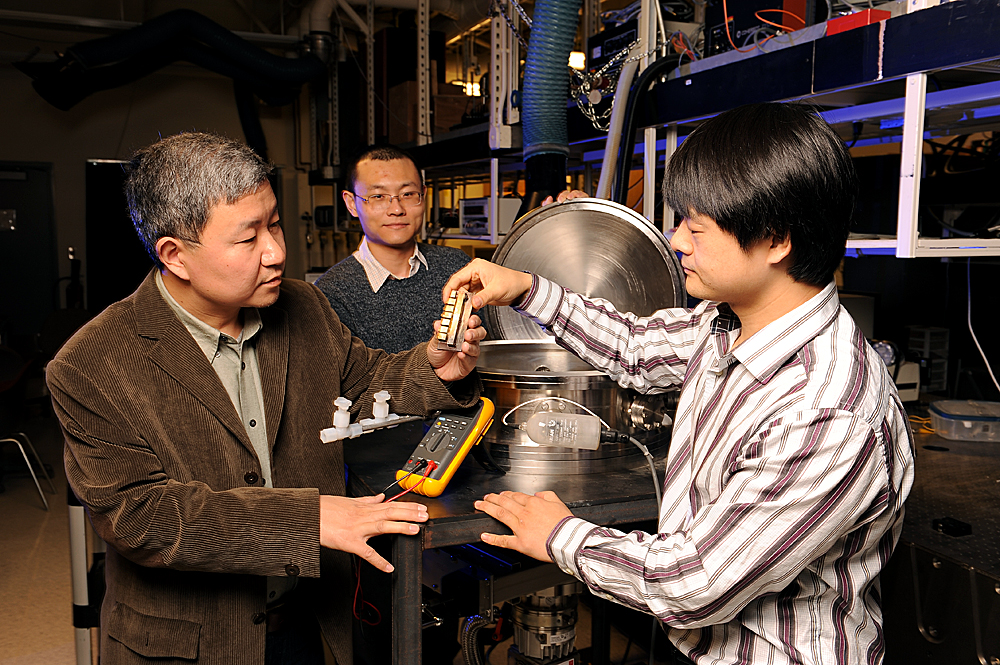
Xinwei Wang, Guoqing Liu and Xiaopeng Huang, left to right, show the instruments they used to study the thermal conductivity of spider silk. Photo by Bob Elbert.

Xinwei Wang had a hunch that spider webs were worth a much closer look.

So he ordered eight spiders - Nephila clavipes, golden silk orbweavers - and put them to work eating crickets and spinning webs in the cages he set up in an Iowa State University greenhouse.

Wang, an associate professor of mechanical engineering at Iowa State, studies thermal conductivity, the ability of materials to conduct heat. He's been looking for organic materials that can effectively transfer heat. It's something diamonds, copper and aluminum are very good at; most materials from living things aren't very good at all.

But spider silk has some interesting properties: it's very strong, very stretchy, only 4 microns thick (human hair is about 60 microns) and, according to some speculation, could be a good conductor of heat. But nobody had actually tested spider silk for its thermal conductivity.

And so Wang, with partial support from the Army Research Office and the National Science Foundation, decided to try some lab experiments. Xiaopeng Huang, a post-doctoral research associate in mechanical engineering; and Guoqing Liu, a doctoral student in mechanical engineering, helped with the project.

"I think we tried the right material," Wang said of the results.

What Wang and his research team found was that spider silks - particularly the draglines that anchor webs in place - conduct heat better than most materials, including very good conductors such as silicon, aluminum and pure iron. Spider silk also conducts heat 1,000 times better than woven silkworm silk and 800 times better than other organic tissues.

A paper about the discovery - "New Secrets of Spider Silk: Exceptionally High Thermal Conductivity and its Abnormal Change under Stretching" - has just been published online by the journal Advanced Materials.

"Our discoveries will revolutionize the conventional thought on the low thermal conductivity of biological materials," Wang wrote in the paper.

The paper reports that using laboratory techniques developed by Wang - "this takes time and patience" - spider silk conducts heat at the rate of 416 watts per meter Kelvin. Copper measures 401. And skin tissues measure .6.

"This is very surprising because spider silk is organic material," Wang said. "For organic material, this is the highest ever. There are only a few materials higher - silver and diamond."

Even more surprising, he said, is when spider silk is stretched, thermal conductivity also goes up. Wang said stretching spider silk to its 20 percent limit also increases conductivity by 20 percent. Most materials lose thermal conductivity when they're stretched.

That discovery "opens a door for soft materials to be another option for thermal conductivity tuning," Wang wrote in the paper.

And that could lead to spider silk helping to create flexible, heat-dissipating parts for electronics, better clothes for hot weather, bandages that don't trap heat and many other everyday applications.

What is it about spider silk that gives it these unusual heat-carrying properties?

Wang said it's all about the defect-free molecular structure of spider silk, including proteins that contain nanocrystals and the spring-shaped structures connecting the proteins. He said more research needs to be done to fully understand spider silk's heat-conducting abilities.

Wang is also wondering if spider silk can be modified in ways that enhance its thermal conductivity. He said the researchers' preliminary results are very promising.

And then Wang marveled at what he's learning about spider webs, everything from spider care to web unraveling techniques to the different silks within a single web. All that has one colleague calling him Iowa State's Spiderman.

"I've been doing thermal transport for many years," Wang said. "This is the most exciting thing, what I'm doing right now."

Source: Iowa State University

Additional Information:
Related Articles:

Monday, March 5, 2012

Robotics: Present state and future trends

Engineerblogger
March 5, 2012


Grunt work: This concept for a military robot would continue the tradition of machines taking on jobs that are dirty or dangerous

Contemporary robots are used for jobs that are boring, dirty, or dangerous; or for tasks that require more speed, precision, or endurance than a human can provide.

They perform almost all welding, painting, and assembly tasks in the automotive industry and have become a basic element of production in industries ranging from electronics to wood products. According to World Robotics, a 2008 report published by the International Federation of Robotics, the estimated number of industrial robots installed worldwide is more than one million—50% in Asia and Australia, 33% in Europe, and 17% in North America.

An assessment of the international state of robotics R&D published in 2006 by the nonprofit analysis World Technology Evaluation Center (WTEC), found that the U.S. was leading in robot navigation in outdoor environments, robot architectures (the integration of control, structure, and computation), and in applications to space, defense, underwater systems, and some aspects of service and personal robots.

Japan and Korea lead in technology for robot mobility, humanlike robots, and some aspects of service and personal robots (including entertainment). Europe led in mobility for structured environments, including urban transportation. Europe also has significant programs in elder care and home service robotics. Australia led in commercial applications of field robotics, particularly in such areas as cargo handling and mining, as well as in the theory and application of localization and navigation.

The panel also reported that the U.S. lost its preeminence in industrial robotics at the end of the 1980s, and nearly all its robots for welding, painting, and assembly are imported from Japan or Europe.


Cognitive robots can be used as home helpers, caregivers, or emergency and rescue aids.

U.S. R&D efforts on robotics have focused primarily on military and defense-related applications—unmanned aerial, ground, and maritime systems, both surface and undersea. The Department of Defense plans to develop an increasingly sophisticated force of unmanned systems over the next 25 years and expects to integrate them with manned systems.

In 2009, the DOD published the 25-year, unmanned-systems integrated roadmap to 2034. In July 2008, the Robotics Technology Consortium, Inc., was formed with 70 initial organizations, to speed the creation and deployment of ground robotics technology for the DOD and other U.S. government agencies. It has since grown to more than 200 member organizations.

A congressional robotics caucus was formed in 2007 to broaden awareness among members of Congress and policy analysts of key issues facing the U.S. robotics industry. In May 2009, the caucus published A Roadmap for U.S. Robotics: From Internet to Robotics, a targeted R&D roadmap for nonmilitary applications of robotics in manufacturing, in medical and healthcare, in domestic and professional services, and in emerging technologies.

In 2005, the European Robotics Technology Platform was formed to strengthen links between academia and industry, and to develop a research agenda of European robotics. In 2009, the industry group Coordination Action for Robotics in Europe (CARE) also published the Strategic Research Agenda for Robotics.

In Japan, the Ministry of Economy, Trade, and Industry has sponsored robotics activities for a long time. A 2007 national technology roadmap by the Trade Ministry called for one million robots to be installed throughout the country by 2025.

To alleviate a workforce shortage in the country, robots are expected to fill the jobs of 3.5 million people by 2025. The Japanese government also estimates that the nation may save as much as $21 billion on insurance payments in the same year by using robots to monitor the health of elderly people.

In South Korea, a 10-year robotics initiative was launched along with a detailed roadmap to make the country the second-largest provider of robotics in the world, after Japan. Robot Land, a theme park being built near Seoul, is expected to open in 2013. The country’s forecasts include placing a robot in every household by 2020.

Future Environments

The convergence of technologies involving computing, communication, and intelligent interfaces with autonomous robotics suggests that networks of intelligent, autonomous robots may become the next disruptive technology.

The concept of networking everyday objects and appliances in an ambient intelligent environment is not new. But the focus has usually been on the creation, delivery, and sharing of information, and not on the performance of physical tasks.

Autonomous mobile robots may one day perform complex medical procedures, including surgery, on patients in dangerous or remote locations from battlefields to space, with little human guidance. Advances in miniaturization and bionanotechnology could lead to a new generation of nanorobots, which would revolutionize the medical industry. Nanobots may provide treatment at the cellular level, perhaps clearing clogged arteries, repairing genes, battling cancer cells, and delivering drugs.

Cognitive robots can become available as office helpers or as robotic companions for guiding the blind and assisting the elderly. General-purpose anthropomorphic robots, with human-like hands, can be used in transforming manufacturing from resource-intensive to knowledge-intensive, and creating totally unmanned factories. Agricultural robotic scouts may roam the fields of the future to care for the plants, use sensors to provide detailed real-time information about the status of the crop, and apply data fusion techniques for making management decisions.

Source: ASME

Friday, March 2, 2012

DARPA’s Robotics Simulator/Test Platform Reaches 2nd Milestone

Engineerblogger
March 2, 2012


DARPA's Autonomous Robotic Manipulation (ARM) program is developing software to perform human-level tasks quickly and with minimal direction.

This video shows the ARM robot performing 18 grasping and manipulation tasks using vision, force, and tactile sensing with full autonomy – no active human control. The DARPA-supplied robot was built using commercial components that include an arm, hand, neck, and head sensors.

During rigorous testing in November 2011, the best team achieved 93% success in grasping modeled and unmodeled objects. The ARM program has entered its second phase, where focus turns to complex bimanual manipulation scenarios.

Source: DARPA

Solved: The Mystery of the Nanoscale Crop Circles

Lawrence Berkeley National Laboratory
March 1, 2012


Almost three years ago a team of scientists at the U.S. Department of Energy’s Lawrence Berkeley National Laboratory (Berkeley Lab) was performing an experiment in which layers of gold mere nanometers (billionths of a meter) thick were being heated on a flat silicon surface and then allowed to cool. They watched in surprise as peculiar features expanded and changed on the screen of their electron microscope, finally settling into circles surrounded by irregular blisters.

The circles varied in diameter up to a few millionths of a meter, and in the center of each was a perfect square. The mysterious patterns were reminiscent of nothing so much as so‑called “alien” crop circles.

Until recently the cause of these strange formations remained a mystery. Now theoretical insights have explained what’s happening, and the results have been published online by Physical Review Letters.

Eagerly melting alloys

When two solids are combined in just the right proportions, changes in chemical bonding may produce an alloy that melts at a temperature far lower than either can melt by itself. Such an alloy is called eutectic, Greek for “good melting.” The eutectic alloy of gold and silicon – 81 percent gold and 19 percent silicon – is especially useful in processing nanoscale semiconductors such as nanowires, as well as for device interconnections in integrated circuits; it liquefies at a modest 363˚ Celsius, far lower than the melting point of either pure gold, 1064°C, or pure silicon, 1414°C.

“Gold-silicon eutectic liquid can safely solder chip layers together or form microscopic conducting wires, by flowing into channels in the substrate without burning up the surroundings,” says Berkeley Lab’s Junqiao Wu. “It’s particularly interesting for processing nanoscale materials and devices.” Wu cites the example of silicon nanowires, which can be grown from beads of eutectic liquid that form from droplets of gold. The beads catalyze the deposition of silicon from a chemical vapor and ride atop continually lengthening nanowire whiskers.

Understanding just how and why this happens has been a challenge. Although eutectic alloys are well studied as solids, the liquid state presents more obstacles, which are particularly formidable at the nanoscale because of greatly increased surface tension – the same surface forces that make it difficult to form ultra-thin films of water, for example, because they pull the water into droplets. At smaller scales the ratio of surface area to bulk increases markedly, and nanoscale structures have been described as virtually “all surface.”

These are the conditions that the team led by Wu, who is a faculty scientist in Berkeley Lab’s Materials Sciences Division and a professor in the Department of Materials Science and Engineering at the University of California at Berkeley, set out to examine, by creating the thinnest possible films of gold-silicon eutectic alloys. The researchers did so by starting with a substrate of pure silicon, on whose flat surface an extremely thin barrier layer (two nanometers thick) of silicon dioxide had formed. On this surface they laid layers of pure gold, varying the thickness from one trial to the next between just a few nanometers to a hefty 300 nanometers. The silicon dioxide barrier prevented the pure silicon from mixing with the gold.

The next step was to heat the layered sample to 600 °C for several minutes – not hot enough to melt the gold or silicon but hot enough to cause naturally existing pinholes in the thin silicon dioxide layer to enlarge into small weak spots, through which pure silicon could come in contact with the overlying gold. At the high temperature, silicon atoms quickly diffused out of the substrate and into the gold, forming a layer of eutectic gold-silicon alloy nearly the same thickness as the original gold and spreading in a virtually perfect circle from the central pinhole.

When the circular disk of eutectic alloy got large enough it suddenly broke up, disrupted by the high surface energy of the gold-silicon eutectic liquid. The debris was literally pulled to the edges of the disk, piling up around it to leave a central denuded zone of bare silicon dioxide.

In the center of the denuded zone, a perfect square of gold and silicon remained.
To read more click here...

Thursday, March 1, 2012

Exotic Material Boosts Electromagnetism Safely

Engineerblogger
March 1, 2012


Yaroslav Urzhumov


By using exotic man-made materials, scientists from Duke University and Boston College believe they can greatly enhance the forces of electromagnetism (EM), one of the four fundamental forces of nature, without harming living beings or damaging electrical equipment.


This theoretical finding could have broad implications for such applications as magnetic levitation trains, which ride inches above the surface without touching it and are propelled by magnets receiving electrical current.

As the term indicates, EM is made up of two types of fields – electric and magnetic. Alternating current sources generate both electric and magnetic fields, and increasing one of them generally leads to the increase in the other. Electrical fields can cause problems if they get too high.

“For any EM applications dealing with things on the human scale, high-intensity EM fields needed for the generation of strong EM forces interfere with other devices and may be harmful to biological tissues, including humans,” said Yaroslav Urzhumov, assistant research professor in electrical and computer engineering at Duke’s Pratt School of Engineering.

“The severity of this problem is substantially reduced if the fields are predominantly magnetic, since virtually all biological substances and the majority of conventional materials are transparent to magnetic fields,” Urzhumov said. “While we can’t suppress the electric field completely, a magnetically-active metamaterial could theoretically reduce the amount of current needed to generate a high enough magnetic field, thus reducing parasitic electric fields in the environment and making high-power EM systems safer. ”

The results of Urzhumov’s analysis were published online in the journal Physical Review B, and the team’s research was supported by the Air Force Office of Scientific Research.

The solution to this problem comes from the recent ability to fabricate exotic composite materials known as metamaterials, which are not so much a single substance, but an entire man-made structure that can be engineered to exhibit properties not readily found in nature. These metamaterials can be fabricated into a limitless array of sizes, shapes and properties depending on their intended use.

In the magnetic levitation train example, conventional electromagnets could be supplemented by a metamaterial, which would have been designed to produce significantly higher intensities of magnetic fields using the same amount of electricity.

The Duke scientists came up with the theoretical underpinning for the metamaterial, which is being fabricated by collaborators at Boston College, led by Willie Padilla, associate professor of physics.

“The metamaterial should be able to increase the magnetic force without increasing the electric current in the source coil,” Urzhumov said. “The phenomenon of magnetostatic surface resonance could allow magnetic levitation systems to increase the mass of objects being levitated by one order of magnitude while using the same amount of electricity.”

EM is currently being used in a host of devices and applications, ranging from subatomic “optical tweezers” scientists use to manipulate microscopic particles with laser beams, to potentially highly destructive weapons.

Urzhumov works in the laboratory of Duke’s David R. Smith, William Bevan Professor of electrical and computer engineering and director of Duke’s Center for Metamaterials and Integrated Plasmonics. Smith has previously demonstrated that similarly designed metamaterials could act as a “cloak” to different frequencies of light and other waves.

Wenchen Chen and Chris Bingham from Boston College’s physics department were also members of the research team.

Source: Duke University

Additional Infomation:

High-Performance Innovation:

Engineerblogger
March 1, 2012


ANSYS-CFX was used in the cloud via Windows HPC Server to depict wave formulation around a seafaring vessel. ANSYS is one of many vendors to develop software specifically designed to remotely take advantage of highly parallel computing systems, offering customers high-end performance and faster results. Image: ANSYS

As researchers scramble to deliver R&D results and bring products to market, they are turning to high-performance computing. Vendors are competing for their business. Can everyone adapt to the cloud?

What laboratory tool has made the most difference in research and development? Arguably, it’s the personal computer. In the early days of computing, specialized clusters of high-performing processors were often needed for data-intensive tasks. But as chipmakers upheld Moore’s Law, desktop machines and even laptops became powerful enough to handle complex design and processing tasks.

Personal computers are ubiquitous and indispensible, but often are no longer powerful enough, even for daily research tasks such a processing a Microsoft Excel spreadsheet. Circumstances have conspired to force researchers to seek a better solution. As microprocessor speed has stalled, data volume has exploded. In 2004, according to Dave Turek, vice president of deep computing at IBM Corp., Armonk, N.Y., computer scientists recognized the limits of microprocessor technology and realized the best avenue for more performance was to group large numbers of processors together and leverage strength in numbers. Multi-core was born.

Now, through a combination of multicore processing, commoditization of high-end service components, and high-speed communications, high-performance computing (HPC) is handling the heavy lifting of high-technology R&D.

“What really has changed is the migration of traditional techniques and approaches into a non-classical domain. When you peel back the covers, at its core, software is sophisticated mathematics used to answer problems,” says Turek. HPC represents this new domain, where linear programming gives way to counter-intuitive parallel processing and where researchers stand to make tremendous gains in knowledge, if they know how to get the most out it. As a result, research organizations cannot consider adopting HPC without gaining knowledge of the associated software, tools, components, storage, and services that together form the infrastructure for intensive computation.
To read more click here...

Wednesday, February 29, 2012

Battery to Take On Diesel and Natural Gas

Technology Review
Feb 29, 2012


Battery building: Aquion Energy recently announced plans to retrofit this factory—which used to make Sony televisions—to make large batteries for use with solar power plants. Credit: RIDC Westmoreland

Aquion Energy, a company that's making low-cost batteries for large-scale electricity storage, has selected a site for its first factory and says it's lined up the financing it needs to build it.

The company hopes its novel battery technology could allow some of the world's 1.4 billion people without electricity to get power without having to hook up to the grid.

The site for Aquion's factory is a sprawling former Sony television factory near Pittsburgh. The initial production capacity will be "hundreds" of megawatt-hours of batteries per year—the company doesn't want to be specific yet. It also isn't saying how much funding it's raised or where the money comes from, except to mention that some of it comes from the state of Pennsylvania, and that $5 million, in the form of an R&D grant, comes from the federal government.

The first applications are expected to be in countries like India, where hundreds of millions of people in communities outside major cities don't have a connection to the electrical grid or any other reliable source of electricity. Most of these communities use diesel generators for power, but high prices for oil and low prices for solar panels are making it cheaper to install solar in some cases.

To store power generated during the day for use at night, these communities need battery systems that can handle anything from tens of kilowatt-hours to a few megawatt-hours, says Scott Pearson, Aquion's CEO. Such a system could make long-distance transmission lines unnecessary, in much the same way that cell-phone towers have allowed such communities access to cellular service before they had land lines.

Eventually Aquion plans to sell stacks of batteries in countries that have electrical grids. They could provide power during times of peak demand and make up for fluctuations in power that big wind farms and solar power plants contribute to the grid. Those applications require tens to hundreds of gigawatt-hours' worth of storage, so to supply them, Aquion needs to increase its manufacturing capacity. Competing with natural-gas power plants—especially in the United States, where natural gas is so cheap—will mean waiting until economies of scale bring costs down.

The company has said that it initially hopes to make batteries for under $300 per kilowatt-hour, far cheaper than conventional lithium-ion batteries. Lead-acid batteries can be cheaper than Aquion's, but they last only two or three years. Aquion's batteries, which can be recharged 5,000 times, could last for over a decade in situations in which they're charged once a day (the company has tested the batteries for a couple of years so far).
To read more click here...

Tuesday, February 28, 2012

Experimental smart outlet brings flexibility, resiliency to grid architecture

Engineerblogger
Feb 28, 2012


Anthony Lentine with the smart outlet. Photo by Randy Montoya

Sandia National Laboratories has developed an experimental “smart outlet” that autonomously measures, monitors and controls electrical loads with no connection to a centralized computer or system. The goal of the smart outlet and similar innovations is to make the power grid more distributed and intelligent, capable of reconfiguring itself as conditions change.

Decentralizing power generation and controls would allow the grid to evolve into a more collaborative and responsive collection of microgrids, which could function individually as an island or collectively as part of a hierarchy or other organized system.

“A more distributed architecture can also be more reliable because it reduces the possibility of a single-point failure. Problems with parts of the system can be routed around or dropped on and off the larger grid system as the need arises,” said smart outlet co-inventor Anthony Lentine.

Such flexibility could make more use of variable output energy resources such as wind and solar because devices such as the smart outlet can vary their load demand to compensate for variations in energy production.

“This new distributed, sensor-aware, intelligent control architecture, of which the smart outlet is a key component, could also identify malicious control actions and prevent their propagation throughout the grid, enhancing the grid’s cyber security profile,” Lentine said.

Anatomy of a smart outlet

The outlet includes four receptacles, each with voltage/current sensing; actuation (switching); a computer for implementing the controls; and an Ethernet bridge for communicating with other outlets and sending data to a collection computer.

The outlet measures power usage and the direction of power flow, which is normally one-way, but could be bi-directional if something like a photovoltaic system is connected to send power onto the grid. Bi-directional monitoring and control could allow each location with its own energy production, such as photovoltaic or wind, to become an “island” when the main power grid goes down. Currently, that rarely occurs due to the lack of equipment to prevent power from flowing back toward the grid.

The outlet also measures real power and reactive power, which provides a more accurate measurement of the power potentially available to drive the loads, allowing the outlets to better adapt to changing energy needs and production.

Similar technology could be built into energy-intensive appliances and connected to a home monitoring system, allowing the homeowner greater control of energy use. What is different about the smart outlet is that distributed autonomous control allows a homeowner with little technical expertise to manage loads and the utility to manage loads with less hands-on, and costly, human intervention.

Utilities currently use mostly fossil fuels and nuclear reactors to generate baseload electric power, the amount needed to meet the minimum requirements of power users. Utilities know how much power they need based on decades of usage data, so they can predict demand under normal conditions.

“With the increased use of variable renewable resources, such as wind and solar, we need to develop new ways to manage the grid in the presence of a significant generation that can no longer supply arbitrary power on demand,” Lentine said. “The smart outlet is a small, localized approach to solving that problem.”

Source: Sandia National Laboratories

Monday, February 27, 2012

Reduction in U.S. carbon emissions attributed to cheaper natural gas

Harvard University
Feb 27, 2012

Changes in carbon dioxide emissions from the power sector in the nine census regions of the contiguous United States, 2008-2009. Image courtesy of Xi Lu.

In 2009, when the United States fell into economic recession, greenhouse gas emissions also fell, by 6.59 percent relative to 2008.

In the power sector, however, the recession was not the main cause.

Researchers at the Harvard School of Engineering and Applied Sciences (SEAS) have shown that the primary explanation for the reduction in CO2 emissions from power generation that year was that a decrease in the price of natural gas reduced the industry's reliance on coal.

According to their econometric model, emissions could be cut further by the introduction of a carbon tax, with negligible impact on the price of electricity for consumers.

A regional analysis, assessing the long-term implications for energy investment and policy, appears in the journal Environmental Science and Technology.

In the United States, the power sector is responsible for 40 percent of all carbon emissions. In 2009, CO2 emissions from power generation dropped by 8.76 percent. The researchers attribute that change to the new abundance of cheap natural gas.

"Generating 1 kilowatt-hour of electricity from coal releases twice as much CO2 to the atmosphere as generating the same amount from natural gas, so a slight shift in the relative prices of coal and natural gas can result in a sharp drop in carbon emissions," explains Michael B. McElroy, Gilbert Butler Professor of Environmental Studies at SEAS, who led the study.

"That's what we saw in 2009," he says, "and we may well see it again."

Patterns of electricity generation, use, and pricing vary widely across the United States. In parts of the Midwest, for instance, almost half of the available power plants (by capacity) were built to process coal. Electricity production can only switch over to natural gas to the extent that gas-fired plants are available to meet the demand. By contrast, the Pacific states and New England barely rely on coal, so price differences there might make less of an impact.

To account for the many variables, McElroy and his colleagues at SEAS developed a model that considers nine regions separately.
To read more click here...

Graphyne May Be Better than Graphene

Engineerblogger
Feb 27, 2012


Stretched honeycomb. The carbon lattice in this 6,6,12-graphyne has a rectangular symmetry, unlike the hexagonal symmetry of graphene. Credit: APS

Sheets of single-layer carbon with a variety of bonding patterns may have properties similar to the wonder material graphene, according to new computer simulations.

Super-strong, highly conducting graphene is the hottest ticket in physics, but new computer simulations suggest that materials called graphynes could be just as impressive. Graphynes are one-atom-thick sheets of carbon that resemble graphene, except in the type of atomic bonds. Only small pieces of graphyne have so far been fabricated, but the new simulations, described in Physical Review Letters, may inspire fresh efforts to construct larger samples. The authors show that three different graphynes have a graphenelike electronic structure, which results in effectively massless electrons. The unique symmetry in one of these graphynes may potentially lead to new uses in electronic devices, beyond those of graphene.

The singe-atom-thick structure of carbon atoms arranged in a honeycomb pattern, known as graphene, was first isolated in a lab 2004, but many of its remarkable electronic properties were revealed by theorists 60 years before. The most striking aspect of graphene is that its electronic energy levels, or “bands,” produce conduction electrons whose energies are directly proportional to their momentum. This is the energy-momentum relationship exhibited by photons, which are massless particles of light. Electrons and other particles of matter normally have energies that depend on the square of their momentum.

When the bands are plotted in three dimensions, the photonlike energy-momentum relationship appears as an inverted cone, called a Dirac cone. This unusual relationship causes conduction electrons to behave as though they were massless, like photons, so that all of them travel at roughly the same speed (about 0.3 percent of the speed of light). This uniformity leads to a conductivity greater than copper.

Graphynes differ from their carbon cousin graphene in that their 2D framework contains triple bonds in addition to double bonds. These triple bonds open up a potentially limitless array of different geometries beyond the perfect hexagonal lattice of graphene, although only small pieces of graphynes have been synthesized so far. Still, this hasn’t stopped theorists from exploring their properties [1]. Recent work gave an indication that certain graphynes might have Dirac cones [2]. To verify this, Andreas Görling of the University of Erlangen-Nürnberg in Germany and his colleagues have now performed a more rigorous investigation of graphyne using state-of-the-art methods.

The team selected three graphynes to study: two with hexagonal symmetry and a third with rectangular symmetry. The researchers first checked that these graphynes were stable by simulating their vibrations and checking that they returned to their original shape. They then determined the band structure using density-functional theory, the gold standard for dealing with the hopelessly large number of electron-electron interactions inside a material. The simulations showed that all three graphynes had Dirac cones. This was surprising in the case of the rectangular graphyne, Görling says, because most people assumed this sort of electronic structure was tied to hexagonal symmetry. The implication is that many other materials (some containing atoms other than carbon) could have Dirac cones.

On closer examination of the rectangularly symmetric graphyne, the team discovered that the Dirac cones were not perfectly conical. A vertical slice in the direction of the “short side” of the rectangular lattice gave an inverted triangle as would be expected, but in the perpendicular direction, parallel to the “long side,” the cross section was curved, like a triangle bent towards a parabola. This distortion should lead to a conductance that depends on the direction of the current, a property not found in graphene but one that could be exploited in nanoscale electronic devices, Görling says. Another potentially useful property of this graphyne is that it should naturally contain conducting electrons and should not require noncarbon “dopant” atoms to be added as a source of electrons, as is required for graphene.

The big challenge now is to make large graphyne samples. “Organic chemists like myself can synthesize (often with difficulty) complex molecular subunits,” but these small sections of graphyne do not exhibit the expected properties of a large lattice, says Michael Haley of the University of Oregon in Eugene. Andre Geim of the University of Manchester, UK, who was awarded the 2010 Nobel Prize for his experimental work on graphene, says that graphyne is “an extremely interesting material, and this report adds to the excitement.” He only hopes it won’t take 60 years for experimentalists to make the excitement a reality this time.

Source: American Physical Society

Additional Information:
  • (1) R. H. Baughman, H. Eckhardt, and M. Kertesz, “Structure‐property predictions for new planar forms of carbon: Layered phases containing sp² and sp atoms,” J. Chem. Phys. 87, 6687 (1987).

Saturday, February 25, 2012

Team’s efficient unmanned aircraft jetting toward commercialization

Engineerblogger
Feb 25, 2012


CU-Boulder Assistant Professor Ryan Starkey, left, with some members of his team, looks over engine model nozzles for a first-of-its-kind supersonic unmanned aircraft vehicle, visible in the rendering on the computer screen. From left are Starkey; Sibylle Walter, doctoral degree student; Josh Fromm, master's degree graduate; and Greg Rancourt, master's degree student. (Photo by Glenn Asakawa/University of Colorado)


Propulsion by a novel jet engine is the crux of the innovation behind a University of Colorado Boulder-developed aircraft that’s accelerating toward commercialization.

Jet engine technology can be small, fuel-efficient and cost-effective, at least with Assistant Professor Ryan Starkey’s design. The CU-Boulder aerospace engineer, with a team of students, has developed a first-of-its-kind supersonic unmanned aircraft vehicle, or UAV. The UAV, which is currently in a prototype state, is expected to fly farther and faster -- using less fuel -- than anything remotely similar to date.

The fuel efficiency of the engine that powers the 50-kilogram UAV is already double that of similar-scale engines, and Starkey says he hopes to double that efficiency again through further engineering.

A rendering, created by master's degree student Greg Rancourt, of the UAV. (Courtesy Ryan Starkey)

Starkey says his UAV could be used for everything from penetrating and analyzing storms to military reconnaissance missions -- both expeditions that can require the long-distance, high-speed travel his UAV will deliver -- without placing human pilots in danger. The UAV also could be used for testing low-sonic-boom supersonic transport aircraft technology, which his team is working toward designing.

The UAV is intended to shape the next generation of flight experimentation after post-World War II rocket-powered research aircraft, like the legendary North American X-15, have long been retired.

“I believe that what we’re going to do is reinvigorate the testing world, and that’s what we’re pushing to do,” said Starkey. “The group of students who are working on this are very excited because we’re not just creeping into something with incremental change, we’re creeping in with monumental change and trying to shake up the ground.”

Its thrust capacity makes the aircraft capable of reaching Mach 1.4, which is slightly faster than the speed of sound. Starkey says that regardless of the speed reached by the UAV, the aircraft will break the world record for speed in its weight class.

Its compact airframe is about 5 feet wide and 6 feet long. The aircraft costs between $50,000 and $100,000 -- a relatively small price tag in a field that can advance only through testing, which sometimes means equipment loss.

Starkey’s technology -- three years in the making at CU-Boulder -- is transitioning into a business venture through his weeks-old Starkey Aerospace Corp., called Starcor for short. The company was incubated by eSpace, which is a CU-affiliated nonprofit organization that supports entrepreneurial space companies. Starkey’s UAV already has garnered interest from the U.S. Army, Navy, Defense Advanced Research Projects Agency and NASA. The acclaimed Aviation Week publication also has highlighted Starkey’s UAV.

Starkey says technology transfer is important because it parlays university research into real-life applications that advance societies and contribute to local and global economies.

It also can provide job tracks for undergraduate and graduate students, says Starkey who’s bringing some of the roughly 50 students involved in UAV development into his budding Starcor.

“There are great students everywhere, but one of the reasons why I came to CU was because of how the students are trained. We definitely make sure they understand everything from circuit board wiring to going into the shop and building something,” said Starkey. “It makes them very effective and powerful even as fresh engineers with bachelor’s degrees. They’re very good students to hire. That’s a piece that I’m interested in embracing -- finding the really good talent that we have right here in Colorado and pulling it into the company.”

Starkey and his students are currently creating a fully integrated and functioning engineering test unit of the UAV, which will be followed by a critical design review after resolving any problems. The building of the aircraft and process of applying for FAA approval to test it in the air will carry into next year.

Starkey’s continuing fascination with speed first began to burn inside of him when he visited Kennedy Space Center at the age of 5. “When I teach I tell my class, ‘If it goes fast and gets hot, I’m in it.’ That’s what I want to do. There needs to be fire involved somewhere.”

Source: University of Colorado at Boulder 

Thursday, February 23, 2012

SPIDERS microgrid project secures military installations

Engineerblogger
Feb 23, 2012


Bill Waugaman is the SPIDERS operational lead at Sandia National Laboratories. Credit: Randy Montoya

When the lights go out, most of us find flashlights, dig out board games and wait for the power to come back. But that’s not an option for hospitals and military installations, where lives are on the line. Power outages can have disastrous consequences for such critical organizations, and it’s especially unsettling that they rely on the nation’s aging, fragile and fossil-fuel dependent grid.

A three-phase, $30 million, multi-agency project known as SPIDERS, or the Smart Power Infrastructure Demonstration for Energy Reliability and Security, is focused on lessening those risks by building smarter, more secure and robust microgrids that incorporate renewable energy sources.

Sandia was selected as the lead designer for SPIDERS, the first major project under a Memorandum of Understanding (MOU) signed by the Department of Energy (DOE) and the Department of Defense (DoD) to accelerate joint innovations in clean energy and national energy security. The effort builds on Sandia’s decade of experience with microgrids – localized, closed-circuit grids that both generate and consume power – that can be run connected to or independent of the larger utility grid.

The goal for SPIDERS microgrid technology is to provide secure control of on-base generation.

“If there is a disruption to the commercial utility power grid, a secure microgrid can isolate from the grid and provide backup power to ensure continuity of mission-critical loads. The microgrid can allow time for the commercial utility to restore service and coordinate reconnection when service is stabilized,” said Col. Nancy Grandy, oversight executive of the SPIDERS Joint Capability Technology Demonstration (JCTD). “This capability provides much-needed energy security for our vital military missions.”

SPIDERS is addressing the challenge of tying intermittent clean energy sources such as solar and wind to a grid. “People run single diesel generators all the time to support buildings, but they don’t run interconnected diesels with solar, hydrogen fuel cells and so on, as a significant energy source. It’s not completely unheard of, but it’s a real integration challenge,” said Jason Stamp, Sandia’s lead project engineer for SPIDERS.

Currently, when power is disrupted at a military base, individual buildings switch to backup diesel generators, but that approach has several limitations. Generators might fail to start, and if a building’s backup power system doesn’t start, there is no way to use power from another building’s generator. Most generators are oversized for the load and run at less-than-optimal capacity, and excess fuel is consumed. Furthermore, safety requirements state that all renewable energy sources on base must disconnect when off-site power is lost.

A smart, cybersecure microgrid addresses these issues by allowing renewable energy sources to stay connected and run in coordination with diesel generators, which can all be brought online as needed. Such a system would dramatically help the military increase power reliability, lessen its need for diesel fuel and reduce its “carbon bootprint.”

“The military has indicated it wants to be protected against disruptions, to integrate renewable energy sources and to reduce petroleum demand,” Stamp said. “SPIDERS is focused on accomplishing those tasks, and the end result is having better energy delivery for critical mission support, and that is important for every American.”

SPIDERS uses existing, commercially available technologies for implementation, so the individual technologies are not novel. “What’s novel is the system integration of the various technologies, and demonstrating them in an operational field environment. Microgrid concepts are still fairly new, and that’s where Sandia’s microgrid design expertise is coming into play,” said Sandia researcher Bill Waugaman, SPIDERS operational lead.

It is common practice to connect diesel generators to buildings, but integrating significant amounts of energy from intermittent clean sources such as solar and wind to that system is unique, and it is a challenge that Sandia and SPIDERS are working to address.

Such integration requires data to determine the most efficient and effective way to operate, but that can open system vulnerabilities, so cybersecurity is paramount. SPIDERS addresses that issue by incorporating an unprecedented level of cybersecurity into the system from the outset.

“Any perturbation of information flow by an adversary would possibly cause an interruption to electrical service, which can have significant consequences,” Stamp said. “It’s important that if we build a microgrid system that depends explicitly on greater information flow, that it operate as intended: reliably and securely.”

SPIDERS is funded and managed through the DoD’s JCTD, which joins the efforts of other government organizations and companies to rapidly develop, assess and transition needed capabilities to support DoD missions. With the DOE’s support, the SPIDERS transition plan includes civilian facilities.

“The SPIDERS approach has many applications beyond military uses. Our interest in SPIDERS extends to organizations, like hospitals, that are critical to our nation’s functionality, especially in times of emergency,” said Merrill Smith, DOE program manager.

Sandia’s microgrid expertise spans the past decade, beginning when Sandia designed microgrids for the DOE’s Federal Energy Management Program (FEMP) and the DOE’s Office of Electricity Delivery and Energy Reliability (OE). The DOE initially asked Sandia to develop a conceptual design for a microgrid at Fort Carson in Colorado Springs, Colo., and another for Camp H.M. Smith in Hawaii.

After Sandia conducted a feasibility analysis and modeling and simulation work for the two bases, U.S. Pacific Command (USPACOM) and U.S. Northern Command (USNORTHCOM) asked Sandia to prove the concept through field work under a JCTD. The two commands pulled together a team of national labs and defense organizations, and selected Sandia to lead the development of the initial designs for three separate microgrids, each more complex than the previous.

The Army Construction Engineering Research Laboratory will use the Sandia designs as a basis for developing contracts with potential system integrators, who will construct the actual microgrids. Other partners in the SPIDERS JCTD include National Renewable Energy Laboratory for renewable energy and electrical vehicle expertise, Pacific Northwest National Laboratory for testing and transition, Oak Ridge National Laboratory to assist with control system development and Idaho National Laboratory for cybersecurity.

The first SPIDERS microgrid will be implemented at Joint Base Pearl Harbor Hickam in Honolulu, and will take advantage of several existing generation assets, including a 146-kW photovoltaic solar power system, and up to 50 kW of wind power. The integrator for the project has been selected and the final design and construction process is underway.

The second installation, at Fort Carson, is much larger and more complex and will integrate an existing 2 MW of solar power, several large diesel generators and electric vehicles. Large-scale electrical energy storage will also be implemented to ensure microgrid stability and to reduce the effects of PV variability on the system. Camp H.M. Smith, the most ambitious project, will rely on solar and diesel generators to power the entire base, which will be its own self-sufficient 5 MW microgrid when the national grid is unavailable.

Integration and implementation are scheduled through 2014. The goal is to install the circuit level demonstration at Pearl Hickam and Fort Carson next year, with Camp Smith installed in 2013.

Source: Sandia National Laboratories