Pages

Subscribe:

Labels

038628037504 (1) 10150 (1) 10BURIED (1) 10Count (1) 110011040 (1) 115Ounce (1) 1200mg (1) 12BSN (1) 12Count (2) 12CountNutricor (1) 12CountWWSN (1) 12Fresh (1) 12Stacker (3) 12VPX (1) 140243 (1) 14Servings (1) 158Ounce (1) 15Ounce (1) 16Ounce (2) 1716 (1) 17Skque (1) 1lbinLife (1) 2000Hrs (1) 2000mg (1) 200Watt (1) 2021A (1) 20OunceNatures (1) 2412Ounce (1) 24Count (1) 24EAS59134 (1) 24FRS (1) 24Guru (1) 24Guru01GR124 (2) 24Nestle (2) 24Pediasure (2) 24Peptamen (1) 24PieceDisplay (1) 24Solis (2) 27ReSource (2) 2Biochem (1) 2Dynamic (1) 2Jarrow (1) 2Muscle (1) 2Natures (1) 2Ounce (3) 2Pound (1) 30Day (1) 328601 (1) 334928 (1) 336gOptimum (1) 37Ounce (1) 3Ensure (1) 3M (1) 414 (1) 432500 (1) 48Boost (1) 48Fluid (1) 48ml (1) 4Ensure (1) 4Isopure (1) 5000mg (1) 527408 (1) 5511786 (1) 574400 (1) 5Hour (2) 5Ounces (1) 600Kendall (1) 662380 (1) 6Beneprotein (1) 6Proteinex (1) 70951 (1) 750mlNutriPrima (1) 845Ounce (1) 84Fluid (2) 84OuncesLiquid (1) 89Inch (1) 8nuun (2) 8Ounce (7) 99369FR (1) ABB (3) Academy (1) ACCENTS (1) Acia162Ounces (1) Acsry (1) Active (2) Adapter (1) AdapterBattery (1) Advance (1) Advanced (1) Advantage (1) AdvantEdge (1) Africa (29) African (1) Agaricus (1) AiCoco (1) AIDSTrustex (1) Airbrush (1) Airbus (6) Aircraft (94) AISI (1) Ajmeras (1) Alchohol (1) Alertness (1) Alfalfa (2) Alive (1) Allergy (1) Allspice (8) Alpine (1) Alstom (2) Alternative (1) Amarillo (1) Amazing (3) Amazon (2) American (1) animal (11) Annual Reports (155) Antioxidant (1) Anwar Ibrahim (1) Apple (1) Applied Materials (1) Arrowroot (1) AshtonDrake (1) Asia (72) Assorted (1) Atkins (1) Audi (1) Australia (21) Automotive (250) Automotive Technology (183) Ayurvedic (1) BABIES (1) Babys (1) Bacopa (1) BagAtkins2627 (1) BagsTraditional (1) BagSun (1) Balanced (1) Ballard Power System (1) Banaba (2) Baram Dam (1) Baram Regatta (1) Bariatric (1) Barisan Nasional (2) Barisan Nasional Helps Penan (1) Barista (2) Barley (2) barsBiochem (1) Basement (1) BASF (2) Basics (1) Batu Lawi (1) Bayer (1) BEA1017OZ (1) Beachbody (1) Beaded (1) Beaumont (1) beautiful girl image (19) Beauty (2) Beneprotein (2) Berries (3) Berry (4) BerryLiving (1) Beverage (1) Bicycle (1) BioAstin (1) Biochem (4) Biofuel (12) Biogenesis (2) BlackBlender (1) Blend (1) Blender (4) Blueberry (1) BlueStereo (1) BMF (1) BMW (7) BMX (1) BN (1) Boeing (4) Bombardier (4) Book (1) Borneo (6) Bottle (8) BottleProStat (1) Bottles (15) BottleScivation (1) bottlesEnsure (2) BottlesMio (1) BoxChenille (1) BoxDarice140243 (1) BOXESAmerican (1) BoxesFRSPowder (1) BoxPremier (1) BP (2) Brands (1) Brands833667000102 (1) Brazil (10) Brazilian (1) Breeze (3) BrewersBarista (1) BRIC (118) Brikpaks (3) Brownie (1) Bruno Manser (1) Bruno Manser Fund (3) Bruno Manser Fund Fraud (1) Bruno Manser Fund Frauds (1) Bruno Manser Lies (2) BTL410400 (1) Bubbles (1) Burner (1) business (72) Butchers (1) Butter (1) Butterscotch (1) Cable (1) Cables (1) Calcium (2) California (1) Calorie (3) Camera (1) Canada (11) Candela (1) Canister (2) CanisterCLICK (1) Canisters (1) Canning (1) Capramilk (1) CapsSwanson (1) Capsule (5) Capsules (6) CapsulesEAS (1) Caraway (1) Cardio (1) Carnation (1) CaseEnsure (2) CaseNestle (2) Celebrity (22) CellularFactory (1) Celsius (1) Certification (28) Certified (2) Chameleon (1) Charger (1) Charter/Terms of Reference (27) CHEAP (135) Chenille (1) Cherry (1) CherryZydot (1) Chevron (1) Chewing (1) Chile (1) China (99) Chipotle (1) Chlorophyll (1) Chocolate (7) Chocolate8 (1) Choice (2) Cholesterol (1) Chrome (1) Chrysler (1) Chunho (1) Citrifolia (1) Citroen (1) Citroën (1) Citrus (2) Civil Service (1) CK Morris Associates (1) Clare Rewcastle Brown (2) Class (1) Classic (2) Clinical (1) CNST (1) Coenzyme (1) Coffee (4) Coffee11001105 (1) Coffee7DSC2B (1) Coffeehouse (1) Cold Fusion (1) Coldkicker (1) Collectable (1) Collection (1) Colored (1) Colors (1) Communications (14) Company (2) COMPLETE (4) Complex (1) Computer (1) Concentrate (1) Concentrated (1) Concepts645654 (1) Condoms (1) Container (7) CONTROL20BGSee (1) Corrections (3) CosMedix (1) count (1) countAmscan (1) CountMy (1) Crayola (3) Criminal (4) Cruiser (1) Crunch (1) Cytosport (2) Daimler (3) Dam (1) DAP (1) DAP Lies (1) Darice (1) DARPA (18) Dato Roland Sagah Wee Inn (1) Defence (60) Defense (61) Delight (2) description (1) Desert (7) Design (65) DESIGNER (3) Desktop (1) detail (1) Detroit (1) Development (1) Dexatrim (1) diameter (1) diameterGaming (1) Diecast (1) Dinosaur (1) DISCOUNT (4) Discover (1) Disney (1) Doctors (1) DoE (8) DolphinsSticky (1) DOMAGRON (1) Dow Corning Corp (2) DP9260 (1) DRA6329 (1) Dragon (1) Dressing (1) Drink (11) Drinkin (1) drinksNVE (1) Dupont (2) dv9657clSIBCORP (1) Dymatize (3) DYMMGV (1) DYNAMIC (5) EachHager (1) EADS (12) ecigs (1) Eco-Tourism (1) Economy (14) Education (1404) Electra (1) Electric Grid (1) Electrolyte (4) ELP3STSL (1) Endorush (1) Endurox (2) Energizing (1) Energy (540) English Article (20) Enhanced (1) Enhancer (1) Enlive (2) Ensure (12) Enterprise (1) Environment (170) Enzymatic (1) Eraser (1) ERECTION (1) Ergonomics (4) ESA (4) Espresso (1) Essence (2) Essentials (3) EssentialsHSE (1) ethnic group (1) Europe (201) Executive/External Ombuds (2) Extended (2) ExtenderBadger (1) Extension (1) Extern/Intern (20) Extract (5) Extreme (21) Factor (1) Factors (3) Fantastic (1) Fatigued (1) Faucet (1) feature (9) Featuring (1) Fellowes (1) Fillet (1) First Energy (6) Fitera (2) FlatScreen (1) Flavor (1) FlavorBeachbody (1) Focus28 (1) Ford Motors (7) Foreign NGOs (2) Forest (1) formula (5) Formulas (1) Forts (1) FORUM (1) Fragrance (1) France (12) Frappuccino (1) FreeHubner (1) French (2) Friday Poll (13) Frontier (1) Frost (1) Fruits (1) Ft1140Alessco (1) Ft132Alessco (1) FToys (1) Fudge (1) Fuel Cell (26) Fujitsu (2) funny (19) Gadget (6) Galleries (1) Gallon (1) GameJax2000 (1) Games (1) General Electric (21) General Motors (15) Genesis (1) Georges (1) Germany (28) Go02658 (1) Golden (1) Goldfinch (2) Goodyear (1) Google (6) Gordoni (1) Gourmet (1) Government (333) Grape (2) Grape5 (1) Green Energy (544) Greens (2) GripAlex (1) Ground (7) Guarana (1) Halal Hub (1) Hammer (1) Hardware (1) Hasbro (1) Hawaiian (1) health (19) Health Care (87) Healthy (4) Herbal (5) Herbals (1) Himalayan (1) Holiday (1) Honda (4) Honeywell (1) Hoodia (1) HPCompaq (1) Hubner (1) human capital development (1) Humor (18) Hydration (2) hydration8PKNUUNLL (1) Hydrive (1) Hyundai (2) IBM (2) Illegal Demonstrations (1) iMicro (1) IMMICRP (1) India (23) information (8) Infrastructure (44) inLife (1) Inside Invester Ltd (1) Instantized (1) Institute (1) International (338) Internet (7) Intestinal (2) Investment (187) IOA News (168) ISO (1) ISO100 (1) Isolate (2) Isopure (4) Isotonix (1) Italian (2) Italy (1) Jabatan Penerangan (1) Jameson Ahip Nawie (1) Japan (57) JarALTERNATIVE (1) JarDoctors (1) Jarrow (1) Job Postings (339) Johnson Controls (1) Journey (2) Juice (2) JUICECRANBERRYOG2 (1) JuiceTahitian (1) Kangmei (1) KCups (1) Kerlix (1) Kettler (1) Kettler8852600 (1) Keurig (1) Keyboard (1) Kiddio (1) KitBerg (1) KiteSpiderMan (1) KitGoldfinch (1) Kombucha (2) KombuchaKIT (1) Kraft911501 (1) Kuching (1) Laboratories (1) Langnickel (1) LaptopNotebook (1) lbBioGenesisRICE3 (1) lbsNatural (1) Leading Indicators (450) Lean (10) LeapFrog (3) Learning (1) Leaves (2) Leccino (1) Legislation (65) Lemonade (2) Lemonlime (1) Len Talif (1) License (1) Lifetime (2) Light (1) LightHog (1) LINERBLADDER (1) Liquid (20) LiquidDeSouzas (1) Litigation (45) Living (2) Lockheed Martin (6) Looking (1) Lubricants (1) Lubricated (1) Macbook (1) Malaysia (4) MaleFemale (1) Management (16) Manufacturing (394) Marine Technology (2) Materials (446) Mazda (2) Medical (84) Medicinals (1) MEGAWING (1) Mental (1) Mercedes-Benz (3) Merdeka (2) Metabolic (1) MetaboLife (1) Metallic (1) Metamucil (1) MetersCables (1) Middle East (16) Miniatures (1) MioEnergy (1) Miradent (1) Miri (1) MIRROR (1) Mitsubishi (4) Monkey (2) Monster (1) Morinda (1) Morton (1) Mosacis (1) Mosaics (1) Mothers (1) MountScotty245 (1) MultiPackCELSIUS (1) MultiPackDYNAMIC (2) MultiPackLILY (1) MultiPackLIQUID (1) MultiPackMACA (1) MultiPackONLY (1) Multiracial (1) Mulu (1) Muscle (1) Muscletech (2) Myoplex (1) Nanotechnology (279) NASA (22) National Laboratory (46) Natural (12) natural phenomena (11) Naturally (1) Naturals (3) Natures (6) Naturessunshine (4) nc8000 (1) nc8220 (1) nc8230 (1) Nesting (1) Nestle (2) Netbook (1) New Programs (133) New Zealand (2) NGO's (213) NGOs (1) Nickel Hydrogen (1) Nissan (8) NIST (5) North America (18) Northrop Grumman (1) Norway (1) NovoAndina (2) Noxide (1) NREL (8) NSF (3) NTT Data (1) Nuclear (45) Numbers (1) Nuspeed (1) Nutrex (1) Nutricor (1) Nutrient (2) Nutrients (1) NutriPrima (1) Nutrition (15) Nutritional (5) NutritionON45 (1) nw8000 (1) nw8240 (1) Offshore (7) OilsAWM (1) OintmentWounded (1) Olives (1) Onshore (2) Optical Technology (28) Optimum (4) Optisource (2) Orang Ulu (1) Orange (7) OrangeHigh5 (1) Organic (12) Original (2) Other Ombuds (145) Otomotif (2) ounce (1) Ounces (5) OuncesSea (1) OunceThe (1) Outside the Standards (62) Oxford Business Group (1) OyToys (1) OzAfrican (1) ozNatures (1) Packages (1) Packet (1) Packets (1) PacketsNatures (1) PacketsUltima (1) Packs (2) PackStarbucks (1) PadCrayola (1) Paradise (1) Parazyme (1) Parents (1) Parmigiani (1) Pavilion (1) Pecan (1) Pediasure (3) Pehin Sri Haji Abdul Taib Mahmud (1) Penan (9) Pepper (1) Peppermint (1) Peptamen (1) Peter Jaban (2) Pharma (1) Pharmaceuticals (1) Phillips (1) Pickling (1) Pieces (1) PineappleGU (1) PinkBlender (2) PKR (1) PlantBased (1) Plantiva (1) Plastic (8) PN0223 (1) Pomegranate (1) PomegranateGU (1) Porsche (1) PostCXDNSR105 (1) Poundlb (1) Pounds (1) PoundsClif (1) Powder (20) Powdered (1) PowderEndurox (1) PP1235BBS (1) Practice Pointers (185) Prebio (1) PregNatal (1) Premier (1) Premium (3) preservatives (1) Preston (1) Private Sector (174) Proasis (1) Products (2) Professional Devt. (254) Profiles (257) Projector (1) Proscience (1) ProStat (2) protein (14) Proteinex (1) Protidiet (1) Proxima (1) Pudding (1) Punch (1) Purpose (1) Puzzle (1) R. Palan and Sabariah Putit (1) R4Lemon (1) Rail (41) RAINBOW (1) Rainforest (2) Raspberry (1) REA6048 (1) ReadytoDrink (1) Reaper (1) Recovery (2) Regional Events (101) Regular (2) Release (2) Remedies (1) REMEDIES4582008 (1) Replacement (2) Replenisher (3) ReplenisherUltima (1) Research (1) Research and Development (825) ReSource (4) Results (1) Revitalization (1) Roasted (1) Robotic Technology (124) Rocket (2) Rolls royce (7) Rooibos (1) Rosemary (1) ROSSLARE (1) Russell (1) Russia (17) Safety (15) Sains (20) SaltFree (1) Samalaju (4) Sammons (1) Samsung (1) Sarawak (13) Sarawak 10th State Election (1) Sarawak Borneo (7) Sarawak Budget 2012 (1) Sarawak Corridor of Renewable Energy (SCORE) (8) Sarawak Development (1) Sarawak Economics (1) Sarawak Economy (6) Sarawak ethnic groups (1) Sarawak Forest Corporation (2) Sarawak Politics (4) Sarawak Rainforest (2) Sarawakian (7) Satellite (6) Saudi Aramco (1) ScaledStar (1) Scholarly Articles/Research (102) science (50) Scivation (1) ScottishPower Renewables (1) Scotty (1) Seasoning (1) SEB (1) Secura (1) Seks (12) Senior Citizens (1) Series (1) serving (2) Servings (2) servingsBariatric (1) Shades (1) shake (4) Shaker (1) SHEETSHygloss (1) Shell (1) ShotCL27752 (1) Siemens (8) Silicone (1) Silver (1) Singapore (2) Single (1) Sleeve (1) SlimFast (1) Slimming (1) SlimStyles (1) SM005Grey (1) Smart (1) smartphone (1) Smoke (1) Smoothie (2) Smore (1) SoftCarpets (2) Softgels (1) Sony (1) Souffle (1) Source (2) South Africa (11) South America (11) South Korea (1) Space Technology (69) Sparkling (1) SpiderMan (1) Sponge (1) SpongeSammons (1) Sport (8) Sports (7) Springtime (1) Stacker (4) Starbucks (1) Starwest (2) Stems (1) Stereo (1) Sterile (1) Sticker (1) Sticky (1) Stomach (2) Strawberry (3) Strength (3) Strive (1) SumoMESUMO66897 (1) Sundries (5) Sunkist (1) Sunwarrior (1) SuperGreens (1) Supplement (4) Supplier (1) supply (3) Support (4) Supreme (2) Sustainable Forest Management Policy (2) Switzerland (2) System (3) Tablet (2) Tablets (3) TabletsTwinlab (1) Tahatian (1) Tahitian (1) Taib Mahmud (6) Taisho (1) Tanjung Manis (1) Tanjung Manis Halal Hub (1) Tartar (2) Tata (4) Tattoos (1) Technology (562) Temporary (2) Temptations (1) Tesla (1) Testors (1) Thalgo (1) The Report 2011 (1) Therapeutic (1) TinTea (1) Tips (25) Tokuyama (1) Topical (1) totalBoost (1) Toyota (15) Toys21030000 (1) ToyTote (1) Transitions (255) Transphorm (1) Transport (135) TREASURE (1) TrikeKiddio (1) Tropical (2) Trumans (1) Trustex (1) Tubes30 (1) Twinlab (2) Twistables (1) Two Hats (2) Uganda (1) UK (107) Ulticare (1) Ultima (3) Ultimate (1) Ulu Baram (1) Unflavored (1) Unibody (1) Unique (53) United States (281) University (1) Unknown (1) Uranium (1) USDA (1) Vale (1) Vanilla (10) Vanilla8 (1) Varcho (1) Variety (3) VegCap (3) Vehicle (1) Video (30) Viennese (1) Visitor Advice (70) VIT033 (1) Vitacost (5) Vitalyte (1) Volkswagen (5) Volvo (2) VTL200CIR (1) Warrior (3) WarsATST (1) Water resources (1) Water Technology (28) Watermelon (1) Wedding (1) Weight (2) Whole (2) Wild10650 (1) Wooden (1) World news (67) Worldwide (1) Wounded (1) Xtend (1) Xtreme (1) Xylitol (1) ZeroCherry (1) ZipFizz (1) ZoomOxo4113600 (1) ZZP88103 (1)

Showing posts with label Research and Development. Show all posts

Thursday, March 8, 2012

Fuel cell technology could be under your car bonnet by 2017

Engineerblogger
March 8, 2012


Credit: Carbon Trust

Carbon Trust has given a £1m boost to four UK fuel cell pioneers. Their cutting-edge technology could be used under the bonnet of mass-produced hydrogen-powered cars as early as 2017. Major manufacturers have already built hydrogen-powered fuel cell cars, but the real challenge is to bring down the costs and, in the global race to do this, UK technologies are now in pole position.

Having identified an opportunity to combine innovative technology from Runcorn-based ACAL Energy and Sheffield-based ITM Power, the Carbon Trust is providing £500k of funding to the companies to develop a new hybrid high-power, low-cost fuel cell design.

Carbon Trust is also backing a project based at Imperial College London (Imperial) and University College London (UCL) with £500k to develop a fuel cell that could offer significant cost savings by using existing high-volume manufacturing techniques employed in the production of printed circuit boards.

The funding comes from the Carbon Trust’s Polymer Fuel Cells Challenge (PFCC) which was launched in 2009 to support the Department for Energy and Climate Change’s objectives to develop lower cost fuel cells and coincides with the recent launch of the Government’s UKH2Mobility project to ensure the UK is well positioned for the commercial roll-out of hydrogen fuel cell vehicles.

Dr Ben Graziano, Technology Commercialisation Manager at the Carbon Trust, said:

“The UK’s home-grown automotive industry hasn’t been the runaway success story many would have hoped for, but British technology is in pole position to be under the bonnet of a next generation of mass-produced hydrogen-powered cars. After a lot of hype, fuel cell technology is now a great growth opportunity for the UK. The funding that we have received from the Department for Energy and Climate Change has enabled us to support the development of some truly world-class British technologies that could slash the costs of fuel cells and transform how we all get about; by 2017 British fuel cell technologies could be powering your car.”

Simon Bourne, CTO, ITM Power Plc, said:

“The PFCC has afforded ITM the opportunity to build on its ground breaking laboratory results via a structured programme to de-risk its membrane technology. With the high level introductions the Carbon Trust has made with commercial end users and the continued success of subsequent material evaluation studies, ITM is in a very strong position to exploit this exciting new fuel cell technology.”

Amanda Lyne, VP of Strategic Business Development and Marketing, ACAL Energy Ltd said:

"It is excellent news that automotive OEMs are committed to the launch of hydrogen fuel cell electric vehicles in 2015 timescales, and that the UK will be among the early adopters. However it is clear that continuous efforts to reduce cost will be necessary to ensure that H2FC vehicles are affordable for mass markets. This funding from the Carbon Trust PFCC is perfectly targeted to ensure that British innovation can be at the forefront of the process to get the economics of the technology right."

Carbon Trust’s Polymer Fuel Cells Challenge aims to speed the UK towards world-beating fuel cell solutions that can grab a significant share of a market that the Carbon Trust has estimated to be worth $26bn in 2020. About the projects:

ACAL Energy/ITM Power

Carbon Trust, which has already supported ACAL Energy and ITM Power in de-risking their unique technologies, saw an opportunity to combine these innovations to demonstrate a fuel cell that could be far cheaper to manufacture, more efficient, produce the required power and be compact enough to fit under the bonnet of tomorrow’s cars. ACAL Energy brings a revolutionary new design of fuel cell inspired by the human lung and bloodstream that is highly durable, virtually platinum-free and also significantly cheaper to produce. ITM Power brings a unique membrane technology (which has been evaluated by several global companies), proven to produce world-beating power density (widely recognised as the single most important factor in reducing fuel cell costs), which could be in fuel cell cars by as early as 2017.

ITM’s current order book for delivery in the current financial year is £0.5m. The company has recruited seven staff in the last 12 months and is currently seeking to recruit ten more. ACAL Energy has raised £6.1m of investment since March 2010 and its staff is set to increase from 25 at that time to 35 by April 2012.

Imperial/UCL

The Imperial and UCL project is developing a fuel cell stack that could offer significant cost savings by using existing high-volume manufacturing techniques employed in the production of printed circuit boards. By simplifying the design and manufacture, this could reduce the costs of a fuel cell stack by more than 20%. Imperial Innovations and UCL Business are collaborating with the project to assist commercialisation of the technology.

Source:  Carbon Trust

Related Information:

NIST Measurements May Help Optimize Organic Solar Cells

Engineerblogger
March 8, 2012


Light that strikes this organic solar cell causes electrons to flow between its layers, creating an electric current. Measurements made by the NIST/NRL research team determined the best thickness for the layers, a finding that could help optimize the cells performance.  Credit: NIST
Organic solar cells may be a step closer to market because of measurements taken at the National Institute of Standards and Technology (NIST) and the U.S. Naval Research Laboratory (NRL), where a team of scientists has developed a better fundamental understanding of how to optimize the cells’ performance.

Prototype solar cells made of organic materials currently lag far behind conventional silicon-based photovoltaic cells in terms of electricity output. But if even reasonably efficient organic cells can be developed, they would have distinct advantages of their own: They would cost far less to produce than conventional cells, could cover larger areas, and conceivably could be recycled far more easily.

The cells the team studied are made by stacking up hundreds of thin layers that alternate between two different organic materials—zinc pthalocyanine and C60, the soccer-ball shaped carbon molecules sometimes called buckminsterfullerenes, or “buckyballs.” Light that strikes this multilayered film excites all its layers from top to bottom, causing them to give up electrons that flow between the buckyball and pthalocyanine layers, creating an electric current.

Each layer is only a few nanometers thick, and varying their thickness has a dramatic effect on how much electrical current the overall cell puts out. According to NIST chemist Ted Heilweil, determining the ideal thickness of the layers is crucial to making the best-performing cells.

“In essence, if the layers are too thin, they don’t generate enough electrons for a substantial current to flow, but if they are too thick, many of the electrons get trapped in the individual layers,” says Heilweil. “We wanted to find the sweet spot.”

Finding that “sweet spot” involved exploring the relationship between layer thickness and two different aspects of the material. When light strikes the film, the layers generate an initial “spike” in current that then decays fairly quickly; the ideal cell would generate electrons as steadily as possible. Changing the layer thickness affects the initial decay rate, but it also affects the overall capacity of the material to carry electrons, so the team wanted to find the optimum combination of these two factors.

Paul Lane of NRL grew a number of films that had layers of different thickness, and the team made measurements at both labs that took the two factors into account, finding that layers of roughly two nanometers thick give the best performance. Heilweil says the results encourage him to think prototype cells based on this geometry can be optimized, though one engineering hurdle remains: finding the best way to get the electricity out.

“It’s still unclear how to best incorporate such thin nanolayers in devices,” he says. “We hope to challenge engineers who can help us with that part.”

Source: NIST

Additional Information:

    Exotic Material Shows Promise as Flexible, Transparent Electrode

    Engineerblogger
    March 8, 2012


    An array of microcircuits made of a 10-nanometer-thick film of bismuth sulfide, an exotic material called a topological insulator, on an insulating mica substrate can be flexed without damaging its electrical properties.
    Photo by Hailin Peng, Peking University.

    An international team of scientists with roots at SLAC and Stanford has shown that ultra-thin sheets of an exotic material remain transparent and highly conductive even after being deeply flexed 1,000 times and folded and creased like a piece of paper.

    The result could open this class of unusual materials, called topological insulators, to its first practical applications: flexible, transparent electrodes for solar cells, sensors and optical communications devices.

    “It’s rare for a good conductor to be both transparent and durable as well,” said Zhi-Xun Shen of SLAC and Stanford’s Institute for Materials and Energy Sciences (SIMES).

    Researchers led by Shen, Zhongfan Liu and Hailin Peng of Peking University in China, and Yulin Chen of Oxford University in England published their results last week in Nature Chemistry. Until recently, Peng and Chen were graduate students and postdoctoral researchers at Stanford and SIMES. They have continued to collaborate with Shen’s research team after being named professors at their current universities.

    The researchers made and tested samples of a compound in which sheets of bismuth and selenium, each just one atom thick, alternate to form five-layer units. The bonds between the units are weak, allowing the overall material to flex while retaining its durability. And as a topological insulator – a new state of quantum matter – the material conducts electricity only on its surface while its interior remains insulating, an unexpected property with unknown potential for fundamental research and practical applications.

    Since surface atoms dominate the structure of bismuth selenide, it is an exceptionally good electrical conductor – as good as gold. Unlike gold, however, bismuth selenide is transparent to infrared light, which we know as heat. While about half the solar energy that hits the Earth comes in the form of infrared light, few of today’s solar cells are able to collect it. The transparent electrodes on the surfaces of most cells are either too fragile or not transparent or conducting enough. The new material could get around that problem and allow cells to harvest more of the sun’s spectrum of wavelengths.

    The researchers’ experiments also showed that bismuth selenide does not degrade significantly in humid environments or when exposed to oxygen treatments that are common in manufacturing.

    “In addition to being a scientific success,” Chen said, “this demonstration should alert engineers and companies that topological insulators can also be important commercially.”

    Peng added, “Infrared light pulses carry phone calls and data through optical fiber networks, so bismuth selenide may be useful in communications devices. This material could also improve infrared sensors common in scientific equipment and aerospace systems.”

    Peng and colleagues made the bismuth selenide samples and conducted the flexing, conductivity and transparency tests in China. The researchers confirmed that the samples were topological insulators at the Stanford Synchrotron Radiation Lightsource’s Beam Line 5-4 at SLAC.

    Theorists first proposed topological insulators in 2004, and experimentalists made the first examples, using mercury telluride at very low temperatures, two years later. Guided by theory, Chen, Shen and colleagues proved in 2009 that cheaper, more abundant and easier-to-handle bismuth telluride and similar compounds containing antimony and selenium are topological insulators at room temperature. Also in 2009, Peng, Shen and colleagues discovered important electrical conduction behavior in bismuth selenide nanoribbons.


    Source:  SLAC National Accelerator Laboratory

    Engineering research and development spurring U.S. toward energy security

    Engineerblogger
    March 8, 2012


    Breakthroughs in engineering research and development have helped launch the U.S. on the path toward elusive energy independence, NPR reports.

    With gas prices continuing to spike throughout the U.S, Americans have increasingly called on the Obama Administration to support policies that would bolster the nation's fuel production. While President Obama has publicly championed an "all of the above" energy strategy – one that promotes domestic drilling, improves fuel efficiency and develops alternative energy technologies – energy experts contend the U.S. has made significant strides over the past decade in reducing its reliance on foreign countries for oil, natural gas and other fossil fuels.

    "Energy self-sufficiency is now in sight," energy economist Phil Verleger told the news provider.

    Verleger and other experts assert that engineering tools and breakthroughs in industrial engineering research have helped augment oil and gas supplies in the U.S. He and other scientists contend that hydraulic fracturing – more commonly known as fracking – and other advanced drilling techniques have allowed the U.S. to tap into previously unattainable natural gas and oil reserves throughout the U.S.

    Though fracking remains exceedingly controversial, such drilling wells have fueled U.S. natural gas production over the past few years, as companies have increasingly exploited resources in states such as Pennsylvania, West Virginia, North Dakota and Texas. Verleger said that the uptick in the nation's energy supplies results from the success of private research and development.

    "This is really the classic success of American entrepreneurs," Verleger noted. "These were people who saw this coming, managed to assemble the capital and go ahead."

    While the U.S. has historically relied upon other countries for the majority of its energy needs, it could become the world's largest producer of natural gas and oil by the end of the decade, according to PFC Energy chief executive Robin West.

    "This shale gale, I describe it as the energy equivalent of the Berlin Wall coming down. This is a big deal," West said, referring to the widespread use of fracking and advanced drilling techniques. "We estimate that by 2020, the U.S. overall will be the largest hydrocarbon producer in the world; bigger than Russia or Saudi Arabia."

    Though many experts caution against estimating when the U.S. will achieve the nebulous goal of energy independence, experts such as West and Verleger contend the uptick in domestic hydrocarbon production will ultimately increase energy security. If the U.S. continues on its current energy course, it would enable the country to reduce its reliance on unstable oil and natural gas producers in the Middle East, experts say.

    Source: Knovel

    Wednesday, March 7, 2012

    Graphene Battery Turns Ambient Heat Into Electric Current

    Engineerblogger
    March 7, 2012


    Credit: Technology Review

    Here's an interesting idea for a battery. The thermal velocity of ions in aqueous solution is huge--hundreds of metres per second at room temperature. And yet few people have studied this process or its potential to generate current.

    Step forward Zihan Xu at The Hong Kong Polytechnic University and a few buddies who have not only studied this process but seemingly mastered it too.

    These guys have created a circuit consisting of an LED connected to a strip of graphene by some wire. They simply placed the graphene in a solution of copper chloride and watched. Sure enough, the LED lights up. (Actually, they needed six of these graphene circuits in series to generate the 2V needed to make the LED light up but you get the picture.)

    Here's what's going on, according to Zihan and co. The copper ions, which have a double positive charge, move through the solution at a rate of about 300 metres per second thanks to the thermal energy of the solution at room temperature.

    When an ion smashes into the graphene strip, the collision generates enough energy to kick a delocalised electron out of the graphene.

    The electron then has two options: it can either leave the graphene strip and combine with the copper ion or it can travel through the graphene strip and into the circuit.

    It turns out that the mobility of electrons is much higher in graphene than it is through the solution, so the electron naturally chooses the route through the circuit. It is this that lights up the LED.

    "The released electrons prefer to travel across the graphene surface...instead of going into the electrolyte solution. That is how the voltage was produced by our device," say Zihan and co.

    So the energy generated by this device comes from ambient heat. These guys say there were able to increase the current by heating the solution and also by accelerating the copper ions with ultrasound. They even claim to have kept their graphene battery running for 20 days on nothing but ambient heat.

    But there's an important question mark. One alternative hypothesis is that some kind of chemical reaction is generating the current, just as in an ordinary battery.

    However, Zihan and co say they ruled this out with a couple of control experiments. However, these are described in some supplementary material that they do not appear to have put on the arXiv. They'll need to make this available before others will take the claim seriously, of course.

    Taken at face value, however, this looks to be a hugely important result. Others have generated current in graphene simply by passing moving water over it, so it's not really a surprise that moving ions can do the job as well.

    It raises the prospect of clean, green batteries powered by nothing but ambient heat. As Zihan and co modestly put it: "it represents a huge breakthrough for the research of self-powered technology".

    Let's hope they're right. But for the moment at least, the jury must remain undecided.

    Source: Technology Review

    Additional Information:

    Nanotrees harvest the sun's energy to turn water into hydrogen fuel

    Engineerblogger
    March 7, 2012


    Schematic shows the light trapping effect in nanowire arrays. Photons on are bounced between single nanowires and eventually absorbed by them (R). By harvesting more sun light using the vertical nanotree structure, Wang’s team has developed a way to produce more hydrogen fuel efficiently compared to planar counterparts (L) where light is simply reflected off the surface. Image Credit: Wang Research Group, UC San Diego Jacobs School of Engineering.

    University of California, San Diego electrical engineers are building a forest of tiny nanowire trees in order to cleanly capture solar energy without using fossil fuels and harvest it for hydrogen fuel generation. Reporting in the journal Nanoscale, the team said nanowires, which are made from abundant natural materials like silicon and zinc oxide, also offer a cheap way to deliver hydrogen fuel on a mass scale.

    “This is a clean way to generate clean fuel,” said Deli Wang, professor in the Department of Electrical and Computer Engineering at the UC San Diego Jacobs School of Engineering.

    The trees’ vertical structure and branches are keys to capturing the maximum amount of solar energy, according to Wang. That’s because the vertical structure of trees grabs and adsorbs light while flat surfaces simply reflect it, Wang said, adding that it is also similar to retinal photoreceptor cells in the human eye. In images of Earth from space, light reflects off of flat surfaces such as the ocean or deserts, while forests appear darker.

    Wang’s team has mimicked this structure in their “3D branched nanowire array” which uses a process called photoelectrochemical water-splitting to produce hydrogen gas. Water splitting refers to the process of separating water into oxygen and hydrogen in order to extract hydrogen gas to be used as fuel. This process uses clean energy with no green-house gas byproduct. By comparison, the current conventional way of producing hydrogen relies on electricity from fossil fuels

    “Hydrogen is considered to be clean fuel compared to fossil fuel because there is no carbon emission, but the hydrogen currently used is not generated cleanly,” said Ke Sun, a PhD student in electrical engineering who led the project.

    By harvesting more sun light using the vertical nanotree structure, Wang’s team has developed a way to produce more hydrogen fuel efficiently compared to planar counterparts. Wang is also affiliated with the California Institute of Telecommunications and Information Technology and the Material Science and Engineering Program at UC San Diego.

    The vertical branch structure also maximizes hydrogen gas output, said Sun. For example, on the flat wide surface of a pot of boiling water, bubbles must become large to come to the surface. In the nanotree structure, very small gas bubbles of hydrogen can be extracted much faster. “Moreover, with this structure, we have enhanced, by at least 400,000 times, the surface area for chemical reactions,” said Sun.

    In the long run, what Wang’s team is aiming for is even bigger: artificial photosynthesis. In photosynthesis, as plants absorb sunlight they also collect carbon dioxide (CO2) and water from the atmosphere to create carbohydrates to fuel their own growth. Wang’s team hopes to mimic this process to also capture CO2 from the atmosphere, reducing carbon emissions, and convert it into hydrocarbon fuel.

    In this experiment, nanotree electrodes are submersed in water and illuminated by simulated sun light to measure electricity output of the device. Photo Credit: Joshua Knoff, UC San Diego Jacobs School of Engineering.

    “We are trying to mimic what the plant does to convert sunlight to energy,” said Sun. “We are hoping in the near future our ‘nanotree’ structure can eventually be part of an efficient device that functions like a real tree for photosynthesis."

    The team is also studying alternatives to zinc oxide, which absorbs the sun’s ultraviolet light, but has stability issues that affect the lifetime usage of the nanotree structure.

    Source: University of California, San Diego

    The World's First Sterilizable Flexible Organic Transistor

    Engineerblogger
    March 7, 2012


    Figure 1: A highly thermostable organic transistor manufactured on a thin plastic film. The team succeeded in building a low drive-voltage and a high thermostable organic circuit on a plastic film by using SAM molecule for the gate insulator, and high heat resistant semiconductors for semiconductor layer.

    An international research team has succeeded in manufacturing on a polymeric film the world’s first flexible organic transistor that is robust enough under high temperature medical sterilization process. The study published online in Nature Communications on March 6, 2012.

    In a serious aging society with a declining birthrate, electronics are increasing their importance in the health and medical area as more IT devices are being introduced. Upon this background, an expectation is getting higher on an organic transistor, which is a soft electronic switch. A flexible organic transistor can easily be manufactured on a biocompatible polymeric film, and this is the reason why it is expected to adopt it to a wearable health monitor without a stress, and/or implantable devices such as a soft pace maker. For practical implementation, it is crucial (1) to make the best use of its softness and biocompatibility, simultaneously (2) to decrease driving voltage down to a few V, and (3) to decrease the risk of infections by sterilization, for a security reason. Up until now, however, the existing organic transistors had huge obstacles towards the practical usage in the health and medical field. For example, typical driving voltage for displays is high (i.e. 20 to 80 V) and/or and it is not durable under high temperature sterilization.

    The team has succeeded in manufacturing on a polymeric film an organic transistor that has high thermal stability and driving voltage of 2V at the same time. The new type organic transistor can be sterilized in a standard sterilization process (150 °C heat treatment) without being deteriorated in its electrical performances. The key to realize heat resistant organic transistor is in the forming technique of an ultrathin insulator film: The team develops a technique to form extraordinarily densely packed self-assembled monolayer (SAM) films, whose thickness is as small as 2 nanometers, on a polymeric film. This allows them to elevate substrate temperature up to 150 °C without creating pinholes through SAM films during the high temperature treatment. It is believed that ultrathin monolayer film like SAM degrades easily by thermal processes; however, it is unexpectedly demonstrated that densely packed SAM is stable at 150 °C or higher. This result is also proved by systematic characterization of crystallographic structures of SAM using a synchrotron radiation beam. Furthermore, by adopting a novel encapsulation layer comprising organic/metal composite materials and extremely thermally stable and high mobility organic semiconductors, the thermal stability of organic transistors is now improved up to 150 °C.

    It should be benefited more from applying this heat-resistant organic transistor to long term implantable devices, or to some medical devices such as a smart catheter. With these applications, it is expected to broaden the usage of the transistor to medical apparatus such as thin film sensor that will detect tumors, inflammations, and or cancers.

    The international team is led by Dr. Takao Someya, who is a professor of the University of Tokyo (President: Jyunichi Hamada, Ph.D.), a research director of ERATO (Exploratory Research for Advanced Technology) “Someya Bio-Harmonized Electronics Project” of Japan Science and Technology Agency (JST, President: Michiharu Nnakamura, D.Sc.), and a global scholar of Princeton University (President: Shirley M. Tilghman, Ph.D.), in collaborations with Associate Professor Tsuyoshi Sekitani of the University of Tokyo and Professor Yueh-Lin (Lynn) Loo of Princeton University. This joint research project was also carried out with the following institutions: Max Planck Institute for Solid State Research, Germany, National Institute of Standards and Technology, NIST, U.S., Hiroshima University, and Nippon Kayaku Co., Japan.

    Background

    In consequence of a serious declining birthrate and a growing proportion of elderly, information technology (IT) devices are rapidly introduced in the health and medical area. One of the good examples is the internet connection of a healthcare device between a patient’s home and a hospital. The internet allowed a doctor to monitor patience’s heart rates and weights away from his/her home. The miniaturization of medical apparatuses such as endoscopes succeeded in minimizing patients’ burdens and/or invasiveness. In this way, in the medical and the healthcare field, electronics are increasing their importance. Indeed, in the health and medical market, electronics are expected to grow 120% every year successively until 2015.

    In this background, an organic transistor, which is a flexible electronic switch, attracts much attention because it is easily manufactured on a biocompatible polymeric film. A biocompatible organic transistor would be suitable for applications to a stress free wearable health monitoring system and implantable devices such as a soft pacemaker. For practical implementation, it is crucial (1) to make the best use of its softness and biocompatibility, simultaneously (2) to decrease driving voltage down to a few V, and (3) to decrease the risk of infections by sterilization, for a security reason. Up until now, however, the existing organic transistors had huge obstacles towards the practical usage in the health and medical field. For example, typical driving voltage for displays is high (i.e. 20 to 80 V) and/or and it is not durable under high temperature sterilization.

    Results in details

    The team has succeeded in manufacturing on a polymeric film an organic transistor that has world’s first 150 °C thermostability and simultaneously its driving voltage of 2V. The keys to realize the heat resistant organic transistor are (1) self-assembled monolayer (SAM) and (2) a sealing film, which are to be discussed later. The highly thermal stability that we had realized exploded the typical theory that an ultrathin monolayer film of nanometers in size was easily affected by heat. This result was also proved by the systematic analysis of precise crystallographic characterizations using a synchrotron radiation beam, which will be described in (3) in detail. Furthermore, the organic transistor has successfully been sterilized under a standard sterilization process (150 °C heat treatment) without being electrically deteriorated. This will be discussed in (4).

    (1) Highly thermostable self-assembled monolayer (SAM) gate insulator

    A key technology towards the development of sterilizable organic transistor is the 2-nm-thick ultrathin self-assembled monolayer (SAM) film. To reduce a thickness of a gate insulator film is known as the effective way to reduce the driving voltage of an organic transistor. From the security reasons, it is necessary to thin down a gate insulator film to a few nanometers thickness in order to reduce the driving voltage down to 2V. The team employed SAM film for a gate insulator in the past. They attempted to optimize manufacturing process of SAM from heat resistance point of view. As a result, by substantially improving crystalline ordering of densely packed SAM films on a polymeric film, they succeed in forming an insulator film that does not create pinholes, the cause of a leakage current, even under a high heat treatment. This becomes possible by optimizing plasma condition during the shaping process of aluminum-oxide thin films on top of the polymeric film, resulting in a way to avoid the film from being damaged during a plasma process.

    (2) An encapsulation layer comprising organic and metal composite films

    An improvement of thermal stability of a SAM gate insulator is not enough to accomplish the high thermal stability of an organic transistor. Normally, organic semiconductors that compose the channel layer in organic transistor are known to be easily degraded by heat. Thereby, an organic semiconductor, which is carefully chosen among heat resistant materials, is dinaphtho-thieno-thiophene (DNTT) in the experiment. Furthermore, after manufacturing an organic transistor, the transistor is completely covered by a flexible, heat-resistant encapsulation layer comprising organic and metal composite films (Figure 2). The encapsulation layer restrains DNTT from subliming with heat, and it prevents elements from substantial deterioration. Moreover, it is demonstrated that electronic characteristic of organic transistor remains practically unchanged even after dipped in the boiling water.

    Figure 2: A schematic device structure (a) and a picture (b) of a thermally stable organic transistor. An organic transistor is covered with a flexible encapsulation layer that has both sealing characteristic as well as thermal stability.


    (3) Structural characterization of nanometer-thick films by synchrotron radiation beams

    The crystallographic structures of SAM films are examined. To be accurate, the gate insulator film used in the experiment consists of two layers, namely, 4-nm-thick aluminum-oxide and 2-nm-thick self-assembled monolayer. The thermal resistance of aluminum-oxide has been long known; however, there has been no report published on a structural analysis on SAM film, nor a report to prove structural stability of SAM film embedded in the devices at high temperature. This is because of the difficulty in analyzing the structure of such a thin SAM film with single molecular layer thickness using x-ray analysis.

    The team attempted to precisely characterize crystallographic structures of a SAM film in order to evaluate the heat resistance of an organic transistor. Note that the thickness of a SAM film is as small as 2 nanometers. By using a synchrotron radiation beam, it is proven, for the very first time, to the best of our knowledge, that crystallographic structure of a SAM film exhibits any deterioration in molecular ordering even at 150 °C or higher temperature. This outcome unexpectedly overthrew what it had been believed that an ultrathin monolayer film of a few nanometers thinness must degrade easily by heat.

    The analysis was carried out together with Professor Yueh-Lin (Lynn) Loo from Princeton University and a group at NIST, and a synchrotron radiation beam at Brookhaven National Laboratory is used.

    (4) The creation of medical flexible electronics

    The high thermostable organic transistors are capable of being sterilized without electrically deteriorated. The team evaluated elements’ heat resistance for three different standard heating sterilization processes that are widely used to sterilize medical apparatuses: they are (1) a heat treatment at a temperature of 150 °C for 20 seconds at atmospheric pressure, (2) a heat treatment at 2 atmospheric pressures, 121 °C for 20 seconds, and (3) a sterilization by boiling.

    First, the thermal stability of the manufactured organic transistor is improved by annealing process at 160 °C, which is slightly high than the typical annealing temperature for sterilization. Second, bacteria are cultured on the above mentioned transistor. Finally, the number of bacteria and the electric characteristics are measured before and after the medical sterilization process. As a result, almost all the bacteria died off after the sterilization; however, electrical characteristics of the transistor are practically unchanged (a negligible level).

    The team’s development in the past

    Unlike the conventional inorganic materials, organic transistors are capable of making lightweight and mechanically flexible electronic devices, since they can be built on polymeric film by a low temperature processing. Organic transistors can be manufactured through printing process as well: This allowed a drastic cost reduction when making large area transistors, compared with those made with silicon. One of the major driving applications for organic transistors is e-paper. Up until now, Someya and his coworkers have intensively investigated the application of organic transistors to large-area sensors or large-area actuators. The team has shown the feasiblity of implementing organic transistors to large area electronics. A series of their achievements include a robot e-skin (2003), a sheet type scanner (2004), an ultrathin braille sheet display (2005), a wireless power transmission sheet (2006), a communication sheet (2007), an ultrasonic sheet (2008), a flash memory (2009).

    Recently, organic transistors are longed to be implemented to medical and healthcare devices because of their biocompatibility. However, it is indispensable that those devices are sterilized. Therefore, it has been required that those organic circuits built on plastic films to be stable through heat treatment, and that they are driven with low voltage.

    Someya and his coworkers have succeeded in making an organic transistor which stays undeteriorated after heating up to 150 °C in 2004. Though, a thick organic polymer that was used as an insulator film caused the driving voltage to be very high, and it was the reason why it did not suit for bio/medical usage. The team had attempted to build a few nm organic/inorganic materials on a plastic film using a molecular self-assembly, and they have finally proved the feasibility of heat resistance of SAM film for the first time.

    In the last year, they invented a new medical electronics called “an intelligent catheter” using flexible organic transistor technique: the new narrow catheter is covered with a pressure sensor network (published in Nature Materials, UK in 2010). It was inevitable to develop a thermostable organic transistor so that the new catheter to be used practically at the hospitals. They finally overcame the barrier.

    Outlook for the future

    Organic transistors are mechanically flexible and expectedly biocompatible since they are made of soft organic electronic materials such as organic semiconductors. Attractive applications that are expected to be realized by flexible biocompatible organic transistors include “a wearable electronics” which reads out bio-information from outside of a skin, or “an implantable electronics” that directly extracts bio-information by implanting the electronics in a body. Indeed, Someya and his coworker also came up with applying the ultraflexible organic electronics to cover a narrow catheter. This opens a new path to the development of a thin film sensor that detects tumors, inflammations, early cancers. The invention will surely broaden the usage of the organic transistors as medical devices. Since a flexibility, a large coverage, and an electric stability are indispensable for implementation of these medical devices, the present invention will serve as the core technology when developing the future medical devices.

    Up to this point, displays and solar cells have been considered as main driving applications of organic devices. Organic EL displays and organic flexible solar cells are implemented rapidly. However, they are only a glimpse of vast potentials that organic devices possess. Indeed, world’s researchers are competing in developing health and medical applications utilizing softness of organic devices. The team has led the field of flexible devices by achieving the world’s smallest minimum bending radius (100 µm). With the feasibility shown with these sterilizable, flexible organic transistors, the contribution will accelerate the researches on the medical applications.

    Source: University of Tokyo via Brookhaven National Laboratory

    Additional Information:

    Tuesday, March 6, 2012

    Researchers Discover New Method of Making Nanoparticles

    Engineerblogger
    March 6, 2012


    Keith Roper, University of Arkansas

    An engineering researcher at the University of Arkansas and his colleagues at the University of Utah have discovered a new method of making nanoparticles and nanofilms to be used in developing better electronic devices, biosensors and certain types of high-powered and highly specific microscopes used for scientific research.

    The never-ending quest to build faster, more efficient and more reliable electronic devices starts deep down below the molecular level, where nanoparticles – far too small for the human eye to detect – make up the building blocks of the latest processing hardware. In pursuit of this goal, scientists and engineers are constantly investigating new materials and better methods of developing or assembling these materials.

    The researchers’ nanoparticles, made of gold and deposited onto silicon substrates by a unique chemical process, are nontoxic and inexpensive to make and have superior dimensions, densities and distribution when compared to other nanoparticles and conventional methods of producing nanoparticles. The unique deposition technique has the further advantage of being able to rapidly coat fragile, three-dimensional and internal surfaces at the temperature and pressure of its surroundings without requiring conductive substrates or expensive, sophisticated equipment.

    “Using successive thermal treatments, we characterized optical and structural features of an inexpensive, molecule-to-molecule, bottoms-up approach to create thermally stable, gold-nanoparticle ensembles on silica,” said Keith Roper, associate professor of chemical engineering at the University of Arkansas. “Images and analysis from scanning electron microscopy and atomic force microscopy revealed that particle densities are the highest reported to date. Our method also allows faster preparation than self-assembly or lithography and allows directed assembly of nanoparticle ensembles on 3D surfaces.”

    The researchers’ unique approach improves upon a method that involves depositing atoms from a solution onto a substrate with a tin-sensitized surface. The researchers use a novel continuous-deposition process and then heat these deposited atoms to transform “islands” of nanoparticle material into desired forms. The resulting spherical nanoparticles can have diameters between 5 and about 300 nanometers. A nanometer is a billionth of a meter. A human hair typically has a diameter of 70,000 nanometers.

    Roper said that microscopic images and spectroscopic data suggest that ultrathin films prepared by their new approach are smoother than conventional “sputtered” or evaporated gold films and may exhibit better optical features, such as reduced surface-roughness scattering. These features are desirable in devices such as photovoltaic cells in which narrow metal layers significantly affect local electromagnetic fields. Smoother thin films also could improve the limits of detection, sensitivity and photocurrent, respectively, in such applications.

    The researchers’ recent studies in this area have been published in Langmuir and Journal of Physical Chemistry C, journals of the American Chemical Society. The researchers were awarded U.S. Patent No. 8,097,295 on Jan. 17 for the development.

    Roper is holder of the Charles W. Oxford Professorship of Emerging Technologies. He is also assistant director of the graduate program in microelectronics/photonics.

    Source:  University of Arkansas

    DARPA’s “Cheetah” Sets Land Speed Record for Legged Robots

    Engineerblogger
    March 6, 2012


    The use of ground robots in military explosive-ordinance-disposal missions already saves many lives and prevents thousands of other casualties. If the current limitations on mobility and manipulation capabilities of robots can be overcome, robots could much more effectively assist warfighters across a greater range of missions. DARPA’s Maximum Mobility and Manipulation (M3) program seeks to create and demonstrate significant scientific and engineering advances in robot mobility and manipulation capabilities.

    The M3 program pursues four parallel tracks of research and development: tool design, improvement of production methods and processes, improvement in control of robot mobility and manipulation, and prototype demonstration.

    This video shows a demonstration of the “Cheetah” robot galloping at speeds of up to 18 miles per hour (mph), setting a new land speed record for legged robots. The previous record was 13.1 mph, set in 1989.

    The robot’s movements are patterned after those of fast-running animals in nature. The robot increases its stride and running speed by flexing and un-flexing its back on each step, much as an actual cheetah does.

    The current version of the Cheetah robot runs on a laboratory treadmill where it is powered by an off-board hydraulic pump, and uses a boom-like device to keep it running in the center of the treadmill. Testing of a free-running prototype is planned for later this year.

    While the M3 program conducts basic research and is not focused on specific military missions, the technology it aims to develop could have a wide range of potential military applications.

    The DARPA M3 performer for Cheetah is Boston Dynamics of Waltham, Mass.

    Source: DARPA

    Developing Robots That Can Teach Humans

    Engineerblogger
    March 6, 2012


    A few years ago, AnthroTronix, Inc., an engineering research and development firm in College Park, Md., introduced Cosmobot, a type of social robot for therapists and educators who work with developmentally and learning disabled children, including those with autism and cerebral palsy. By imitating human joint movement in its shoulders, arms, hands and head, Cosmobot motivates children to develop new skills more quickly than is typical with traditional therapy. But why does this work? Why do children respond so favorably to educational programs taught by technology? And, when the technology is a robot made from inanimate materials, how do children learn to distinguish between the robot and a living thing? Credit: NSF


    Researchers are programming robot teachers to gaze and gesture like humans

    When it comes to communication, sometimes it's our body language that says the most--especially when it comes to our eyes.

    "It turns out that gaze tells us all sorts of things about attention, about mental states, about roles in conversations," says Bilge Mutlu, a computer scientist at the University of Wisconsin-Madison.

    Mutlu knows a thing or two about the psychology of body language. He bills himself as a human-computer interaction specialist. Support from the National Science Foundation (NSF) is helping Mutlu and his fellow computer scientist, Michael Gleicher, take gaze behavior in humans and create algorithms to reproduce it in robots and animated characters.

    "These are behaviors that can be modeled and then designed into robots so that they (the behaviors) can be used on demand by a robot whenever it needs to refer to something and make sure that people understand what it's referring to," explains Mutlu.

    Both Mutlu and Gleicher are betting that there will be significant benefits to making robots and animated characters "look" more like humans. "We can build animated agents and robots that can communicate more effectively by using the very subtle cues that people use," says Gleicher.

    Mutlu sets up experiments to study the effect of a robot gaze on humans. "We are interested in seeing how referential gaze cues might facilitate collaborative work such that if a robot is giving instructions to people about a task that needs to be completed, how does that gaze facilitate that instruction task and people's understanding of the instruction and the execution of that task," says Mutlu.

    To demonstrate, a three-foot-tall, yellow robot in the computer sciences lab greets subjects, saying: "Hi, I'm Wakamaru, nice to meet you. I have a task for you to categorize these objects on the table into boxes."

    In one case, the robot very naturally glances toward the objects it "wants" sorted as it speaks. In another case, the robot just stares at the person. Mutlu says the results are pretty clear. "When the robot uses humanlike gaze cues, people are much faster in locating the objects that they have to move."

    Another experiment run by Mutlu and Gleicher's team explores how an animated character's eyes affect human learning. A character projected on a screen says to the viewer, "Today, I'll be telling you a story that comes straight from ancient China." Behind the animated character is a map of China that he'll be referring to in the lecture that runs several minutes.

    "The goal of the experiment is to see if we could achieve a high-level outcome, like learning, by controlling an animated character's gaze," says Gleicher. "What we found was when the lecturer looked at the map at appropriate times to indicate to the participant that now I'm talking about something on the map, the participant ended up learning more about spatial locations."

    The team hopes their work will transform how humanoid robots and animated characters interface with people, especially in classrooms. "We can design technology that really benefits people in learning, in health and in well-being, and in collaborative work," notes Mutlu.

    Now, that's technology worth keeping an eye on!


    Source:  National Science Foundation (NSF)

    Student Innovation at Rensselaer Polytechnic Institute Could Enable Better, Cheaper Detection of Hazardous Gases

    Engineerblogger
    March 6, 2012


    Credit: RPI

    Fazel Yavari has developed a new sensor to detect extremely small quantities of hazardous gases. Made from a 3-D foam of the world’s thinnest material—graphene—this sensor is durable, inexpensive to make, and opens the door to a new generation of gas detectors for use by bomb squads, defense and law enforcement officials, as well as applications in industrial settings.

    Yavari, a doctoral student in the Department of Mechanical, Aerospace, and Nuclear Engineering at Rensselaer Polytechnic Institute, is one of three finalists for the 2012 $30,000 Lemelson-MIT Rensselaer Student Prize. A public ceremony announcing this year’s winner will be held at 6:45 p.m. on Wednesday, March 7, in the auditorium of the Rensselaer Center for Biotechnology and Interdisciplinary Studies. For more information on the ceremony visit: http://www.eng.rpi.edu/lemelson


    Fazel Yavari: Credit: RPI

    Yavari’s project is titled “High Sensitivity Detection of Hazardous Gases Using a Graphene Foam Network,” and his faculty adviser is Nikhil Koratkar, professor of mechanical, aerospace, and nuclear engineering at Rensselaer.

    Detecting trace amounts of hazardous gases present within air is a critical safety and health consideration in many different situations, from industrial manufacturing and chemical processing to bomb detection and environmental monitoring. Conventional gas sensors are either too bulky and expensive, which limits their use in many applications, or they are not sensitive enough to detect trace amounts of gases. Also, many commercial sensors require very high temperatures in order to adequately detect gases, and in turn require large amounts of power.

    Researchers have long sought to leverage the power of nanomaterials for gas detection. Individual nanostructures like graphene, an atom-thick sheet of carbon atoms arranged like a nanoscale chicken-wire fence, are extremely sensitive to chemical changes. However, creating a device based on a single nanostructure is costly, highly complex, and the resulting devices are extremely fragile, prone to failure, and offer inconsistent readings.

    Yavari has overcome these hurdles and created a device that combines the high sensitivity of a nanostructured material with the durability, low price, and ease of use of a macroscopic device. His new graphene foam sensor, about the size of a postage stamp and as thick as felt, works at room temperature, is considerably less expensive to make, and still very sensitive to tiny amounts of gases. The sensor works by reading the changes in the graphene foam’s electrical conductivity as it encounters gas particles and they stick to the foam’s surface. Another benefit of the Yavari’s device is its ability to quickly and easily remove these stuck chemicals by applying a small electric current.

    The new graphene foam sensor has been engineered to detect the gases ammonia and nitrogen dioxide, but can be configured to work with other gases as well. Ammonia detection is important as the gas is commonly used in industrial processes, and ammonia is a byproduct of several explosives. Nitrogen dioxide is also a byproduct of several explosives, as well as a closely monitored pollutant found in combustion exhaust and auto emissions. Yavari’s sensor can detect both gases in quantities as small as 0.5 parts-per-million at room temperature.

    When he’s not studying or working in the lab, Yavari likes to keep active by playing tennis, cycling, or skiing. He also enjoys making time to travel around the United States and overseas. At home in Isfahan, Iran, Yavari’s parents are both high school teachers. They encouraged him as a child to study math and science, and today they are very proud of his accomplishments and cheering for him to win the $30,000 Lemelson-MIT Rensselaer Student Prize.

    Yavari received his bachelor’s degree in mechanical engineering from Shahrekord University in Iran, and his master’s degrees in mechanical engineering from the University of Tehran.

    After earning his doctoral degree later this year, Yavari plans to continue conducting research either in academia or the private sector.

    About the $30,000 Lemelson-MIT Rensselaer Student Prize
    The $30,000 Lemelson-MIT Rensselaer Student Prize is funded through a partnership with the Lemelson-MIT Program, which has awarded the $30,000 Lemelson-MIT Student Prize to outstanding student inventors at MIT since 1995.

    ABOUT THE LEMELSON-MIT PROGRAMCelebrating innovation, inspiring youth

    The Lemelson-MIT Program celebrates outstanding innovators and inspires young people to pursue creative lives and careers through invention.

    Jerome H. Lemelson, one of U.S. history’s most prolific inventors, and his wife, Dorothy, founded the Lemelson-MIT Program at the Massachusetts Institute of Technology in 1994. It is funded by The Lemelson Foundation and administered by the School of Engineering. The Foundation sparks, sustains, and celebrates innovation and the inventive spirit. It supports projects in the U.S. and developing countries that nurture innovators and unleash invention to advance economic, social, and environmentally sustainable development. To date The Lemelson Foundation has donated or committed more than U.S. $150 million in support of its mission.

    Source: Rensselaer Polytechnic Institute (RPI)


    Additional Information:
    Engineer discovers spider silk conducts heat as well as metals

    Engineeerblogger
    March 6, 2012


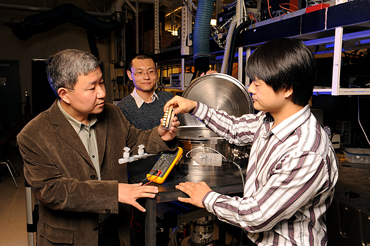
    Xinwei Wang, Guoqing Liu and Xiaopeng Huang, left to right, show the instruments they used to study the thermal conductivity of spider silk. Photo by Bob Elbert.

    Xinwei Wang had a hunch that spider webs were worth a much closer look.

    So he ordered eight spiders - Nephila clavipes, golden silk orbweavers - and put them to work eating crickets and spinning webs in the cages he set up in an Iowa State University greenhouse.

    Wang, an associate professor of mechanical engineering at Iowa State, studies thermal conductivity, the ability of materials to conduct heat. He's been looking for organic materials that can effectively transfer heat. It's something diamonds, copper and aluminum are very good at; most materials from living things aren't very good at all.

    But spider silk has some interesting properties: it's very strong, very stretchy, only 4 microns thick (human hair is about 60 microns) and, according to some speculation, could be a good conductor of heat. But nobody had actually tested spider silk for its thermal conductivity.

    And so Wang, with partial support from the Army Research Office and the National Science Foundation, decided to try some lab experiments. Xiaopeng Huang, a post-doctoral research associate in mechanical engineering; and Guoqing Liu, a doctoral student in mechanical engineering, helped with the project.

    "I think we tried the right material," Wang said of the results.

    What Wang and his research team found was that spider silks - particularly the draglines that anchor webs in place - conduct heat better than most materials, including very good conductors such as silicon, aluminum and pure iron. Spider silk also conducts heat 1,000 times better than woven silkworm silk and 800 times better than other organic tissues.

    A paper about the discovery - "New Secrets of Spider Silk: Exceptionally High Thermal Conductivity and its Abnormal Change under Stretching" - has just been published online by the journal Advanced Materials.

    "Our discoveries will revolutionize the conventional thought on the low thermal conductivity of biological materials," Wang wrote in the paper.

    The paper reports that using laboratory techniques developed by Wang - "this takes time and patience" - spider silk conducts heat at the rate of 416 watts per meter Kelvin. Copper measures 401. And skin tissues measure .6.

    "This is very surprising because spider silk is organic material," Wang said. "For organic material, this is the highest ever. There are only a few materials higher - silver and diamond."

    Even more surprising, he said, is when spider silk is stretched, thermal conductivity also goes up. Wang said stretching spider silk to its 20 percent limit also increases conductivity by 20 percent. Most materials lose thermal conductivity when they're stretched.

    That discovery "opens a door for soft materials to be another option for thermal conductivity tuning," Wang wrote in the paper.

    And that could lead to spider silk helping to create flexible, heat-dissipating parts for electronics, better clothes for hot weather, bandages that don't trap heat and many other everyday applications.

    What is it about spider silk that gives it these unusual heat-carrying properties?

    Wang said it's all about the defect-free molecular structure of spider silk, including proteins that contain nanocrystals and the spring-shaped structures connecting the proteins. He said more research needs to be done to fully understand spider silk's heat-conducting abilities.

    Wang is also wondering if spider silk can be modified in ways that enhance its thermal conductivity. He said the researchers' preliminary results are very promising.

    And then Wang marveled at what he's learning about spider webs, everything from spider care to web unraveling techniques to the different silks within a single web. All that has one colleague calling him Iowa State's Spiderman.

    "I've been doing thermal transport for many years," Wang said. "This is the most exciting thing, what I'm doing right now."

    Source: Iowa State University

    Additional Information:
    Related Articles:

    Is Seaweed the Future of Biofuel?

    Engineerblogger
    March 6, 2012


    Credit: TAU

    As scientists continue the hunt for energy sources that are safer, cleaner alternatives to fossil fuel, an ever-increasing amount of valuable farmland is being used to produce bioethanol, a source of transportation fuel. And while land-bound sources are renewable, economists and ecologists fear that diverting crops to produce fuel will limit food resources and drive up costs.

    Now, Prof. Avigdor Abelson of Tel Aviv University's Department of Zoology and the new Renewable Energy Center, and his colleagues Dr. Alvaro Israel of the Israel Oceanography Institute, Prof. Aharon Gedanken of Bar-Ilan University, Dr. Ariel Kushmaro of Ben-Gurion University, and their Ph.D. student Leor Korzen, have gone to the seas in the quest for a renewable energy source that doesn't endanger natural habitats, biodiversity, or human food sources.He says that marine macroalgae — common seaweed — can be grown more quickly than land-based crops and harvested as fuel without sacrificing usable land. It's a promising source of bioethanol that has remained virtually unexplored until now.

    The researchers are now developing methods for growing and harvesting seaweed as a source of renewable energy. Not only can the macroalgae be grown unobtrusively along coastlines, Prof. Abelson notes, they can also clear the water of excessive nutrients — caused by human waste or aquaculture — which disturb the marine environment.

    A man-made "ecosystem"

    While biomasses grown on land have the potential to inflict damage on the environment, the researchers believe that producing biofuel from seaweed-based sources could even solve problems that already exist within the marine environment. Many coastal regions, including the Red Sea in the south of Israel, have suffered from eutrophication — pollution caused by human waste and fish farming, which leads to excessive amounts of nutrients and detrimental algae, ultimately harming endangered coral reefs.

    Encouraging the growth of seaweed for eventual conversion into biofuel could solve these environmental problems. The system that the researchers are developing, called the "Combined Aquaculture Multi-Use Systems" (CAMUS), takes into account the realities of the marine environment and human activity in it. Ultimately, all of these factors function together to create a synthetic "man-made ecosystem," explains Prof. Abelson.

    Man-made fish feeders, which produce pollution in the form of excess nutrients and are generally considered harmful to the marine environment, would become a positive link in this chain. Used alongside an increased population of filter feeders such as oysters, which suck in extra particles and convert them food that the microalgae can consume, this "pollution" could be used to sustain a much greater yield of seaweed, which is needed for seaweed to become a sustainable source of fuel.

    "By employing multiple species, CAMUS can turn waste into productive resources such as biofuel, at the same time reducing pollution's impact on the local ecosystem," he says.

    Turning waste into opportunity

    The researchers are now working to increase the carbohydrate and sugar contents of the seaweed for efficient fermentation into bioethanol, and they believe that macroalgae will be a major source for biofuel in the future. The CAMUS system could turn seaweed into a sustainable bioethanol source that is productive, efficient, and cost-effective.

    Source: Tel Aviv University

    Monday, March 5, 2012

    Battery 500 Project: 800 km range for electrovehicles

    Engineerblogger
    March 5, 2012


    IBM's Battery 500 project, led by scientists at IBM Research – Almaden in California, is an interdisciplinary consortium to develop a lithium–air battery that aims to increase the range of electrovehicles to 500 miles (approximately 800 km). This is more than five times the range of today's batteries, which average some 150 km per charge. If the project is successful, battery-powered vehicles could finally become a practical reality and thus overcome the main obstacle to becoming generally accepted and widespread: In a recent survey conducted by IBM, 64% of consumers said that the limited range was their strongest objection to driving electrovehicles.

    Changing from gasoline to electricity as the main energy source for vehicles could be one of the most significant technological turning points in the history of our modern industrial society. However, progress has been slow in developing high-performance batteries. High manufacturing costs are another major factor that has limited the widespread acceptance and large-scale development of electrovehicles. Consumers' greatest fear is being stranded somewhere with an empty battery, and this fear is justified, as the range of most current battery-operated vehicles is only some 150 km. It appears unlikely that a realistic range can be achieved with today's battery technology, which must also have an acceptable weight and be available at reasonable prices.

    Rechargeable lithium–ion storage batteries like the ones used in cell phones or notebook computers offer only a fraction of the energy density—the amount of energy that can be stored per mass unit or volume unit—achieved by fossil fuels such as gasoline or diesel. Therefore this battery technology for electrovehicles is only of interest today for short distances or in hybrid-engine vehicles. If this situation is to be fundamentally changed, new types of batteries with significantly higher energy densities must replace today's lithium–ion batteries. IBM, world patent leader and active for decades in fundamental research, has launched a new project dubbed Battery 500 to tackle this problem. For this new project, IBM is leveraging its recent progress in the fields of materials science, nanotechnology, chemistry and supercomputing.

    An interdisciplinary team of scientists at IBM Research – Almaden in California and IBM Research – Zurich, together with leading universities, corporations and research institutes has been exploring a so-called lithium–air battery since mid-2009. The aim of this project is to develop a battery whose energy density is up to ten times higher than that of today's rechargeable lithium–ion batteries, thus providing electrovehicles with a range of up to 500 miles or 800 km. "With our lithium–air battery technology we hope to achieve a quantum leap that could be a breakthrough in electromobility," explains Dr. Winfried Wilcke, initiator and head of the Battery 500 project at IBM Research – Almaden. "This is yet another project of IBM's 'Smarter Planet' vision in which new mobility concepts play a vital role."

    "Airy" bundle of energy

    A major advantage of the lithium–air battery is that it takes oxygen from the atmosphere as its reacting agent. The oxygen is stored in light carbon nanostructures in the cathode, meaning that significantly more energy per kilogram battery weight can be stored than in today's batteries. A numerical example illustrates this advantage: a conventional lithium–ion battery with an energy content of 50 kilowatt hours (kWh) weighs about 500 kg. A range of 800 km would require an energy content of 150 kWh, which would mean a weight of 1.5 tons, which is clearly unrealistic for practical use in electrovehicles. In contrast, IBM scientists estimate that a 150 kWh lithium–air battery would weigh "only" about 150–300 kg.
    The theoretically achievable specific energy of a lithium–air battery (without the weight of the ambient oxygen) is greater than 11 kWh per kilogram (kWh/kg). Scientists predict that, in practice, a lithium–air battery could achieve about one-tenth of the theoretical specific energy. Taking the relative efficiency of combustion motors and electromotors into account, the difference in "practical" energy densities between electromotors and gasoline or diesel-powered motors is actually very small because electromotors have a very high efficiency of 85%. The lithium–air technology thus exhibits the greatest potential of all battery types researched to date.

    A battery that "breathes"

    Like all batteries, the basic construction of a lithium–air battery consists of two electrodes, in this case a metal electrode of lithium (the anode) and an oxygen-permeable electrode of a light carbon structure (the cathode). When the battery is discharged, the lithium atoms of the anode lose electrons and proceed as lithium ions through an electrically conducting electrolyte to the cathode, where they react with oxygen from the atmosphere. The product of this reaction is then deposited in the cathode. When the battery is charged, it releases the oxygen collected while the vehicle was being driven (discharged) back into the atmosphere. Metaphorically speaking, the battery "inhales" oxygen while discharging and "exhales" it again while being recharged.
    IBM scientists are focusing on so-called aprotic (non-watery) lithium–air batteries, which use organic liquids and lithium salts as electrolytes. Discharging the battery produces lithium peroxide (Li2O2)—but only when the right electrolytes are used—which is stored in the battery's cathode. During the charging process, the lithium peroxide breaks down into oxygen, which is released into the atmosphere, and lithium, which is stored in the battery's anode.

    From simulations and experiments to success

    The members of this project have already achieved major breakthroughs toward achieving their ambitious goal. For example, the functionality of this technology has been proved in principle on laboratory-scale models that unequivocally demonstrated the rechargeability of lithium–air batteries. The key to this first success was a combination of computer-based simulations and practical experiments. The team at the IBM Research – Zurich Laboratory performed so-called ab initio simulations to obtain new insights into the molecular-level processes that take place in lithium–air batteries. These highly complex simulations draw exclusively on basic laws of physics and physics models. In this way, interactions between atoms and molecules in a given system can be computed exactly. Performed on a petaflop IBM BlueGene/P supercomputer at Argonne National Laboratory, these simulations showed for the first time that the electrolytes used in conventional lithium–ion batteries do not work in lithium–air batteries, contrary to what was previously thought.

    "Our simulations allowed us to demonstrate the processes that actually take place during discharge. The carbon-based electrolyte reacts in an undesirable manner with the lithium peroxide and decompose as a result. This effectively destroys the lithium–air battery," explains Dr. Alessandro Curioni, head of the Computational Sciences research group at IBM Research – Zurich.
    Using a mass spectrometer developed specifically for the Battery 500 project, scientists were able to perform laboratory experiments that clearly confirm the electrolyte decomposition predicted by the simulations. "Simulations and experimental results have allowed us to identify stable electrolytes with which we were able to demonstrate the basic functionality of the charging and discharging processes," says project leader Wilcke. In addition, very high charge capacities have been demonstrated in the laboratory. A further fundamental result is the fact that, contrary to long-held assumptions, catalyzers are not kinetically necessary because the so-called overvoltage of the fundamental electrochemical reaction 2Li+ + O2 + 2- <=> Li2O2 is much smaller than originally thought. Nevertheless, the very low conductivity of lithium peroxide is a problem that is yet to be resolved.

    Still a "Grand Challenge"

    Several other veritable challenges remain for scientists to solve before lithium–air batteries can be implemented for practical purposes or fabricated industrially. It is therefore one of IBM Research's so-called "Grand Challenges"—ambitious and risky research projects with uncertain outcomes but very high potentials, such as the development of the WATSON supercomputer.
    Currently, scientists are seeking to increase the energy density of the battery, which is still far too low for real-life electromobility. Another challenge is the charging process, which is currently too slow. But even assuming that this can be improved markedly, it will not be possible, say, to charge the battery quickly during one's coffee break. Scientists are currently aiming for the capability to charge the battery overnight, which, based on the considerable range, should be sufficient. To solve the problem posed by lithium's susceptibility to humidity, the IBM team is also developing novel nanomembranes, which will be required in order to protect the sensitive lithium anode from steam and carbon dioxide in the atmosphere. Additional challenges are the long-term stability of the components' materials and the improved ability to suppress undesirable secondary reactions.

    Upon successful completion of the current research phase, the Battery 500 project could possibly be pursued with industrial partners to develop commercial models of the lithium–air battery in the timeframe of 2020 to 2030. Participants of the Battery 500 project include several other top-notch partners of German, Japanese and Korean corporations as well as additional American research institutions.


    Source: IBM

    Energy Squeeze: Squeezing polymers produces chemical energy

    Engineerblogger
    March 5, 2012

    Bartosz A. Grzybowski

    A polymer is a mesh of chains, which slowly break over time due to the pressure from ordinary wear and tear. When a polymer is squeezed, the pressure breaks chemical bonds and produces free radicals: ions with unpaired electrons, full of untapped energy. These molecules are responsible for aging, DNA damage and cancer in the human body.

    In a new study, Northwestern University scientists turned to squeezed polymers and free radicals in a search for new energy sources. They found incredible promise but also some real problems. Their report is published by the journal Angewandte Chemie.

    The researchers demonstrated that radicals from compressed polymers generate significant amounts of energy that can be used to power chemical reactions in water. This energy has typically been unused but now can be harnessed when polymers are under stress in ordinary circumstances -- as in shoe soles, car tires or when compacting plastic bags.

    They also discovered during the study that a silicone polymer commonly used in implants for cosmetic procedures releases a large quantity of harmful free radicals when the polymer is under only a moderate amount of pressure. These findings suggest the safety of certain polymer-based medical implants should be looked at more closely.

    “We have established that polymers under stress create free radicals with overall efficiencies of up to 30 percent and shoot the radicals out into the surrounding medium where they can drive chemical reactions,” said Bartosz A. Grzybowski, an author of the paper and the Kenneth Burgess Professor of Physical Chemistry and Chemical Systems Engineering. “These radicals can be useful or they can be harmful, depending on the situation.”

    Grzybowski and his team are the first to use this energy to drive chemical reactions by simply surrounding the compressed polymer with water containing desired reagents.

    The radicals created in the polymer migrate toward the polymer/water interface where they produce hydrogen peroxide, which then can drive chemical processes.

    “You can get a surprisingly large amount of chemical energy from a polymer under compression,” Grzybowski said. “This energy is, in a sense, free for the taking. Under normal circumstances, the energy is virtually never retrieved from deformed polymers, which then age unproductively. But you could recharge a battery from the energy produced by walking or driving a car. And you could capture even more energy when compacting millions of plastic bags.”

    Grzybowski is also director of Northwestern’s Non-Equilibrium Energy Research Center, which is funded by the U.S. Department of Energy.

    “We are interested in new sources of chemical energy, and this energy from the simple breaking of polymers’ bonds is not being used,” he said. “By surrounding the polymer with a medium, such as water, we can produce environmentally friendly chemical energy. One direction we are pursuing is to use this energy to sanitize water in developing countries. This is possible because hydrogen peroxide produced by squeezed polymers kills bacteria.”

    The researchers confirmed that mechanical deformation -- moderate squeezing -- created free radicals in the polymers. They also determined the number of radicals produced in a polymer under pressure is approximately 1016 (10 to the 16th) radicals per cubic centimeter of polymer -- a substantial amount.

    They next filled polymer tubes with water, squeezed the tubes and measured the total number of radicals that migrated into the surrounding solution. They found that nearly 80 percent of the radicals made the trip.

    Grzybowski and his team demonstrated they can squeeze a polymer, such as what might be found in a shoe, tire or plastic bag, and get a mechanical-to-chemical energy conversion of up to 30 percent -- approaching the energy efficiency of a car engine.

    The hydrogen peroxide produced when a polymer surrounded by water is squeezed can power a variety of chemical reactions, including fluorescence, nanoparticle synthesis and dye bleaching, the researchers showed.

    To illustrate the process, they converted a Nike Air LeBron shoe into a “lightning shoe,” where the air pockets in the polymeric sole are filled with a solution of a compound that lights up in the presence of radicals. After a person walked in the shoe for 30 minutes or more, enough radicals were created to generate a blue glow visible to the naked eye.

    The researchers studied seven different polymers, including a number of particular public interest. Poly(dimethylsiloxane), a silicon-based material commonly used in medical implants, was one of them. In the lab experiments, the medium surrounding the polymer and the amount of pressure exerted on the material were similar to what would be found in the human body, Grzybowski pointed out.

    “Our findings are somewhat worrisome since every polymeric implant in the human body experiences mechanical stresses and, as we now know, can produce harmful free radicals and liberate them into surrounding tissues, which may contribute to diseases such as cancer, stroke, myocardial infarction, diabetes and other major disorders,” Grzybowski said. “With this knowledge, I am quite happy to have a metal implant in my knee, rather than a polymer implant.

    “From a scientific perspective, our work proves yet again that a phenomenon can be useful or harmful depending on how we implement it,” he said. “The same polymer can be a useful source of energy when outside of a human body, yet a potential risk hazard when implanted into it.”

    The U.S. Department of Energy funded the research.

    Source: Northwestern University

    Additional Information:

    Heart-powered pacemaker could one day eliminate battery-replacement surgery

    Engineerblogger
    March 5, 2012

    An artificial pacemaker from St. Jude Medical, with electrode.

    A new power scheme for cardiac pacemakers turns to an unlikely source: vibrations from heartbeats themselves.

    Engineering researchers at the University of Michigan designed a device that harvests energy from the reverberation of heartbeats through the chest and converts it to electricity to run a pacemaker or an implanted defibrillator. These mini-medical machines send electrical signals to the heart to keep it beating in a healthy rhythm. By taking the place of the batteries that power them today, the new energy harvester could save patients from repeated surgeries. That's the only way today to replace the batteries, which last five to 10 years.

    "The idea is to use ambient vibrations that are typically wasted and convert them to electrical energy," said Amin Karami, a research fellow in the U-M Department of Aerospace Engineering. "If you put your hand on top of your heart, you can feel these vibrations all over your torso."

    The researchers haven't built a prototype yet, but they've made detailed blueprints and run simulations demonstrating that the concept would work. Here's how: A hundredth-of-an-inch thin slice of a special "piezoelectric" ceramic material would essentially catch heartbeat vibrations and briefly expand in response. Piezoelectric materials' claim to fame is that they can convert mechanical stress (which causes them to expand) into an electric voltage.

    Karami and his colleague Daniel Inman, chair of Aerospace Engineering at U-M, have precisely engineered the ceramic layer to a shape that can harvest vibrations across a broad range of frequencies. They also incorporated magnets, whose additional force field can drastically boost the electric signal that results from the vibrations.

    The new device could generate 10 microwatts of power, which is about eight times the amount a pacemaker needs to operate, Karami said. It always generates more energy than the pacemaker requires, and it performs at heart rates from 7 to 700 beats per minute. That's well below and above the normal range.

    Karami and Inman originally designed the harvester for light unmanned airplanes, where it could generate power from wing vibrations.

    A paper on the research, titled "Powering pacemakers from heartbeat vibrations using linear and nonlinear energy harvesters," is published in the current print edition of Applied Physics Letters.

    The research is funded by the National Institute of Standards and Technology and the Institute for Critical Technology and Applied Science at Virginia Tech.

    Source: University of Michigan

    Friday, March 2, 2012

    Unique salt allows energy production to move inland

    Engineerblogger
    March 2, 2012


    Microbial reverse dialysis test cell. Credit PSU

    Production of energy from the difference between salt water and fresh water is most convenient near the oceans, but now, using an ammonium bicarbonate salt solution, Penn State researchers can combine bacterial degradation of waste water with energy extracted from the salt-water fresh-water gradient to produce power anywhere.

    "We are taking two technologies, each having limitations, and putting them together," said Bruce E. Logan, Kappe Professor of Environmental Engineering. "Combined, they overcome the limitations of the individual technologies."

    The technologies Logan refers to are microbial fuel cells (MFC) -- which use wastewater and naturally occurring bacteria to produce electricity -- and reverse electrodialysis (RED) -- which produces electricity directly from the salinity gradient between salty and fresh water. The combined technology creates a microbial reverse-electrodialysis cell (MRC). The researchers describe MRCs in today's (March 1) edition of Science Express.

    RED stacks extract energy from the ionic difference between fresh water and salt water. A stack consists of alternating ion exchange membranes -- positive and negative -- with each RED membrane pair contributing additively to the electrical output. Unfortunately, using only RED stacks to produce electricity is difficult because a large number of membranes is required when using water at the electrodes, due to the need for water electrolysis.

    Using exoelectrogenic bacteria -- bacteria found in wastewater that consume organic material and produce an electric current -- reduces the number of stacks needed and increases electric production by the bacteria.

    Logan, working with Roland Cusick, graduate student in environmental engineering, and postdoctoral fellow Younggy Kim, placed a RED stack between the electrodes of an MFC to form the MRC.

    While the researchers previously showed that an MRC can work with natural seawater, the organic matter in water will foul the membranes without extensive precleaning and treatment of the water. Seawater use restricts MRC operation to coastal areas, but food waste, domestic waste and animal waste contain about 17 gigawatts of power throughout the U.S. One nuclear reactor typically produces 1 gigawatt.

    Rather than rely on seawater, the researchers used ammonium bicarbonate, an unusual salt. An ammonium bicarbonate solution works similarly to seawater in the MRC and will not foul the membranes. The ammonium bicarbonate is also easily removed from the water above 110 degrees Fahrenheit. The ammonia and carbon dioxide that make up the salt boil out, and are recaptured and recombined for reuse.

    "Waste heat makes up 7 to 17 percent of energy consumed in industrial processes," said Logan. "There is always a source of waste heat near where this process could take place and it usually goes unused."

    The researchers tested their ammonium bicarbonate MRC and found that the initial production of electricity was greater than that from an MRC using seawater.

    "The bacteria in the cell quickly used up all the dissolved organic material," said Logan. "This is the portion of wastewater that is usually the most difficult to remove and requires trickling filters, while the particulate portion which took longer for the bacteria to consume, is more easily removed."

    The researchers tested the MRC only in a fill and empty mode, but eventually a stream of wastewater would be run through the cell. According to Logan, MRCs can be configured to produce electricity or hydrogen, making both without contributing to greenhouse gases such as carbon dioxide. The MRC tested produced 5.6 watts per square meter.

    Logan also said not having to process wastewater would save about 60 gigawatts.

    The King Abdullah University of Science and Technology supported this work.

    Source: Pennsylvania State University