Pages

Subscribe:

Labels

038628037504 (1) 10150 (1) 10BURIED (1) 10Count (1) 110011040 (1) 115Ounce (1) 1200mg (1) 12BSN (1) 12Count (2) 12CountNutricor (1) 12CountWWSN (1) 12Fresh (1) 12Stacker (3) 12VPX (1) 140243 (1) 14Servings (1) 158Ounce (1) 15Ounce (1) 16Ounce (2) 1716 (1) 17Skque (1) 1lbinLife (1) 2000Hrs (1) 2000mg (1) 200Watt (1) 2021A (1) 20OunceNatures (1) 2412Ounce (1) 24Count (1) 24EAS59134 (1) 24FRS (1) 24Guru (1) 24Guru01GR124 (2) 24Nestle (2) 24Pediasure (2) 24Peptamen (1) 24PieceDisplay (1) 24Solis (2) 27ReSource (2) 2Biochem (1) 2Dynamic (1) 2Jarrow (1) 2Muscle (1) 2Natures (1) 2Ounce (3) 2Pound (1) 30Day (1) 328601 (1) 334928 (1) 336gOptimum (1) 37Ounce (1) 3Ensure (1) 3M (1) 414 (1) 432500 (1) 48Boost (1) 48Fluid (1) 48ml (1) 4Ensure (1) 4Isopure (1) 5000mg (1) 527408 (1) 5511786 (1) 574400 (1) 5Hour (2) 5Ounces (1) 600Kendall (1) 662380 (1) 6Beneprotein (1) 6Proteinex (1) 70951 (1) 750mlNutriPrima (1) 845Ounce (1) 84Fluid (2) 84OuncesLiquid (1) 89Inch (1) 8nuun (2) 8Ounce (7) 99369FR (1) ABB (3) Academy (1) ACCENTS (1) Acia162Ounces (1) Acsry (1) Active (2) Adapter (1) AdapterBattery (1) Advance (1) Advanced (1) Advantage (1) AdvantEdge (1) Africa (29) African (1) Agaricus (1) AiCoco (1) AIDSTrustex (1) Airbrush (1) Airbus (6) Aircraft (94) AISI (1) Ajmeras (1) Alchohol (1) Alertness (1) Alfalfa (2) Alive (1) Allergy (1) Allspice (8) Alpine (1) Alstom (2) Alternative (1) Amarillo (1) Amazing (3) Amazon (2) American (1) animal (11) Annual Reports (155) Antioxidant (1) Anwar Ibrahim (1) Apple (1) Applied Materials (1) Arrowroot (1) AshtonDrake (1) Asia (72) Assorted (1) Atkins (1) Audi (1) Australia (21) Automotive (250) Automotive Technology (183) Ayurvedic (1) BABIES (1) Babys (1) Bacopa (1) BagAtkins2627 (1) BagsTraditional (1) BagSun (1) Balanced (1) Ballard Power System (1) Banaba (2) Baram Dam (1) Baram Regatta (1) Bariatric (1) Barisan Nasional (2) Barisan Nasional Helps Penan (1) Barista (2) Barley (2) barsBiochem (1) Basement (1) BASF (2) Basics (1) Batu Lawi (1) Bayer (1) BEA1017OZ (1) Beachbody (1) Beaded (1) Beaumont (1) beautiful girl image (19) Beauty (2) Beneprotein (2) Berries (3) Berry (4) BerryLiving (1) Beverage (1) Bicycle (1) BioAstin (1) Biochem (4) Biofuel (12) Biogenesis (2) BlackBlender (1) Blend (1) Blender (4) Blueberry (1) BlueStereo (1) BMF (1) BMW (7) BMX (1) BN (1) Boeing (4) Bombardier (4) Book (1) Borneo (6) Bottle (8) BottleProStat (1) Bottles (15) BottleScivation (1) bottlesEnsure (2) BottlesMio (1) BoxChenille (1) BoxDarice140243 (1) BOXESAmerican (1) BoxesFRSPowder (1) BoxPremier (1) BP (2) Brands (1) Brands833667000102 (1) Brazil (10) Brazilian (1) Breeze (3) BrewersBarista (1) BRIC (118) Brikpaks (3) Brownie (1) Bruno Manser (1) Bruno Manser Fund (3) Bruno Manser Fund Fraud (1) Bruno Manser Fund Frauds (1) Bruno Manser Lies (2) BTL410400 (1) Bubbles (1) Burner (1) business (72) Butchers (1) Butter (1) Butterscotch (1) Cable (1) Cables (1) Calcium (2) California (1) Calorie (3) Camera (1) Canada (11) Candela (1) Canister (2) CanisterCLICK (1) Canisters (1) Canning (1) Capramilk (1) CapsSwanson (1) Capsule (5) Capsules (6) CapsulesEAS (1) Caraway (1) Cardio (1) Carnation (1) CaseEnsure (2) CaseNestle (2) Celebrity (22) CellularFactory (1) Celsius (1) Certification (28) Certified (2) Chameleon (1) Charger (1) Charter/Terms of Reference (27) CHEAP (135) Chenille (1) Cherry (1) CherryZydot (1) Chevron (1) Chewing (1) Chile (1) China (99) Chipotle (1) Chlorophyll (1) Chocolate (7) Chocolate8 (1) Choice (2) Cholesterol (1) Chrome (1) Chrysler (1) Chunho (1) Citrifolia (1) Citroen (1) Citroën (1) Citrus (2) Civil Service (1) CK Morris Associates (1) Clare Rewcastle Brown (2) Class (1) Classic (2) Clinical (1) CNST (1) Coenzyme (1) Coffee (4) Coffee11001105 (1) Coffee7DSC2B (1) Coffeehouse (1) Cold Fusion (1) Coldkicker (1) Collectable (1) Collection (1) Colored (1) Colors (1) Communications (14) Company (2) COMPLETE (4) Complex (1) Computer (1) Concentrate (1) Concentrated (1) Concepts645654 (1) Condoms (1) Container (7) CONTROL20BGSee (1) Corrections (3) CosMedix (1) count (1) countAmscan (1) CountMy (1) Crayola (3) Criminal (4) Cruiser (1) Crunch (1) Cytosport (2) Daimler (3) Dam (1) DAP (1) DAP Lies (1) Darice (1) DARPA (18) Dato Roland Sagah Wee Inn (1) Defence (60) Defense (61) Delight (2) description (1) Desert (7) Design (65) DESIGNER (3) Desktop (1) detail (1) Detroit (1) Development (1) Dexatrim (1) diameter (1) diameterGaming (1) Diecast (1) Dinosaur (1) DISCOUNT (4) Discover (1) Disney (1) Doctors (1) DoE (8) DolphinsSticky (1) DOMAGRON (1) Dow Corning Corp (2) DP9260 (1) DRA6329 (1) Dragon (1) Dressing (1) Drink (11) Drinkin (1) drinksNVE (1) Dupont (2) dv9657clSIBCORP (1) Dymatize (3) DYMMGV (1) DYNAMIC (5) EachHager (1) EADS (12) ecigs (1) Eco-Tourism (1) Economy (14) Education (1404) Electra (1) Electric Grid (1) Electrolyte (4) ELP3STSL (1) Endorush (1) Endurox (2) Energizing (1) Energy (540) English Article (20) Enhanced (1) Enhancer (1) Enlive (2) Ensure (12) Enterprise (1) Environment (170) Enzymatic (1) Eraser (1) ERECTION (1) Ergonomics (4) ESA (4) Espresso (1) Essence (2) Essentials (3) EssentialsHSE (1) ethnic group (1) Europe (201) Executive/External Ombuds (2) Extended (2) ExtenderBadger (1) Extension (1) Extern/Intern (20) Extract (5) Extreme (21) Factor (1) Factors (3) Fantastic (1) Fatigued (1) Faucet (1) feature (9) Featuring (1) Fellowes (1) Fillet (1) First Energy (6) Fitera (2) FlatScreen (1) Flavor (1) FlavorBeachbody (1) Focus28 (1) Ford Motors (7) Foreign NGOs (2) Forest (1) formula (5) Formulas (1) Forts (1) FORUM (1) Fragrance (1) France (12) Frappuccino (1) FreeHubner (1) French (2) Friday Poll (13) Frontier (1) Frost (1) Fruits (1) Ft1140Alessco (1) Ft132Alessco (1) FToys (1) Fudge (1) Fuel Cell (26) Fujitsu (2) funny (19) Gadget (6) Galleries (1) Gallon (1) GameJax2000 (1) Games (1) General Electric (21) General Motors (15) Genesis (1) Georges (1) Germany (28) Go02658 (1) Golden (1) Goldfinch (2) Goodyear (1) Google (6) Gordoni (1) Gourmet (1) Government (333) Grape (2) Grape5 (1) Green Energy (544) Greens (2) GripAlex (1) Ground (7) Guarana (1) Halal Hub (1) Hammer (1) Hardware (1) Hasbro (1) Hawaiian (1) health (19) Health Care (87) Healthy (4) Herbal (5) Herbals (1) Himalayan (1) Holiday (1) Honda (4) Honeywell (1) Hoodia (1) HPCompaq (1) Hubner (1) human capital development (1) Humor (18) Hydration (2) hydration8PKNUUNLL (1) Hydrive (1) Hyundai (2) IBM (2) Illegal Demonstrations (1) iMicro (1) IMMICRP (1) India (23) information (8) Infrastructure (44) inLife (1) Inside Invester Ltd (1) Instantized (1) Institute (1) International (338) Internet (7) Intestinal (2) Investment (187) IOA News (168) ISO (1) ISO100 (1) Isolate (2) Isopure (4) Isotonix (1) Italian (2) Italy (1) Jabatan Penerangan (1) Jameson Ahip Nawie (1) Japan (57) JarALTERNATIVE (1) JarDoctors (1) Jarrow (1) Job Postings (339) Johnson Controls (1) Journey (2) Juice (2) JUICECRANBERRYOG2 (1) JuiceTahitian (1) Kangmei (1) KCups (1) Kerlix (1) Kettler (1) Kettler8852600 (1) Keurig (1) Keyboard (1) Kiddio (1) KitBerg (1) KiteSpiderMan (1) KitGoldfinch (1) Kombucha (2) KombuchaKIT (1) Kraft911501 (1) Kuching (1) Laboratories (1) Langnickel (1) LaptopNotebook (1) lbBioGenesisRICE3 (1) lbsNatural (1) Leading Indicators (450) Lean (10) LeapFrog (3) Learning (1) Leaves (2) Leccino (1) Legislation (65) Lemonade (2) Lemonlime (1) Len Talif (1) License (1) Lifetime (2) Light (1) LightHog (1) LINERBLADDER (1) Liquid (20) LiquidDeSouzas (1) Litigation (45) Living (2) Lockheed Martin (6) Looking (1) Lubricants (1) Lubricated (1) Macbook (1) Malaysia (4) MaleFemale (1) Management (16) Manufacturing (394) Marine Technology (2) Materials (446) Mazda (2) Medical (84) Medicinals (1) MEGAWING (1) Mental (1) Mercedes-Benz (3) Merdeka (2) Metabolic (1) MetaboLife (1) Metallic (1) Metamucil (1) MetersCables (1) Middle East (16) Miniatures (1) MioEnergy (1) Miradent (1) Miri (1) MIRROR (1) Mitsubishi (4) Monkey (2) Monster (1) Morinda (1) Morton (1) Mosacis (1) Mosaics (1) Mothers (1) MountScotty245 (1) MultiPackCELSIUS (1) MultiPackDYNAMIC (2) MultiPackLILY (1) MultiPackLIQUID (1) MultiPackMACA (1) MultiPackONLY (1) Multiracial (1) Mulu (1) Muscle (1) Muscletech (2) Myoplex (1) Nanotechnology (279) NASA (22) National Laboratory (46) Natural (12) natural phenomena (11) Naturally (1) Naturals (3) Natures (6) Naturessunshine (4) nc8000 (1) nc8220 (1) nc8230 (1) Nesting (1) Nestle (2) Netbook (1) New Programs (133) New Zealand (2) NGO's (213) NGOs (1) Nickel Hydrogen (1) Nissan (8) NIST (5) North America (18) Northrop Grumman (1) Norway (1) NovoAndina (2) Noxide (1) NREL (8) NSF (3) NTT Data (1) Nuclear (45) Numbers (1) Nuspeed (1) Nutrex (1) Nutricor (1) Nutrient (2) Nutrients (1) NutriPrima (1) Nutrition (15) Nutritional (5) NutritionON45 (1) nw8000 (1) nw8240 (1) Offshore (7) OilsAWM (1) OintmentWounded (1) Olives (1) Onshore (2) Optical Technology (28) Optimum (4) Optisource (2) Orang Ulu (1) Orange (7) OrangeHigh5 (1) Organic (12) Original (2) Other Ombuds (145) Otomotif (2) ounce (1) Ounces (5) OuncesSea (1) OunceThe (1) Outside the Standards (62) Oxford Business Group (1) OyToys (1) OzAfrican (1) ozNatures (1) Packages (1) Packet (1) Packets (1) PacketsNatures (1) PacketsUltima (1) Packs (2) PackStarbucks (1) PadCrayola (1) Paradise (1) Parazyme (1) Parents (1) Parmigiani (1) Pavilion (1) Pecan (1) Pediasure (3) Pehin Sri Haji Abdul Taib Mahmud (1) Penan (9) Pepper (1) Peppermint (1) Peptamen (1) Peter Jaban (2) Pharma (1) Pharmaceuticals (1) Phillips (1) Pickling (1) Pieces (1) PineappleGU (1) PinkBlender (2) PKR (1) PlantBased (1) Plantiva (1) Plastic (8) PN0223 (1) Pomegranate (1) PomegranateGU (1) Porsche (1) PostCXDNSR105 (1) Poundlb (1) Pounds (1) PoundsClif (1) Powder (20) Powdered (1) PowderEndurox (1) PP1235BBS (1) Practice Pointers (185) Prebio (1) PregNatal (1) Premier (1) Premium (3) preservatives (1) Preston (1) Private Sector (174) Proasis (1) Products (2) Professional Devt. (254) Profiles (257) Projector (1) Proscience (1) ProStat (2) protein (14) Proteinex (1) Protidiet (1) Proxima (1) Pudding (1) Punch (1) Purpose (1) Puzzle (1) R. Palan and Sabariah Putit (1) R4Lemon (1) Rail (41) RAINBOW (1) Rainforest (2) Raspberry (1) REA6048 (1) ReadytoDrink (1) Reaper (1) Recovery (2) Regional Events (101) Regular (2) Release (2) Remedies (1) REMEDIES4582008 (1) Replacement (2) Replenisher (3) ReplenisherUltima (1) Research (1) Research and Development (825) ReSource (4) Results (1) Revitalization (1) Roasted (1) Robotic Technology (124) Rocket (2) Rolls royce (7) Rooibos (1) Rosemary (1) ROSSLARE (1) Russell (1) Russia (17) Safety (15) Sains (20) SaltFree (1) Samalaju (4) Sammons (1) Samsung (1) Sarawak (13) Sarawak 10th State Election (1) Sarawak Borneo (7) Sarawak Budget 2012 (1) Sarawak Corridor of Renewable Energy (SCORE) (8) Sarawak Development (1) Sarawak Economics (1) Sarawak Economy (6) Sarawak ethnic groups (1) Sarawak Forest Corporation (2) Sarawak Politics (4) Sarawak Rainforest (2) Sarawakian (7) Satellite (6) Saudi Aramco (1) ScaledStar (1) Scholarly Articles/Research (102) science (50) Scivation (1) ScottishPower Renewables (1) Scotty (1) Seasoning (1) SEB (1) Secura (1) Seks (12) Senior Citizens (1) Series (1) serving (2) Servings (2) servingsBariatric (1) Shades (1) shake (4) Shaker (1) SHEETSHygloss (1) Shell (1) ShotCL27752 (1) Siemens (8) Silicone (1) Silver (1) Singapore (2) Single (1) Sleeve (1) SlimFast (1) Slimming (1) SlimStyles (1) SM005Grey (1) Smart (1) smartphone (1) Smoke (1) Smoothie (2) Smore (1) SoftCarpets (2) Softgels (1) Sony (1) Souffle (1) Source (2) South Africa (11) South America (11) South Korea (1) Space Technology (69) Sparkling (1) SpiderMan (1) Sponge (1) SpongeSammons (1) Sport (8) Sports (7) Springtime (1) Stacker (4) Starbucks (1) Starwest (2) Stems (1) Stereo (1) Sterile (1) Sticker (1) Sticky (1) Stomach (2) Strawberry (3) Strength (3) Strive (1) SumoMESUMO66897 (1) Sundries (5) Sunkist (1) Sunwarrior (1) SuperGreens (1) Supplement (4) Supplier (1) supply (3) Support (4) Supreme (2) Sustainable Forest Management Policy (2) Switzerland (2) System (3) Tablet (2) Tablets (3) TabletsTwinlab (1) Tahatian (1) Tahitian (1) Taib Mahmud (6) Taisho (1) Tanjung Manis (1) Tanjung Manis Halal Hub (1) Tartar (2) Tata (4) Tattoos (1) Technology (562) Temporary (2) Temptations (1) Tesla (1) Testors (1) Thalgo (1) The Report 2011 (1) Therapeutic (1) TinTea (1) Tips (25) Tokuyama (1) Topical (1) totalBoost (1) Toyota (15) Toys21030000 (1) ToyTote (1) Transitions (255) Transphorm (1) Transport (135) TREASURE (1) TrikeKiddio (1) Tropical (2) Trumans (1) Trustex (1) Tubes30 (1) Twinlab (2) Twistables (1) Two Hats (2) Uganda (1) UK (107) Ulticare (1) Ultima (3) Ultimate (1) Ulu Baram (1) Unflavored (1) Unibody (1) Unique (53) United States (281) University (1) Unknown (1) Uranium (1) USDA (1) Vale (1) Vanilla (10) Vanilla8 (1) Varcho (1) Variety (3) VegCap (3) Vehicle (1) Video (30) Viennese (1) Visitor Advice (70) VIT033 (1) Vitacost (5) Vitalyte (1) Volkswagen (5) Volvo (2) VTL200CIR (1) Warrior (3) WarsATST (1) Water resources (1) Water Technology (28) Watermelon (1) Wedding (1) Weight (2) Whole (2) Wild10650 (1) Wooden (1) World news (67) Worldwide (1) Wounded (1) Xtend (1) Xtreme (1) Xylitol (1) ZeroCherry (1) ZipFizz (1) ZoomOxo4113600 (1) ZZP88103 (1)

Showing posts with label Management. Show all posts

Thursday, February 23, 2012

Value Stream Analysis Improves Processes, Saves Money

Engineerblogger
Feb 23, 2012


An example Pareto chart from a value stream analysis shows the potential benefit of implementing VSA findings. (AFRL Graphic)


Engineers from the Air Force Research Laboratory have stimulated industrial base investments in infrastructure and technology by leveraging the value stream analysis (VSA) process to identify significant process improvement opportunities.

As a result, General Electric Aviation, Pratt & Whitney and Rolls Royce, together with some of their suppliers, invested in process improvements to produce an expected $34 million cost avoidance for current and future products. Because many of the manufacturing technologies are applicable to advanced turbine engine performance improvements, the potential for an additional $126 million cost avoidance for current projects exists.

For the last five years, AFRL's Manufacturing Technology Division (AFRL/RXM), in cooperation with General Dynamics Information Technology and TechSolve, Inc., has been conducting VSAs within the advanced turbine engine industrial base. Each VSA generated a list of potential process improvements, projected costs, and assessed the risks associated with achieving the anticipated benefits.

AFRL/RXM used the data from these VSAs to develop successful ManTech programs, including a program for the advanced machining of CMCs. This program yielded increases in material removal rates and a reduction in cutting tool costs by two orders of magnitude. Additionally, the 3D airfoil inspection process reduced the dimensional inspection of complex shapes from 60 minutes down to 3 minutes.

Industry has used this data to pursue lower risk process improvements. These process improvements have been implemented and are anticipated to yield benefits of $27 million. Process improvements that have been partially implemented through industry investment are anticipated to yield an additional $7 million. When implemented, processes that are still maturing could provide an additional $126 million in benefits. For industry, the return on investment is about 15 to 1 and it is even greater for the Air Force, at 28 to 1.

Source: Air Force Office of Scientific Research

Wednesday, February 15, 2012

The Future of Robotics in Manufacturing: Moving to the Other Side of the Factory

Industry Week
Feb 15, 2012


A robotic arm prepares to place a door on a BMW at the automaker's Spartanburg, S.C., plant. Using electronic-measuring technology, the robot takes multiple photos of the relationship between the vehicle and the door and adjusts its position to eliminate any potential gaps in the fit caused by variations in the sheet metal.

To boldly go where they've never gone before, robots will need to become smarter, cheaper and easier to use. The industry could turn to an unlikely source to get there.

The birth of a BMW sports-activity vehicle begins with a few pieces of metal and the whirs, thrusts and twists of a robot.

Although BMW employs more than 7,000 people at its sprawling factory complex in Spartanburg, S.C., humans are a rare sight on the X5/X6 line in the body shop. There, a battalion of more than 380 robots -- there are nearly 1,000 of them plantwide -- fashions X5 vehicle bodies from 443 separate pieces of metal, performing 237 stud welds and more than 6,000 spot welds on each one, among a flurry of other tasks. The body shop also boasts BMW's first fully automated hang-on fit line, where robots attach the doors, hoods, hatches and fenders to the vehicles. The "Best Fit" system, which debuted on Spartanburg's X3 line in 2010, automates a process so critical to BMW's quality standards that it once was trusted only to human hands. "It was the one part of our shop that was almost 100% manual operations," says Herman Adams, the plant's body shop maintenance planner. "The rest of our shop was about 95% automation, so it was a really stark contrast."

While robots now do nearly 100% of the work in the body shop at BMW Spartanburg, it's a completely different story on the assembly lines. Walk the floor of Spartanburg's two mammoth assembly halls, observes Erik Nieves, technology director for Yaskawa America Inc.'s Motoman Robotics Division, and you see "an army of biology." Although automation undoubtedly plays a role in vehicle assembly at BMW Spartanburg -- a robotic arm, for example, plunks the sunroof into a hole on top of the BMW X3 -- the final-assembly process is largely the domain of people. And it's no different at any other major automotive plant. Consequently, Nieves believes that the future of robotics is about finding a way to move robots "to the other side of the wall" -- to the assembly line.
To read more click here...

Wednesday, February 8, 2012

New tool for analyzing solar-cell materials:Optimizing solar cell materials and production

Engineerblogger
Feb 8, 2012


As the United States seeks to reinvigorate its job market and move past economic recession, MIT News examines manufacturing’s role in the country's economic future through this series on work at the Institute around manufacturing.

To make a silicon solar cell, you start with a slice of highly purified silicon crystal, and then process it through several stages involving gradual heating and cooling. But figuring out the tradeoffs involved in selecting the purity level of the starting silicon wafer — and then exactly how much to heat it, how fast, for how long, and so on through each of several steps — has largely been a matter of trial and error, guided by intuition and experience.

Now, MIT researchers think they have found a better way.

An online tool called “Impurities to Efficiency” (known as I2E) allows companies or researchers exploring alternative manufacturing strategies to plug in descriptions of their planned materials and processing steps. After about one minute of simulation, I2E gives an indication of exactly how efficient the resulting solar cell would be in converting sunlight to electricity.

One crucial factor in determining solar cell efficiency is the size and distribution of iron particles within the silicon: Even though the silicon used in solar cells has been purified to the 99.9999 percent level, the tiny remaining amount of iron forms obstacles that can block the flow of electrons. But it’s not just the overall amount that matters; it’s the exact distribution and size of the iron particles, something that is both hard to predict and hard to measure.

Graduate student David Fenning, part of the MIT team behind I2E, compares the effect of iron atoms on the flow of electrons in a solar cell to a group of protesters in a city: If they gather together in one intersection, they may block traffic at that point, but cars can still find ways around and there is little disruption. “But if there’s one person in the middle of every intersection, the whole city could shut down,” he says, even though it’s the same number of people.

A team led by assistant professor of mechanical engineering Tonio Buonassisi, including Fenning, fellow graduate student Douglas Powell and collaborators from the Solar Energy Institute at Spain's Technical University of Madrid, found a way to use basic physics and a detailed computer simulation to predict exactly how iron atoms and particles will behave during the wafer-manufacturing process. They then used a highly specialized measurement tool — an X-ray beam from a synchrotron at Argonne National Laboratory — to confirm their simulations by revealing the actual distribution of the particles in the wafers.

“High-temperature processing redistributes the metals,” Buonassisi explains. Using that sophisticated equipment, the team took measurements of the distribution of iron in the wafer, both initially and again after processing, and compared that with the predictions from their computer simulation.

Free of charge, the I2E website has been online since July, and users have already carried out approximately 2,000 simulations. The details of how the system works and examples of industrial impact will be reported soon in a paper in the trade journal Photovoltaics International. The U.S. Department of Energy, which supported the research, has also reported on the new tool in an entry that will be posted on the agency’s blog.

Already, Powell says, I2E has been used by “research centers from around the world.”

By using the tool, a company called Varian Semiconductor Equipment Associates (recently acquired by Applied Materials), which makes equipment for producing solar cells, was able to fine-tune one of the furnaces they sell. The changes enabled the equipment to produce silicon wafers for solar cells five times faster than it originally did, even while slightly improving the overall efficiency of the resulting cells.

The company “started with a process that was fairly long,” Buonassisi says. They initially found a way to speed it up, but with too much of a sacrifice in performance. Ultimately, he says, using I2E, “we came up with a process that was about five times faster than the original, while performing just as well.”

Without the tool, there are simply too many possible variations to test, so people end up selecting the best from a small number of choices. But with I2E, Buonassisi says, “you can look for the global optimum” — that is, the best possible solution for a given set of requirements. “We can really speed up the innovation process,” he says.

Russell Low, a manager at Varian who was not involved in the work with MIT, says, "I would consider the work being carried out at MIT to be leading edge — combining computation physics with high-resolution experimentation. Given that silicon is still the major cost component of producing a solar cell, any technique that is capable of making use of [cheaper materials] ... is a significant achievement."

Fenning says that companies generally “can’t afford to do these large experiments” needed to figure out the best process for a given application. The physics of what goes on inside the wafer during the processing is complex, he says: “There are a number of competing mechanisms that cloud the picture of exactly what is going on,” which is why developing the simulation was a long and complex process.

Now that the simulation tool is available, Fenning says, it helps manufacturers balance product quality against production time. Because there are so many variations in the supplies of starting material, he says, “it’s a constantly evolving problem. That’s what makes it interesting.”

Source: MIT News

Tuesday, February 7, 2012

Thermal management: Beating the Heat

Engineerblogger
Feb 7, 2012


Credit: ASME

Although technically a sub-category of thermal engineering, heat transfer affects all engineering disciplines, including mechanical engineering. Heat transfer refers to the exchange of thermal energy from one system to another.

Thermal management, a practical embodiment of heat transfer, involves the removal of heat from the point of generation to the surroundings. Thermal management involves the use of fans, cooling fluids, or specialized materials to draw heat from temperature-sensitive components like computer chips, solar cells, and lighting. Components that overheat have a poor performance and shortened lifespan.

Electronic devices are notorious for generating heat. All central processing units in modern computers incorporate some sort of heat-dissipating mechanism such as a fan, heat-drawing materials, or both. As computers shrink in size, thermal management becomes even more critical. Components are close together, so heat from one part can easily damage a nearby component. Because space is limited, a suitable fan becomes impractical.

Passive Removal

Several options exist for thermal management in miniaturized computers. Passive thermal management uses materials with specialized thermal properties that transmit heat only in one direction–away from a hot component. You may have noticed how your notebook computer warms your thighs as you type away. Were it not for these "thermal spreaders" the computer would be literally too hot to handle.

Another passive strategy involves heat-spreading, which prevents hot spots by dissipating heat evenly across and away from microprocessor packages. Joel Plawsky, professor of chemical engineering at Rensselaer Polytechnic Institute, Troy, NY, conceived of a composite microcoating that conducts heat away from delicate components while simultaneously absorbing stresses associated with thermal expansion.

"Because computers cycle on and off through sleep mode, they never reach a steady state temperature," Dr. Plawsky says. "Thermal problems are much worse now than when computers were kept on all the time."

The nanocomposite consists of two phases. Nonconductive silicone, epoxy, or silicone-epoxy copolymer provide a matrix for the conductive elements and a means of absorbing stresses as chips heat and cool. Heat is drawn away by silver or copper nanoparticles. During polymer curing, the metal particles "find" one another and form heat-conducting networks. According to Dr. Plawsky, the bifunctional, 25-mm-thick composite is barely visible to the unaided eye.
 
This infrared image shows an ionic-cooling system in action. After the device is turned on, air carries heat away from the system. Image: Tessera

Thermal Spreading

Alexis R. Abramson, associate professor of mechanical and aerospace engineering at Case Western Reserve University, Cleveland, OH, is investigating new materials that draw heat away from sensitive components in laptop and desktop components. At stake may be the future of computing itself. "Thermal management is the reason we're not able to increase processor speeds as significantly as we have in the past," she says.

One of Dr. Abramson's research interests is thermal spreading, which draws heat away from critical components and operators through simple conduction. Next-generation thermal spreaders are expected to carry even more heat, perhaps in a single direction.

Ionic Wind Pumps

Another project, the ionic wind pump, achieves the same heat-dissipative effect as a fan but with no moving parts.

Ionic pumps are microfabricated electronic devices consisting of two opposing structures, each measuring 1 mm x 1 mm x 150 mm. One structure serves as an emitter electrode, the other as the collector. When a voltage is applied across the electrodes, air close to the emitter becomes positively ionized. That air is attracted to the negatively charged collector electrode. The distance the air travels is minuscule, but hundreds or thousands of the devices can move the air far enough to move it out of the laptop's case.

Unlike fans, micropumps can be placed anywhere inside the device, in any configuration, and almost any density. Dr. Abramson has used them with thermal spreaders to take advantage of the best properties of each.

"We've shown that an array of ionic wind pumps works better than fans and consumes much less electricity," she says.

Heat transfer and dissipation become even more critical with electronic devices. As circuits become smaller, the ability of their materials to dissipate heat generally decreases. Bulk silicon, for example, has a thermal conductivity of 149 W/m-K. In silicon nanowires, however, conductivity falls to about 50. Dr. Abramson attributes the decline to heat "bouncing off the walls" instead of moving directly through the material.

Ironically, the thermal conductivity of single-walled carbon nanotubes, 3,500 W/m-K, is the highest of any known material (copper's is 385 W/m-K).

Source: American Society of Mechanical Engineers (ASME)

Manufacturing: Get In "the Assembly" Line

Engineerblogger
Feb 7, 2012


Credit: ASME

The assembly line did nothing short of completely change the history of business—but it didn't end there. Lines are still a vital part of industry and are an area for engineers to consider.

If, when thinking of the assembly lines, you envision those made famous by the Ford Model T, you're not alone. With next year marking the 100th anniversary of that continuous line, it set a standard but might also have inspired unnecessary bulk in future lines, says Trevor Johnson, president of Innomation Technologies, Stony Point, ON, Canada.

Keep It Simple

"The most important assembly lines may be the simplest," he says. "There's a tendency to make things complex because it's impressive, but it's also costly. People see an [automotive] assembly line with tracks 12 miles long on the floor carrying bodies around but much of any production can be subcomponents. For small stuff, [the assembly] may have a motor in it and all it's doing is moving a two-pound box from one spot to the other for a $200,000 investment."

Johnson says it is about stepping back and asking if you can create a line where much of the building of the product is done by hand. This also tends to create a safer line, he says. "When you have a system that's relatively frictionless, you could have something weigh 50 pounds that only requires four to five pounds to push with the 10:1 ratio of moving something on a rolling system," he says.

For Johnson, a good part of creating an assembly line is done before any physical building ever begins. "3D design is vital because, with the pictorial representation of an object, most 3D allows you to see interferences," he says. "If there's a hinge, one can see how far it can swing until it hits something or point out things that are incorrect or incompatible. We use software called Inventor."

Safety First

Robotics also have their place when considering assembly lines, Johnson says, but, selectively. "We would use it typically for jobs that are physically heavy, or dangerous, or inaccessible," he says. "You might use a robot for carrying around a car seat or could use it for loading a mold where exposed to risk. Saving a worker from chemical exposure is really one of its most important uses."

Johnson believes the mechanical engineering components for assembly line success are 25% theory and 75% experience. "There's an art to it that goes beyond what you can learn in school and it comes from a passion for making a successful machine," he says. "When you truly make automation work at its finest, there isn't anything like it."

Of course, that's not to say that Johnson and others don't still have to tip their cap to the innovation of that Old Model T line, which reduced the time it took to make a car to the single digits in hours. A video from the History Channel's web site gives you contrasting visuals on the transition from humble line beginnings to the technology of today.

Source: American Society of Mechanical Engineers(ASME)

Thursday, December 8, 2011

Energy management vendors worth your notice

Engineerblogger
Dec 8, 2011

Summary: CA Technologies, CarbonSystems, IBM and Verisae emerge as sector leaders in Verdantix report about enterprise-grade energy management software.

One of the fastest development markets related to green information technology has been the one for software applications that help enterprises get a handle on their energy consumption and on the environmental impact.

There have been plenty of lists about this category. The latest one from independent sustainability and environmental research firm Verdantix shows that the market is evolving quickly and that about a dozen leaders are emerging from within the broad pack of approximately 60 different, supposedly enterprise-ready products on the market.

The four companies that make out especially well in the Verdantix report, “Green Quadrant Energy Management Software 2011,” are the ones that the researcher identifies as market leaders: CA Technologies, CarbonSystems, IBM and Verisae. The factors that distinguish these enterprise software companies according to the Verdantix report are their support for a wide range of meters and other sensor and control devices, a good representation of customers, and relationships with technology integrators including CSC, Deloitte and Wipro. Another big deal is domain expertise. So, for example, Verdantix advises buying from technology vendors that have had proven experience in vertical markets.

In the release about the report, Verdantix senior manager Janet Lin said:


“The energy management software market is transitioning from a jumble of tactical, operational applications deployed at the facility level to enterprise-scale applications that enable firms to implement strategy energy management programs. But buyers need to select energy management software with extreme caution. Our research unearthed a number of implementation train wrecks.”

The other group of enterprise software and energy management software companies that Verdantix is watching closely are C3, Hara, Infor, JouleX and SAP. That is because all of these companies have good product road maps (not to mention some decent relationships with companies such as Hewlett-Packard).

The 15 companies included in the report are (in alphabetical order):
  1. 4Tell
  2. C3
  3. CA Technologies
  4. CarbonSystems
  5. ENXSuite
  6. eSight Energy
  7. Hara
  8. IBM
  9. Infor
  10. Johnson Controls
  11. JouleX
  12. Pace Global
  13. SAP
  14. Schneider Electric
  15. Verisae
Source: Zdnet

Friday, October 7, 2011

Like Hobos On The Outsourcing Train

Manufacturing.net
Oct 07, 2011

Outsourcing has been an enormously popular trend in manufacturing for the U.S. However, as popular as it is, and as much as it might make sense on paper, it doesn’t always produce the business benefit we seek. Consider the change that outsourcing means to your business before you jump on the train with everyone else.

I’m afraid that the title of this post is a little impolite, with a derogatory slant for each of us participating in outsourcing our manufacturing and production. I do intend to draw a simile between hobos jumping on a moving train for no other reason than to go somewhere else, and businesses that decide to outsource without a plan for how to deal with the change that such a decision implies.

I’m not a logistical expert, but I do know very, very well what it means to change processes, skill sets, and behaviors suddenly. Often, when we make business decisions that impose major changes, we neglect to consider the impact that the sudden change and the learning curve will have on our business and its performance.

This week I read about the delivery of Boeing’s 787 Dreamliner, three years late. Boeing’s explanation to the press for why the 787 was so late is that it was the first aircraft that Boeing had generally outsourced (other issues such as a 58-day labor strike also contributed). According to The Seattle Times, the 787 development cost more than twice what typical new jet developments cost, because of delays.1

Boeing isn’t the only business to struggle with on-time delivery after outsourcing production. Another business, coincidentally also in the airline business, and one where some of my friends and colleagues work, is also struggling. I won’t name it for the sake of respect to my colleagues’ confidences

This business, several years ago, boasted repeated on-time delivery numbers in the upper 90’s, some of the best numbers in the corporation. It needed to expand its production in order to meet demands and leaders decided, rather than expanding the operations, to begin outsourcing production and to use the existing facility only for final assembly.
Unfortunately, today the on-time delivery numbers are embarrassing enough that my contacts in the business don’t know what they really are. Suffice to say, some deliveries are more than 90-days late and they went an entire month recently without a single delivery.

My contacts in the business have discussed many of their challenges with me in recent months, either seeking advice, or just sharing insights back and forth. From those discussions, it’s apparent that the root of the on-time delivery problem is that parts are not available to complete the assemblies. In other words, the outsourced production is not producing.

A related, contributing cause is the introduction of an Enterprise Resource Planning (ERP) system that has resulted in logistics systems challenges. I say it’s related for two reasons. First, figuring out how to make the system work for the business led to some of the ordering and delivery mishaps. Second, the phenomenon surrounding the ERP system’s failure to produce better efficiency is the same as the one surrounding outsourcing’s failure to produce better efficiency; change happened.
To read more click here...

Thursday, August 18, 2011

Solar power does not have a long shelf life

Fraunhofer-Gesellschaft
Aug 18, 2011

Storing power is complicated and expensive, but very often, especially far away from the regular power grids, there is no way around large batteries for grid-independent electricity consumers. It would make more sense to use the electricity when it is generated. This becomes possible with the help of a smart energy management system.

For fruits, cereals and leguminous plants such as oranges, wheat, beans and olives to grow in hot and dry climates, they must be irrigated regularly. And very often the water used comes from deep wells. In Egypt, many farmers currently use diesel generators to water their fields. A model project in Upper Egypt, in Wadi El Natrun, shows that other methods are possible. Here, a photovoltaic stand-alone system takes care of irrigating a wheat field. Concentrator photovoltaic system (CPV) modules – which, due to their higher degree of effectiveness and their particular construction, require far less space than traditional PV modules – supply the energy, while Fresnel lenses concentrate the rays of the sun onto pinhead-sized multi-junction solar cells. With the aid of a tracking motor, the CPV cells, which are attached to a pillar, follow the sun precisely to achieve an optimized yield of solar light. They supply the energy for a submersible pump that pumps the water up from a well that is 105 feet deep and for a small desalination unit that satisfies farmers’ potable water requirements. The CPV cells also supply the energy for PV-module trackers, the monitoring and control system and an air-conditioning unit that cools the utility room of the facility.
To read more click here...

Friday, July 29, 2011

Efficiency drives major investments in automation and control technology

Engineerlive
July 27, 2011

Operating companies continue to invest heavily in automation and control technologies, both for new plants and revamps, in the drive for better efficiency., as Sean Ottewell explains.

Petrobras has selected Emerson Process Management to provide process automation technologies and services for the Petrochemical Complex of Rio de Janeiro (Comperj) in Brazil.

As main automation contractor for Comperj, Emerson will deliver engineering services and technologies for process automation and systems integration of the refining unit, selected utilities, and offsite operations that are part of the Brazilian energy giant’s project.

Built on an area of 45 million m2 – the equivalent of about 6000 soccer fields – the Comperj complex will be able to process 165,000 bbl/d of heavy crude when its first refining unit begins operations in 2013, and the same amount in a second unit expected five years later. This investment in Brazil’s refining capacity will help support the country’s expanding oil production. The project is also expected to generate more than 200,000 direct and indirect jobs during construction.
To read more click here...

Tuesday, July 19, 2011

The Most Important Product Development Decision

Manufacturing.net
July 18, 2011

The most important decision in product development is the first one; what the product will be. Ensure that you have a method or practice in place to prevent your very first decision from driving thousands, or millions of dollars in wasted development and a failed product.

The Rest of the Story

A close friend of mine works with an engineer formerly of the NASA staff. He is a sharp engineer that tells a amentable story of his experience with the wonders of the space program.

He explains that he spent two years working on a project to develop a treadmill for the international, or any other, space station. Think about that one for a few seconds.

He was a young engineer at the time and probably didn’t have the tenure or confidence to say what many of the rest of us are probably thinking. “Get lost! I want a different project!”

Are you one of those marketing, sales, engineering, or common sense folks who can smell a booby trap a mile off? The space treadmill stinks of disaster.

The idea behind the treadmill is to solve the problem of exercising the astronauts in a very compact space while on board the space station. Apparently, aerobic exercise is particularly difficult to facilitate. But, how a treadmill became the objective is beyond my imagination.

Granted, it fits in a small space; we even have versions in our home that fold up against the wall or under our beds. It is also universal to body size or fitness level. Fair enough. But as an engineer I see a whole menu of disaster-driving challenges.

The first and most significant is gravity. It’s kind of hard to run on a treadmill without it, so now you need to somehow replace gravity. No, a bungee cord on a belt won’t do it. The dynamics of running are apparently too complex.

Second is the problem of impact and vibration. The third thought in my mind is power. I won’t belabor the points except to point out that dampening vibrations, to save the space station’s lightweight structure and meeting the limed power budget are certainly difficult challenges for a system that must also be very compact and light.

I understand from the story that the engineer’s team did design a treadmill to work within the constraints, but that it was never produced because other exercise options proved to be more practical. Naturally, the engineer tells the story with a blush in his cheeks and some chagrin in his voice. Still, he got to work for NASA on the space program, so I remain jealous. I won’t give him any grief either. I too have worked on less-than-practical projects because I was ordered to do so.

I think what we have here is an example of NASA’s well-deserved reputation of “Nothing is impossible” attitude. I think its “If you can dream it we can make it happen” culture got a little carried away with trying to develop the space treadmill product.

In spite of the engineer’s observations that a treadmill might not be the best idea, he was told to develop one because that is what the contract said to do. I’ve worked in engineering services and I fully understand the notion that the customer is always right and that if we want to get paid we make the customer happy. But there’s the catch.

Sometimes what the customer asks for is not what will make the customer happy. Just because the customer wants it, or just because you can do what no one else thinks it’s possible, doesn’t mean it’s the right thing to do.

Take the urban legend example of two Marketing and Engineering teams competing with each other to develop the better luggage product. Both teams explore customer feedback and desires and get the same response. “My luggage is heavy and it hurts to carry it around. Make my luggage lighter.”

One team went off and spent a great deal of time and money developing expensive materials and a minimalist design to make their luggage product incrementally lighter than all others on the market. The other dug deeper into understanding the problem and instead developed the very successful rollerboard we all travel with today. By the way, the latter is actually heavier.

The second design team understood that it isn’t the luggage that determines how much weight a customer carries; it’s what the customer puts in it that determines how heavy the burden will be. Instead of battling a problem that the developer could not control, the second team simply eliminated the problem by eliminating the need to carry the luggage.

What the customer asks for is often what the customer believes the solution is. Or the customer puts his problem into language that implies a solution and we assume that such is what the customer wants. For example, “make it lighter.” The customer probably means for us to make the burden lighter, not necessarily the luggage. The customer is thinking about the problem, the design team is thinking about the product.

Sometimes it isn’t the customer that dictates a solution, but our Marketing or Sales folks in our own business who dictate a solution which is the first to come to mind, not necessarily the most practical. Whatever the case, if we take our orders and run without thinking; we can easily spend gobs of resources developing a product that is exactly what was requested, but won’t make anyone happy.

Has this ever happened to you? Have you ever made the mistake yourself? I have. I suggested a solution to a process problem and began the production of the equipment when someone pointed out a much simpler and more practical solution. It’s an easy mistake.

To prevent the mistake, build a quick and easy system to prevent developing a bad idea. The first key is to include several perspectives on the decision. I know that Marketing folks sometimes prefer not to include engineering folks in the product vision because they desire a bit more of the NASA “nothing is impossible” attitude instead of the, “do you have any idea what you are asking?” attitude, but many times the engineers will be able to insert a pragmatic perspective that can greatly simplify the solution.

Next, make sure that you really understand the problem. Take a few minutes to write a good problem statement. A good problem statement includes the following:
What is the problem?
How do you know?
When (under what conditions) does the problem occur?

The problem statement must not include opinions, nor should it include solutions. It may be an exercise that takes one or more iterations, but really it takes only a few minutes and it can save you months of wasted product development.

Finally, be sure that your system asks and answers some simple questions to make sure the product vision is the one you really want. Here are my favorites:
Are we solving the customer’s true problem?
How do we know that we are developing the best or right solution?
Will it be easy for a competitor to “leap-frog” our solution with a better one?

By “leap-frog” I mean to create a solution that is one function or capability better, or of comparable capability but less expensive and, therefore, a market stealer.

In my experience the above three questions are sufficient to prevent the two-year-long space treadmill projects. Re-word the questions all you want to make them fit your business and your language. Just, be sure to utilize the automatic checks-and-balance opportunity of including other functional voices in your question-and-answer review.

It may take a little extra effort and time, and it may generate more discussion than you care to entertain when making a business decision, but some decisions are worth it. Decisions that drive months, or years, of product development resources and potential product failure are certainly worth a little extra effort. Mitigate the time and discussion by keeping the process simple, and doing it frequently for practice.

The first decision in product development is that which determines what the product will be. Don’t be hasty and jump to task on the first idea to come to mind. Don’t blindly develop what the customer asks for when it is clear that an alternative might serve better.

The very order of “develop this” is the command that will invest your resources on either success or failure. Make an effort to challenge your decision with a few simple questions. It’s the most important one in the process. Issue your orders wisely and with greater confidence for the effort.

Stay wise, friends.

Monday, July 18, 2011

Putting a New Face on CAD Interoperability

Design News
July 10, 2011

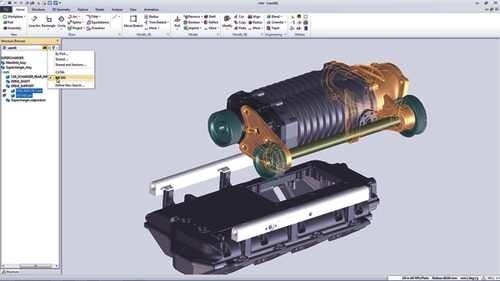
For more than a decade, it's been one of CAD users' more vehement complaints: 3D models created in one CAD system can't readily be used by another. While the CAD interoperability problem has by no means been sidelined, the industry has gained significant ground in addressing the issue via new technologies and through modifications to the design workflow that facilitate cross-platform collaboration.

New visualization and collaboration tools that foster the exchange of lightweight models (meaning 3D geometry without all the design intelligence) have been instrumental in helping companies better exchange multi-CAD data without the hangover of traditional platforms. In addition, new technologies advancing the concept of direct modeling, along with reorienting design workflows so that only critical parts of a design, not full assemblies, are translated between parametric-based offerings, are other tactics easing the interoperability burden.

The solutions couldn't come at a better time. In today's global economy and with the rise of outsourcing, engineers are just as likely sharing design information with peers within their own companies as they are with suppliers, partners, and customers located across the globe. Needless to say, with few exceptions -- large automotive OEMs, perhaps -- it's the rare instance when all of the parties within this extended and dispersed product development ecosystem can mandate the use of the same CAD tool, hence enjoy a fairly seamless exchange of CAD data.
To read more click here...

Sunday, May 15, 2011

Improving the Science of Teaching Science

New York Times
May 13, 2011

Over the past few years, scientists have been working to transform education from the inside out, by applying findings from learning and memory research where they could do the most good, in the classroom. A study appearing in the journal Science on Thursday illustrates how promising this work can be and how treacherous.

The research comes from a closely watched group led by Carl Wieman, a Nobel laureate in physics at the University of British Columbia who leads a $12 million initiative to improve science instruction using research-backed methods for both testing students’ understanding and improving how science is taught.

In one of the initiative’s most visible studies, Dr. Wieman’s team reports that students in an introductory college physics course did especially well on an exam after attending experimental, collaborative classes during the 12th week of the course. By contrast, students taking the same course from another instructor who did not use the experimental approach and continued with lectures as usual scored much lower on the same exam.

Friday, April 8, 2011

Testing Smart Energy Systems

SPX
April 08, 2011

The residential housing sector needs smart energy systems. And yet the potential for developing these kinds of systems remains largely untapped. In the SmartEnergyLab - an innovative test laboratory - Fraunhofer researchers are able to analyze, assess and develop almost any energy management system for controlling power and heat.

Friday, March 11, 2011

Better Automation Diagnostics

Mechatronictips.com
March 6, 2011

Preventing machinery faults and downtime is a recent topic of discussion in the automation business.  A lot of interesting information is offered, mostly anecdotal, that is offered as “helpful tips” for the aspiring automation programmer.  But its generally very loose, as anecdotal information usually is, and not quite as helpful for specific situations.
To read more click here...

Monday, March 7, 2011

Enecsys Announces The Cost-Saving, Solar PV Duo

Cambridge, UK (SPX) 
March 03, 2011
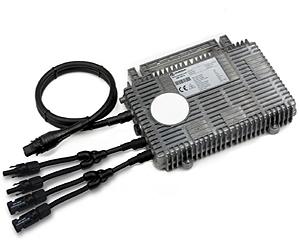
Enecsys Limited has announced the Enecsys Duo micro-inverter. This 360-Watt addition to the Enecsys micro-inverter family is the world's highest power density micro-inverter with dimensions of 262 x 160 x 35mm. Designated the SMI-D360W-72, it is designed to reduce system costs whilst supporting fully independent power point tracking of two connected photovoltaic modules.
To read more click here...

Monday, February 21, 2011

CK Morris Associates, LLC Introducing the First Remote Project Methodology Designed to Control and Improve Virtual Project Execution

Redorbit.com
Feb 18, 2011

CK Morris Associates, LLC Virtual Program and Project Management Consulting creates a project methodology specifically designed to manage remote projects. The Remote Methodology is intended to integrate with other well known methodologies such as Traditional, Adaptive, and Extreme. The methodology adds value by facilitating the identification and planning for risks commonly associated with virtual or remotely managed projects.